
Fiat to Crypto Exchange: How to Buy Cryptocurrency with Fiat Currency
What is a Fiat to Crypto Exchange?
Most people’s first contact with cryptocurrency goes through a fiat to crypto exchange. It’s the on-ramp: the point where traditional money — dollars, euros, pounds, naira, pesos — converts into digital assets. Without it, crypto is a closed system accessible only to people who already have it.
A fiat crypto exchange is a platform that accepts government-issued currency (fiat) as payment and delivers cryptocurrency in return. This sounds simple, but the infrastructure behind it is substantial. The platform needs banking relationships to process card payments or bank transfers, regulatory licenses in each jurisdiction where it operates, compliance systems for anti-money laundering (AML) and know-your-customer (KYC) checks, and the technical infrastructure to custody or deliver the purchased crypto.
Fiat to crypto exchanges come in several forms. Centralized exchanges (CEXs) like Coinbase, Kraken, and Binance are the dominant type — they handle everything in-house, from identity verification to order matching to custody. Payment gateways like MoonPay and Transak focus specifically on the fiat-to-crypto conversion step, often embedded inside crypto wallets or DeFi apps. Peer-to-peer platforms connect buyers and sellers directly, with fiat transferred outside the platform.
The common thread is the crypto fiat gateway function: converting one type of money into another. Everything else — trading features, staking, DeFi access — is built on top of this foundational step.
Why Use a Fiat to Crypto Exchange?
The answer seems obvious, but it’s worth unpacking. Buying crypto with fiat currency solves a specific access problem: you have dollars (or any other national currency) and you want Bitcoin, Ethereum, or any other digital asset. A fiat exchange is the most direct path.
Several reasons drive people toward fiat to crypto exchanges specifically:
- Starting from zero — if you don’t already own any crypto, you need a fiat on-ramp. There’s no other way in without either mining (expensive and technically demanding) or receiving crypto from someone else.
- Speed and convenience — most major fiat crypto exchanges process purchases in minutes. A bank card purchase on Coinbase or Kraken can deliver crypto to your account faster than a traditional wire transfer clears.
- Regulatory protection — licensed fiat exchanges operate under financial regulation. This means consumer protection mechanisms, dispute processes, and legal recourse that peer-to-peer or purely decentralized platforms don’t offer.
- Fiat off-ramp access — the best fiat to crypto exchanges work in both directions. When you want to convert crypto back to fiat, the same platform handles the reverse transaction. This round-trip capability is essential for anyone treating crypto as a trading or investment vehicle rather than a long-term hold.
- Broad asset selection — major fiat exchanges list hundreds of cryptocurrencies. You’re not limited to buying Bitcoin with fiat; you can access Ethereum, Solana, stablecoins, and hundreds of altcoins with a single account.
The alternative to fiat exchanges — buying crypto from another person who already holds it — works but carries friction: finding a willing seller, negotiating price, arranging a payment method, and managing counterparty risk. Fiat exchanges abstract all of this.
How to Buy Crypto with Fiat Currency
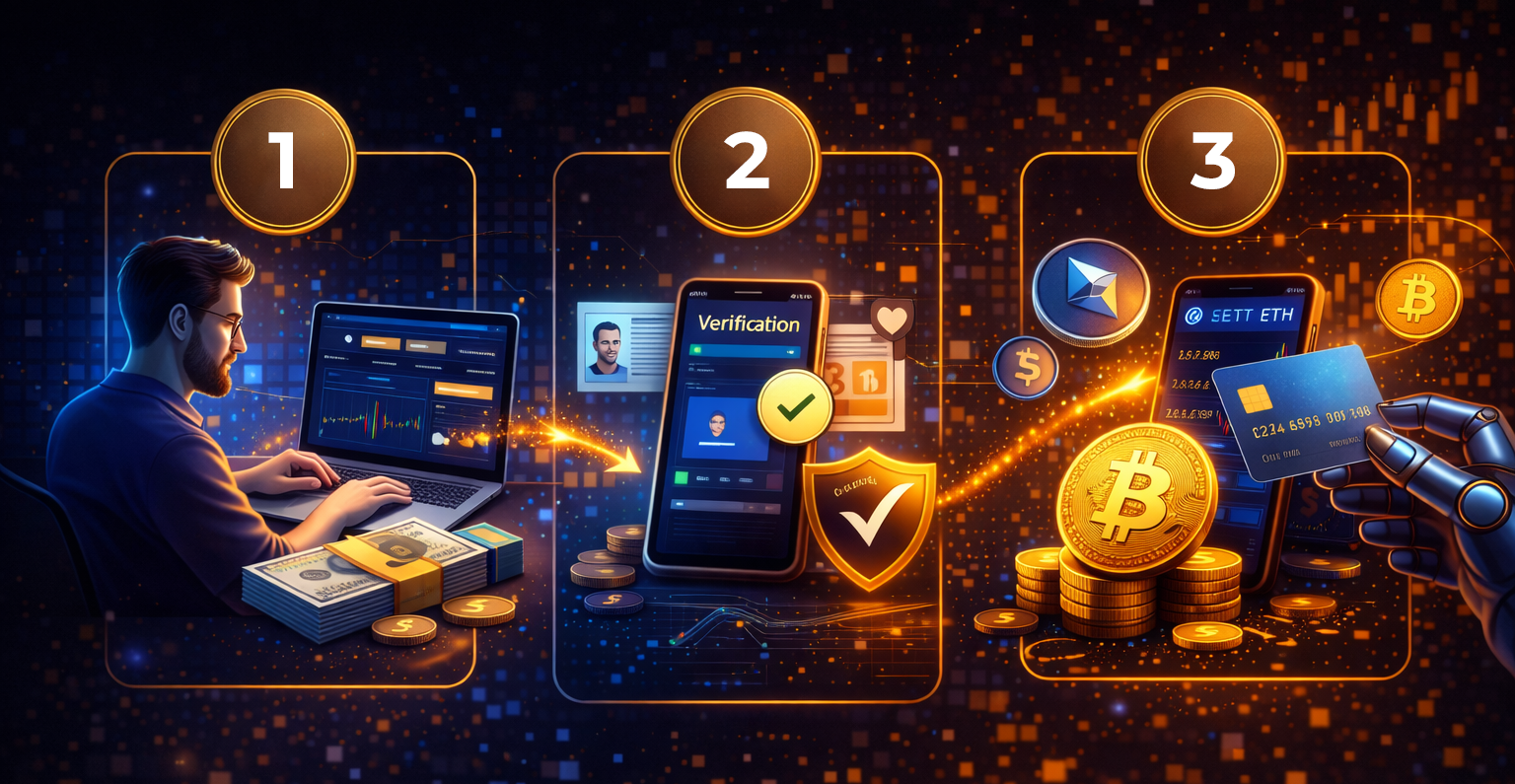
The process varies slightly by platform, but the core sequence is consistent across all major fiat to crypto exchanges:
- Step 1: Choose a platform — select a licensed, reputable fiat crypto exchange operating in your country. Consider factors like supported fiat currencies, available cryptocurrencies, fee structure, and withdrawal options. Coinbase, Kraken, Binance, and Gemini cover most global markets. Regional options like Bitpanda (Europe) or Luno (Africa, Asia) serve specific geographies.
- Step 2: Create and verify your account — all regulated fiat exchanges require identity verification (KYC). Prepare a government-issued ID, proof of address, and in some cases a selfie. Verification typically takes minutes for basic levels and up to a day or two for higher withdrawal limits.
- Step 3: Add a payment method — link a bank card, bank account (via ACH, SEPA, or wire transfer), or another supported payment method. Card purchases are faster but typically carry higher fees (1.5–3.99%). Bank transfers are slower but cheaper.
- Step 4: Select your cryptocurrency — find the asset you want to buy. For most first-time buyers, Bitcoin (BTC) or Ethereum (ETH) are the starting points. Stablecoins like USDC or USDT are useful if you want to enter the crypto ecosystem without immediate price exposure.
- Step 5: Execute the purchase — enter the amount in fiat and review the total including fees. Confirm the transaction. Card purchases settle almost immediately; bank transfers may take 1–5 business days depending on your region and the platform.
- Step 6: Secure your crypto — for amounts you plan to hold long-term, consider moving crypto off the exchange to a personal wallet (hardware wallet for significant amounts, software wallet for more frequent access). Leaving crypto on an exchange carries custodial risk — if the exchange has issues, your access to funds may be affected.
A few practical notes. Fiat bitcoin purchases on major platforms typically carry a spread (the difference between the buy and sell price) in addition to explicit fees. Always check the total cost before confirming, not just the advertised fee percentage. And for larger purchases, bank transfers almost always work out cheaper despite the wait.
Crypto Fiat Gateway: Bridging Traditional Finance and Crypto
The crypto-fiat gateway is the bridge between traditional banking and decentralized networks. Since these systems are inherently incompatible, several components must work in tandem to facilitate transactions:
- Banking Partnerships: Exchanges need accounts to process deposits and withdrawals. Finding crypto-friendly banks remains a challenge, which often limits an exchange’s geographic reach.
- Payment Integration: For card purchases, platforms integrate with processors like Stripe or specialized providers. These entities assess fraud risk and can decline transactions they deem suspicious.
- Compliance Infrastructure: Regulated exchanges must implement KYC (Know Your Customer) and AML (Anti-Money Laundering) protocols. This expensive requirement has led the market to consolidate around a few major players.
- Liquidity Management: Exchanges must constantly source assets to fulfill orders, either through their own inventory or third-party liquidity providers.
While the user experience has improved—moving from days of waiting to near-instant purchases via Apple Pay or SEPA—the “best” exchange remains highly dependent on geography. Regulatory landscapes and available payment methods vary significantly by jurisdiction. Before signing up, users should always verify which fiat currencies and local payment rails a platform supports to ensure a seamless entry into the crypto market.
Risks of Using Fiat to Crypto Exchanges
Fiat to crypto exchanges are the most accessible entry point into crypto, but they carry specific risks that users should understand before depositing funds.
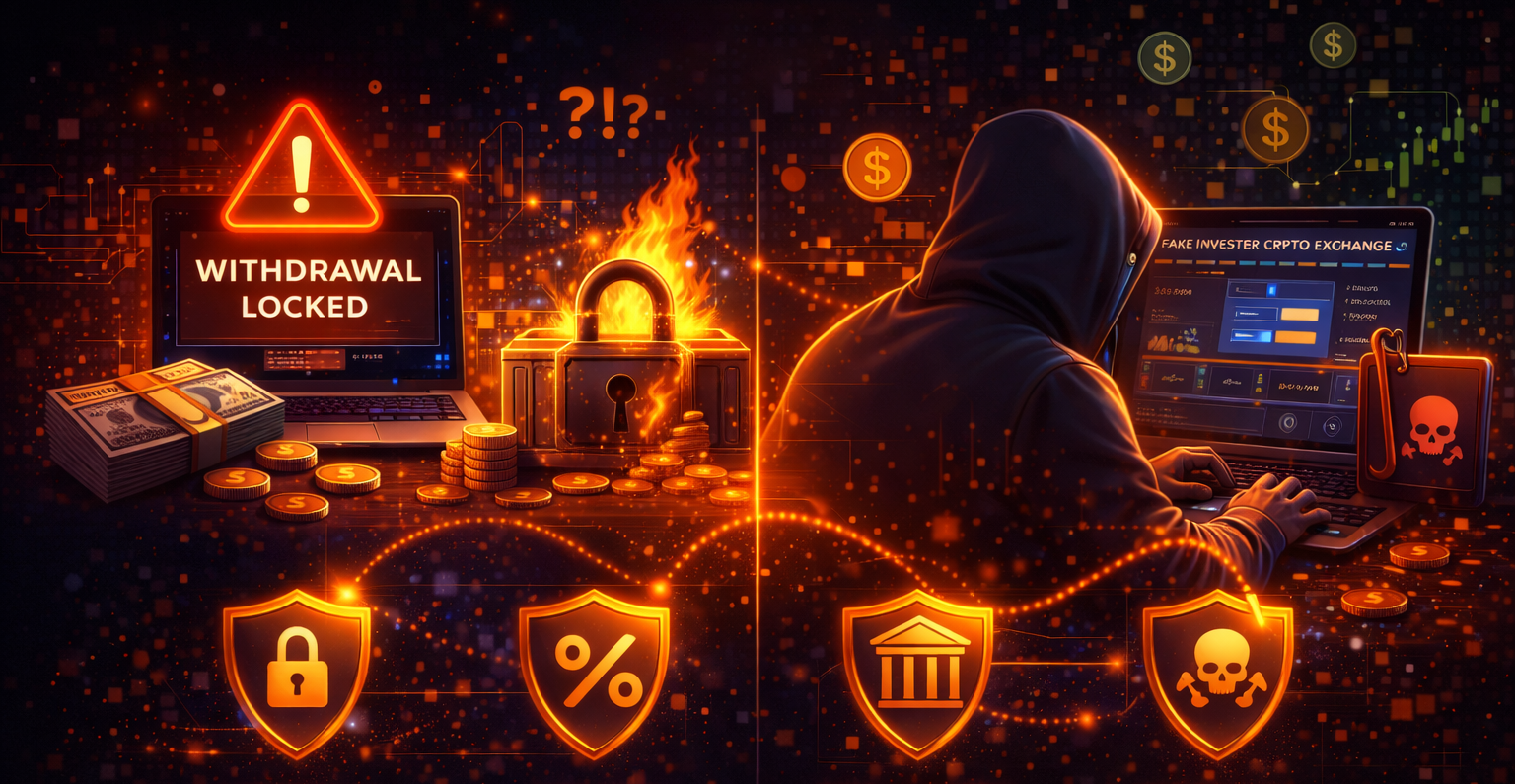
Custodial risk is the most fundamental. When you buy crypto on a centralized fiat exchange and leave it there, you don’t hold the private keys — the exchange does. If the exchange freezes withdrawals, gets hacked, or goes insolvent, your access to those funds may be compromised. FTX’s collapse in November 2022 eliminated $8 billion in user funds; Celsius and Voyager Digital filed for bankruptcy in 2022 with user funds locked in proceedings. These weren’t fringe platforms — they were among the most prominent names in the industry.
Fee structures can be opaque. Most fiat crypto exchanges list competitive headline fees but make money on the spread — the gap between the buy and sell price. A platform advertising “zero commission” may still charge 0.5–2% embedded in the price you pay. Always compare the effective cost (total fiat in vs. crypto received) rather than just the stated fee.
Price volatility between order and settlement matters more than most new users expect. For card purchases, settlement is near-instant and this is less of an issue. For bank transfers, the days between initiating a purchase and receiving crypto mean you’re exposed to price movement in that window. If Bitcoin drops 10% while your bank transfer is processing, you receive fewer dollars’ worth of Bitcoin than you intended to spend.
Regulatory Hurdles and Security Best Practices
Regulatory and access risk is real. Fiat exchanges are required to comply with local regulations, which means they can freeze accounts, block withdrawals, or exit markets with limited notice. Users in sanctioned countries may find their accounts restricted. Regulatory requirements are shifting fast, and platforms that are available today may restrict access for users in specific jurisdictions without warning.
Verification delays create access problems at critical moments. Exchanges often increase verification requirements during periods of high volatility or regulatory scrutiny. Users who haven’t completed higher verification tiers may find their purchase or withdrawal limits reduced at exactly the moment they want to act.
Phishing and fraud targeting fiat exchange users is pervasive. Fake exchange websites, fraudulent customer support contacts, and social engineering attacks that ask for login credentials are common. Use bookmarks for exchange URLs, enable all available two-factor authentication options, and never enter credentials following a link from an email or social media message.
None of these risks make fiat crypto exchanges unusable — they’re how the overwhelming majority of retail crypto investors first enter the market. But understanding them allows for better decisions: using regulated platforms, not leaving large amounts on exchanges, and verifying the total cost of any purchase before confirming.
Veröffentlichte Artikel
 Beliebt
Bitcoin Pizza Guy: Die Geschichte des 900-Millionen-Dollar-Essens
Einleitung Die Geschichte von Bitcoin ist echt wild. Es gab krasse Höhen...
Bitcoin Lightning Network erklärt: Was es ist und wie Bitcoin Lightning funktioniert
Einführung In der Welt der Kryptowährungen waren Transaktionsgeschwindigkeit und Kosten schon immer...
Wie funktionieren Bitcoin-Automaten? Der komplette Guide zur Nutzung von Krypto-ATMs
Einleitung Millionen von Menschen weltweit nutzen heute Kryptowährungen – das ist zumindest...
 Beliebt
Die beste Bitcoin-Mining-Software 2025 – Top 7 Tools für maximale Rentabilität
Bitcoin-Mining ist längst kein reines Hobby für Enthusiasten mehr, sondern ein knallhartes...

Dienstleistungen mit Bitcoin bezahlen: Wo wird BTC heute akzeptiert?
Wo Bitcoin heute als Zahlungsmittel gilt Heute kann Bitcoin (BTC) genutzt werden,...

Was man 2025 mit Bitcoin kaufen kann
Einführung Im Laufe der Jahre hat sich Bitcoin von einer experimentellen digitalen...