
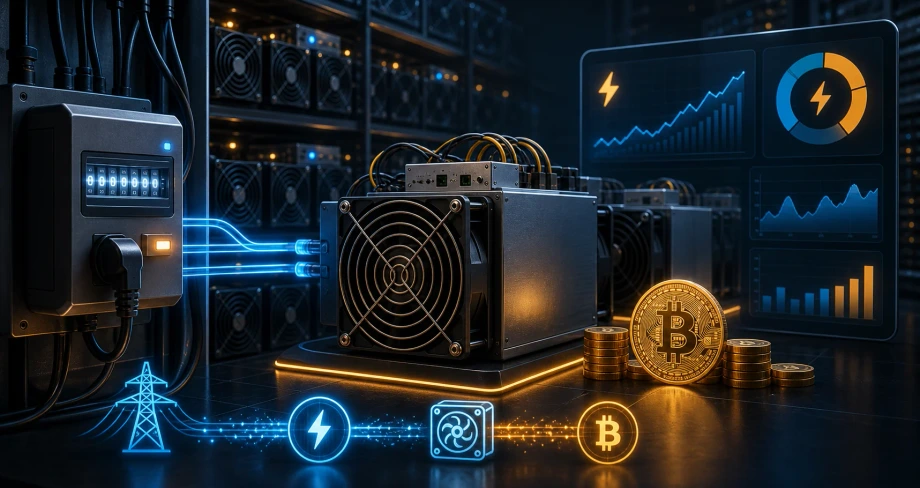
What Electricity Cost Means for Miners
Mining electricity cost is the amount paid to run hardware continuously. It is calculated from power draw, runtime and tariff, then compared with expected mining revenue.
How Power Cost Is Built
Watts
ASIC power consumption shows how much electricity the miner uses while operating.
Tariff
The $/kWh rate turns power draw into a daily or monthly cost.
Uptime
More uptime means more revenue, but also more total electricity consumed.
How Electricity Looks in Practice
ASIC miners compare electricity cost across home setups, hosting providers and farm locations. Pools influence payout timing, while electricity influences net margin.
FactorMining context
Low tariffCan keep efficient ASICs above break-even for longer.
High tariffCan make even strong hardware unprofitable.
Variable tariffRequires sensitivity analysis rather than one fixed estimate.
Common Electricity Cost Mistakes
 Ignoring cooling power and auxiliary load
Related Academy Pages
Continue with pools, hardware and profitability tools.FAQ
More mining profitability questions
It is usually the largest recurring operating cost and directly reduces daily net profit.
Hosting may provide industrial rates, but the full hosting fee and terms must be included in ROI calculations.
No. Pools affect payout mechanics and fees, not the physical power consumed by an ASIC.
It is the electricity rate where mining revenue equals operating cost under the current assumptions.