
Power Efficiency Curve
A power efficiency curve is a graphical relationship showing how an ASIC miner’s power consumption changes relative to its hashrate and operating frequency. In cryptocurrency mining, the curve helps miners understand the balance between performance and electricity efficiency at different operating settings.
Power Efficiency Curve Explained in Simple Terms
Power Efficiency Curve Explained in Simple Terms
ASIC miners can run at different speeds and power levels.
As mining performance increases:
hashrate usually increases
electricity consumption also increases
However, power usage does not always increase evenly. At higher frequencies, miners may consume much more electricity for relatively small performance gains.
The power efficiency curve helps miners find the most efficient operating point between:
mining speed
electricity cost
heat generation
How Power Efficiency Curve Works
How Power Efficiency Curve Works
The power efficiency curve is influenced by:
chip frequency
voltage
ASIC architecture
cooling conditions
Here’s how it works:
Low Frequency Operation
The ASIC runs cooler and uses less electricity, but hashrate is lower.Frequency Increases
Hashrate improves as chip speed increases.Power Consumption Rises
Higher frequencies require more voltage and generate more heat.Efficiency Changes
After a certain point, electricity usage rises faster than mining performance.Optimal Efficiency Zone
Miners often aim for the operating point with the best balance between hashrate and power consumption.
Mining efficiency is commonly measured as:
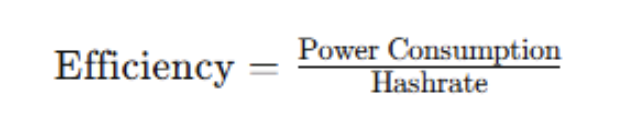
Usually expressed in:
joules per terahash (J/TH)
Example of Power Efficiency Curve in Practice
Example of a Power Efficiency Curve
An ASIC miner may operate at:
150 TH/s using 3000W
180 TH/s using 4200W
200 TH/s using 5200W
Although hashrate increases:
electricity usage increases much faster at higher settings
This means:
the miner becomes less energy-efficient at maximum performance
Some miners choose lower frequencies to reduce electricity costs and heat generation.
Why Power Efficiency Curve Matters
The power efficiency curve affects:
mining profitability
electricity costs
cooling requirements
thermal performance
hardware lifespan
Efficient tuning can significantly improve long-term mining returns.
Power Efficiency Curve and Overclocking
Overclocking pushes the miner to higher frequencies.
This may:
increase hashrate
increase power usage sharply
reduce efficiency
generate more heat
Improper overclocking may also cause:
instability
thermal throttling
hardware damage
Power Efficiency Curve and Undervolting
Undervolting lowers chip voltage while maintaining stable operation.
Benefits may include:
lower power consumption
improved efficiency
reduced temperatures
quieter operation
Many miners use undervolting to optimize the efficiency curve.