
Timestamp (Blockchain)
A timestamp in blockchain is a piece of data that records the approximate time when a block was created and added to the blockchain. In Bitcoin, the timestamp is included inside the block header and is used during mining, block validation, and difficulty adjustment. Timestamps help maintain the chronological order of blocks and support network consensus.
Timestamp (Blockchain) Explained in Simple Terms
Timestamp Explained in Simple Terms
A blockchain timestamp acts like a digital time label for each block.
When miners create a new block, they include the current time inside the block header. This helps the network determine:
when the block was mined
the order of blocks
whether the block follows network rules
Timestamps are important because blockchain systems rely on proper block timing to maintain stable block production and network synchronization.
How Timestamp (Blockchain) Works
How Timestamp Works
Timestamps are included in every new blockchain block during the mining process.
Here’s how it works:
Block Creation
A miner builds a candidate block with transactions and block data.Timestamp Added
The miner inserts the current Unix time into the block header.Mining Begins
The block header, including the timestamp, is hashed repeatedly during Proof of Work mining.Network Verification
Other nodes verify that the timestamp is valid and falls within the allowed time range.Difficulty Adjustment Support
The blockchain uses timestamps to measure block production speed and adjust mining difficulty.
In Bitcoin mining, the block header hash condition is:

The timestamp is part of the block header used in this calculation.
Example of Timestamp (Blockchain) in Practice
A Bitcoin miner creates a block with:
previous block hash
Merkle Root
nonce
timestamp
Example timestamp:
1765432100
The miner then begins hashing the block header.
If the miner changes the timestamp:
the block header changes
the resulting hash changes
mining calculations continue with new values
Timestamp and Mining Difficulty
Bitcoin adjusts mining difficulty every 2,016 blocks using timestamps.
The simplified relationship is:
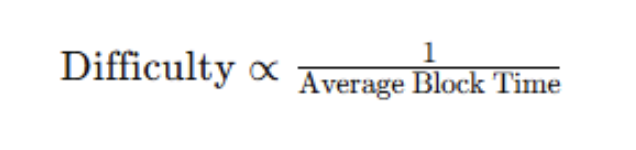
If blocks are mined too quickly:
difficulty increases
If blocks are mined too slowly:
difficulty decreases
What Is Unix Time?
Bitcoin timestamps use Unix time.
Unix time measures:
the number of seconds since January 1, 1970 (UTC)
Example:
1760000000
This allows blockchain systems to record time consistently across the network.
Why Timestamps Matter in Blockchain
Timestamps serve several important purposes:
Maintain Block Order
Timestamps help organize blocks chronologically.Support Difficulty Adjustment
Bitcoin adjusts mining difficulty based on how quickly blocks are mined over time.Prevent Invalid Blocks
Nodes reject blocks with incorrect or unrealistic timestamps.Help Network Synchronization
Timestamps assist nodes in maintaining consistent blockchain history.Track Blockchain Activity
Users and explorers can see approximately when blocks were mined.
Timestamp Rules in Bitcoin
Bitcoin nodes check timestamps using consensus rules.
A valid timestamp must:
be greater than the median time of previous blocks
not be too far in the future compared to network time
This helps prevent miners from manipulating blockchain timing.