
Best Bitcoin Mining Software of 2025 – Top 7 Tools for Maximum Profitability
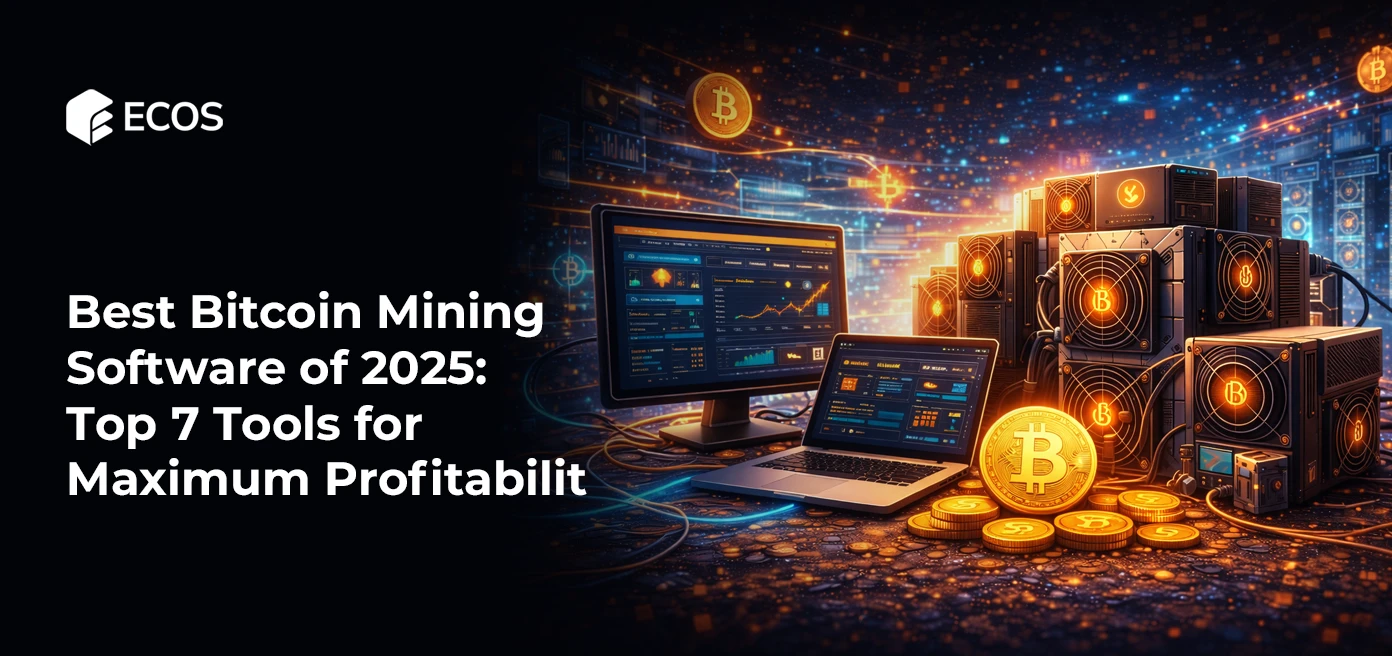
Bitcoin mining has long since moved beyond being a hobby for enthusiasts and has become a full-fledged business. Large companies build massive mining farms, launch data centers, and develop software to make mining more profitable. At the same time, it is important to understand that for any miner, the profitability of cryptocurrency mining depends on two key factors: hardware performance and electricity costs.
This means that in order to remain competitive, miners have to choose regions with cheap energy and look for the most reliable and high-performance software for their equipment. Without high-quality software, mining efficiency decreases while operating costs grow.
Today, bitcoin mining software is constantly evolving and becoming more advanced. Modern solutions are capable of boosting miner performance and increasing ASIC profitability by 20–25%. That is why choosing the right software today has a direct impact on final profits.
What Is Bitcoin Mining Software?
Bitcoin mining software is specialized software that uses a computer’s computing power to mine (produce) cryptocurrency. Essentially, it acts as an intermediary between the hardware and the blockchain network, solving complex mathematical problems and receiving rewards in the form of Bitcoin.
Mining software differs depending on the cryptocurrency, the algorithm used, and the type of hardware. However, in general, any mining software performs the same core functions, namely:
- Manages hardware by controlling GPUs or ASIC miners and configuring operating parameters.
- Connects to mining pools to combine computing power with other miners, increasing the chances of finding a block.
- Monitors miner status, including temperature, hash rate, power consumption, and other key metrics.
- Optimizes the mining process by automatically adjusting settings to achieve maximum efficiency.
- Switches between algorithms when mining different cryptocurrencies.
Today, BTC mining software has become significantly smarter. Modern solutions also provide miners with advanced tools for optimization, analytics, and automated management of the mining process. For example, ECOS allows users to track profitability in real time and instantly make optimization decisions. Miners can see their returns almost minute by minute, which is especially important in periods of high market volatility.
Energy Efficiency and Remote Management
One of the key advantages of modern mining software is reduced energy consumption. Mining – especially on ASIC devices – requires significant electricity costs, but newer versions of ASIC mining software allow miners to balance workloads and reduce energy consumption by up to 15%. There is already practical evidence of this: for example, miners in Texas reported that they managed to cut energy costs for crypto mining by 12% after updating their software.
In addition, an increasing number of solutions now support remote management, which is especially relevant in today’s market, where around 35% of miners manage their farms remotely via cloud-based dashboards.

Key Features to Look for in Bitcoin Mining Software
Choosing the best cryptocurrency mining software directly impacts the profitability of your hardware. The math is simple: the more efficient your software, the more effectively even low-cost equipment can work, and the more cryptocurrency you can mine. But how do you choose software that is both reliable and easy to use? Here are the main factors to consider:
Hardware Compatibility
The software you choose must work correctly with your hardware. Today, around 65% of miners use ASIC devices, but GPU mining software is still popular in regions with cheap electricity. Therefore, when selecting mining software, prioritize compatibility with the devices you use.
If you mine on ASIC, ensure the software allows you to utilize the full potential of your device. Often, software permits switching between different coins, while the miners themselves may not support this functionality – or vice versa. In such cases, using that software is simply impractical.
Another important point: some programs and algorithms support both ASIC and GPU, often offering greater flexibility. Miners can switch between devices without losing time or efficiency. If this is relevant to you, consider such software.
Performance
Good software should work in tandem with your hardware, unlocking its full potential. Today, miners using optimized solutions have increased performance by an average of 20%, and that’s not the limit! For example, Kryptex allows manual parameter adjustments to reduce energy consumption and improve efficiency. With rising electricity costs, this can save up to 10% of expenses.
This isn’t the only solution on the market – there are other similar programs worth exploring.
User Interface
A simple, intuitive interface saves time and lowers the entry barrier. About 70% of new miners today choose easy mining software, which can be used without programming knowledge. Many cloud or remote mining services offer such functionality “out of the box.” Users can manage their rigs via an app or a company website – for example, ECOS clients report that configuring and using miners through the app is very convenient, reducing setup and launch time by nearly half compared to more complex systems.
Security
As the market grows, so do the risks. The higher the BTC price, the more hackers are interested in miners and holders of digital gold. Recently, cyberattacks on mining operations have increased by 25%, making encryption and two-factor authentication essential.
Some solutions, like CGMiner, also provide protection against DDoS attacks, reducing the risk of downtime and income loss.
Cost
There are both free and paid bitcoin mining programs. Free versions are suitable for beginners, while professional miners often choose paid solutions with extended functionality.
Premium versions can boost performance by 15% or more, making them worthwhile for large-scale operations.
Compatibility with Your Hardware
The choice of software directly depends on the type of hardware.
- ASIC. ASIC devices provide maximum power for Bitcoin mining. Today, about 75% of miners use ASICs for Bitcoin mining. ASIC mining software, such as CGMiner, gives full control over settings and can increase efficiency by 20%.
- GPU. GPUs remain popular among private miners and are used in some regions with low electricity costs. GPU mining software, for example Kryptex, allows mining different coins and switching between them depending on profitability.
- CPU. CPU mining is used less often but is still relevant for altcoins. CPU mining software, such as MultiMiner, is suitable for experiments and learning.
Properly selected software can increase mining efficiency by up to 25%.
Ease of Use and User Interface
Many miners – especially clients of cloud services and remote mining systems – do not have specialized knowledge or skills. These are simply people far from the world of cryptocurrencies but eager to join a profitable and income-generating business. For them, as beginners, interface simplicity plays a key role. Mining hardware manufacturers have already recognized this.
Modern easy mining software aims to minimize the number of actions required to start mining: automatic hardware detection, preconfigured pools, templates for optimal settings, and visual prompts. This approach reduces the risk of errors and allows mining to begin in just a few minutes.
A good example is EasyMiner – a program with an intuitive graphical interface that spares users from working with the command line. All main parameters are displayed as clear panels: hash rate, temperature, profitability, and connection status. According to statistics, over 40% of new miners choose EasyMiner specifically for its ease of use and low entry barrier.
Awesome Miner, in turn, focuses on speed of deployment and scalability. Most users launch the program in less than 10 minutes, even when working with multiple devices. This is especially important for owners of medium and large farms, where every minute of downtime means lost profits. The software offers centralized management, configuration templates, and automatic application of settings to all rigs, significantly reducing the operator’s workload.
An additional advantage of modern interfaces is remote access. Many bitcoin mining platforms and miner management software allow users to control hardware via a web panel or mobile app. Users can monitor profitability, restart devices, and receive alerts about malfunctions from anywhere in the world.
As a result, a convenient interface is not just a matter of comfort. It directly affects efficiency, reduces errors, saves time, and makes mining accessible even to those who have never worked with cryptocurrencies before. That is why in 2024–2025, ease of use becomes as important a criterion as performance and energy consumption.
Performance and Efficiency Metrics
Without precise data, a miner works blindly, not understanding how efficiently the equipment is being used and where money is being lost. Modern bitcoin mining software and miner management software provide detailed analytics, allowing decisions to be made based on numbers rather than assumptions.
Key metrics that need to be monitored constantly:
- Hash Rate. Hash rate reflects the computational power of the equipment and directly affects the number of mined blocks and rewards received. Even a slight decrease in hash rate can lead to a noticeable loss of income over time. In 2024, miners using optimized BTC mining software increased hash rates on average by 20–30% through fine-tuning frequencies, voltages, and operational algorithms. Advanced programs allow monitoring hash rate dynamics, identifying unstable devices, and automatically restarting rigs when performance drops.
- Energy Consumption. Electricity remains the main expense in mining. Efficiency is measured not only by total hash rate but also by the “hash rate / power consumption” ratio. Modern ASIC mining software and GPU mining software can automatically balance the load, reducing energy consumption without significant loss of power. In practice, optimizing energy consumption saves 10–15% of electricity, which for medium and large farms translates to thousands of dollars per month. In 2024, many farms switched to energy-efficient profiles thanks to software updates rather than hardware replacement.
- Real-Time Metrics. Displaying real-time data has become standard for the best bitcoin mining programs. Online monitoring allows instant response to changes: rising temperature, falling hash rate, pool connection errors, or power consumption spikes. The main advantage is the ability to adjust settings without stopping equipment, which reduces downtime and increases overall profitability. For large farms and cloud solutions, this is critical: even a few minutes of downtime across dozens or hundreds of devices leads to direct financial losses.
Overall, competent work with performance metrics turns mining from a lottery into a manageable business. Miners who regularly analyze hash rate, energy consumption, and real-time data in 2024–2025 demonstrate 20–30% higher profitability compared to those who ignore these metrics.

Security and Privacy Features
In 2025, security has become one of the key factors when choosing bitcoin mining software. The rise in digital asset prices and the expansion of mining farms have made miners a prime target for cybercriminals. Industry data shows that attacks on mining infrastructure in 2025 increased by 35–40% compared to 2024, with attacks increasingly targeting not only large farms but also private users of cloud services and remote management systems.
Modern crypto mining platforms and miner management software are required to include multi-layered security systems. Key security elements today are as follows:
Data Encryption
Encryption protects sensitive information: wallet addresses, access keys, pool data, and financial transactions. In 2025, over 60% of successful hacks were associated with outdated software lacking modern encryption. Reliable BTC mining software uses end-to-end encryption, significantly reducing the risk of data interception even when farms are managed remotely.
Two-Factor Authentication (2FA)
2FA has become standard for most bitcoin mining platforms and cloud services. An additional verification layer – via mobile apps or hardware keys – greatly complicates unauthorized access. According to 2025 statistics, using 2FA reduces the likelihood of account compromise by 45–50%, especially in systems with remote access and automated management.
DDoS Protection
DDoS attacks remain one of the most common threats in mining. They overload infrastructure with fake traffic, causing equipment downtime and direct financial losses. In 2025, average downtime due to DDoS attacks at unprotected farms increased by 20%, whereas miners using software with built-in DDoS protection reduced downtime by more than half. Advanced ASIC mining software and cloud solutions automatically filter traffic and switch to backup nodes.
Overall, miners who use encryption, 2FA, and DDoS protection encounter hacks and financial losses 40–45% less frequently. In 2025, security ceased to be an optional feature – it became a mandatory condition for stable and profitable mining operations, especially for those using cloud solutions or managing equipment remotely.
Cost and Fee Structures
The modern market for mining software is diverse – everyone can find solutions that suit them perfectly, including in terms of price. For example, there are free solutions on the market, such as EasyMiner, which are suitable for beginners. About 25% of new miners start with them. There are also paid tools, like Awesome Miner, costing $4–5 per month, but capable of increasing efficiency by 10–15%.
Some cloud mining software, including ECOS, retain 1–2% of revenue as a fee for convenience and additional features.
Best Bitcoin Mining Software
| Software | Pros | Cons | Suitable for |
| ECOS | Cloud integration, profit tracking | Limited free version | Cloud mining |
| CGMiner | Open-source, ASIC support | Complex setup | Professionals |
| BFGMiner | ASIC/FPGA support | No GPU support | Specialized hardware |
| EasyMiner | Simplicity | Few features | Beginners |
| Awesome Miner | Farm management | Paid | Large-scale operations |
| MultiMiner | Versatility | Less customization | Beginners |
| Kryptex | Background GPU mining | No ASIC support | GPU miners |
Bitcoin Mining Software vs. Cloud Mining Software
The choice between bitcoin mining software and cloud mining software largely determines a miner’s strategy, risk level, and potential profitability. In recent years, the market has clearly split into two approaches: managing one’s own hardware and renting computing power from providers.
In 2024, cloud mining became roughly 20% more popular, mainly due to its low entry barrier. Users do not need to purchase ASIC hardware, figure out settings, or maintain farms. It’s enough to choose a contract on a crypto mining platform and start receiving payouts. In 2025, this trend continued: about 35–40% of new market participants start with cloud solutions, seeing them as a way to get acquainted with the industry without significant investments.
However, cloud mining has limitations. Contracts usually include fees (on average 1–3%), fixed terms, and limited control over the hash rate. During a sideways market or BTC price drop, some contracts become unprofitable. According to early 2025 data, up to 30% of short-term cloud contracts showed lower-than-expected profitability due to rising network difficulty and provider fees.
Local mining using one’s own hardware and ASIC mining software or GPU mining software requires higher initial investments. In 2025, launching a small ASIC farm costs on average $4,000–$6,000, including equipment and infrastructure. However, the miner gets full control over settings, power consumption, and strategy. With a rising BTC price, owners of their own hardware have an advantage: the long-term profitability of local mining is on average 15–25% higher than cloud solutions, provided there is access to cheap electricity.
Another important factor is flexibility. Local miners can quickly change pools, optimize frequencies, update miner management software, and adapt to network changes. In cloud mining, such opportunities are either limited or completely absent. This is especially critical during sharp changes in network difficulty or BTC price.
In conclusion, in 2025 cloud mining remains a convenient entry point into the industry and is suitable for beginners, investors without technical experience, and users who do not want to maintain equipment. Local mining, on the other hand, remains the choice for those focused on maximum efficiency and long-term profit, especially in conditions of rising BTC value and optimized electricity costs.
Conclusion
In 2025, Bitcoin mining has fully transformed into a managed business, where software plays no less of a role than the hardware itself. Modern bitcoin mining software allows increasing performance, reducing energy costs, managing farms remotely, and protecting assets from cyber threats.
The choice of the right solution depends on your goals, budget, and level of involvement: cloud platforms remain a convenient starting point for beginners, while owning your own hardware and using advanced management tools provides higher long-term profits. In any case, choosing the right software is not just a technical step, but a strategic decision that directly affects the stability and profitability of mining in conditions of growing competition and network difficulty.
Published Articles
 Popular
Bitcoin Pizza Guy: The Story Behind the First Real Bitcoin Purchase
Introduction The history of Bitcoin is full of dramatic ups and downs,...
How Bitcoin ATMs Work: A Complete Guide to Using Crypto ATMs
Introduction Millions of people around the world use cryptocurrencies today – at...

Services You Can Pay for with Bitcoin
Where Bitcoin Is Accepted Today Today, Bitcoin (BTC) can be used to...

What You Can Buy With Bitcoin in 2025
Introduction Over the years, Bitcoin has evolved from an experimental digital currency...
 Popular
Bitcoin & Crypto Options Trading: A Complete Guide for Beginners and Experts
Bitcoin options trading has grown rapidly in recent years as the cryptocurrency...
Bitcoin Taproot Explained: What the Upgrade Means for BTC
Introduction Unfortunately, the most popular cryptocurrency today – Bitcoin – was not...