
How Bitcoin ATMs Work: A Complete Guide to Using Crypto ATMs
Introduction
Millions of people around the world use cryptocurrencies today – at least, that’s the conclusion reached by experts at a16z, who counted the number of active crypto users worldwide. Between 40–70 million people actively use crypto, while the total number of holders globally exceeds 700 million. It’s no surprise that with such widespread adoption, new and more convenient ways to use BTC and other cryptocurrencies in everyday life continue to emerge – one of these ways is Bitcoin ATMs.
Questions like what is a Bitcoin ATM and how does it work or how to use a Bitcoin ATM are very relevant for newcomers to the crypto industry. It’s understandable – at first glance, they look like ordinary ATMs, but crypto ATMs operate on a different principle.
In this article, we will take a detailed look at how a Bitcoin ATM works, the technologies behind these devices, how to use them correctly, the risks and advantages to consider, and what to expect from the development of crypto ATMs in the coming years.
What Is a Bitcoin ATM?
A Bitcoin ATM is a device that visually resembles a regular bank ATM, but is designed for cryptocurrency transactions. Unlike traditional ATMs, which work with bank cards, crypto ATMs interact directly with users’ crypto wallets.
You’ve probably seen modern ATMs that allow you to operate your bank account without using a card – via QR code. Similarly, crypto ATMs give users the ability to conduct transactions in real time using their wallets. Through such a device, you can:
- Buy Bitcoin (and sometimes other cryptocurrencies) simply by depositing fiat currency;
- Exchange Bitcoin and receive cash or a transfer to a card (depending on the model and region).
It’s important to understand that these devices do not store cryptocurrencies internally – the ATMs serve simply as an interface, allowing clients to conduct transactions in real time in the way they are accustomed to.
The key features of a Bitcoin ATM include:
- No need for a bank account (required only if you want to transfer funds to your card);
- Simplified process of buying and selling cryptocurrencies;
- Higher fees compared to online exchanges.
Today, tens of thousands of crypto ATMs are installed worldwide, and their number continues to grow, especially in countries with developed crypto infrastructure. This makes understanding how do Bitcoin ATMs work increasingly relevant for a wide audience.
How Does a Bitcoin ATM Work?
To understand how does a crypto ATM work (как работает crypto ATM), we can look at the process of interacting with such a system from both the user and technical perspectives. Outwardly, a crypto ATM resembles a classic ATM: a screen, buttons, a QR code scanner, and in some models – a device for using bank cards.
The internal structure of a crypto ATM is also similar to a traditional machine, but instead of interacting with the banking system, it interacts with the blockchain of the cryptocurrency it supports. Thus, despite its external simplicity, behind the interface of a crypto ATM lies an entire system combining software, payment modules, and blockchain infrastructure.
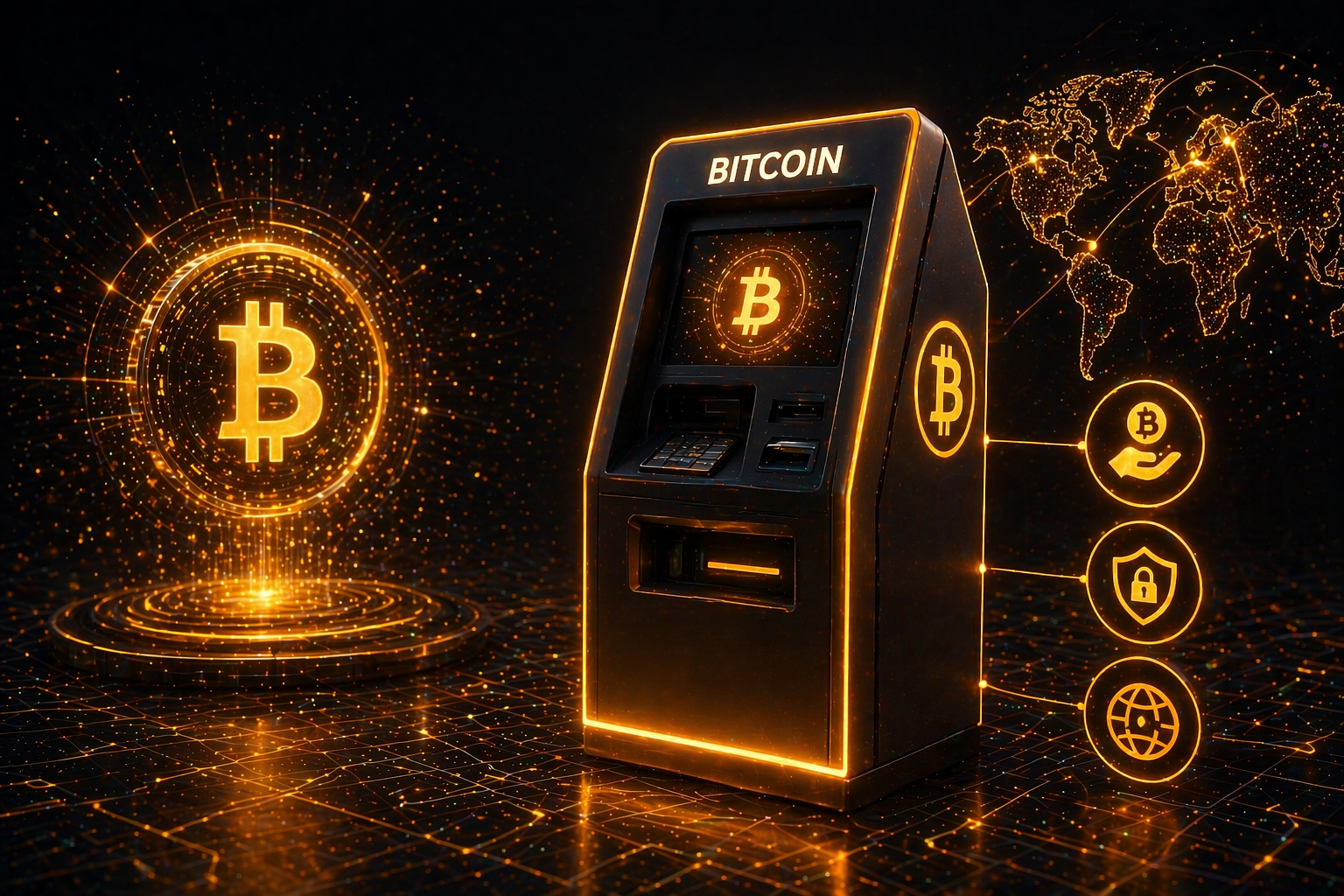
At the core of any Bitcoin ATM are several key components:
- Operator ATM software platform;
- Connection to cryptocurrency exchanges or liquidity providers;
- Integration with the Bitcoin blockchain and other networks;
- Identity verification systems and regulatory compliance.
All of this allows the user to complete a transaction in just a few minutes – a process that previously required registration on an exchange and completing complex procedures.
Step-by-Step Process Explained
Suppose you want to buy Bitcoin using a crypto ATM – to understand how the system works and how does a bitcoin ATM work (как работает bitcoin ATM) we will break it down step by step:
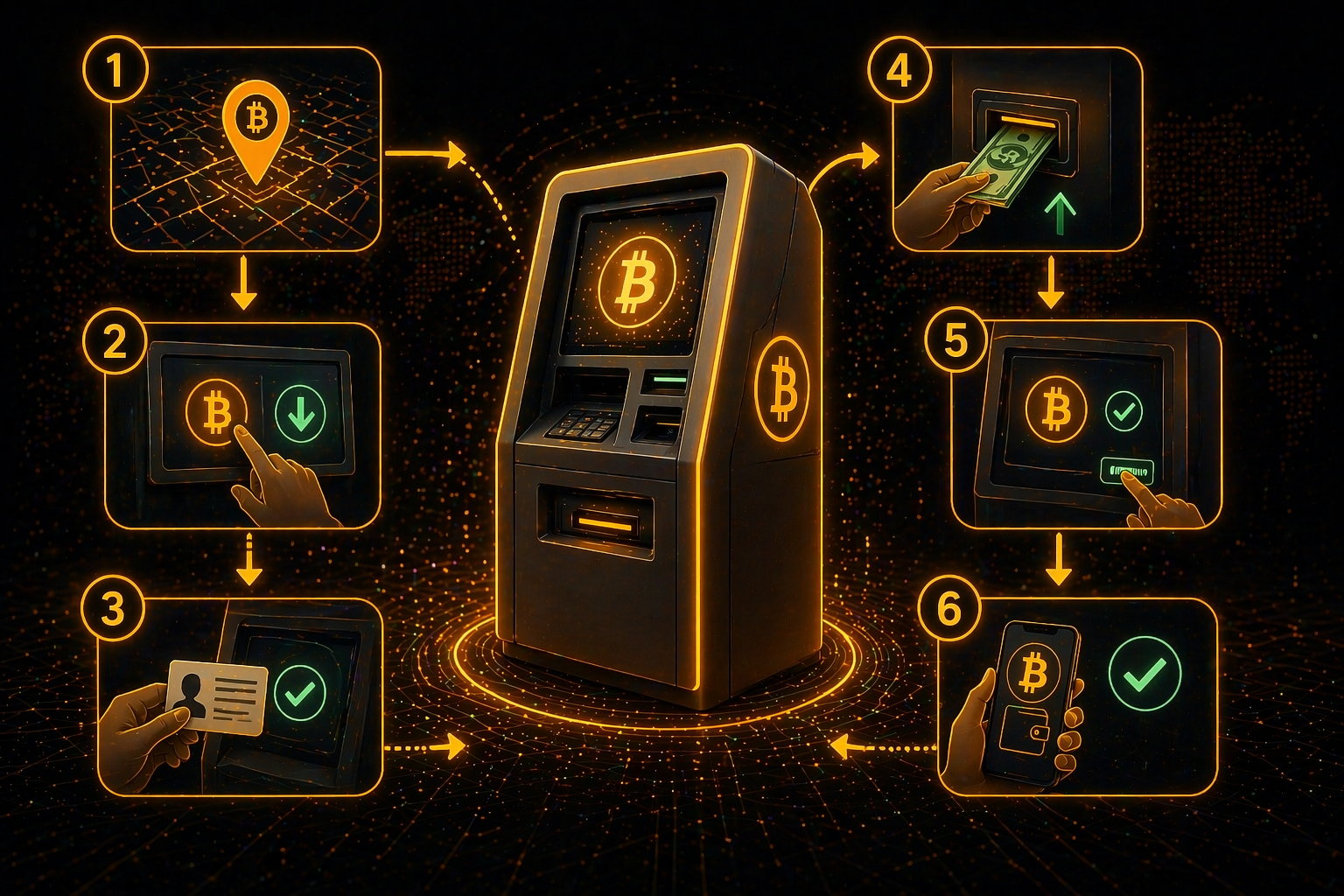
- So, you approach the crypto ATM. On the screen, you select the operation (buy or sell cryptocurrency).
- After choosing the operation, the ATM will prompt you to authorize using your crypto wallet or create a new wallet.
- Next, identity verification may be required (this depends on the amount and local regulations).
- After that (suppose you want to buy Bitcoin) – you make the payment (by card or cash, depending on the ATM model) and confirm the transaction.
- Then the ATM initiates the transaction on the blockchain. Fiat funds are converted into cryptocurrency at the exchange rate at the moment of the transaction on the exchange the ATM uses. The purchased Bitcoin is sent to the specified wallet after network confirmation.
If you want to sell Bitcoin and receive cash, the process is mirrored: the user either sends cryptocurrency to the ATM address, and after confirmation receives fiat, or authorizes their wallet, and the ATM executes the transaction in real time, converting cryptocurrency into fiat.
How Bitcoin ATMs Connect to the Blockchain
A better way to understand how do bitcoin ATMs work (как работают bitcoin-банкоматы) is to look at how these devices interact with the blockchain. In fact, it is this interaction with the blockchain that is their main difference from traditional ATMs. Unlike bank ATMs, which are connected to centralized payment networks, Bitcoin ATMs operate with decentralized infrastructure. Each crypto ATM has an operator and is connected to the operator’s software platform. This platform acts as an intermediary between the device, the blockchain, and external liquidity sources. When a user initiates an operation, the system creates a transaction and sends it to the network through its own node or through reliable blockchain providers.
Thus, the interaction with the blockchain looks like this:
- Transaction creation and signing;
- Sending data to the Bitcoin network;
- Waiting for confirmations;
- Final crediting of funds to the user wallet or dispensing cash.
This is how a Bitcoin ATM works without the involvement of banks or payment systems. The ATM does not store user funds and does not control the network; it simply connects to the network, initiates, and tracks transactions on the blockchain. That is why the speed of Bitcoin crediting depends on network load and fees. During periods of high activity, confirmation may take longer, so one should not expect instant results.
How Do Bitcoin Machines Work Technically
From a technical perspective, the question how do bitcoin machines work (как работают биткоин-машины) covers both the hardware and software components of the devices. Modern Bitcoin ATMs are essentially full computers with a set of built-in modules. Their typical technical architecture includes a screen for user interaction; a cash acceptor and, in the case of two-way ATMs, a cash dispenser; a QR scanner for reading wallet addresses; a communication module (Internet, LTE); and a secure computing module for transaction signing.
Inside, a crypto ATM is even more complex. It connects to the operator (an exchange or another trading platform) and calculates the cryptocurrency rate in real time; performs KYC/AML procedures; monitors the status of transactions on the blockchain.
Nevertheless, for the user, the ATM looks very similar to a regular bank terminal, and working with crypto is simplified as much as possible, which makes using a crypto ATM popular even among people who are just starting to learn about cryptocurrencies.
How to Use a Bitcoin ATM
Bitcoin ATMs were designed for maximum ease of use. These machines act as a bridge between cash and cryptocurrency, so the process of using them is intuitive, even for those who have never interacted with digital assets before but are familiar with traditional ATMs.
The beauty of crypto ATMs is that, unlike crypto exchanges, there is no need to create an account, navigate trading interfaces, or manage orders. Of course, the system may prompt you to create a wallet if you don’t have one, but most transactions are performed directly on the machine’s screen, step by step.
However, despite the simplicity, there are basic requirements and nuances that should be considered in advance.
Requirements (Wallet, ID, and Phone)
To use a crypto ATM, you will need a phone with a wallet and, possibly, an ID document. By familiarizing yourself in advance with how the system works, you can avoid delays and errors when using a Bitcoin ATM and gain a full understanding of how to use a Bitcoin ATM in practice.
The first and most important requirement for using the ATM is a cryptocurrency wallet. This can be a mobile app, hardware wallet, or software wallet on a laptop. If you are buying cryptocurrency, the Bitcoin will be sent to this address after the transaction is completed. If you are selling, your wallet must have enough coins to cover the transaction. The ATM usually reads the address via QR code, reducing the risk of errors.
The second important element is a mobile phone. Many operators (for example, exchanges that run their own crypto ATMs) require login verification via SMS, especially for transactions above the minimum limit. This enhances security and allows ATM operators to comply with regulatory requirements.
The third consideration is identity verification. Depending on the country, region, and transaction amount, a Bitcoin ATM may require:
- entering your phone number;
- scanning a document;
- taking a selfie.
Small amounts can often be deposited or withdrawn without full KYC, but for transactions above the set limits, KYC becomes mandatory. This is standard practice and does not make the ATM “less anonymous” than other legal ways to purchase cryptocurrency.
How to Buy Bitcoin via ATM
Buying Bitcoin is the most popular function of crypto ATMs. Initially, Bitcoin ATMs were installed primarily for purchases, not for selling cryptocurrency, and today many users use these machines mainly to buy crypto. Therefore, it’s no surprise that most users start learning how to use a Bitcoin ATM by purchasing BTC.
The process of buying BTC through an ATM usually looks like this: the user selects the Buy Bitcoin option on the screen, after which the system asks for a wallet address. Most often, this is done by scanning a QR code, which reduces the risk of errors. Then the ATM displays the current exchange rate and the operator fee. This step is important because fees at Bitcoin ATMs are usually higher than on online exchanges. After confirming the terms, the user inserts cash or confirms a cashless payment, if the machine supports this option.
Once the transaction is completed, it is sent to the blockchain. Depending on the network congestion of Bitcoin, the funds may arrive in the wallet within a few minutes or with a slight delay. The user receives a receipt or electronic confirmation with the transaction hash, which can be used to track the status of the transfer on the network.
How to Sell Bitcoin via ATM
Selling Bitcoin through an ATM is not available on all machines, but two-way ATMs are gradually becoming more common. This scenario is useful for those who want to understand how do Bitcoin ATMs work not only for buying, but also for cashing out.
The process starts with selecting the Sell Bitcoin function. The ATM shows the amount the user wants to receive and generates an address for sending the cryptocurrency. The user transfers Bitcoin from their wallet to this address. After sending the transaction, the system waits for confirmations on the blockchain – the number of confirmations depends on the operator’s policy and the current network load. Once the conditions are met, the ATM either dispenses cash or initiates an alternative payout method, if supported.
How Do Crypto ATMs Work for Other Coins
Although the term “Bitcoin ATM” is used most often, many machines have long stopped being limited to Bitcoin only. Modern crypto ATMs support multiple digital assets. When working with other cryptocurrencies, the process is essentially the same as with Bitcoin: the user interacts with the physical terminal, selecting the desired cryptocurrency on the screen. After that, the system connects to the corresponding blockchain and generates a transaction directly on the network.
From a technical perspective, how does a crypto ATM work for altcoins depends on several factors. First, the specific blockchain network determines the speed and fees. For example, Ethereum transactions require gas fees and confirmations on the Ethereum network, while stablecoin transfers can occur on various networks – ERC-20, TRC-20, or others. Second, the ATM operator’s software, which aggregates liquidity and automatically calculates the exchange rate. Nevertheless, for the user, the process usually looks just as simple: they select the desired coin, enter a wallet address or scan a QR code, and deposit cash. The ATM displays the rate, fees, and total amount. After confirmation, the transaction broadcasts to the network, with funds arriving in your wallet following the required confirmations.
It is important to note that fees and processing speed can differ from Bitcoin. For instance, during high network congestion on Ethereum, fees can be noticeably higher, and confirmation time longer. This emphasizes that understanding how do crypto ATMs work for different coins helps users consciously choose the asset and the right time for the transaction. –
Ultimately, crypto ATMs are becoming universal access points to digital assets, allowing users to buy and sell not only Bitcoin but also a wide range of popular cryptocurrencies, without the need to register on exchanges or use complex trading platforms.
Security and Privacy When Using Bitcoin ATMs
When it comes to cryptocurrency, security and privacy are always top priorities, and Bitcoin ATMs are no exception. From a technical perspective, most modern machines use encrypted communication channels to transmit data. This means the system encrypts all transaction data, wallet addresses, and amounts instead of sending them in plain text. Additionally, ATM operators regularly update their software to protect against vulnerabilities and malicious attacks. Understanding these technical foundations is vital not only for convenience but also for minimizing risks.
Identity Verification and Anonymity
The level of anonymity when using a Bitcoin ATM varies depending on the country, operator, and transaction amount. In some regions, users can finish small trades anonymously, but exceeding certain limits triggers identity verification. This requirement ensures compliance with AML (Anti-Money Laundering) and KYC (Know Your Customer) regulations. Therefore, you should always take extra care with the identity verification requirements at your specific location.
In terms of privacy, Bitcoin ATMs still offer a higher level of confidentiality than centralized exchanges. Users do not need to create an account or upload large amounts of personal data for every small trade. However, remember that all blockchain transactions are public. Once a wallet address becomes public, anyone can track the movement of funds, even if your identity remains hidden.
A separate risk involves the human factor. Mistakes in entering a wallet address, using fake QR codes, or trusting questionable intermediaries can lead to a loss of funds. Therefore, when using a crypto ATM, always use your own wallet, double-check the address before confirming, and take your time with the transaction.
Overall, Bitcoin ATMs offer a safe way to trade cryptocurrencies as long as you follow basic precautions. These machines combine physical accessibility with direct blockchain interaction, providing a balanced approach to privacy and regulatory compliance for users worldwide.
Advantages and Disadvantages of Bitcoin ATMs
Like any other way of interacting with cryptocurrency, using a Bitcoin ATM has its strengths and weaknesses. Despite the growing popularity of crypto ATMs worldwide, this tool is not suitable for everyone or for all scenarios. Below, we will review the key advantages and disadvantages of Bitcoin ATMs, as well as situations in which their use is truly justified.
Pros – Speed, Accessibility, Convenience
The main advantage of using a Bitcoin ATM is the speed of transactions. Unlike centralized exchanges, where a user must register, go through verification, and wait for deposit confirmation, crypto ATMs allow you to buy or sell cryptocurrency in just a few minutes.
Bitcoin ATMs also excel in accessibility. You can find them in shopping malls, supermarkets, airports, and gas stations. This makes cryptocurrencies more understandable and tangible for a broad audience, including people who are not familiar with trading or online platforms. Users do not need to navigate complex exchange interfaces or order types – simply follow the step-by-step instructions on the screen.
Convenience is another important factor. Most machines have an intuitive interface, support multiple languages, and operate like a regular ATM. This is especially helpful for beginners, as on-screen prompts guide you through the buying or selling process in just 5–10 minutes.
Cons – High Fees, Limited Availability
The main disadvantage of a Bitcoin ATM is the fees. Depending on the operator, country, and type of transaction, the charges can range from 5% to 15% of the transaction amount. For users accustomed to low fees on exchanges, these conditions may seem unfavorable.
Another limitation is geographical accessibility. Despite their growth, crypto ATMs predominantly cluster in major cities and wealthy regions. In contrast, smaller towns and rural areas suffer from a lack of coverage or remain completely underserved. Additionally, Bitcoin ATMs often have transaction limits. This is due to both regulatory requirements and risk mitigation measures for the operators. For large transactions, users will still need to rely on exchanges or other financial services.
When It Makes Sense to Use a Bitcoin ATM
Bitcoin ATMs excel when speed, simplicity, and minimal online interaction are a priority. They are convenient for one-time cryptocurrency purchases, quickly exchanging cash for Bitcoin, or selling small amounts without complex registration and KYC procedures.
These machines are also popular among users who value physical interaction with the service and want to better understand how a crypto ATM works. For travelers, people without bank cards, or those who prefer cash transactions, Bitcoin ATMs become a logical solution.
At the same time, for regular trading, large investments, and active participation in the market, crypto exchanges remain a more economical and functional option. Bitcoin ATMs are a tool of convenience and accessibility, not a replacement for a full-fledged trading infrastructure.
Finding a Bitcoin ATM Near You
Although the network of crypto ATMs is actively expanding, their location still depends on the country, city, and local regulations. You can find these machines using online maps and aggregators. These services show the current location of the devices, supported cryptocurrencies, types of operations (buy or sell), fees, and limits. For users who want to quickly understand how to use a Bitcoin ATM, such maps make the process much easier.
Most aggregators allow you to:
- Filter ATMs by currency (BTC, ETH, LTC, etc.);
- Choose machines with buy or sell functions;
- Check verification requirements;
- See approximate fee levels.
Fees when using BTC ATMs can vary significantly depending on the operator. To select the most advantageous conditions, it makes sense to compare several locations and choose the best option. Finally, when searching for a Bitcoin ATM, it is important to consider legal requirements. In some countries and regions, strict identification rules apply, which means some machines may require identity verification even for small amounts. This directly affects the user experience and the speed of transactions.
The Future of Bitcoin and Crypto ATMs
The crypto ATM market continues to develop alongside the digital asset ecosystem. As interest in cryptocurrencies grows, more companies are investing in infrastructure, making Bitcoin ATMs more functional and accessible.
One of the key areas of development is the expansion of supported assets. Modern machines increasingly work not only with BTC, but also with Ethereum, stablecoins, and other popular coins. This makes crypto ATMs a universal tool for users who want to understand how to use a crypto ATM for various purposes.
The second important trend is integration with mobile wallets and Web3 services. QR codes, instant notifications, and closer connections to blockchain networks improve the convenience and security of operations. At the same time, interfaces are becoming even simpler, focused on mass adoption, not just enthusiasts.
Regulation will also play a key role. Identification requirements are tightening in some countries. Meanwhile, other regions are adopting more flexible models to encourage cryptocurrency use in everyday transactions.
In the long term, Bitcoin ATMs could bridge the gap between traditional finance and digital assets. This is especially true for people who aren’t ready to transition fully to online exchanges.
Conclusion
Bitcoin ATMs offer one of the simplest entry points into the world of cryptocurrency. Crypto ATMs offer speed, convenience, and accessibility, but they also have their limitations, such as fees and geographical availability. They do not replace crypto exchanges, but they complement the ecosystem, bringing digital assets closer to the mass audience.
For beginners, Bitcoin ATMs are a convenient entry point, allowing users to understand in practice how to use a bitcoin atm without complicated registration or technical setup. For experienced users, they serve as a tool for fast transactions and an alternative method of working with cash.
Market technology is constantly evolving, driving the expansion of crypto ATMs. As a result, these machines are creating a stronger link between physical and digital finance.
Published Articles
Crypto On-Ramps and Off-Ramps Explained: How Fiat and Crypto Move In and Out
Entering the world of digital assets often feels like trying to cross...
 Popular
Bitcoin Pizza Guy: The Story Behind the First Real Bitcoin Purchase
Introduction The history of Bitcoin is full of dramatic ups and downs,...

Crypto Basics Explained: A Beginner’s Guide to Cryptocurrency and Trading
Introduction The world of finance is changing right before our eyes. Just...
 Popular
Uniswap Explained: What It Is, How It Works, and How to Use the UNI DEX
Introduction Decentralization and decentralized platforms that have emerged in recent years have...
 Popular
Bitcoin Lightning Network Explained: What It Is and How Bitcoin Lightning Works
Introduction In the world of cryptocurrency, transaction speed and costs have always...

WAGMI in Crypto Explained: Meaning, Origin, and the Rise of WAGMI Exchange
Introduction Over the past few years, the crypto community has developed its...