
What Is Cryptocurrency Arbitrage and How Can You Make Money from It?

Introduction
Two exchanges display different prices for the same coin. Buying on the cheaper one and selling on the dearer one appears to leave a profit. Then you open the order books: the attractive price covers only a small quantity, withdrawals cost more than expected, and the receiving exchange needs several confirmations. The apparent margin starts shrinking before you place an order.
People do earn money from cryptocurrency arbitrage, but the result depends on completing an entire trading route. A useful calculation includes the purchase, sale, transfers, and restoration of usable balances. This guide explains the main structures and how to assess them, including practical considerations for users in Russia.
What Is Cryptocurrency Arbitrage in Simple Terms?
In practical terms, cryptocurrency arbitrage is an attempt to capture inconsistent prices or exchange relationships through offsetting transactions. The simplest example is buying the same asset in one market and selling it in another at a higher price. The aim is to keep the difference after all costs. Both prices must be available for the quantity you intend to trade.
A trader might hold funds on both exchanges to place the two orders close together. Another might buy first, transfer the coin, and sell after arrival. The second approach leaves an interval in which the selling price can change. It is often called arbitrage, but the displayed margin is still exposed to the market until execution finishes.
What makes cryptocurrency arbitrage different from a straightforward purchase is the planned offsetting transaction. Buying a coin because you expect its price to rise later is directional speculation. A cheaper-looking token on a different network also needs examination: it may represent a different claim, with conversion restrictions that prevent the proposed route from working.
Why Cryptocurrency Prices Differ
Demand, Liquidity, and Order-Book Depth
Each venue has its own buyers, sellers, and available balances. Local demand can push prices apart. A small market may show a high last-traded price even though few buyers remain at that level. Comparing two last prices therefore provides a weak starting estimate of an executable opportunity.
For a purchase, inspect sell orders; for a sale, inspect buy orders. Calculate the average execution price across the levels needed to fill your quantity. If buying consumes increasingly expensive offers while selling reaches lower bids, the trade itself erodes the spread. Displayed volume and sufficient depth for your order are different measurements.
Transfer Restrictions and Differences Between Venues
A price gap can persist because moving value between markets is difficult. Deposits may be paused on the required network, withdrawals may need review, or a funding method may carry a hold. An account can sometimes trade while being unable to withdraw the resulting assets. Check each operation separately.
Quote currencies matter too. A BTC price in USDT is not automatically comparable with one in dollars or rubles. Convert the expected proceeds into the same unit using an attainable rate and include conversion costs. Where a stablecoin trades away from its target, assuming one token equals one dollar can distort the whole comparison.
Main Types of Cryptocurrency Arbitrage
Cross-Exchange Arbitrage
In cross-exchange cryptocurrency arbitrage, the price difference comes from separate markets for the same transferable asset. A sequential route buys on exchange A, withdraws, waits for credit on exchange B, and sells. Trading fees, withdrawal charges, and price changes during transfer determine how much of the gap survives. Verify the exact token, supported network, and deposit instructions before treating the prices as connected.
With balances already on both venues, a trader can buy on A while selling inventory on B. This reduces reliance on a transfer finishing before the spread closes. It also commits capital to both platforms. Afterward, the balances are uneven; restoring the coin and cash positions takes another transfer or trade. Include that rebalancing expense in the route's economics.
Intra-Exchange and Triangular Arbitrage
Within one exchange, triangular arbitrage follows inconsistent rates across three trading pairs. A hypothetical cycle could run from USDT to BTC, then ETH, then back to USDT. It works only if the completed cycle returns more of the starting asset after fees. Multiply the executable conversion rates in the correct direction, taking account of each pair's bid or ask.
Keeping the cycle inside one venue avoids a blockchain transfer between those trades. There are still three orders, minimum sizes, rounding rules, and the possibility of partial execution. If the second order fails, the trader holds an intermediate asset whose price may move. Automated execution cannot remove that exposure without specific controls for incomplete orders.
P2P Arbitrage
Peer-to-peer trading describes transactions with counterparties, often involving a platform's escrow and an external payment method. It is not a required component of arbitrage. A P2P route seeks a difference between executable offers, perhaps using different payment rails. Check quantity limits and settlement terms; advertised prices can apply only to a narrow order size or particular payment method.
The sequence involves agreeing to an order, making or receiving payment, and releasing the crypto under the platform's rules. Bank fees and currency conversion can consume the margin. Payment disputes, third-party senders, and forged receipts add counterparty risk. Confirm actual receipt through your bank rather than a screenshot, and follow the platform's name-matching requirements. Escrow does not authenticate an external bank payment by itself.
Arbitrage Between DEXs and CEXs
On a decentralized exchange, a pool or another onchain pricing mechanism may quote a different rate from a centralized exchange. A trader buys on one side and sells on the other. Costs can include trading charges, gas, approvals, and inventory transfers. Use a quote for the intended size: in an automated market maker, the swap changes pool balances and its own execution price.
An onchain transaction and an offchain exchange order do not share one atomic settlement. Either side can complete while the other fails. Transaction ordering and competing bots may also change the onchain result. Some same-chain strategies bundle several swaps into one reverting transaction, but that protection does not automatically extend to a CEX order or a cross-chain transfer.
Spot and Futures Arbitrage
A spot-futures trade pairs ownership of an asset with an offsetting derivative position. A dated future trading above spot may offer a basis to capture through a matched long spot and short future position held toward settlement. Costs include both markets' fees, financing where used, and capital committed as margin. Contract size, settlement rules, and the actual hedge need checking.
Perpetual contracts instead involve funding payments that can change direction. A positive rate today does not fix future receipts. Basis movements can affect the combined result, and a leveraged short can be liquidated if its margin is inadequate, even while an offsetting spot holding exists elsewhere. These structures require ongoing position management and should not be reduced to a quick two-price comparison.

How to Calculate Arbitrage Profit
For a cryptocurrency arbitrage calculation, start with proceeds from the quantity actually sold, then subtract the purchase cost and every cost needed to complete the route. If a fee is charged in the coin itself, reduce the sale quantity rather than assuming the original amount reaches the destination. Avoid counting that reduction twice as both missing inventory and a separate cash expense.
Here is a hypothetical prefunded example. Buying 0.1 BTC on A at an average executable price of $60,000 costs $6,000. Selling an existing 0.1 BTC on B at $60,300 produces $6,030. The gross difference is $30. Assume a 0.1% fee on each trade: $6 for the purchase and $6.03 for the sale. Another $5 is allocated to restoring balances. The result is $12.97 before tax and any additional expenses.
That is approximately 0.216% of the $6,000 purchase amount. If the route requires another 0.1 BTC already held on B, the tied-up capital is roughly $12,000 at these illustrative prices. The return on that combined commitment is about 0.108%. Stating the denominator matters: the smaller purchase amount does not represent all capital required by the arrangement.
Now reduce sale proceeds by $15 because execution was worse than planned. The same route would lose about $2, allowing for the slightly lower sale fee. This sensitivity check is more useful than simply quoting the gross spread. Recalculate with actual fee tiers, executable depth, and realistic transfer or rebalancing expenses before committing funds.
How to start evaluating cryptocurrency arbitrage
Begin with one route you can describe completely. Write down where the starting funds sit, every order or conversion required, and where usable funds should end up. Confirm account eligibility and verification before depositing. Check deposit availability, supported networks, withdrawal minimums, and the rules of the intended payment channel. A login that works does not prove that every operation is available.
Observe the route without trading first. Record timestamps and order-book depth, then calculate what the same quantity would have returned after costs. Include opportunities that disappear before completion. A scanner showing a positive spread is an alert to investigate, not evidence that an order can be filled at its displayed price.
If a route remains plausible, a small test can reveal account or transfer problems before larger sums are committed. Track the full cycle, including the final withdrawal or restoration of inventory. A successful tiny transfer proves little about larger size limits or future reviews. Define in advance what to do if a leg fills only partly or a transfer stalls.
Automation comes after the execution rules are understood. A bot needs limits on order size, acceptable prices, open exposure, and repeated retries. Exchange API credentials should carry only the permissions required; a tool that merely monitors or trades does not need withdrawal authority. Keep execution records so errors can be reconciled against actual account balances.

How Much Can You Earn, and How Much Capital Is Needed?
There is no dependable daily percentage or universal starting sum. The working capital depends on minimum orders, available depth, fee structure, and whether balances must be held on several venues. Fixed charges hurt small trades disproportionately. A larger order can absorb those charges more easily, but it may reach worse order-book levels and increase the amount exposed to a platform failure.
Evaluate cryptocurrency arbitrage using completed cycles over a defined period. Count failed attempts, losses from incomplete trades, idle balances, software costs, and withdrawals. Report cash profit alongside the capital committed and the time required. A route that earns once may not remain available; other participants can close the gap, and transfers can prevent capital from being reused promptly.
Reinvesting a theoretical margin every few minutes is not a credible earnings forecast unless actual settlement and rebalancing support that frequency. Treat screenshots of unusually profitable trades cautiously. They rarely establish the full cost, the amount of working capital, or the losses excluded from the picture.
Main Risks of Cryptocurrency Arbitrage
Execution risk begins when one side fills and the other does not. The remaining position can move against you. Limit orders control the acceptable price but may remain unfilled; market orders prioritize execution and can consume poor prices. A process for handling incomplete trades should be defined before the first order is sent.
Custody and operational risks remain even when orders offset market exposure. An exchange can suspend withdrawals or fail, a transfer can use the wrong network, and a stablecoin used for settlement can lose value. Keeping several balances available may help execution while increasing the funds held with external providers.
Large apparent spreads also appear on fraudulent platforms. A fake exchange may accept deposits, display a profit, then demand more money for an alleged tax or withdrawal unlock. Verify the service independently. Do not send funds merely because a private chat supplies a profitable route, and do not give a remote operator control of your trading account.
What Users in Russia Need to Consider
The following access checks are dated October 28, 2026. Kraken's official geographic restrictions list Russia among unsupported regions and state that cash and crypto deposits are not permitted from those regions. It is therefore not an available venue to assume in a route for a Russian resident. Other providers' eligibility must be checked separately against residence, legal entity, sanctions status, and product terms.
Verification, trading access, and funding access are separate checks. For example, Bybit publishes service restrictions and identity-verification requirements; neither a translated interface nor a P2P advertisement proves your proposed ruble payment and withdrawal route is available. Confirm the selected asset, network, bank method, limits, and account status directly. Do not use another person's documents, cards, or account to get around restrictions.
Tax obligations require their own assessment. For Russian tax residents, current Federal Tax Service guidance describes personal income tax at 13%, with 15% applied to the portion above the applicable 2.4 million ruble threshold, for income from buying, selling, or otherwise disposing of digital currency. The relevant tax-base rules matter. Keep acquisition records, trade exports, fees, and ruble valuations; do not treat every incoming bank transfer as net profit or rely on this schedule for every residency status or business structure.
Bank reviews are a third issue. The Bank of Russia has warned that some crypto-exchange payment arrangements can connect unwitting users with criminal proceeds. A bank may question the source or purpose of transfers even when an exchange account is verified. Retain the order history and payment evidence, use accounts in your own name, and respond through official bank channels. Paying tax does not override a platform restriction or resolve a disputed payment.
Key Takeaways
- Compare executable prices for the same quantity and an actually transferable asset.
- Include trading costs, transfers, and the expense of restoring balances.
- Treat P2P settlement, triangular cycles, and futures positions as different structures.
- Measure results against all capital committed, including inventory on other venues.
- Verify platform access, tax treatment, and banking requirements separately.
Expert Insight
Gemini's Cryptopedia states: “The profitability of crypto arbitrage depends on several factors, including speed, timing, liquidity, and transaction costs.” Apply that observation to a complete route. Timestamp the quotes, check depth for the intended quantity, and identify the slowest step. A spread that survives only on the screen may disappear before funds become available for the offsetting trade.
Conclusion
The useful unit of analysis is a completed cycle with all expenses recorded. Start by understanding how both sides execute and how the balances become usable again. If a price gap cannot cover those steps with room for ordinary execution errors, the route offers little basis for an expected profit.
FAQ
- Is cryptocurrency arbitrage guaranteed to make money?
No. Fees, price changes, incomplete execution, and payment problems can turn a visible spread into a loss.
- Does every arbitrage route use P2P?
No. P2P is one way to transact with counterparties. Cross-exchange spot trades and triangular cycles can use exchange order books instead.
- Can I start with a small amount?
Small tests can reveal operational issues, but minimum orders and fixed fees may make a route uneconomic. Larger size introduces depth and exposure limits.
- Do bots remove arbitrage risk?
Bots can reduce reaction time while also repeating mistakes quickly. Position limits, restricted API permissions, and handling for partial fills remain necessary.
- How should I assess a route for a Russian resident?
Check current service eligibility, verification, funding and withdrawal methods, tax records, and banking requirements. Do not rely on someone else's successful transaction.
Published Articles

How to Sell Bitcoin: Convert BTC to Cash Safely and Easily
Key Takeaways Introduction When does it make sense to sell bitcoin? How to sell bitcoin Selling bitcoin on crypto exchanges How to sell bitcoin for cash Bitcoin ATMs and physical cash-out options How to convert bitcoi...
IBIT: What It Is and How BlackRock's Bitcoin ETF Works
Learn how the IBIT ETF works, its fees and risks, and how buying U.S. shares differs from investing in IBIT39 on Brazil's B3 exchange.

What Is an Automated Market Maker (AMM) in Crypto?
How an automated market maker works in crypto, how liquidity pools set token prices, and how AMMs compare with order books, including benefits and risks.

How to Buy New Crypto Before Listing
Learn how to buy new crypto before listing through presales, launchpads, and DEXs. Understand token launches, US eligibility, vesting, and common risks.

What Is Cryptocurrency Market Capitalization?
Understand crypto market cap, how to calculate it, and how circulating supply, FDV, trading volume, and liquidity affect cryptocurrency analysis.
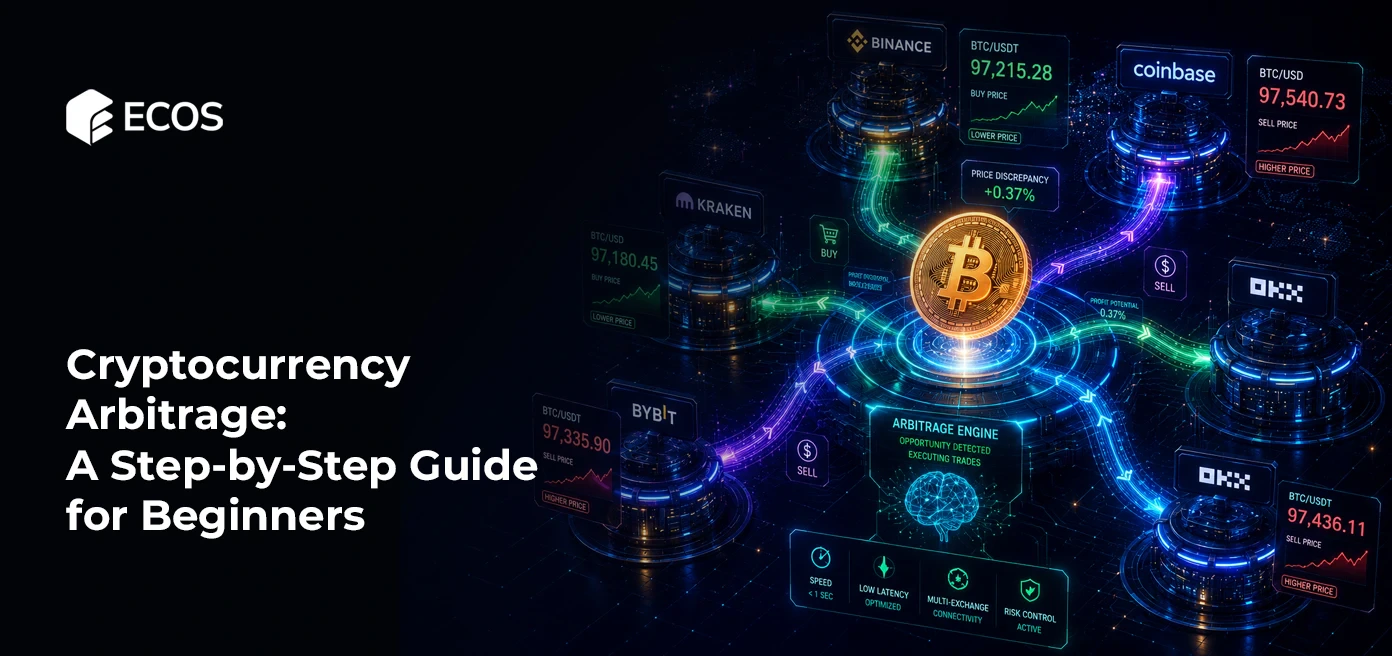
Cryptocurrency Arbitrage: A Step-by-Step Guide for Beginners
Introduction In November 2022, during the FTX collapse, Bitcoin was briefly trading at a $400 premium on Coinbase compared to Binance. Traders who spotted this crypto arbitrage opportunity, executed quickly, and got o...