
Custodial and Non-Custodial Wallets Explained
Introduction
You don’t actually store cryptocurrency. That trips people up when they first learn it. What a crypto wallet stores — and what you’re actually protecting — is the private key that proves ownership of coins on a blockchain. Lose that key, and the coins are gone. Someone else gets it, and the coins are theirs. This is why the question of who holds your private key matters more than almost anything else in crypto security. Two fundamentally different models answer that question. Custodial wallets hand key management to a third party — usually an exchange. Non-custodial wallets put that responsibility on you. In the debate of custodial vs non custodial wallet, neither is objectively better. Each makes sense for different people in different situations.
What Is a Crypto Wallet?
A crypto wallet is software (or hardware) that manages private keys. The private key is a long string of characters that cryptographically proves you control a specific address on the blockchain. When you send a transaction, your wallet signs it with that key. The network verifies the signature. Without it, you can’t move the funds.
The wallet doesn’t hold coins the way a bank account holds dollars. The coins live on the blockchain. The wallet holds the proof of ownership. It’s closer to a password manager for blockchain addresses than to an actual vault.
This distinction matters because it changes the risk calculation. If your bank loses your money, they owe it back. If the software holding your private key disappears — or if you forget your password — there’s no appeals process. The blockchain doesn’t know your name.
What Is a Custodial Wallet?
A custodial wallet is one where a third party holds your private keys on your behalf. When you create an account on Coinbase, Binance, or Kraken and leave funds there, you’re using a custodial wallet. The exchange holds the keys. You hold an account balance in their system — which represents their promise to pay you the equivalent in crypto when you ask for it.
This is how most people start with crypto. The user experience is familiar: sign up with an email, set a password, enable two-factor authentication. If you forget your password, customer support can help. The complexity of key management is invisible.
Major custodial platforms include: Coinbase, Binance, Kraken, Gemini, and OKX — all of which manage keys for hundreds of millions of users collectively. Some also offer their own non-custodial wallet products alongside the exchange, which adds useful context: even these companies know that custody isn’t right for every situation.
What Is a Non-Custodial Wallet?
A non-custodial wallet puts private key control entirely in your hands. You generate a seed phrase (usually 12 or 24 words) when setting up the wallet. That phrase is the master key. Anyone who has it controls the wallet. No company, no server, no support team can unlock it for you or reset it.
Non-custodial wallet meaning, stripped down: you are the bank. The wallet software (MetaMask, Trust Wallet, Exodus for software; Ledger, Trezor for hardware) helps you interact with the blockchain, but it doesn’t know your private key and can’t recover it.
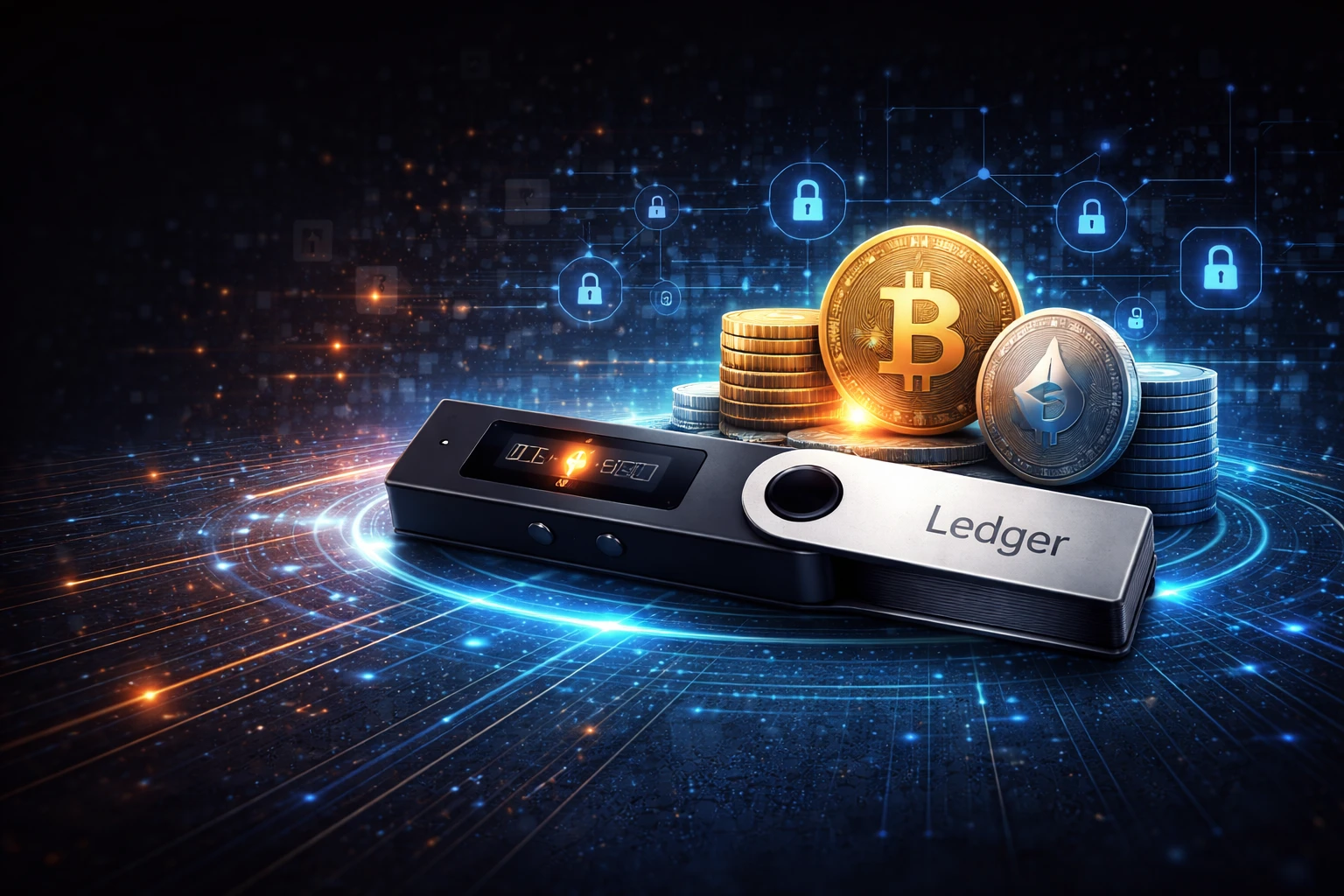
Hardware wallets take this further. They store private keys on a physical device that never connects to the internet directly. Transaction signing happens on the device. A compromised computer can’t extract the key because it never touches the computer. Ledger and Trezor are the two dominant hardware wallet manufacturers.
The seed phrase is everything. Write it down on paper, store it somewhere physically secure, and never take a photo of it or type it into anything connected to the internet. This isn’t overcaution — seed phrase theft is one of the most common methods of crypto loss.

Custodial vs Non-Custodial Wallets: Key Differences
Control Over Private Keys
With a custodial wallet, the platform holds the private key. Your login credentials give you access to their interface, but the underlying blockchain address is controlled by the exchange’s infrastructure. If the exchange decides to freeze withdrawals — as FTX did in November 2022, days before its collapse — you can’t move your funds regardless of what your account balance shows.
With a non-custodial wallet, the private key never leaves your control. No one can freeze your wallet, block withdrawals, or prevent you from moving funds. The tradeoff is that no one can help you either.
Security Responsibility
Custodial platforms invest heavily in security infrastructure: cold storage, multi-sig, insurance programs, regulatory compliance. For most users, a well-run custodial exchange provides better day-to-day security than they’d achieve managing keys themselves. The risk isn’t individual — it’s concentrated. A successful hack or insolvency event affects everyone on the platform simultaneously.
Non-custodial wallets distribute security responsibility to each individual user. Your security is as good as your seed phrase storage. Most large-scale crypto thefts from individuals involve phishing — fake wallet websites, fake support, or malware that captures the seed phrase when it’s entered.
Account Recovery Options
Custodial wallet: forgot your password? Email reset. Lost access to your 2FA? Customer support can verify your identity and restore access. This is exactly how online banking works.
Non-custodial wallet: forgot your password? Use your seed phrase to restore the wallet in any compatible app. Lost your seed phrase? The funds are permanently inaccessible. No exceptions. Chainalysis estimated that roughly 3.7 million Bitcoin — worth over $350 billion at 2024 prices — are permanently lost, many due to lost keys.
Advantages of Custodial Wallets
- Password recovery — standard account recovery through email or ID verification. No seed phrase required.
- Exchange integration — funds are instantly available for trading without transfer delays or gas fees.
- No technical setup — buying and storing crypto on an exchange requires no understanding of keys, addresses, or seed phrases.
- Institutional security — major exchanges hold most user funds in cold storage with multi-signature authorization and often carry insurance.
- Fiat on/off ramp — custodial platforms handle the bank transfer integration that makes buying with dollars or euros straightforward.
Advantages of Non-Custodial Wallets
- No third-party risk — your funds don’t depend on a company’s solvency, security practices, or decisions. FTX had millions of users who lost access to their funds overnight; non-custodial users of that platform were unaffected.
- Full blockchain access — non-custodial wallets connect directly to DeFi protocols, NFT marketplaces, and decentralized exchanges. Custodial wallets typically don’t.
- No KYC requirements — most non-custodial wallets don’t require identity verification. You can use them with just an internet connection.
- Censorship resistance — no entity can freeze a non-custodial wallet or block transactions (outside of specific sanctioned addresses at the network level).
- Privacy — non-custodial wallets don’t link your transactions to your identity unless you voluntarily connect them to an account.
Risks of Custodial Wallets
Exchange failure is the most acute risk. FTX collapsed in November 2022 with an $8 billion shortfall. Celsius filed for bankruptcy in July 2022. BlockFi in November 2022. Voyager Digital in July 2022. In each case, users with funds on the platform lost access — sometimes permanently, sometimes partially recovered through bankruptcy proceedings.
Regulatory freezes are another real possibility. In 2022, Canadian authorities ordered crypto exchanges to freeze accounts linked to the truckers’ convoy protests. Users on compliant exchanges had no ability to access their funds during that period.
Platform hacks remain a risk despite improved security. Bitfinex lost 120,000 BTC in a 2016 hack. Bybit lost approximately $1.5 billion in February 2025 — the largest crypto exchange hack on record. Users were eventually made whole in that case, but there’s no guarantee.
Risks of Non-Custodial Wallets
Seed phrase loss is permanent. There’s no backup, no support line, no recovery path. Write it down wrong, lose the paper, or forget where you stored it — and the funds are gone. Permanently.
Phishing attacks specifically target non-custodial wallet users. Fake MetaMask websites, fake hardware wallet setup guides, fake “wallet support” on social media — all designed to capture seed phrases. The sophistication of these attacks has increased substantially.
User error in transactions. Sending to the wrong address, approving a malicious smart contract, or connecting to a compromised DeFi protocol can drain a non-custodial wallet without any recourse. The blockchain doesn’t reverse transactions.
Hardware wallet damage or loss is recoverable — if you have the seed phrase. Without it, the device is the only copy of the key, and physical destruction or loss means permanent loss of funds.
Custodial vs Non-Custodial Wallet Comparison Table
| Feature | Custodial Wallet | Non-Custodial Wallet |
| Private key control | Exchange/platform | You |
| Recovery options | Email/ID reset | Seed phrase only |
| Account access | Username + password | Seed phrase or device |
| Security responsibility | Platform | User |
| Risk of platform failure | Yes | No |
| KYC required | Usually yes | Usually no |
| Best for | Beginners, active traders | Long-term holders, DeFi users |
| Examples | Coinbase, Binance, Kraken | MetaMask, Ledger, Trust Wallet |
Conclusion
Custodial wallets offer convenience and recovery but carry platform risk. Non-custodial wallets provide total control and DeFi access but place all security responsibility on you. Many use both: exchanges for trading and personal wallets for long-term storage and sovereignty.
More Questions
Custodial wallets are managed by third parties who hold your keys. Non-custodial wallets give you direct key control. The former offers easy recovery; the latter eliminates counterparty risk.
A wallet where only you hold the private keys locally. It uses a seed phrase for recovery and connects directly to dApps. Examples: MetaMask, Trust Wallet, Ledger.
It means no company can freeze your funds or lose them in bankruptcy. However, losing your seed phrase means permanent loss of access.
They stop platform-level risks (hacks, insolvency) but increase personal risks (phishing, lost phrases). Safety depends on your ability to manage your own keys.
Custodial. Familiar logins and account recovery prevent irreversible mistakes common with seed phrase mismanagement.
Yes. It is common to use exchanges for buying/trading and non-custodial hardware wallets for secure, long-term savings.
Published Articles
 Popular
Bitcoin Pizza Guy: The Story Behind the First Real Bitcoin Purchase
Introduction The history of Bitcoin is full of dramatic ups and downs,...
How Bitcoin ATMs Work: A Complete Guide to Using Crypto ATMs
Introduction Millions of people around the world use cryptocurrencies today – at...

Best Bitcoin Mining Software of 2025 – Top 7 Tools for Maximum Profitability
Bitcoin mining has long since moved beyond being a hobby for enthusiasts...

Services You Can Pay for with Bitcoin
Where Bitcoin Is Accepted Today Today, Bitcoin (BTC) can be used to...

What You Can Buy With Bitcoin in 2025
Introduction Over the years, Bitcoin has evolved from an experimental digital currency...
 Popular
Bitcoin & Crypto Options Trading: A Complete Guide for Beginners and Experts
Bitcoin options trading has grown rapidly in recent years as the cryptocurrency...