
What Is Render Crypto? A Guide to RNDR/RENDER
Introduction
A detailed animation can keep a workstation busy long after the artist has finished editing. Render connects that kind of work with GPU capacity supplied by other participants. Its token history needs a little care: RNDR is the legacy Ethereum token, while RENDER is the Solana token supported by the Render Foundation. They belong to the same project, but the blockchain, wallet requirements, and network utility differ. Those differences matter before you buy, transfer, or upgrade either asset.
What Is Render Crypto?
Render crypto refers to the tokens associated with the Render Network, a distributed platform for GPU rendering and computing. GPU providers contribute processing capacity; creators submit work that needs it. The supported network token is RENDER on Solana. The earlier RNDR token remains a separate asset on Ethereum. Understanding Render crypto therefore requires identifying both the service and the token version shown in a wallet or exchange account.
What Is the Render Network?
The Render Network connects creative workloads with distributed graphics processors. Rendering turns a digital scene into finished images by calculating lighting, materials, and other visual details. Much of that calculation can be demanding even when a scene looks simple on screen. The network gives creators access to participating GPUs without requiring them to own all the hardware used for a project.
Who Created Render and What Problem Does It Solve?
OTOY, led by founder Jules Urbach, founded Render in 2017. The network became publicly available in 2020. Its starting problem was practical: artists could need more GPU capacity than they could afford to buy, while other owners had idle hardware. OTOY remains an ecosystem partner. The Render Network Foundation, established in 2023, supports stewardship and governance, with responsibilities distinct from operating every service built around the network.
RNDR vs. RENDER: What Is the Difference?
The Original RNDR Token on Ethereum
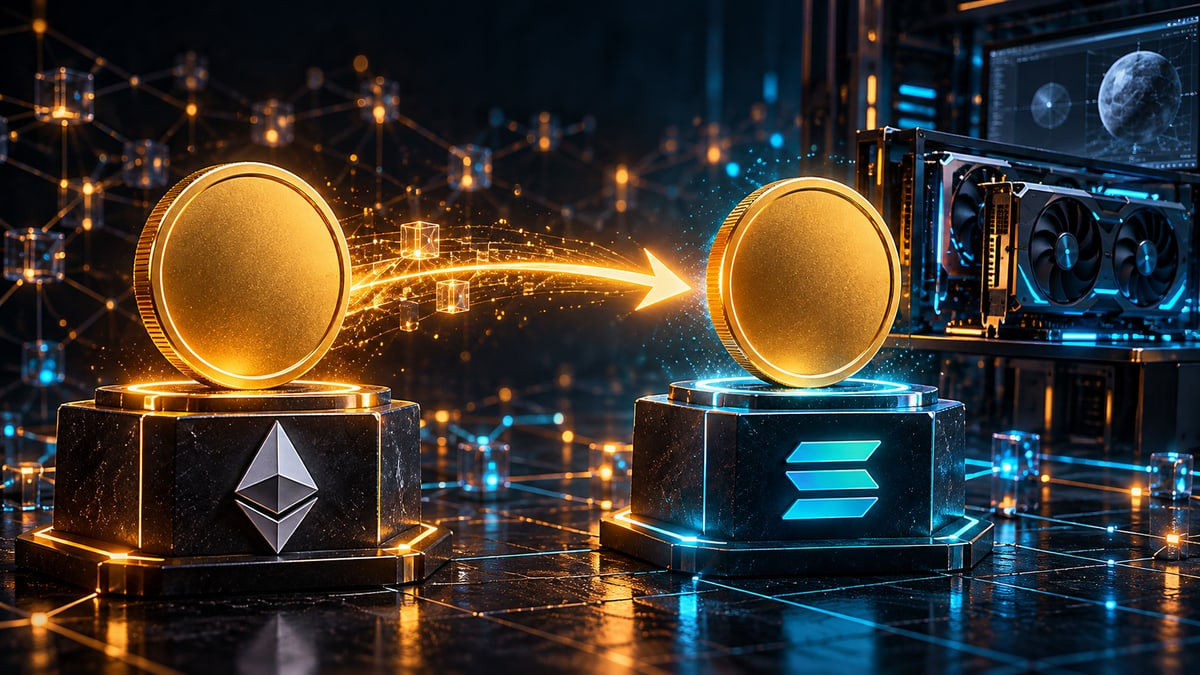
RNDR was issued as an ERC-20 token on Ethereum and served the earlier network. It can still exist in a wallet even though the Foundation no longer maintains it for current network use. A balance with the old ticker has not necessarily been upgraded. The project also had a Polygon version, now deprecated, with its own upgrade route. Check the chain before interpreting any old RNDR balance.
The RENDER Token on Solana
RENDER is an SPL token on Solana, introduced following community approval of the move. The Foundation's support, current burn-and-mint system, and token governance are centered on this version. Solana transactions need SOL for network fees. An Ethereum address holding RNDR and a Solana account holding RENDER are different destinations, even when a wallet application displays both in one interface.
What the Token Migration Means for Holders
The official upgrade converts eligible RNDR to RENDER at a 1:1 token ratio. The upgrade is one-way, and the legacy tokens are burned through the process. It changes the token count one-for-one; it does not fix a future market price. Holders using an exchange should read that venue's instructions, because automatic conversions and supported deposit networks are exchange-specific. Self-custody holders need the official upgrade process and a suitable Solana destination.
How Does the Render Network Work?
Creators, GPU Providers, and Rendering Jobs
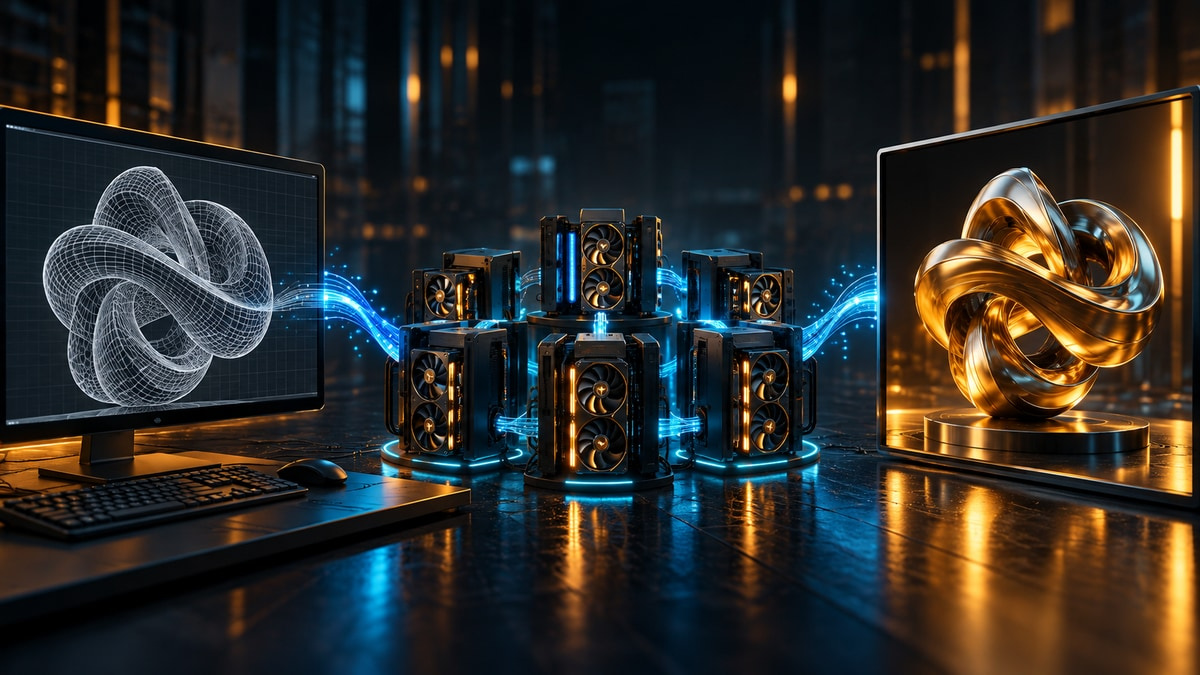
A creator prepares a supported project, checks the job settings, and submits it through the relevant application or interface. The workflow distributes processing to participating nodes. The creator can review watermarked previews and download final frames after completion. For an animation, several frames can require substantial work. GPU operators supply the machines that perform those calculations, subject to the network's requirements and job allocation.
Owning a graphics card does not establish what an operator will earn. The available workload, hardware eligibility, and applicable reward rules all matter. Electricity and equipment costs continue even when a headline token reward looks attractive. An operator considering participation needs to examine the current onboarding conditions and calculate costs for their own machine. A token investor does not receive those operator rewards merely by holding RENDER.
Off-Chain Processing and Blockchain Settlement
The GPUs perform rendering off-chain. Solana does not calculate every pixel of an animation. Blockchain transactions support the token economics and settlement associated with the work, while supported software handles submission, distribution, and delivery. This separation explains how the service can use a blockchain without turning graphics computation into ordinary blockchain transactions. It also leaves dependencies on applications, network coordination, and the reliability of participating hardware.
What Is the Render Token Used For?
Render Credits and Payments for GPU Work
Render crypto utility includes funding work through the network's credit system. Official documentation describes burning RENDER for USD-valued Render Credits, which are nontransferable work credits. Its example converts $5 worth of RENDER into five credits. The amount of RENDER required depends on its price at conversion. Five credits should not be confused with five freely tradable tokens or five hours of GPU processing.
A creator can assess an estimated job cost in credits before committing funds. For example, a hypothetical $20 conversion would require 10 tokens at $2 each or five at $4, ignoring fees. The spending amount remains $20 in either case. A separate service estimate determines what work that budget purchases. Payment options can vary by interface, so review the supported workflow instead of assuming every application has identical requirements.
Burn-and-Mint Equilibrium and Node Rewards
Under Burn-and-Mint Equilibrium, or BME, service-related token burning and operator rewards are accounted for separately. Operators receive RENDER through emissions and allocations governed by network rules. The reward schedule has been revised through proposals, and allocations can cover completed work or availability under the applicable program. A creator's payment therefore does not simply pass unchanged from their wallet into one operator's wallet.
Burning removes tokens, while emissions add tokens or distribute allocated reserves. Their net effect depends on the actual quantities over the period being measured. High activity does not automatically make supply shrink, and lower supply would not guarantee a higher market price. When assessing Render crypto tokenomics, compare usage-related burns with rewards and issuance under the current schedule. An old supply figure without its date can conceal later changes.
Community Governance
The community uses Render Network Proposals, or RNPs, to consider changes such as emissions, integrations, and network development. Current token voting uses RENDER on Solana; Ethereum RNDR voting has been deprecated. Voting eligibility is determined from token holdings at a specified snapshot. The Foundation's voting documentation describes participation through an onchain self-custody wallet. An approved proposal still needs implementation, so distinguish a vote from a feature already available.
Render Network Use Cases
3D Rendering, Animation, and Visual Effects
An artist may need final frames for an animation, an agency may need product imagery, or a studio may be producing visual effects. Architectural scenes also require lighting and material calculations. These workloads share a need for graphics processing that can exceed one workstation's capacity. Supported tools matter: a creator should confirm application compatibility and prepare the scene correctly before assuming it can be sent to any participating GPU.
AI Tools and GPU Computing
The ecosystem also includes AI generation tools and broader compute initiatives. The Foundation describes workloads such as inference, fine-tuning, and data processing. These services have their own interfaces and requirements. A working rendering service does not mean every proposed computing integration is live. For Render crypto research, separate demonstrated application access from plans that still need development. Check the supported task and its payment process rather than relying on the broad label 'AI compute.'
How to Choose a Wallet for RNDR or RENDER
Matching Your Wallet to the Token’s Blockchain
An RNDR wallet for the Ethereum token needs ERC-20 support and ETH for transactions. A wallet for RENDER needs Solana SPL support and SOL for fees. Some applications cover both networks, but their accounts remain separate. Hardware-wallet users should verify the device's current Solana support and the software connection they intend to use. Keep recovery phrases offline and never enter them into a migration page.
Checking Token Addresses and Transfer Networks
Verify the Ethereum contract or Solana mint through current official project documentation. A ticker and icon are easy to copy. Before withdrawing from an exchange, match its selected transfer network with the receiving account and confirm that it supports that token. A small test transfer can reveal a wrong setup before a larger amount is sent. It does not make a fraudulent token or malicious approval safe.
Migration needs additional attention to the destination wallet. Connecting several accounts can leave the wrong Solana address selected. Read the address shown by the upgrade interface and review the approvals before signing. Sending RNDR directly to its token contract is not a migration method and may make the funds unrecoverable. Keep transaction records if the upgrade is delayed; use official support channels for assistance.
Benefits and Risks of Render Crypto
For creators, access to outside GPU capacity can reduce the need to buy machines for occasional heavy projects. Providers have a way to put suitable idle hardware to work. Usage-related credits and burns make parts of the service economy observable, while governance gives holders a route to participate in changes. The benefit to an individual user still depends on the workload, service compatibility, price, and performance they actually receive.
A Render crypto investment exposes the holder to token volatility as well as execution risk across the project. Demand for graphics and computing is broader than demand captured by one network. Competing services may win customers; supported applications can change. Operators face hardware costs and uncertain utilization. Holders also face emissions, exchange liquidity, and custody risks. A migration error adds a separate operational loss that has nothing to do with the quality of the rendering service.
Key Takeaways
RNDR on Ethereum is the legacy token; supported network use centers on RENDER on Solana.
GPU work happens off-chain, with blockchain-based token accounting and settlement.
Render Credits fund work and are different from transferable RENDER tokens.
BME combines service-related burns with separately determined network rewards.
Match token identity, blockchain, and destination account before transferring or upgrading.
Expert Insight
The Render Network Knowledge Base describes Render Credits as 'non-fungible and non-transferrable.' That short qualification is useful: a credit represents access to work, while RENDER is the market-traded asset used in the token economy. Reading the credit rules alongside the current emissions schedule gives a clearer view of utility than treating every visible token or credit balance as the same thing.
Conclusion
Render connects GPU-intensive work with distributed providers and uses RENDER to support its service economy. Start by identifying which token and blockchain you hold. Then examine usable applications, credit spending, and the reward schedule separately. That keeps an older RNDR balance, a creator's job budget, and an operator's earnings from becoming one misleading investment story.
FAQ
- What is RNDR crypto today?
RNDR is the legacy Ethereum token. The Foundation focuses current network support on RENDER, the Solana SPL token.
- Is RNDR to RENDER migration automatic?
Exchange treatment varies. Self-custody holders use the official upgrade process; holding RNDR in a wallet does not automatically convert it.
- What is the upgrade ratio?
Eligible RNDR upgrades to RENDER at 1:1. The official upgrade is one-way and does not guarantee equal future market prices.
- Does holding RENDER earn GPU rewards?
Holding alone does not earn operator rewards. Those follow qualifying network participation and the applicable allocation rules.
- Are Render Credits tradable tokens?
Official documentation describes them as nontransferable work credits. They are distinct from the RENDER tokens traded on the market.
Published Articles
What Is Quant (QNT)? The Cryptocurrency Explained
Discover how Overledger works, what the QNT token is used for, and what to check when following its price, buying in Germany, or choosing a wallet.
Quant network (QNT) explained: features, use cases, and how it works
Key Takeaways Introduction What Is Quant Network? How Quant Network works What is qnt crypto? Quant network use cases Quant vs other interoperability solutions Staking qnt and network participation Security and govern...
Best Crypto Wallets: Security, Features, and Expert Recommendations
Compare the most secure crypto wallets for mobile and hardware use. Review key protection, recovery, security audits, and risks before choosing a wallet.
What Is Aave (AAVE)? The Protocol and Token Explained
Learn what Aave coin means, how lending and borrowing work, the roles of AAVE, aTokens and GHO, and what to check before buying AAVE in Germany.
Bitcoin vs XRP Explained: Technology, Speed, and Investment Comparison
Compare XRP vs Bitcoin by technology, transaction speed, fees, supply, decentralization, and investment risks. Understand how Ripple differs from XRP.
Hardware Wallet Explained: How Cold Storage Protects Cryptocurrency
Learn how a hardware crypto wallet protects private keys, how to set one up, and what to check when backing it up, signing transactions, or recovering access.