
What Is Slippage in Crypto? Understanding Its Causes and How to Minimize Its Impact
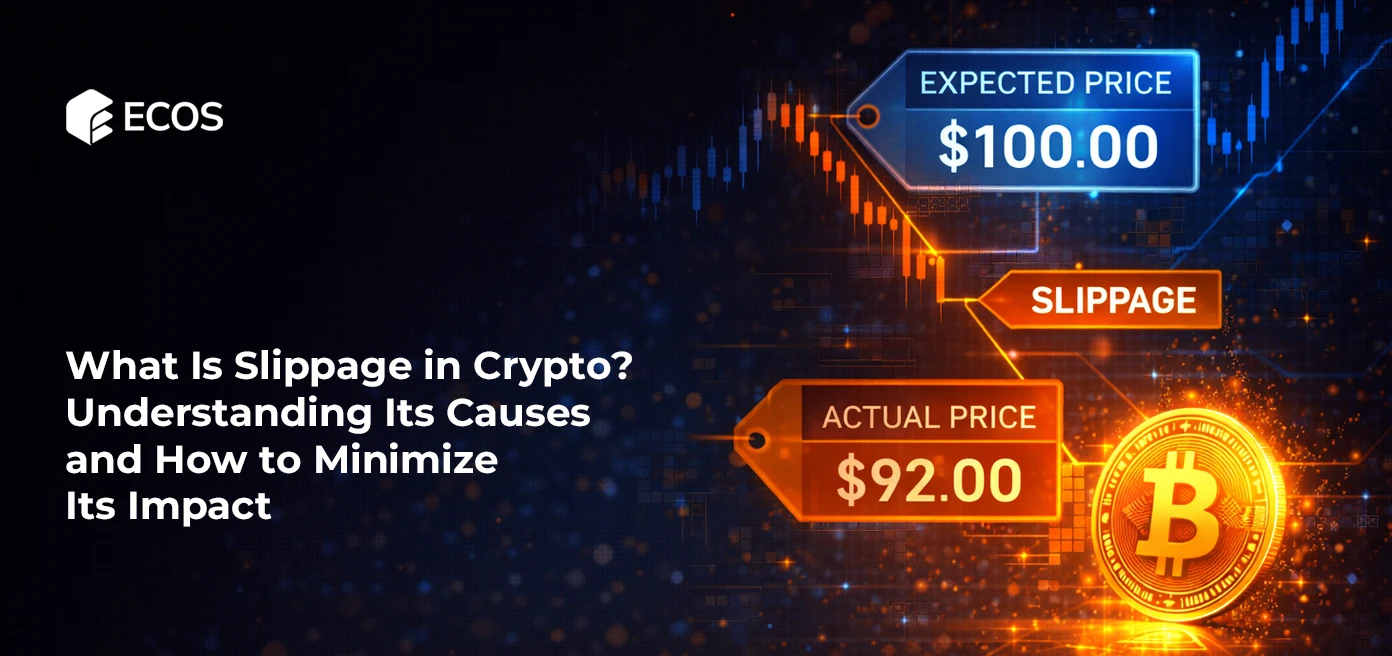
Key Aspects of Slippage
Crypto slippage is the difference between the price a trader expects to pay or receive. It is also the price at which a trade actually executes.
It happens in milliseconds, often without any warning, and it affects every type of market participant. This includes retail buyers swapping tokens on a DEX and institutional desks moving large positions.
A 2024 incident made the cost of slippage impossible to ignore. A trader attempting a large memecoin swap lost over $1 million to slippage in a single transaction. The position was so large relative to available liquidity that executing it moved the market dramatically against them.
That trader’s loss became widely discussed because it illustrated something most retail participants underestimate. Slippage isn’t a minor rounding error; at scale, it becomes the dominant cost of a trade.
Understanding what slippage means in crypto is practical knowledge for anyone trading digital assets seriously. This includes learning how it forms, what amplifies it, and how to limit it.
How Slippage Happens in Crypto Trading
Every trade requires a counterparty. On centralized exchanges, an order book matches buyers and sellers at agreed prices. On decentralized exchanges, an automated market maker (AMM) algorithm prices assets based on the ratio of tokens in a liquidity pool. In both cases, the price available at the moment an order is submitted can differ from the price when the order is filled.
The gap opens for two reasons. First, market conditions change between order submission and execution — other trades happen, prices shift, the liquidity landscape reorganizes. Second, a single order large enough to consume multiple price levels moves through the order book or depletes a liquidity pool, with each successive unit of the order executing at a slightly worse price than the last.
On a DEX using an AMM model, this price impact is mathematically precise. The constant-product formula (x * y = k) means that buying a token reduces the pool’s supply of it and raises its price with every unit purchased. A small trade barely registers. A trade sized at 5% or more of pool liquidity can shift the execution price by several percent from the quoted rate.
Factors Contributing to Slippage
Several variables determine how much slippage a given trade experiences.
- Liquidity depth — shallow pools or thin order books mean fewer counterparties exist at any given price. Each trade consumes a larger share of available liquidity, pushing price further.
- Trade size — larger orders relative to available liquidity cause more price impact. The memecoin trader who lost over a million dollars executed a position that dwarfed the pool’s liquidity, making extreme slippage structurally inevitable.
- Market volatility — fast-moving markets widen spreads and make prices unstable between order placement and fill. Slippage during a sharp Bitcoin sell-off or a token listing event can be multiples of normal conditions.
- Network congestion — on chains like Ethereum, high gas fees and slow confirmation times mean transactions may sit in the mempool while prices move. A trade submitted at one price can confirm minutes later at a substantially different one.
- Slippage tolerance settings — on DEXes, traders set a maximum acceptable slippage. Too tight, and transactions fail. Too loose, and frontrunning bots exploit the tolerance to extract value.
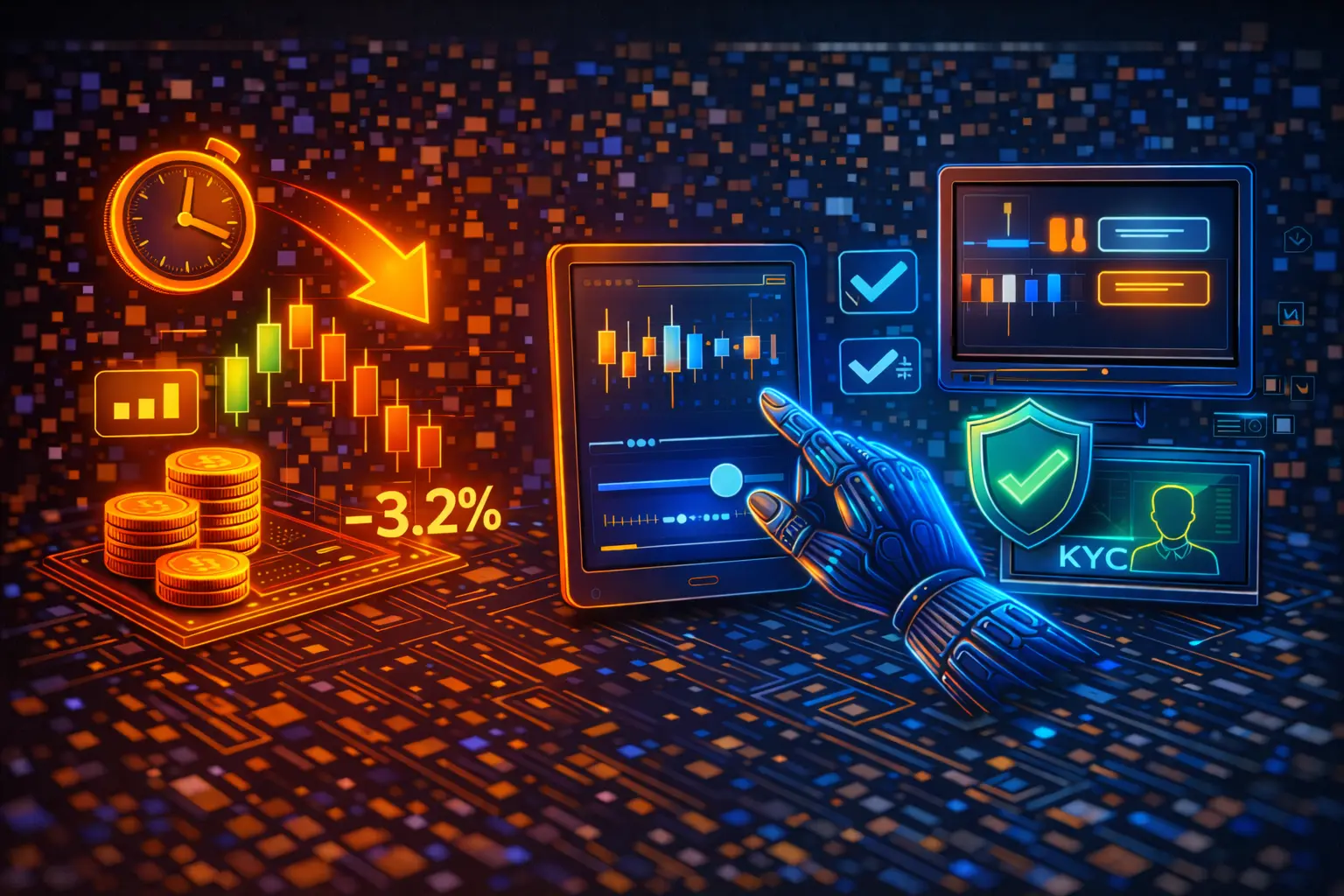
Why Does Slippage Occur in Crypto Transactions? Details
Key Reasons
At its root, crypto slippage occurs because markets are continuous and dynamic while order execution takes time. The quoted price is a snapshot; the filled price is the reality at a specific moment of execution. When those two moments differ — by milliseconds on a CEX, or by a full block confirmation on a DEX — slippage fills the gap.
Smart contract execution introduces a layer that traditional finance doesn’t have. A DEX swap is a transaction that gets broadcast to the network, queued, and eventually included in a block by a validator or miner. Everything that happens to the liquidity pool between broadcast and inclusion affects the fill price. Other swaps, arbitrage transactions, and liquidity additions or removals all compete in the same mempool.
Liquidity and Volatility
These two factors interact. Low liquidity amplifies the effect of volatility: in a shallow pool, even modest buying pressure pushes price sharply. High volatility in a deep market is more manageable — the depth absorbs directional flow without dramatic price shifts.
Memecoins sit at the worst intersection of both. They typically launch with small liquidity pools and attract speculative trading that can move volume multiples of that pool in hours. The trader million slippage memecoin scenario isn’t exceptional — it’s the predictable outcome of institutional-scale positioning in a retail-scale liquidity environment.
For major pairs like BTC/USDT or ETH/USDC on top-tier venues, slippage on reasonable trade sizes is minimal. For low-cap tokens or newly launched assets, slippage of 5–15% on trades of meaningful size is common, and slippage of 30–50% or more is possible when liquidity is thin and volatility is high.
Order Types and Slippage
Market orders are the primary source of slippage. By design, a market order says: execute immediately at whatever price is available. In liquid markets, that price is close to the quoted price. In illiquid or fast-moving markets, it can be far from it.
Limit orders eliminate slippage on the execution side — they specify the maximum price to buy or minimum price to sell and won’t fill outside that range. The tradeoff is that limit orders may not fill at all if the market never reaches the specified price.
Stop-market orders combine elements of both: they trigger automatically when price reaches a level, then execute as market orders. The trigger gives control over entry timing, but the market execution means the fill price can still differ from the trigger price — sometimes significantly in fast markets.
Impact of High-Speed Trading
In crypto, high-frequency traders and MEV (Maximal Extractable Value) bots actively monitor mempools for pending transactions. When they detect a large pending swap, they can insert their own transactions before and after it — a practice called sandwiching. The bot buys before the victim’s trade (pushing price up), lets the victim buy at the elevated price, then sells immediately after (capturing the profit). The victim trader loses to slippage that was deliberately manufactured.
This form of slippage isn’t accidental. It’s extracted value. On Ethereum, billions of dollars in MEV have been extracted from regular users since the practice became widespread. Private transaction relays and MEV-resistant protocols exist to mitigate this, but they require deliberate configuration on the trader’s part.
How to Minimize Slippage in Crypto Trading
No method eliminates slippage entirely, but several approaches reduce it meaningfully.
- Use limit orders where possible — limit orders specify your acceptable price and don’t fill outside it. On CEXes, this is the most direct way to avoid unexpected slippage.
- Trade during high-liquidity windows — major pairs have deeper liquidity during peak trading hours (US and European market overlaps). Thin weekend or off-hours markets amplify slippage.
- Split large orders — breaking a large trade into smaller tranches over time reduces the price impact each individual fill has on the market. This is standard practice for institutional execution.
- Choose high-liquidity venues — for DEX trading, comparing liquidity across pools and routing through aggregators (like 1inch or Paraswap) finds the best available price across multiple pools simultaneously.
- Set tight-but-realistic slippage tolerance — on AMM-based DEXes, setting slippage tolerance too high invites MEV exploitation. Setting it too low causes failed transactions and wasted gas. For major pairs, 0.1–0.5% is typical. For volatile or illiquid tokens, 1–3% may be necessary.
- Use private transaction services — Flashbots Protect and similar MEV-resistant relays submit transactions directly to validators, bypassing the public mempool and reducing sandwich attack exposure.
- Monitor on-chain conditions — network congestion affects how long transactions sit pending. Submitting transactions during low-congestion periods reduces the window for price movement before confirmation.
The Impact of Slippage on Crypto Purchases and Investments
Large vs. Small Trades
For small retail trades — buying $100–$500 of a major token — slippage is typically negligible. On liquid pairs, it registers in fractions of a percent and has minimal effect on investment outcome.
The calculus changes at scale. A $100,000 order on a mid-cap token can move the market enough to add 1–2% to the effective purchase price. A $1 million order on a low-liquidity memecoin can move it by 10–50%. The trader million to slippage story that circulated widely in 2024 involved a position sized so far beyond the pool’s depth that the trade itself became the dominant price driver during execution.
Institutional traders account for this with execution algorithms — TWAP (time-weighted average price) and VWAP (volume-weighted average price) strategies break large orders into smaller pieces timed to minimize market impact. Retail traders rarely have access to these tools directly, but the same principle applies manually: patience and smaller increments reduce cost.
Financial Cost of Slippage
Slippage is a real cost with no offsetting benefit. Unlike trading fees — which fund exchange operations or liquidity providers — slippage value goes to whoever was on the other side of the trade at the better price. In MEV scenarios, it flows directly to bots.
Over time, consistent slippage erodes returns in ways that aren’t always visible in portfolio tracking tools. A strategy that appears profitable on paper may underperform if its execution costs are higher than modeled. Active traders who place frequent market orders in illiquid conditions can lose a meaningful percentage of returns to accumulated slippage.
Transaction cost analysis (TCA) — standard practice in institutional equity trading — accounts explicitly for slippage as an execution cost. Crypto traders who apply the same discipline to their own activity often discover their actual cost per trade is meaningfully higher than the quoted fee.
Why Understanding Slippage Matters
Slippage shapes real outcomes. A trader who buys a token expecting 20% upside and pays 8% slippage on entry and exit has halved their effective return before any market movement. A strategy that backtesters on historical closing prices but executes with real slippage in a live illiquid market will consistently underperform its modeled expectations.
Understanding crypto slippage also informs token selection. A token trading on a single low-liquidity DEX pool carries execution risk that a token with deep order books on multiple venues does not. That risk should factor into position sizing and expected return calculations — not just price and momentum.
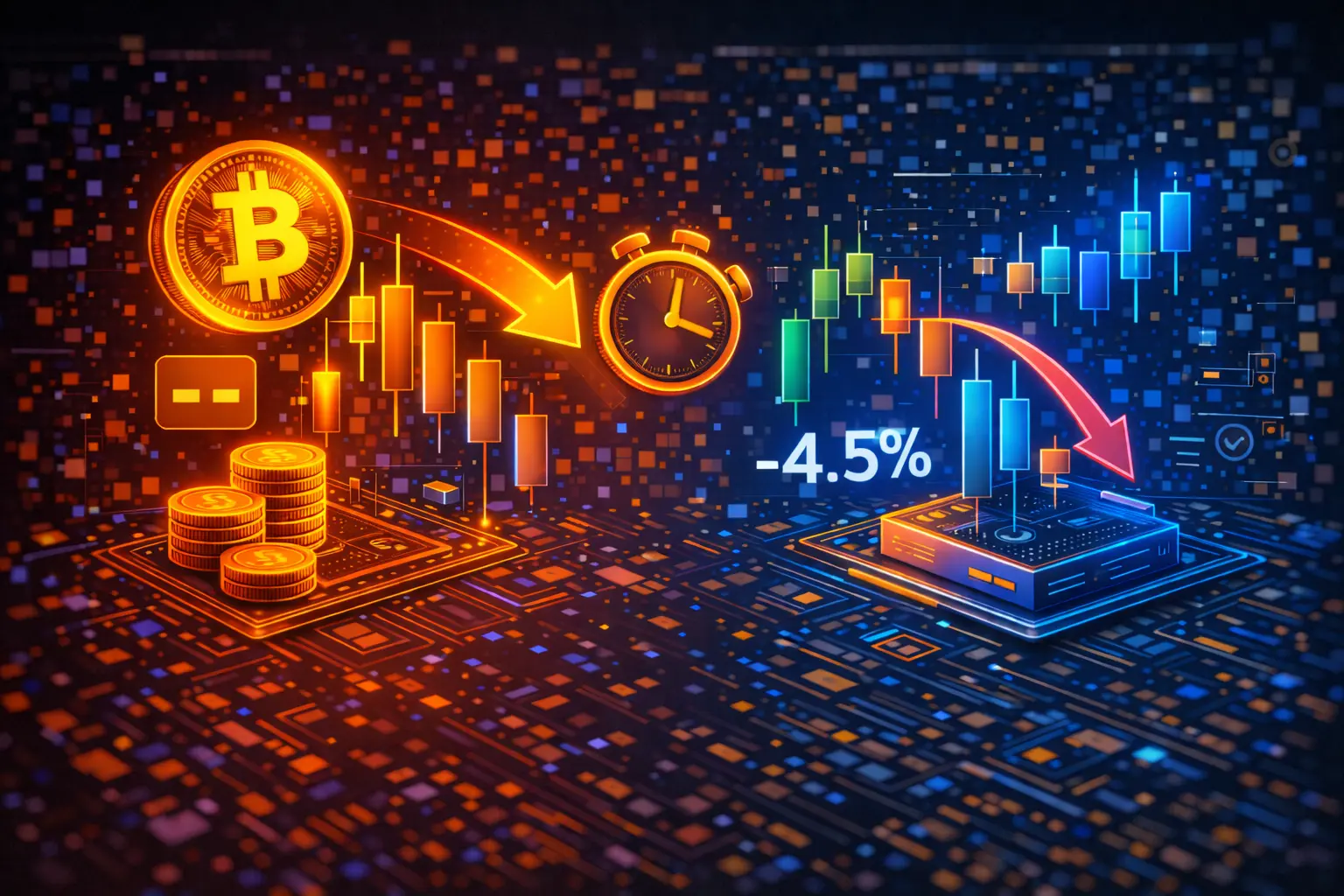
Can Slippage Be Completely Avoided in Crypto Trading?
No — and this is worth stating plainly. Some degree of slippage is structural in any market where prices move continuously and execution takes time. Even on highly liquid CEX pairs with tight spreads, the price between order submission and fill can differ by a small amount.
What can be managed: the magnitude of slippage. Using limit orders, choosing liquid venues, sizing positions relative to available liquidity, trading during active market hours, and avoiding MEV-exposed transactions on public mempools all bring slippage closer to the irreducible minimum.
What cannot be eliminated: price movement between submission and execution. This is inherent to how markets work. The goal isn’t zero slippage — it’s slippage small enough that it doesn’t materially affect trade outcomes.
Traders who accept this reality and plan around it — rather than expecting quoted prices to be guaranteed fill prices — will have more accurate cost models and fewer unpleasant surprises.
Conclusion: Understanding and Managing Slippage in Crypto
Crypto slippage sits at the intersection of market microstructure, liquidity depth, and execution mechanics. It’s not a bug in the system — it’s a feature of how continuous markets handle the mismatch between order flow and available counterparties.
The trader who lost over a million dollars to slippage on a memecoin trade didn’t encounter a glitch. They encountered the predictable consequences of trying to execute an order that the market’s liquidity couldn’t absorb without significant price impact. Understanding what does slippage mean in crypto — and modeling it as a real cost — would have either prevented the trade or sized it to a level the market could handle.
For most traders, slippage management comes down to a few practical decisions: use limit orders on CEXes, check liquidity before entering illiquid positions, split large orders, and set realistic slippage tolerances on DEXes. None of these steps are complicated. But consistently applying them is the difference between the quoted price and the price you actually pay.
Crypto Mining with ECOS!
ECOS is a comprehensive crypto investment platform offering cloud mining contracts, a crypto wallet, exchange, and investment portfolios — all in one place. Whether you’re just starting out or looking to diversify beyond trading, ECOS gives you tools to put your capital to work without managing hardware.
Cloud mining with ECOS means earning Bitcoin through remote mining infrastructure with no setup costs, no electricity bills, and no equipment to maintain. Contracts start from accessible entry points, making it straightforward to begin generating mining income alongside your trading activity.
Explore ECOS at ecos.am and see how cloud mining fits into your broader crypto strategy.
Published Articles
 Popular
Bitcoin Pizza Guy: The Story Behind the First Real Bitcoin Purchase
Introduction The history of Bitcoin is full of dramatic ups and downs,...
How Bitcoin ATMs Work: A Complete Guide to Using Crypto ATMs
Introduction Millions of people around the world use cryptocurrencies today – at...

Best Bitcoin Mining Software of 2025 – Top 7 Tools for Maximum Profitability
Bitcoin mining has long since moved beyond being a hobby for enthusiasts...

Services You Can Pay for with Bitcoin
Where Bitcoin Is Accepted Today Today, Bitcoin (BTC) can be used to...

What You Can Buy With Bitcoin in 2025
Introduction Over the years, Bitcoin has evolved from an experimental digital currency...
 Popular
Bitcoin & Crypto Options Trading: A Complete Guide for Beginners and Experts
Bitcoin options trading has grown rapidly in recent years as the cryptocurrency...