
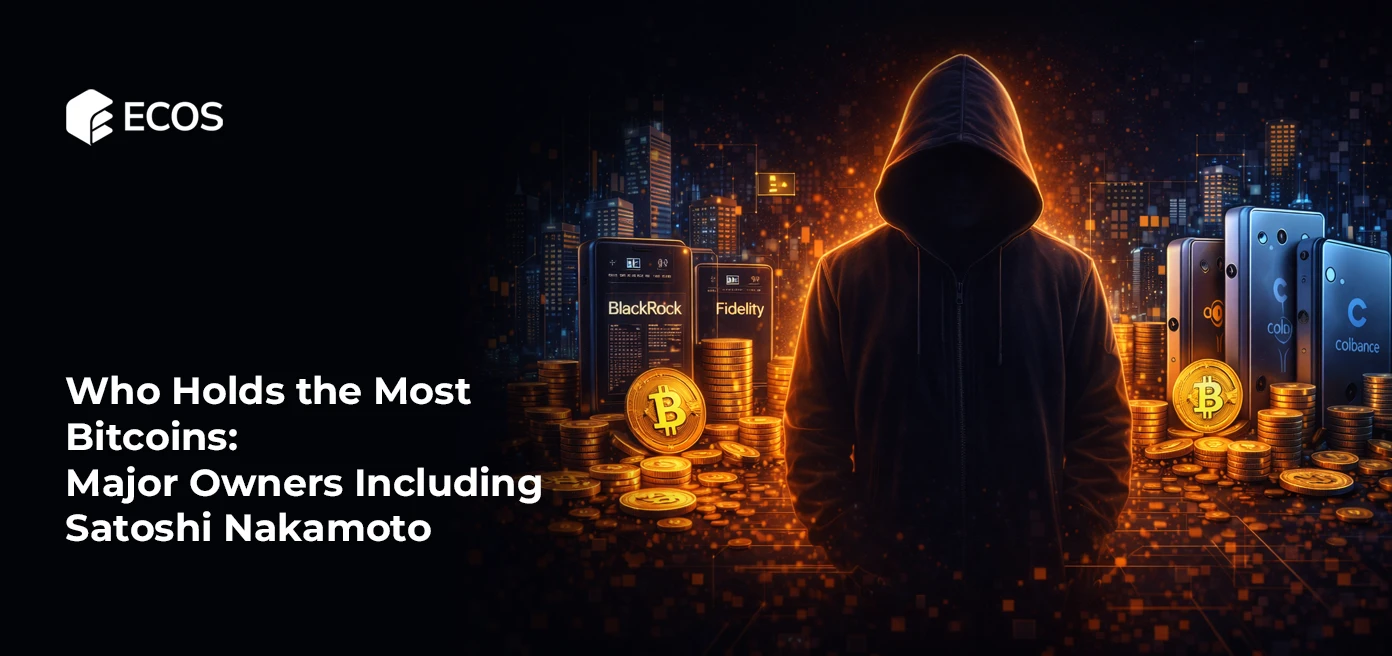
Who Holds the Most Bitcoins: Major Owners Including Satoshi Nakamoto
Introduction
When I first encountered Bitcoin, the concept of transparency fascinated me: anyone can see the transactions, yet no one knows exactly who is behind them. Asking who owns bitcoin isn’t just about satisfying curiosity. It’s about understanding who wields market power. Now that the BTC price is measured in tens of thousands of dollars, bitcoin owners have transformed from niche tech enthusiasts into some of the world’s most significant financial players.
In this article, we will explore who owns the most bitcoin in the world. We will peek into the wallets of the network’s mysterious creator, estimate the holdings of public companies, and figure out how many coins are actually controlled by regular people versus giant corporations.
How Bitcoin Ownership Works
Bitcoin doesn’t sit in a bank vault. If you want to understand who has the most bitcoins, you first need to grasp how ownership works on the blockchain. Ownership is proven by a digital key. Whoever holds the key, holds the coins.
Interestingly, the Bitcoin blockchain is entirely public. We can see wallet addresses and balances, but these addresses are pseudonymous. I can see a wallet holding 100,000 BTC, but it doesn’t have “Property of the US Government” written on it. This is why the largest holders of bitcoin often remain the subject of guesswork and detective work by blockchain analytics firms.
Who Owns the Most Bitcoin in the World?
Overview of the Largest Bitcoin Holders
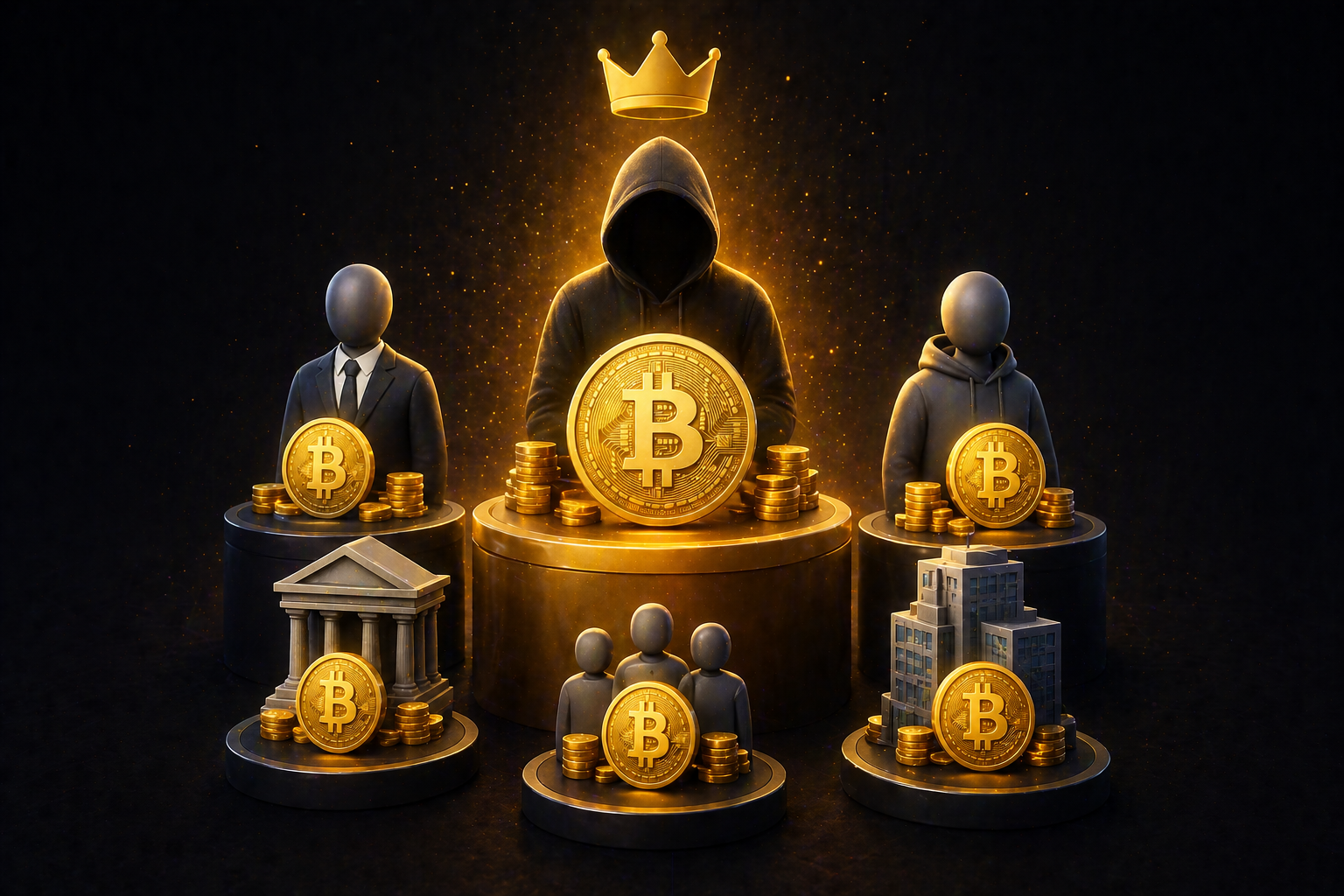
If we were to list who has most bitcoin, the list would comprise four main groups:
- Anonymous creators and early adopters.
- Institutional investors and funds (like MicroStrategy).
- Cryptocurrency exchanges (holding user funds).
- National governments (mostly through seizures).
Individual vs Institutional Ownership
Bitcoin used to be a solo player’s game. Today, that has changed. The largest owners of bitcoin are increasingly not “crypto-anarchists” but Wall Street funds. Institutions bring stability to the market, but their massive capital also means they can influence prices with a single decision to sell.
How Rankings of Bitcoin Owners Are Estimated
Creating an exact ranking is tricky. Analysts use blockchain data and cross-reference it with public company filings. However, it’s worth remembering that many of the biggest bitcoin holders spread their funds across thousands of different addresses for security. Therefore, any figures we discuss are well-founded estimates rather than absolute certainties.
Satoshi Nakamoto and Early Bitcoin Holders
How Much Bitcoin Is Believed to Belong to Satoshi
When we discuss who has the most bitcoins, the name Satoshi Nakamoto is always at the top of the list,. Although the creator’s identity remains a mystery, blockchain analysis allows us to peek into the past. Researchers like Sergio Demian Lerner identified the “Patoshi pattern”—a series of blocks mined by the same entity during the network’s first year.
Estimates suggest that Satoshi Nakamoto owns roughly 1.1 million BTC. At today’s prices, bitcoin owners of this scale rank among the wealthiest individuals on the planet. These coins are spread across hundreds of wallets, and not a single one has been spent in over 15 years.
Dormant Wallets and Unmoved BTC
Satoshi wasn’t alone. In 2009 and 2010, only a handful of enthusiasts were mining Bitcoin. Many of those who owns bitcoin from that era have either lost their private keys or are intentionally holding their coins as “digital gold.”
These addresses are known as “dormant wallets.” The fact that massive amounts of BTC remain unmoved for years creates a natural scarcity in the market. To me, this is one of the most intriguing parts of the story: thousands of people are essentially sitting on digital fortunes, resisting the urge to sell even when prices hit record highs.
Impact of Satoshi’s Holdings on the Market
Knowing who owns the most bitcoin in the world matters to every trader. If Satoshi’s wallets suddenly “woke up,” it could trigger widespread panic. The market would likely view any movement of these coins as a signal of a massive impending dump.
However, most analysts believe these bitcoins will never leave their addresses. They have become a sort of mythical reserve. The fact that the largest holders of bitcoin from the early days remain in the shadows actually helps maintain faith in decentralization—there is no living “king” who can collapse the market on a whim.
Largest Individual Bitcoin Holders
I often wonder how much courage it took to sink millions into a project that many dismissed as a passing fad. The largest holders of bitcoin are individuals whose names are now inseparable from cryptocurrency history. At the top of this list, you’ll frequently find the Winklevoss twins. Following their legal battle with Facebook, Tyler and Cameron funneled a significant portion of their wealth into BTC, at one point owning roughly 1% of the total supply, making them some of the people who has the most bitcoins among private citizens.
Another standout is Tim Draper. In 2014, he bought about 30,000 BTC at a US government auction after the coins were seized from Silk Road. Back then, it looked like a massive gamble, but today Draper is seen as one of those who has most bitcoin, having proven his point over time.
Michael Saylor is also worth mentioning. While he’s closely tied to MicroStrategy, his personal wallets hold impressive amounts as well. If you’re looking for who owns the most bitcoin in the world among famous investors, Saylor is a top candidate. These aren’t just passive hoarders; their conviction in the technology often pushes the rest of the market into action.
Institutional and Corporate Bitcoin Owners
I remember when big corporations wouldn’t touch Bitcoin with a ten-foot pole. Mentioning crypto in a boardroom used to get you laughed at. Now, things are completely different. Institutional and corporate bitcoin owners have become the primary engine driving the market.
MicroStrategy is the most famous example. Michael Saylor basically turned his software company’s balance sheet into a giant Bitcoin wallet. They are now the largest holders of bitcoin among public companies. For them, it is not a side project; it is a core strategy to protect capital from inflation.
It’s not just tech firms, though. The 2024 launch of Bitcoin ETFs opened the floodgates for heavyweights like BlackRock and Fidelity. If you are looking for who owns the most bitcoin in the world today, these funds are often the answer. They hold BTC for millions of regular investors who want crypto in their accounts without messing around with private keys.
These bitcoin owners are rewriting the rulebook. While this massive capital inflow helps stabilize price swings, it also gives these institutional “whales” incredible leverage over the market. I keep a close eye on their filings because their buy orders often dictate where the charts go next.
Crypto Exchanges as Major Bitcoin Holders
I often check the balances of the largest exchanges, and the numbers are staggering. But there is a catch: when we look at who owns the most bitcoin in the world, exchange wallets are always at the top. However, these coins don’t belong to the platform—they belong to us, the regular users.
Binance, Coinbase, and Kraken are technically among those who has most bitcoin. Analysts estimate that millions of coins sit in their cold storage. This has always been a bit concerning to me. If one platform controls that much, any technical glitch or hack could shake the entire market.
Remember the old saying: “Not your keys, not your coins”? That’s why many seasoned bitcoin owners prefer to move their funds to personal wallets. Even though exchanges are the largest holders of bitcoin, their actual power is tied to their obligations to customers. I think relying solely on exchange balances to judge wealth distribution is a bit misleading, since a single address might represent millions of individual people.
Governments and Bitcoin Ownership
I find it quite ironic that governments, after years of criticizing crypto, have become some of those who owns bitcoin on a massive scale. Most countries didn’t end up with these coins because they believed in the tech. They got them through law enforcement. When police bust darknet markets or catch hackers, the seized assets end up in the state’s pockets.
The US government, for instance, has long been on the list of who owns the most bitcoin in the world. It all started with the Silk Road takedown, and since then, the US Treasury has been regularly topped up by seizures from cybercriminals. Estimates suggest the US controls over 200,000 BTC, making them some of the largest holders of bitcoin on the planet.
There are outliers, though. El Salvador is the first country to intentionally become one of the bitcoin owners, buying the coin as a national reserve. Unlike Germany or the UK, which usually auction off seized coins, El Salvador holds onto them, betting on future growth. To me, this is a key distinction: when we look at who has most bitcoin among nations, we see a clear split between accidental holding and strategic investment.
Bitcoin Ownership Distribution
People often call Bitcoin “money for everyone,” but the numbers tell a more complicated story. Asking who owns bitcoin? forces us to think about actual equality within the network. If you look at on-chain data, it resembles a pyramid: the vast majority of addresses hold tiny fractions of BTC, while the very top controls massive reserves.
Stats suggest that a small percentage of addresses own a significant portion of the circulating supply. That sounds alarming, right? But I always add a “however” to that: many of those “whale” addresses are actually exchange cold wallets holding funds for millions of retail investors. This means the bitcoin ownership distribution is more spread out than the raw charts suggest. Still, the concentration of coins among a small circle of holders is a reality that you can’t ignore.
Why large bitcoin holders matter
I think many people underestimate how much “whale” behavior affects our peace of mind. When we dig into who owns bitcoin in massive amounts, we are actually looking for those capable of crashing or pumping the price with a single click. Major bitcoin owners provide liquidity, but their dominance is a double-edged sword.
If the person who owns the most bitcoin in the world suddenly moves their assets to an exchange, panic grips the market. It’s a matter of trust. We all want to believe in the system’s independence, yet we can’t stop checking who has most bitcoin for fear of their sudden moves. Ultimately, the largest holders of bitcoin set the trends that everyone else is forced to follow.
Will Bitcoin Ownership Become More Decentralized?
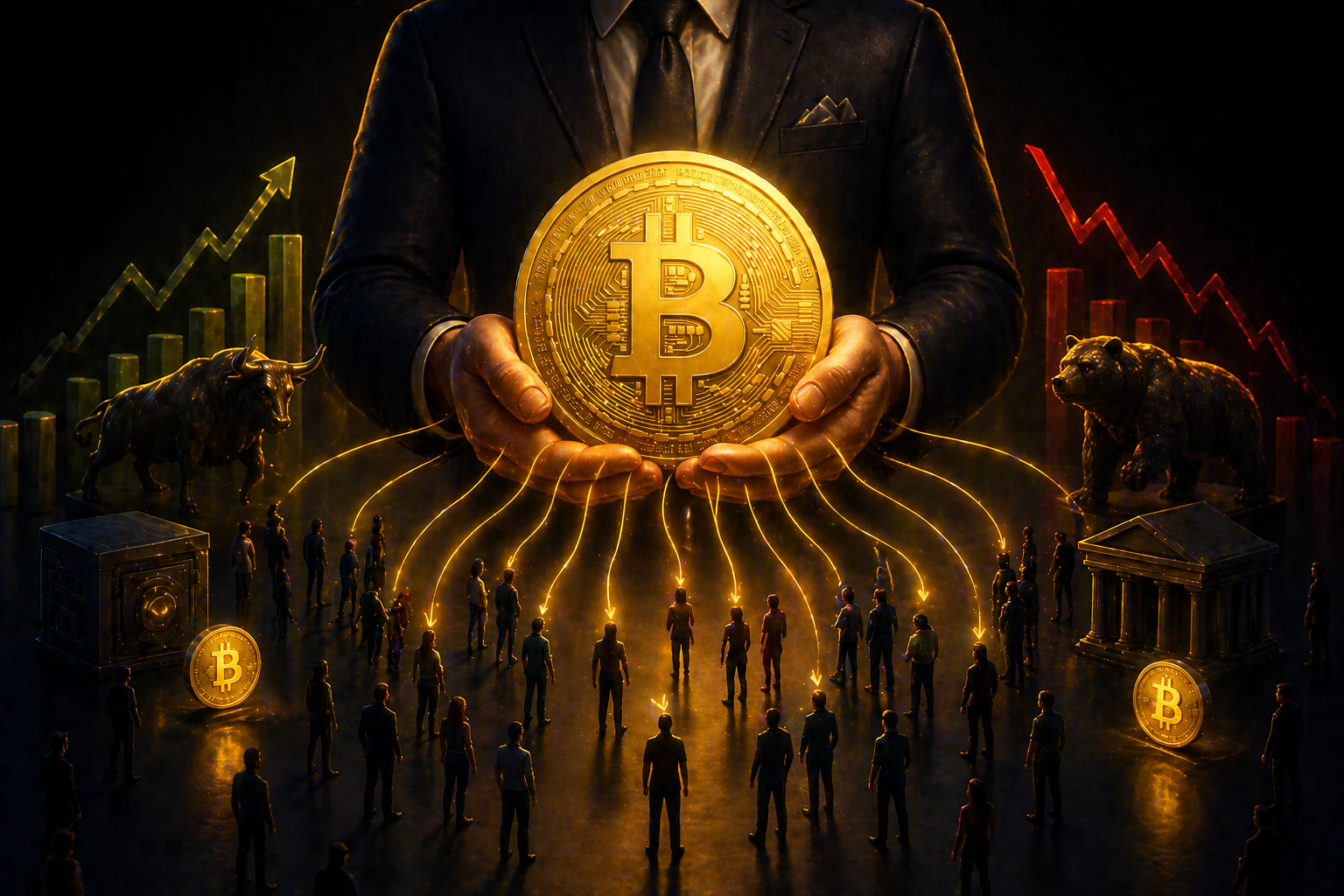
People often ask if Bitcoin will eventually become more “democratic.” In theory, as the price climbs, coins should spread among millions of smaller participants. In reality, however, the largest holders of bitcoin, specifically big investment funds, are only growing their stakes. I suspect decentralization is currently facing a challenge from the popularity of spot ETFs. While it is now easier for a regular person to get exposure, corporate bitcoin owners control massive amounts, which feels like a slight departure from Satoshi’s original vision of a peer-to-peer system.
Conclusion
Knowing who owns bitcoin helps us better understand real market risks. We see that the largest owners of bitcoin are a mix of a mysterious creator, bold early investors, and modern financial institutions. While the blockchain remains transparent, its wealth is still highly concentrated. I think it’s vital to watch whale movements, but we shouldn’t forget that the network’s real strength lies in its global user base, not just in wallet balances. Ultimately, the question of who has the most bitcoins will remain relevant as long as this asset stays the world’s premier digital currency.
Published Articles
 Popular
Bitcoin Pizza Guy: The Story Behind the First Real Bitcoin Purchase
Introduction The history of Bitcoin is full of dramatic ups and downs,...
How Bitcoin ATMs Work: A Complete Guide to Using Crypto ATMs
Introduction Millions of people around the world use cryptocurrencies today – at...

Best Bitcoin Mining Software of 2025 – Top 7 Tools for Maximum Profitability
Bitcoin mining has long since moved beyond being a hobby for enthusiasts...

Services You Can Pay for with Bitcoin
Where Bitcoin Is Accepted Today Today, Bitcoin (BTC) can be used to...
What You Can Buy With Bitcoin in 2025
Introduction Over the years, Bitcoin has evolved from an experimental digital currency...
 Popular
Bitcoin & Crypto Options Trading: A Complete Guide for Beginners and Experts
Bitcoin options trading has grown rapidly in recent years as the cryptocurrency...