
The Metaverse and Cryptocurrencies: A Comprehensive Guide to Virtual Realities, Digital Assets, and Future Opportunities
Introduction
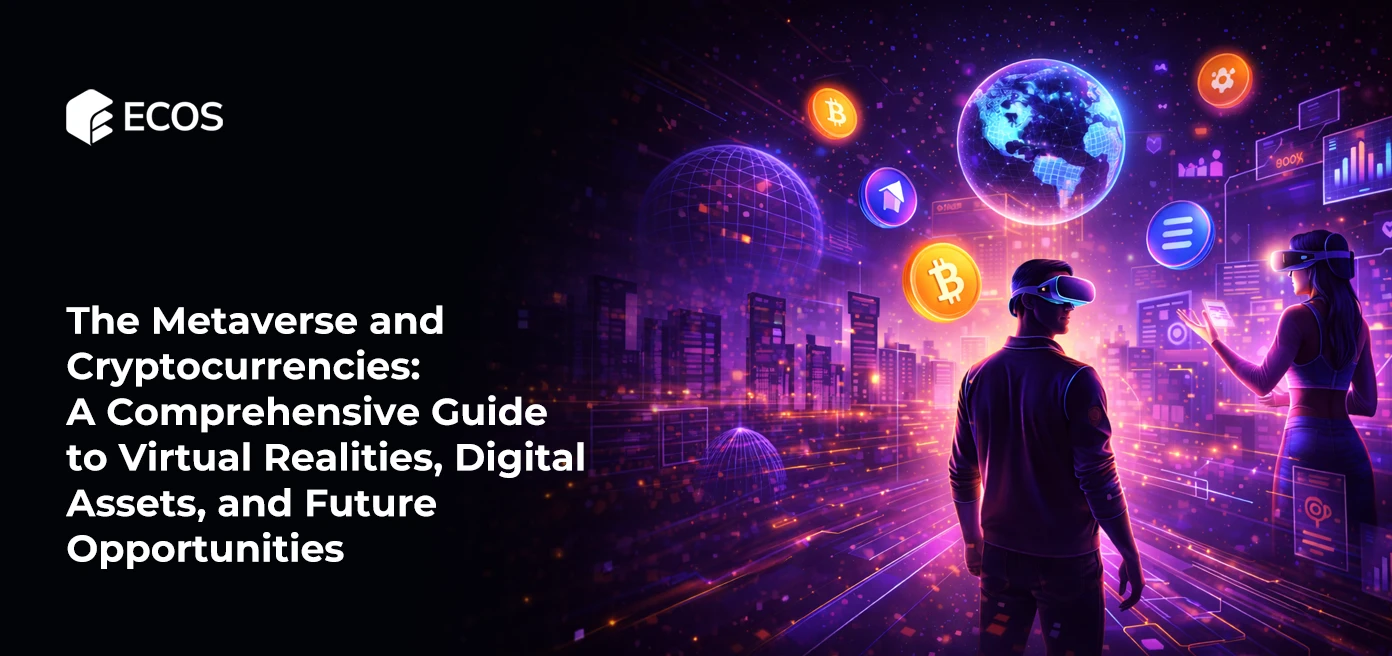
Over the past few years, discussions about the metaverse have moved beyond futuristic speculation. Major technology companies, gaming platforms, and crypto projects are actively investing in virtual worlds where users can work, socialize, own digital assets, and even generate income. At the intersection of virtual reality technologies and blockchain, the concept of metaverse and crypto is taking shape.
What is the metaverse crypto? It is not limited to virtual games or 3D environments. Instead, it refers to digital worlds where the internal economy is built on blockchain infrastructure, and users own assets directly through their wallets. Today, metaverse cryptocurrencies are used to purchase virtual land, in-game items, NFT avatars, and to participate in project governance. They form the economic layer of virtual worlds, transforming them from standard platforms into fully developed digital ecosystems with their own financial systems.
Interest in this sector intensified alongside the growth of DeFi and the NFT market. Although enthusiasm around metaverse projects has cooled significantly since its peak, questions such as what is metaverse coins, how they differ from traditional tokens, and whether they hold long-term potential continue to attract attention. This article explores the relationship between virtual worlds and the crypto economy, examines existing projects, outlines potential risks and opportunities, and explains why metaverse and crypto remains one of the key areas of development within Web3.
What Is the Metaverse?
The term “metaverse” describes a digital space where users interact with each other and with virtual environments through avatars. It is not a single project, but a collection of platforms united by the concept of a shared online world.
In simple terms, the metaverse represents the next stage of internet evolution. Web1 enabled reading, Web2 enabled interaction through social networks, while Web3 and metaverse environments introduce digital ownership. This leads to the question: what is cryptocurrency metaverse? It is a virtual world where the economy is built on blockchain infrastructure, and digital assets belong to users rather than the platform itself.
A metaverse environment may include:
- virtual real estate,
- digital clothing and in-game items,
- gaming assets,
- NFTs,
- governance tokens.
Most metaverse projects are built as decentralized ecosystems. This means their rules are defined by smart contracts and community governance rather than centralized control. This is where metaverse and crypto intersect – without blockchain, a fully functional digital economy would not be possible.
What Is Metaverse Crypto?
Now let’s address the key question: what is metaverse cryptocurrencies? These are tokens used within virtual worlds for payments, trading, governance, and incentivizing user activity. In simple terms, they serve as the economic “fuel” of metaverse ecosystems.
When users purchase virtual land or NFT skins, they pay with native tokens specific to that platform. This is why interest arises around concepts such as what is metaverse altcoin – a project’s native token that can perform multiple functions, including:
- a medium of exchange,
- a governance instrument,
- a reward mechanism,
- participation in staking.
An interesting related question is whether a bitcoin metaverse exists. In practice, BTC is not a native metaverse token. However, it can function as an investment asset or be used as a means of exchange through bridges and DeFi infrastructure connected to virtual ecosystems.
By 2026, the metaverse market has become more mature. After the overheated period of 2021–2022, many projects underwent natural consolidation. Those that survived were able to build real user bases and sustainable economic models rather than relying solely on marketing-driven hype.

What Is Metaverse Projects?
When users ask what is metaverse projects, they typically refer to specific platforms where individuals can interact, own digital assets, and participate in a virtual economy.
A metaverse project combines a virtual environment, a digital economy, NFT infrastructure, tokenomics, and tools for user interaction. These platforms may be gaming-focused (Play-to-Earn), social, educational, or corporate in nature. Some concentrate on virtual real estate development, while others focus on building creative economies where users can create and monetize digital content.
It is within these ecosystems that the connection between metaverse and crypto becomes clear. Without tokens, it would be impossible to ensure transparent economic systems, enforce digital ownership rights, or enable community participation in governance.
Why Metaverse and Crypto Are Connected
The connection between virtual worlds and cryptocurrencies is not accidental. A metaverse environment requires:
- digital ownership,
- transparent settlements,
- global accessibility,
- the absence of centralized control.
Blockchain technology addresses each of these requirements.
If the metaverse is viewed as a digital environment where assets exist in the form of tokens and NFTs, and transactions are recorded on a public network, cryptocurrencies become the core infrastructure of that system.
Cryptocurrencies enable users to:
- buy and sell virtual land,
- trade NFTs,
- participate in DAO governance,
- earn rewards for activity.
Without blockchain infrastructure, a metaverse would function as nothing more than a centralized game rather than a decentralized digital economy.
Types of Metaverse Cryptocurrencies
The metaverse sector is not limited to a single type of token. When investors analyze metaverse cryptocurrencies, it is important to understand that they serve different functions within their ecosystems.
Several key categories can be identified.
Native Platform Tokens
These are the primary tokens of a specific metaverse platform. They function as both a medium of exchange and a governance instrument. These are typically the assets referred to when discussing what is metaverse coins.
Core functions of native tokens include:
- purchasing virtual land,
- paying for NFT assets,
- participating in governance voting,
- staking,
- earning rewards.
Such tokens are often described as metaverse altcoin, as they are not base-layer assets like BTC or ETH.
Governance Tokens
Governance tokens grant holders the right to participate in project decision-making. Token holders may vote on protocol upgrades, treasury allocations, or changes to the economic model.
Within metaverse ecosystems, governance mechanisms play a crucial role. They help maintain decentralization and ensure that projects remain community-driven.
Utility Tokens
Utility tokens are used to access platform features, including:
- in-game services,
- access to events,
- purchasing digital items,
- avatar customization.
Through the utility model, consistent daily demand for the token is generated.
NFT Assets
NFTs are a fundamental component of the metaverse and crypto ecosystem. In virtual worlds, NFTs may represent:
- land,
- buildings,
- characters,
- clothing,
- unique digital items.
They form the layer of digital ownership without which the concept of a metaverse loses its core meaning.
Infrastructure Tokens
Some projects focus on building tools and infrastructure for metaverse development, including engines, VR frameworks, and cross-chain solutions. Their tokens support the technical backbone of the sector.
By 2026, the market has become more structured. After the initial hype cycle, it became clear that not all what is metaverse cryptos have real-world utility. Projects that survived were those able to build sustainable economic models and attract active user communities.
How Metaverse Cryptocurrencies Work
To understand how the sector operates, it is not enough to define what is metaverse cryptocurrencies – it is essential to examine how these tokens function within virtual environments.
A metaverse economy is typically built on three interconnected layers: blockchain infrastructure, smart contracts, and user activity. Each of these layers directly influences token demand and valuation.
Blockchain as the Foundation
Most metaverse projects operate on Ethereum or compatible networks. This enables verifiable asset ownership, immutable transaction records, and economic transparency. For this reason, the concept of metaverse and crypto effectively represents the integration of virtual environments with blockchain-based economies.
Smart Contracts
Smart contracts govern token issuance, asset trading, reward distribution, and governance mechanisms. When a user purchases virtual land or a digital item, the transaction is executed through a smart contract and permanently recorded on-chain.
This provides a practical explanation of what is the metaverse crypto – a programmable digital economy where ownership and transactions are enforced by code.
Demand and Internal Economy
Token value depends on user engagement, NFT demand, trading volume, and DAO participation. If a platform is actively developing – with users buying land, creating content, and hosting events – token demand increases. If activity declines, token value tends to weaken.
By 2026, it has become clear that the concept of a metaverse alone is insufficient. Investors increasingly focus on measurable indicators such as active user numbers, transaction volumes, and the sustainability of the economic model rather than marketing narratives.
Major Metaverse and Crypto Projects
When discussing what is metaverse projects, attention usually turns to established ecosystems that have already developed functioning digital economies. The most prominent categories include:
- virtual real estate platforms,
- gaming metaverses,
- social virtual worlds,
- infrastructure-focused Web3 projects.
Many of these platforms experienced peak hype during 2021–2022, followed by significant corrections. This period of consolidation removed a large number of speculative projects from the market.
Today, the metaverse sector is evolving more pragmatically. Key priorities include real user adoption, AI and VR integration, cross-chain compatibility, and sustainable monetization models.
Some investors also explore the concept of a bitcoin metaverse. While BTC is not a native token within virtual worlds, it is used as a reserve asset and a diversification instrument by investors active in the metaverse sector.
Investment Opportunities in Metaverse Cryptocurrencies
Interest in the metaverse and crypto sector is largely driven by its investment potential. After a sharp expansion followed by a market correction, the space has become more mature, and investors more selective. While early participants often entered during peak hype cycles, by 2026 attention has shifted toward fundamental metrics.
When evaluating metaverse projects, investors typically focus on several key factors:
- an active user base,
- a sustainable economic model,
- NFT trading volume,
- partnerships with brands and developers,
- transparent tokenomics.
Metaverse Tokens
Purchasing native tokens remains the most direct way to gain exposure to the sector. This is a traditional strategy: investors anticipate growth in platform adoption and increasing demand for the token. However, it is important to recognize that metaverse cryptocurrencies are highly volatile. Their prices depend not only on platform activity but also on broader crypto market conditions.
Virtual Real Estate
A separate investment segment involves acquiring digital land in established metaverse platforms. At the market peak, some parcels were sold for millions of dollars. Today, the approach is more pragmatic. Investors assess factors such as location within the virtual environment, proximity to major brands, and potential user traffic.
This segment is closely linked to what is cryptocurrency metaverse – a digital economy in which virtual property derives value from scarcity and demand dynamics.
NFTs and In-Game Assets
Some market participants invest in NFT characters, gaming items, and digital collectibles. Their value depends on platform popularity and asset rarity. However, this segment is generally considered more speculative.
Diversification Through Infrastructure Projects
Beyond gaming worlds, there are infrastructure-focused projects that support metaverse development, including engines, VR solutions, and cross-chain bridges.
These projects tend to be less driven by hype and may offer more sustainable development models over time.

Risks of Investing in Metaverse Cryptocurrencies
Despite its potential, the sector remains high-risk. Anyone researching what is metaverse altcoin should understand the associated challenges.
Volatility
Metaverse tokens can decline by significant percentages over short periods. While this is characteristic of the broader crypto market, it is especially pronounced in niche segments.
Dependence on User Activity
If a platform loses its audience, token demand declines. Without sustained user engagement, a metaverse economy cannot function effectively.
Regulatory Risks
The legal status of virtual real estate and NFTs remains unclear in many jurisdictions. Regulatory developments could significantly impact sector growth.
Technological Limitations
Metaverse platforms require substantial computational power, VR adoption, and advanced infrastructure. Mass adoption remains constrained by technological factors.
By 2026, it has become evident that metaverse and crypto is no longer purely a speculative trend, yet it has not become a universal standard of digital life. The sector is currently in a phase of gradual, structured development.
Future of Metaverse and Cryptocurrencies
The development of the metaverse sector has moved beyond the hype phase and entered a stage of gradual integration into the broader digital economy. While early projects relied heavily on marketing and novelty, today the focus has shifted toward sustainable economic models, real utility, and technological maturity.
Integration with Web3 and AI
One of the key trends in 2026 is the integration of metaverse platforms with artificial intelligence and decentralized Web3 infrastructure. Virtual worlds are increasingly using AI to generate dynamic environments, interactive NPCs, and personalized user experiences.
This evolution strengthens demand for metaverse cryptocurrencies, as internal economies become more complex, active, and diversified.
Cross-Platform Compatibility and Interoperability
The future of metaverse development is closely tied to interoperability between platforms. Users want to move their NFT avatars, digital assets, and reputation from one virtual world to another. This is where blockchain technology becomes essential.
When discussing what is the metaverse crypto, the concept refers to an environment where digital ownership exists independently of any single platform. Blockchain enables assets to remain verifiable, transferable, and user-controlled across ecosystems.
Institutional Interest
Major global brands continue experimenting with virtual environments for marketing, digital events, and the sale of virtual goods. This institutional participation generates additional demand for tokens and NFTs.
If the sector was once viewed as a speculative experiment, it is now increasingly considered part of long-term digital strategy for many companies.
Gradual Formation of a Digital Economy
The metaverse will not replace the internet overnight. However, elements of virtual worlds are already being integrated into:
- online gaming,
- digital events,
- remote work environments,
- social platforms.
As the digital economy expands, questions such as what is metaverse cryptos will increasingly be asked not only by crypto enthusiasts but by mainstream audiences.
Conclusion
The convergence of metaverse and crypto represents one of the most ambitious phases in Web3 development. The metaverse is not merely a collection of virtual 3D spaces – it is an attempt to build a fully functional digital economy with real ownership and decentralized governance.
Understanding what metaverse ecosystems truly represent allows for a realistic assessment of their potential, free from excessive optimism. Today, the market is more mature:
- speculative projects have faded,
- platforms with real economic activity have survived,
- investors increasingly evaluate fundamentals rather than hype.
The metaverse remains a developing ecosystem. Yet its integration with blockchain technology introduces a new model of digital ownership that could reshape how value, governance, and monetization function online.
The question is no longer whether the metaverse exists, but which projects will succeed in building sustainable economies and attracting active communities.
Published Articles
 Popular
Bitcoin Pizza Guy: The Story Behind the First Real Bitcoin Purchase
Introduction The history of Bitcoin is full of dramatic ups and downs,...
 Popular
The Meme Economy: How Internet Humor Shapes Culture, Markets, and Crypto
Introduction Ten years ago, the idea that a picture of a dog...
 Popular
What is the Omniverse? Exploring the Ultimate Multiversal Concept
Introduction Do you know what the omniverse is? Is this concept real?...
Bitcoin Taproot Explained: What the Upgrade Means for BTC
Introduction Unfortunately, the most popular cryptocurrency today – Bitcoin – was not...
Crypto On-Ramps and Off-Ramps Explained: How Fiat and Crypto Move In and Out
Entering the world of digital assets often feels like trying to cross...
Crypto Basics Explained: A Beginner’s Guide to Cryptocurrency and Trading
Introduction The world of finance is changing right before our eyes. Just...