
What is the Omniverse? Exploring the Ultimate Multiversal Concept
Introduction
Do you know what the omniverse is? Is this concept real? The term is increasingly appearing in scientific and philosophical discussions, in pop culture, fiction, games, and digital worlds – but not everyone today can clearly explain what it actually is.
In short, this multiversal idea describes a framework that goes far beyond our usual understanding of the Universe. While classical cosmology studies the observable world around us, multiverse theories suggest the existence of multiple parallel realities, and the overarching theory encompasses all possible existence. It refers to the totality of all universes, all dimensions, all timelines, and even hypothetical worlds with entirely different laws of physics.
To understand what it entails, it is important to see this term as the broadest possible concept, uniting scientific hypotheses, philosophical models, and abstract ideas about reality – even those that cannot be tested experimentally. This universality is what makes the idea so captivating.
In this article, we will explore what the omniverse means, how it differs from the multiverse, how the concept is used in the cryptocurrency market, how scientists and philosophers interpret it, and why it has become so popular in mainstream culture.
What Is the Omniverse?
When we look at the omniverse not only philosophically but also in a technological context, the term takes on a completely different meaning. It is often used to describe a digital environment where various virtual worlds, platforms, blockchains, and economic systems interact. From the perspective of modern technology, the meaning of the omniverse is increasingly associated with the idea of a unified digital space.
This space can include metaverses, gaming worlds, Web3 platforms, NFT ecosystems, and decentralized financial services. Unlike isolated virtual environments, the omniverse implies interoperability and interaction between them. The concept is often interpreted as a framework where different blockchains and protocols exist not separately, but as parts of a single ecosystem. Cross-chain solutions, network bridges, universal wallets, and multi-chain applications are all elements that form the foundations of a digital omniverse.
In technological terms, the omniverse is an attempt to overcome the fragmentation of digital space. Where each platform once existed independently, there is now a growing demand for a single environment in which data, assets, and identities can exist across multiple worlds simultaneously.
Scientific Views on the Omniverse
One of the key questions in the context of the omniverse is “is the omniverse real?” In academic science, the omniverse is not yet considered a proven model of reality, although the term is increasingly used as a convenient framework for discussing the limits of existing theories about the Universe and the multiverse.
In physics and cosmology, the term is usually understood as a hypothetical collection of all possible universes, including any variations of physical laws, dimensions, and forms of matter. In this sense, the omniverse stands “above” the multiverse, encompassing all possible scenarios of reality within a single abstract concept.
Accepted Theories vs Speculative Physics
Modern science allows for the existence of the multiverse within some theoretical models – for example, inflationary cosmology or interpretations of quantum mechanics. However, the omniverse theory goes beyond even these hypotheses, as it suggests the existence not only of observable or mathematically describable universes, but also of any conceivable variants of reality.
Therefore, most scientists consider the omniverse definition more as a philosophical or meta-theoretical construct. It helps to reason about the limits of knowledge, but is not part of testable physical theories.
Why the Omniverse Isn’t Scientifically Proven
The main problem is that understanding what does the omniverse mean from a scientific perspective is impossible. If a hypothesis does not allow for observations, measurements, or falsification, it remains outside the scope of rigorous science. This is why the question how big is the omniverse cannot, in principle, be answered.
The omniverse, by definition, has no boundaries, making any attempts at formalization purely theoretical. For this reason, the scientific community treats this concept with caution, preferring to operate with narrower and verifiable models.
Philosophical and Mathematical Interpretations
Despite the lack of empirical evidence, omniversal meaning is actively discussed in philosophy of science and mathematics. Some philosophers consider the omniverse as a logical set of all possible worlds in which any non-contradictory laws are realized.
From a mathematical perspective, one can define omniverse as an abstract space of all possible structures and systems. This approach was later adopted by the technology community, where the term began to be used to describe digital ecosystems, metaverses, and distributed networks.
At this intersection of philosophy, science, and technology, the omniverse ceases to be purely a cosmological concept and gradually becomes a convenient metaphor for describing complex, multi-layered digital worlds.
The Omniverse in Pop Culture
Although from a scientific perspective, what is an omniverse remains an abstract concept, it is popular culture that truly made this term widely known. Movies, comics, video games, and later digital technologies have turned the omniverse into a convenient way to explain the existence of multiple parallel worlds, character versions, and alternative scenarios.
Comics, Games, and Fictional Universes
One of the main sources of the concept’s popularity has been the comic book industry. In DC Comics, the term is used to denote a structure that includes multiverses, local universes, and alternative realities. This allowed authors to freely merge different storylines and character versions.
In video games and science fiction literature, this multiversal definition is often reduced to the idea of “everything at once”: a player or reader can move between worlds with different rules, technologies, and forms of life. This approach became especially relevant in the era of online projects and metaverses, where digital worlds exist in parallel and can intersect.
Fan communities began expanding the concept even further, introducing terms like ultra omniverse. In such interpretations, it becomes an absolute superstructure, encompassing not only all fictional and hypothetical worlds but also the observer’s own reality. These interpretations lack a precise definition, yet they influenced the formation of this vision as a highly flexible and all-encompassing concept. This played a key role in the later adoption of the term in technology and digital environments.
Why the Idea Became So Popular
The popularity is simple to explain: what does the omniverse look like – a question without a single answer. Everyone can interpret it in their own way. In the age of the internet, metaverses, and Web3, this uncertainty became an advantage.
When digital platforms began connecting game worlds, social networks, NFT ecosystems, and blockchain projects, the term omniverse proved to be the perfect metaphor. It helped describe a situation where different digital spaces exist simultaneously, intersect, and complement each other without losing autonomy.
That is why today the concept of omniverse vs multiverse is increasingly discussed not only in fiction but also in technological contexts – especially in blockchain, cryptocurrencies, and decentralized ecosystems.
The Omniverse in Technology, Blockchain, and Crypto
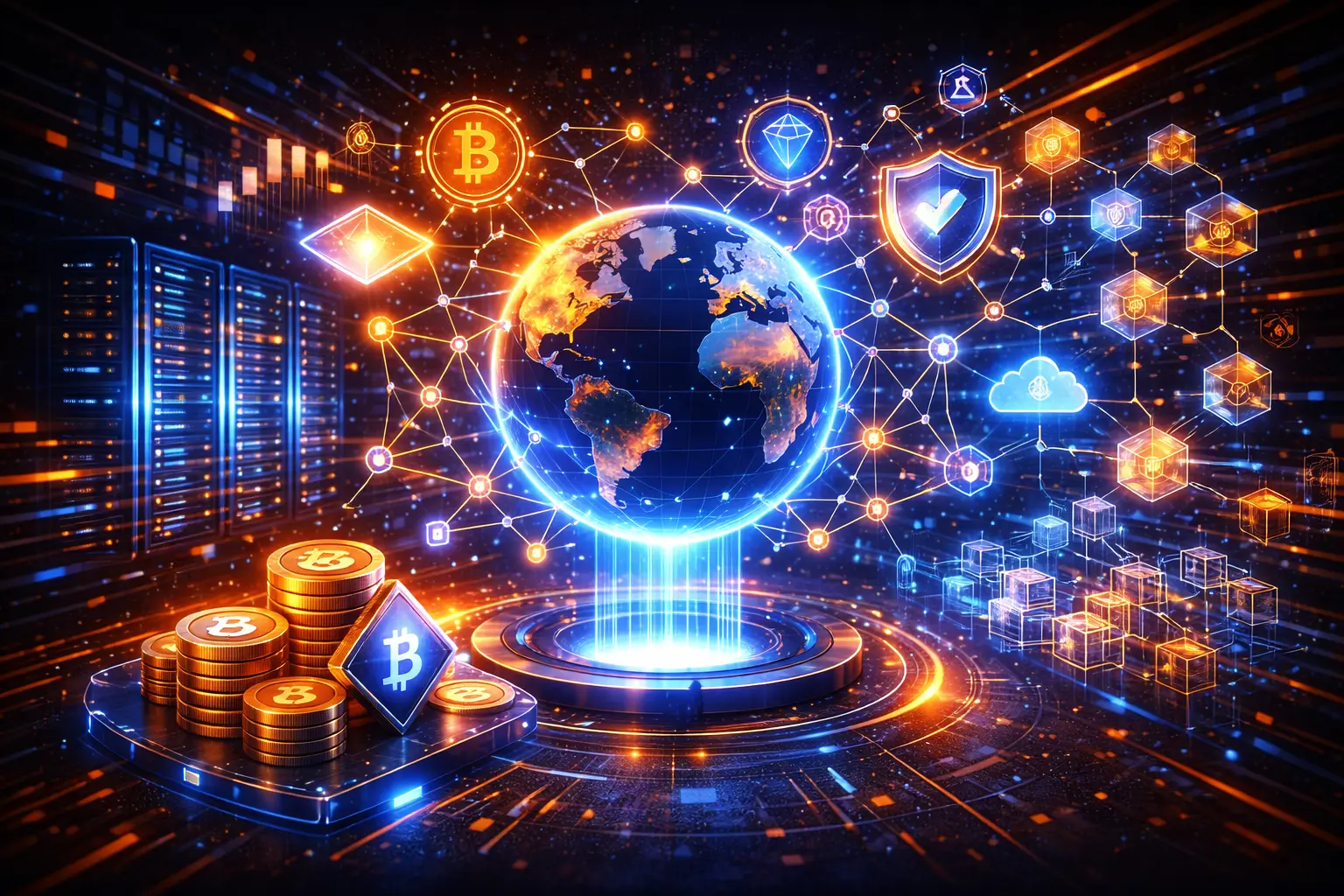
In recent years, the term omniverse has increasingly been used in a technological context. The development of Web3, blockchain, metaverses, and decentralized applications has created an environment where the concept of the omniverse is no longer purely abstract. In technology, omniverse meaning most often describes an ecosystem in which multiple digital worlds, platforms, and networks coexist simultaneously, interact with each other, and do not depend on a single point of control.
Omniverse vs Multiverse in Digital Ecosystems
In the technological context, it is important to distinguish omniverse vs multiverse. A multiverse usually refers to a set of separate worlds or platforms that exist in parallel but rarely interact directly. Examples include isolated game worlds or closed application ecosystems.
The omniverse, on the other hand, implies a higher level of integration. In addressing the question what is an omniverse, different blockchains, metaverses, NFT platforms, and DeFi protocols can be connected through bridges, standards, and cross-chain mechanisms. Users can move between ecosystems while preserving their assets, identity, and transaction history.
The Omniverse Concept in Blockchain and Web3
In blockchain, the omniverse theory is often used as a metaphor for a cross-chain future. Different networks – Ethereum, Solana, Bitcoin second-layer solutions, and others – can be seen as separate “universes” connected within a broader structure.
From this perspective, the answer to what does omniverse mean for the crypto market is a space where:
- assets move freely between networks,
- smart contracts interact with each other,
- users are not tied to a single blockchain.
This vision is already partially realized through bridges, interoperable protocols, and universal wallets, forming the foundations of a crypto omniverse.
Omniverse and the Crypto Market
For crypto users, whether the omniverse is real is more of a practical question than a philosophical one. Although such a unified environment does not yet exist, its elements are already visible in the market infrastructure.
NFT collections, metaverses, DAOs, and tokenized assets increasingly go beyond a single platform. NFTs can be used across different games, tokens in multiple ecosystems, and digital identities can move between services. In this context, what is omniversal means “compatible across all environments.”
That is why the omniverse definition has become a convenient way to describe the future of the crypto economy. In this future, strict boundaries between networks disappear, allowing value to be created at the very intersection of technologies.
If we ask how big is the omniverse in a technological sense, the answer depends on the scale of digital interactions. Every new blockchain, protocol, or metaverse expands this space. Unlike physical reality, universe, multiverse and omniverse in the digital world are not constrained by the laws of nature. Their growth is determined by the number of users, computing resources, and the level of integration between systems.
Omniverse vs Multiverse: Key Differences
The terms omniverse and multiverse are often used interchangeably, especially in pop culture and media. However, in scientific, philosophical, and technological contexts, there are fundamental differences between them.
- Multiverse describes the concept of multiple parallel universes. These worlds may have similar or radically different physical laws, but they are considered part of a broader system.
- Omniverse is a broader concept. It encompasses all possible universes, realities, dimensions, and even theoretical forms of existence, regardless of their nature or logic.
In other words, a multiverse resembles a set of isolated ecosystems or separate blockchains, while an omniverse reflects the idea of a unified space where different networks, protocols, and digital worlds can interact without limitations.
This is why the concept of omniverse is increasingly used to describe the future of Web3 and decentralized technologies.
Conclusion
The concept of the omniverse has come a long way. It has evolved from philosophical and scientific hypotheses into a metaphor actively used in technology, blockchain, and the crypto market. Today, the question of whether the omniverse is real does not have a straightforward answer.
Physics treats the concept as a theoretical model, while culture views it as an image of limitless possibilities. Meanwhile, digital technologies adopt the omniverse as a practical way of thinking.
Within the Web3 landscape, this term symbolizes a shift from isolated systems to interconnected ecosystems. This is a space where blockchains, metaverses, DeFi, and digital identities become part of a unified environment.
This is a space where blockchains, metaverses, DeFi, and digital identities become part of a unified environment.
This approach changes more than just the architecture of technologies. It also transforms the very understanding of interactions between people, data, and digital assets. Thus, the omniverse today is not just a fantastic idea. It is a concept that helps us comprehend the future of technology and the direction of the decentralized world.
Published Articles
 Popular
Bitcoin Pizza Guy: The Story Behind the First Real Bitcoin Purchase
Introduction The history of Bitcoin is full of dramatic ups and downs,...
 Popular
The Meme Economy: How Internet Humor Shapes Culture, Markets, and Crypto
Introduction Ten years ago, the idea that a picture of a dog...
Bitcoin Taproot Explained: What the Upgrade Means for BTC
Introduction Unfortunately, the most popular cryptocurrency today – Bitcoin – was not...
Crypto On-Ramps and Off-Ramps Explained: How Fiat and Crypto Move In and Out
Entering the world of digital assets often feels like trying to cross...
Crypto Basics Explained: A Beginner’s Guide to Cryptocurrency and Trading
Introduction The world of finance is changing right before our eyes. Just...
 Popular
Uniswap Explained: What It Is, How It Works, and How to Use the UNI DEX
Introduction Decentralization and decentralized platforms that have emerged in recent years have...