
Top Metaverse Coins: Best Picks, Use Cases, and Virtual Land Potential
Introduction
Metaverses… A few years ago, this term sent shockwaves through the entire crypto community. Today, metaverses have become a fully established sector within the Web3 economy. In 2021–2022, the market was mainly associated with speculation and NFT hype. However, by 2026, metaverse cryptocurrencies are increasingly viewed as infrastructure assets for digital worlds, social platforms, and virtual economies.
Modern metaverse crypto projects combine blockchain technology, NFTs, gaming mechanics, and digital identity. They create environments where people can work, communicate, create content, and truly own digital assets. This is exactly what distinguishes mature projects from early experiments. Interest in metaverses has not disappeared. It has simply shifted into a healthier phase, where audiences are focused on projects with real-world use cases.
In this article, we will explore which metaverse coins to buy deserve attention, how tokens and NFTs function inside virtual worlds, and what long-term potential metaverses still have after the period of rapid growth and market correction.
What Are Metaverse Coins and How Do They Work?
Metaverse cryptocurrencies are digital assets used inside virtual worlds to power their economies, governance systems, and user interactions. Unlike traditional cryptocurrencies that are primarily designed for payments or value storage, metaverse tokens usually serve specific functions strictly within their own ecosystems.
As a rule, metaverse crypto projects use native tokens to pay for goods and services, purchase NFTs and virtual land, and access gaming or social features. These coins act as the “fuel” of a virtual world, sustaining its economic activity and incentivizing user participation. Technically, metaverse tokens operate via smart contracts and are closely integrated with NFT infrastructure, since NFTs are what establish ownership of unique digital assets.
In most projects, tokens also play a governance role. Token holders can participate in voting, influence platform development decisions, and take part in resource allocation. This model increases community engagement and clearly distinguishes mature top metaverse projects from traditional centralized gaming platforms.
It is important to understand that not all metaverse tokens serve the same purpose. Some are primarily focused on gameplay mechanics, others on social interaction or virtual commerce. Therefore, when choosing the best metaverse crypto, it is essential to analyze not only the token’s price, but also its real utility and role within the ecosystem.
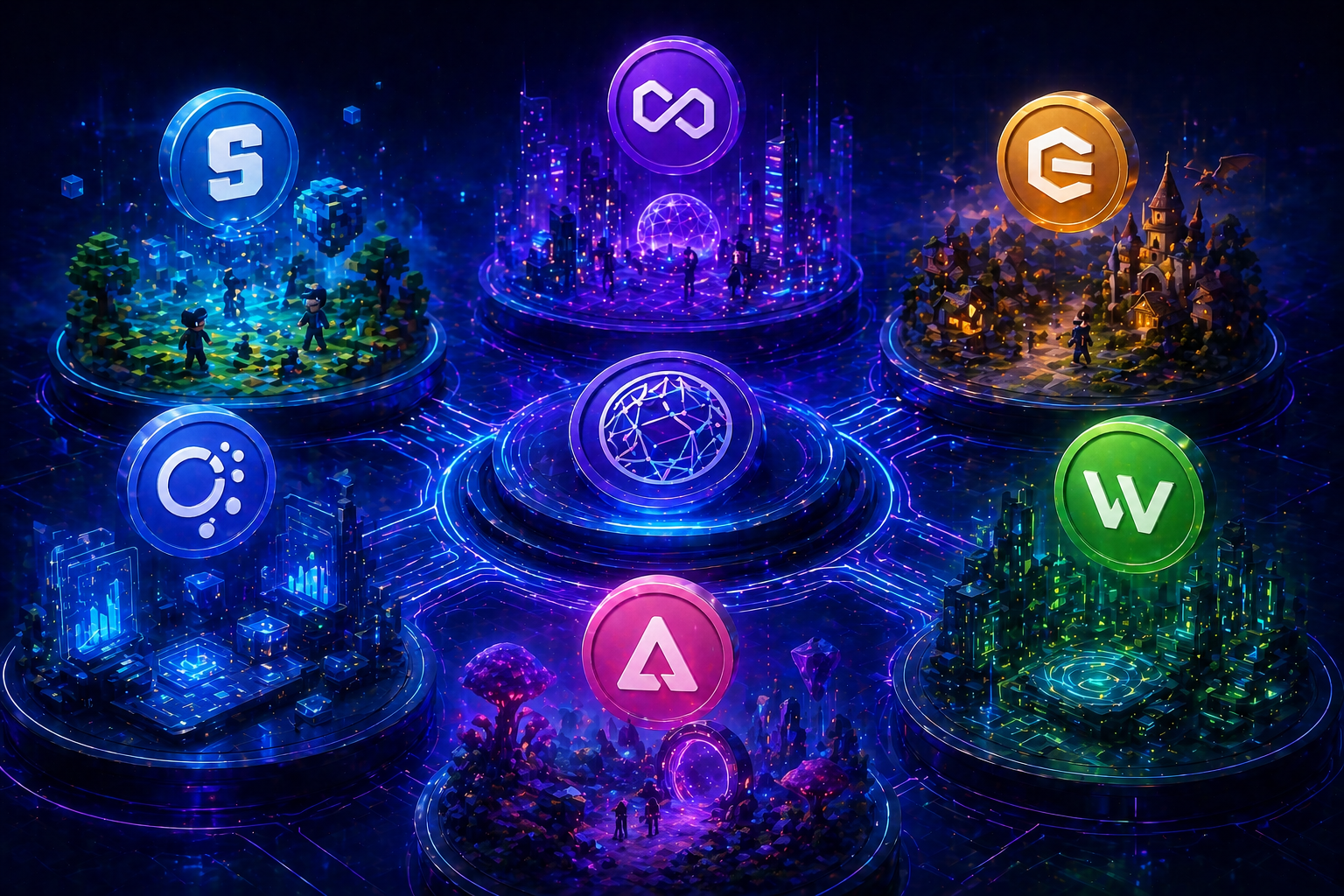
By 2026, the metaverse market has become more mature and structured. Many early projects failed to retain their audiences, while others evolved into sustainable digital ecosystems with real users and functioning economies. That is why, when choosing such projects today, it is important to focus not on past hype, but on current metrics and real use cases.
Modern TOP metaverse projects are developing at the intersection of several domains, and their value is increasingly driven by activity within virtual worlds themselves.
Criteria for Choosing the Best Metaverse Crypto
To objectively evaluate metaverse coins to buy in 2026, several key factors should be taken into account. First and foremost is the number of active users and the level of community engagement. Projects with a live economy and consistent user activity have a much higher chance of long-term sustainability.
The second important criterion is real use cases. Sustainable metaverse crypto projects offer tools for content creation, monetization, renting or purchasing virtual land, hosting events, and integrating brands. In such ecosystems, tokens have tangible utility rather than purely speculative value.
It is also essential to analyze tokenomics: token distribution, emission schedules, burning mechanisms, staking, and reward systems. A well-balanced model helps reduce sell pressure and supports long-term interest in metaverse cryptocurrencies.
Top Metaverse Projects by Use Case
One of the main trends of 2026 has been a clear segmentation of metaverses by use cases. Gaming projects focus on in-game NFTs and tokens, building closed economies with earning opportunities. Social metaverses, by contrast, are centered around events, virtual spaces, and user interaction.
A separate category includes platforms designed for brands and businesses, where metaverses are used to launch virtual stores, advertising campaigns, and digital showrooms. Such ecosystems are driving growing interest in best metaverse crypto coin projects from corporate clients.
Finally, universal solutions are emerging that connect multiple metaverses at once. In this context, MD Coin – universal cryptocurrency in the metaverse world is increasingly discussed – a token designed to be used across different virtual environments without being tied to a single project. It is precisely these universal and utility-driven projects that are shaping the foundation of the metaverse market after 2026, shifting the focus from speculation to long-term digital presence.
Why People Are Drawn to Metaverse Projects
Interest in metaverses cannot be explained by investments or technology alone. At the core of the popularity of metaverse crypto projects are deep psychological and social factors that make virtual worlds attractive to millions of users worldwide.
First and foremost, metaverses provide a sense of presence and freedom of self-expression. Users create avatars, virtual homes, and spaces that reflect their identity. Unlike traditional social networks, people are not just consuming content – they become part of a digital world. That is why metaverse cryptocurrencies are perceived not as abstract tokens, but as tools for active participation in an ecosystem.
Another key factor is digital ownership. NFTs and virtual land allow users to truly own assets rather than rent them from a platform. The ability to buy land, items, or access rights and manage them freely strengthens emotional attachment. This is directly connected to the growing interest in best land to buy in metaverse and the expansion of the NFT economy.
The social dimension also plays a crucial role. Metaverses are becoming spaces for communication, events, and communities. Concerts, exhibitions, gaming sessions, and business events are shaping a new format for digital interaction. For many users, participation in these experiences is more important than short-term speculation, which increases the resilience of best metaverse crypto assets.
Finally, metaverses offer a strong sense of early participation. Users feel like pioneers helping to shape a new digital layer of the internet. This creates a feeling of involvement and belonging that is difficult to replicate on traditional Web2 platforms. That is why interest in metaverse coins to buy persists even during market downturns.
Taken together, these factors explain why metaverses remain appealing: they combine technology, emotions, social connections, and economic incentives within a single digital space.
Metaverse as Digital Identity
One of the key reasons users continue to return to metaverses is the formation of digital identity. Within metaverse crypto projects, a user is no longer just an account – they become the owner of a digital persona, assets, and reputation that can potentially move across platforms.
Avatars, NFTs, virtual clothing, and in-world items form a personal digital “profile” that reflects an individual’s style, status, and interests. Unlike Web2 services, where data belongs to the platform, identity in metaverses is increasingly закреплена to the user through blockchain technology. This is where metaverse cryptocurrencies and NFTs function as infrastructure for ownership, not merely as a medium of exchange.
For many users, digital identity in the metaverse becomes an extension of their real personality. Ownership of rare NFTs, virtual land, or access to closed communities strengthens a sense of belonging and status. This is especially evident in projects where NFTs act as passes to virtual and offline events, creating strong communities around best metaverse crypto ecosystems.
By 2026, more projects are focusing on identity portability. Users expect their avatars, items, and activity history to be usable across multiple virtual worlds. This approach increases the long-term value of digital assets and supports sustained demand for metaverse coins to buy as universal tools for interaction.
In the long run, metaverses may evolve into a new layer of digital identity – similar to social networks, but with real ownership, built-in economies, and user control. This transformation is what makes the metaverse market relevant not only to investors, but also to a much broader audience.
Best Metaverse NFT Projects
NFT tokens have become an integral part of the metaverse economy and largely define the value of virtual worlds. By 2026, best metaverse nft projects have moved far beyond simple collectible images, transforming NFTs into functional assets used in games, social spaces, virtual commerce, and even corporate use cases.
Among the most popular and notable projects are:
- Bored Ape Yacht Club
One of the most well-known NFT brands in Web3. A Bored Ape NFT functions not just as a digital image, but as an access pass to an exclusive virtual and offline community with events, experiences, and entry into the Yuga Labs ecosystem, including the Otherside metaverse.
- Decentraland
A social metaverse where NFTs represent virtual land, buildings, and objects. It is widely used for events, virtual exhibitions, and brand activations. Land and in-world items in Decentraland remain among the most recognizable NFT assets on the market.
- The Sandbox
A gaming-focused metaverse with an NFT-driven economy centered on user-generated content. NFTs are used as land, characters, and in-game objects, while the platform активно collaborates with brands, artists, and studios.
- Azuki
An NFT project with a strong community and a focus on culture, events, and metaverse integration. Owning an Azuki NFT grants access to exclusive events and digital spaces, making the collection part of a broader metaverse ecosystem.
- Clone X
A project created by RTFKT (Nike), focused on digital fashion and avatars. These NFTs are used in virtual worlds and metaverses as elements of identity and customization.
- World of Women
A socially oriented NFT project that is developing its own metaverse initiatives and offline programs. NFTs here serve as community access passes and tools for participation in cultural and educational projects.
Together, these projects illustrate how NFTs in the metaverse have evolved from collectibles into core infrastructure for identity, access, and economic activity.
NFTs in the Metaverse: Collectibles, Art, and Virtual Goods
Initially, people mostly associated NFTs with digital art and collectible items. However, as metaverse crypto projects evolved, their role expanded significantly. Modern NFTs now represent virtual goods: clothing, vehicles, and tools for customizing digital spaces. Users can freely buy and sell these assets. In some ecosystems, they even generate income through rentals or in-game utility.
It is precisely this utility that makes NFTs a core element of the metaverse ecosystem, turning virtual worlds into fully fledged digital economies rather than just visual environments.
How NFTs Integrate with Virtual Worlds
The integration of NFTs into metaverses takes place at the level of smart contracts and internal platform mechanics. Each NFT is linked to a specific object or right within a virtual world. This model ensures transparency and strong protection of ownership rights, which is especially important for long-term investors and users. That is why metaverse coins to buy are often closely connected to the NFT economy: tokens are used for settlements, while NFTs serve to закреплять value and ownership.
By 2026, more and more projects are implementing cross-platform compatibility, allowing NFTs to be used across multiple metaverses. This approach increases asset liquidity and significantly enhances their long-term potential.
Virtual Land in the Metaverse
Virtual land has become one of the most valuable and compelling assets within metaverses. Unlike abstract tokens, land NFTs grant users actual ownership rights to a specific digital plot inside a particular virtual world. This is exactly why interest in best land to buy in metaverse remains strong even after the overall NFT hype has cooled down.
Today, the virtual land market is concentrated around several major metaverse platforms, each offering its own model for usage, ownership, and monetization of digital real estate.
What Is Virtual Land and Why It Has Value
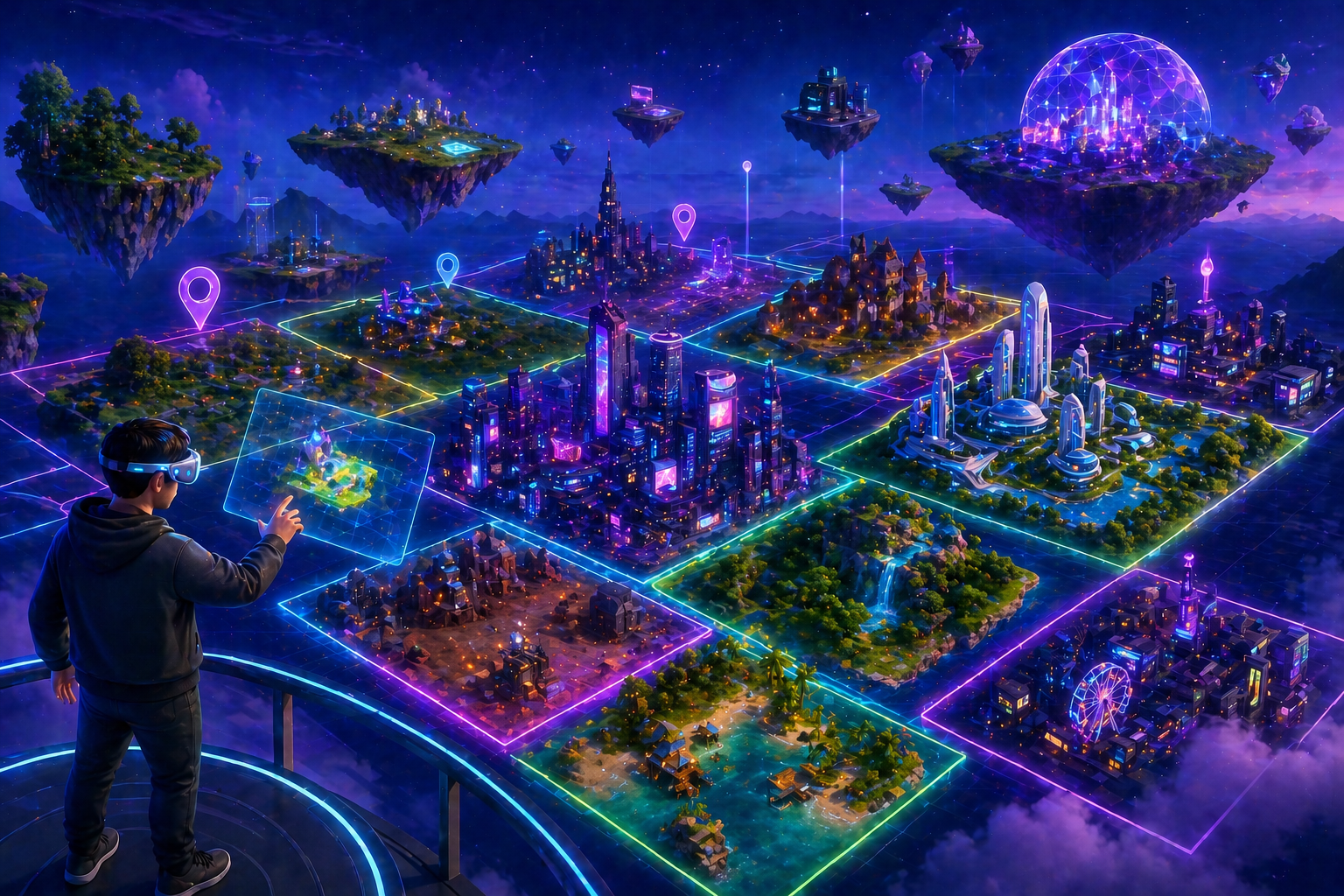
Virtual land is an NFT that represents a parcel of space inside a specific metaverse. Ownership of such an asset is recorded on the blockchain and gives the holder the right to manage the plot according to the platform’s rules: building structures, renting it out, placing advertising, or hosting events.
The value of virtual land is driven by limited supply and user traffic. For example, in Decentraland, the number of land parcels is strictly capped, and plots located in central areas have historically been priced higher due to their proximity to popular locations and major events. A similar model applies in The Sandbox, where the virtual world is divided into a fixed number of LAND NFTs, each representing a unique piece of digital real estate.
Best Land to Buy in Metaverse Projects
When it comes to concrete examples, the most liquid and in-demand virtual land remains plots in Decentraland and The Sandbox. These platforms have a long track record, active communities, and ongoing partnerships with major brands, all of which help sustain demand for virtual land.
Special attention should also be given to Otherside, the metaverse developed by Yuga Labs. Unlike classic social virtual worlds, Otherside focuses heavily on gameplay mechanics and deep integration with the Bored Ape Yacht Club ecosystem. Land in Otherside is not just a static space but an active element of gameplay, which creates a distinct investment profile.
These are the projects most often mentioned when discussing best land to buy in metaverse, as they combine liquidity, strong brand recognition, and real, practical use cases within their virtual economies.
Use Cases: Renting, Advertising, Events, Gaming
Real use cases reveal the practical value of virtual land. In Decentraland, users actively employ land plots for virtual conferences, exhibitions, and concerts. Landowners generate income by renting out space or hosting branded content.
The Sandbox focuses on gaming and creator-driven scenarios. Creators use land to host mini-games, interactive zones, and NFT galleries. These activities create additional demand from developers and content creators.
In Otherside, land-NFTs are deeply integrated into gameplay, making them a functional part of the virtual economy rather than just an object of speculation. This approach strengthens the connection between metaverse crypto projects and real user activity.
Taken together, these examples show that virtual land is no longer an experiment. It has become an infrastructure asset of metaverses and an important factor when evaluating best metaverse crypto from a long-term perspective.
Metaverse Coins vs Gaming Tokens vs NFTs
In practice, users often confuse concepts such as metaverse cryptocurrencies, gaming tokens, and NFTs, even though these assets serve very different purposes. Understanding the differences between them is especially important when choosing best metaverse crypto for long-term participation.
Metaverse coins serve as the core tokens of an ecosystem. Users employ them for payments, governance, virtual land purchases, and service access. These assets most often fall into the category of metaverse coins to buy, since they form the foundation of a virtual world’s economy.
Gaming tokens, by contrast, usually function only within the scope of a specific game. Gameplay popularity and user activity directly determine their value. If interest in the project declines, such tokens can quickly lose liquidity, even if they formally belong to crypto metaverse projects.
NFTs are unique digital assets. They confirm a user’s ownership of land, characters, items, or other digital objects. Unlike tokens, NFTs are non-fungible. Owners more often use them as long-term assets or elements of digital identity.
As a result, best metaverse crypto coin projects typically combine all three components: tokens for the economy, NFTs for ownership, and gaming mechanics to drive user engagement.
Risks and Challenges of Investing in Metaverse Cryptos
Despite the decline in hype, metaverse cryptocurrencies remain highly volatile today. Prices of metaverse tokens often depend on trends, news cycles, and the interest of major market players rather than on fundamental indicators. In addition, many metaverse crypto projects show a high level of infrastructural development but struggle with a lack of active users. Without sustainable demand, the economy of a virtual world cannot grow.
Technological limitations also hinder the development of some projects. High hardware requirements, weak VR/AR integration, and platform fragmentation slow down mass adoption. This directly affects the short-term potential of best metaverse crypto assets.
Finally, investors must consider regulatory risks. NFTs and virtual ownership increasingly attract the attention of regulators. This oversight may influence monetization models. It could also impact how people use metaverse coins across different jurisdictions.
The Future of Metaverse Crypto Projects
Analysts believe that the further development of metaverses will depend less and less on speculative interest. The focus is shifting toward infrastructure, integration with real businesses, and everyday use cases. It is precisely such top metaverse projects that have the highest chances of long-term sustainability.
One of the key growth drivers will be the integration of artificial intelligence. AI-powered avatars, dynamic virtual worlds, and personalized content can significantly increase user engagement. This, in turn, creates additional demand for metaverse cryptocurrencies as tools for payments and governance.
Corporate metaverses are also becoming an increasingly visible direction. Companies are using virtual spaces for training, presentations, and marketing. This strengthens the position of crypto metaverse projects with real, applied value.
In the long term, the market will consolidate around a few ecosystems. These projects will feature sustainable economies, active communities, and real use cases. These ecosystems will form the foundation of the next stage in the evolution of metaverses.
Conclusion
Metaverses in 2026 are no longer an experiment or a hype-driven trend, but a developing segment of the digital economy. Metaverse cryptocurrencies play a key role in shaping virtual worlds by enabling payments, governance, and user interaction.
Metaverses continue to evolve. Hype will not define their future. Instead, technology quality, user engagement, and the practical value of digital assets will determine their success.
Published Articles
 Popular
Bitcoin Pizza Guy: The Story Behind the First Real Bitcoin Purchase
Introduction The history of Bitcoin is full of dramatic ups and downs,...
 Popular
The Meme Economy: How Internet Humor Shapes Culture, Markets, and Crypto
Introduction Ten years ago, the idea that a picture of a dog...
 Popular
What is the Omniverse? Exploring the Ultimate Multiversal Concept
Introduction Do you know what the omniverse is? Is this concept real?...
Bitcoin Taproot Explained: What the Upgrade Means for BTC
Introduction Unfortunately, the most popular cryptocurrency today – Bitcoin – was not...
Crypto On-Ramps and Off-Ramps Explained: How Fiat and Crypto Move In and Out
Entering the world of digital assets often feels like trying to cross...
Crypto Basics Explained: A Beginner’s Guide to Cryptocurrency and Trading
Introduction The world of finance is changing right before our eyes. Just...