
Top Privacy Coins: The Best Anonymous Cryptocurrencies and How They Work
Introduction
If you still think Bitcoin is completely anonymous, I have some bad news. Today, anyone with an internet connection and basic blockchain analysis skills can trace your money. In 2026, network transparency is nearly absolute. While some call this accountability, it feels more like an open invitation for anyone to peek at my personal bank statement without permission. That is why an anonymous cryptocurrency is no longer just a niche tool for techies—it is a basic necessity for everyone.
I often hear the argument that only people with something to hide need privacy. But that misses the point entirely. We close our curtains at night not because we are doing something illegal, but because we value our private space. Finances are no different. In this guide, I want to find out which most anonymous cryptocurrency actually protects your data and which ones just offer a false sense of security. We will go through the technical details without getting buried in boring theory and pick the best tools to protect your digital assets.
What is an anonymous cryptocurrency?
Many people still believe that all crypto is private by default. That is a mistake. In a standard blockchain, your actions are out in the open. If someone links your identity to a wallet address, they can see every single cent you have ever received or spent. A real anonymous cryptocurrency works differently. It does not just give you a “username”; it actively hides the links between the people involved in a transaction.
Basically, an untraceable cryptocurrency is a coin that uses cryptographic tricks to erase your financial footprint. When you send a regular transfer, the details go into a public ledger. With private coins, this “ledger” is encrypted so that an outsider cannot tell where the money came from or where it went. I think this is the most honest approach to digital money in 2026.
For a regular person, this means their data will not leak online every time they buy coffee or pay for a subscription. Anonymous coins give us back the right to handle our own funds without being watched by corporations or random strangers. It is not just about technology; it is about keeping your boundaries in a world where algorithms track every move.
Anonymity vs confidentiality
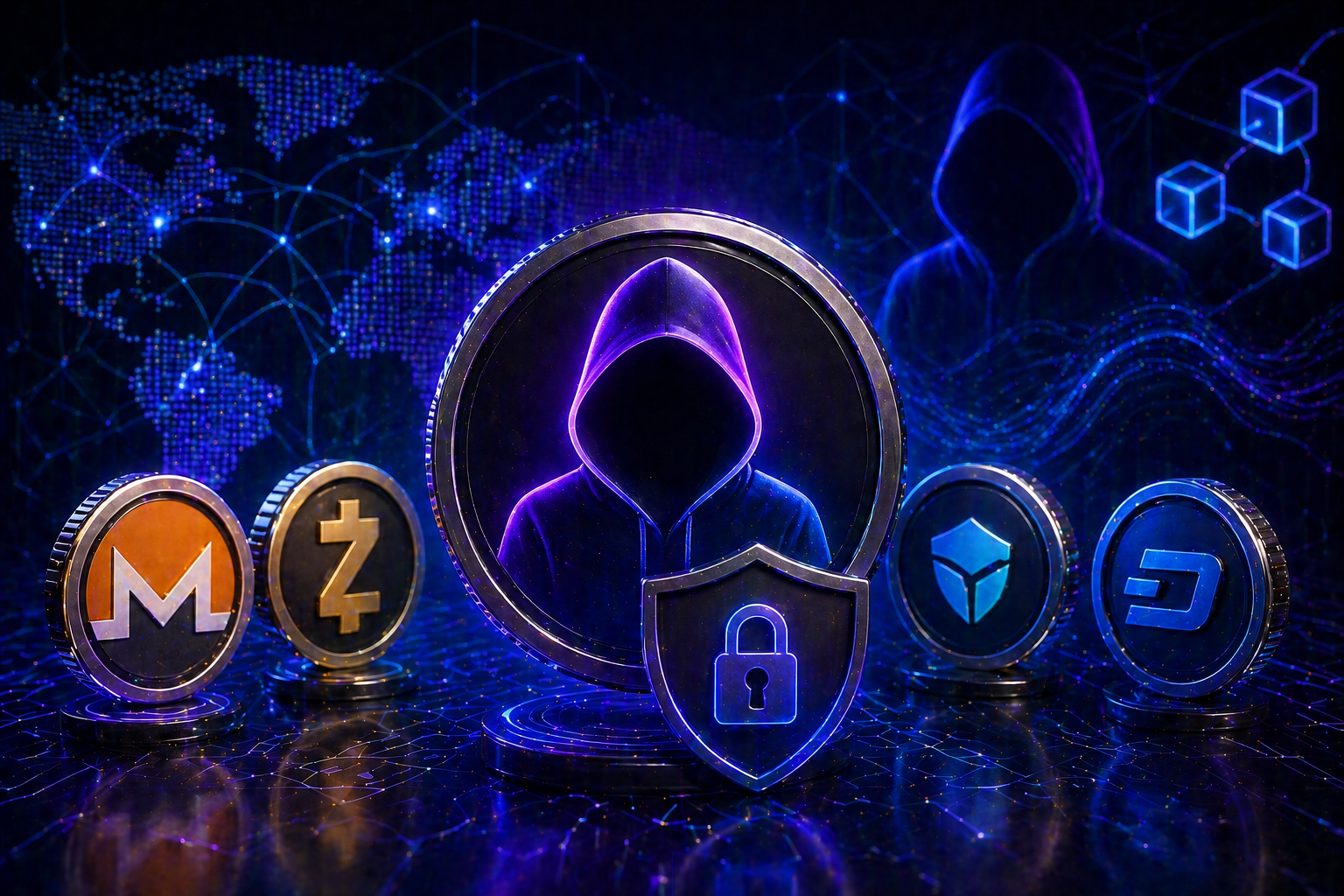
People often use these terms as if they mean the same thing. They don’t. In the crypto world, there is a big gap between them. It took me some time to realize that you can be anonymous and still show everyone your business.
What anonymity means in crypto
Anonymity is when no one knows you own a specific wallet. Think of it like standing in a crowded square wearing a mask. People see someone there, but they don’t know it is you. Blockchain works similarly. Your transactions are visible, but they are linked to a string of random characters instead of your name. But there is a catch: if you ever link that address to your real identity, your untraceable cryptocurrency is not so hard to find anymore.
What confidentiality means in blockchain systems
Confidentiality is about the details. It means no one can see your balance or how much you sent. Even if someone knows your address, they just see encrypted data. This is what makes a coin truly secure. I look at it like a private safe in a bank. People might know you have a box there, but they have no idea if it contains gold bars or old letters.
Why these concepts are often confused
The line gets blurry because the most anonymous cryptocurrency usually tries to offer both at once. We tend to think that if no one knows our name, our actions are hidden too. In reality, analytics firms can track you down based on your patterns if the blockchain does not hide transaction details. I think real privacy only happens when anonymity and confidentiality work together.
How privacy coins achieve anonymity
People often think blockchain anonymity is some kind of digital magic trick. In reality, it all comes down to clever math and developer ingenuity. To turn a regular ledger into an untraceable cryptocurrency, creators have to break the transparency logic we are used to with Bitcoin. There are three main ways to “cover the tracks,” and each has its own strengths.
Ring signatures and stealth addresses
This is the gold standard for Monero. Ring Signatures work like a group petition: a group of people participates in a transaction, and from the outside, it is impossible to tell who actually sent the money. It is just one of ten people in the “ring.” Stealth Addresses go even further. For every deal, the wallet creates a new, one-time address. Even if I send you money a hundred times, the blockchain will show a hundred different payments to random wallets.
Zero-knowledge proofs (zk-SNARKs)
This technology is used in Zcash, and I find it the most elegant. zk-SNARKs allow you to prove a transaction is valid (you have the funds and you sent them) without revealing any details at all. Imagine showing a bouncer your ID while covering everything except your birth date with your thumb. You have proven your age without showing your name or address. This is exactly how this private coin protects your data—everything is verified, but nothing is exposed.
Top privacy coins in 2026
The digital asset market has shifted quite a bit over the last few years, but a handful of projects still hold the crown. I have picked the ones that actually work and have the community’s trust. These are not just names on a list; they are real tools that let you own your money without unwanted witnesses.
Monero (XMR)
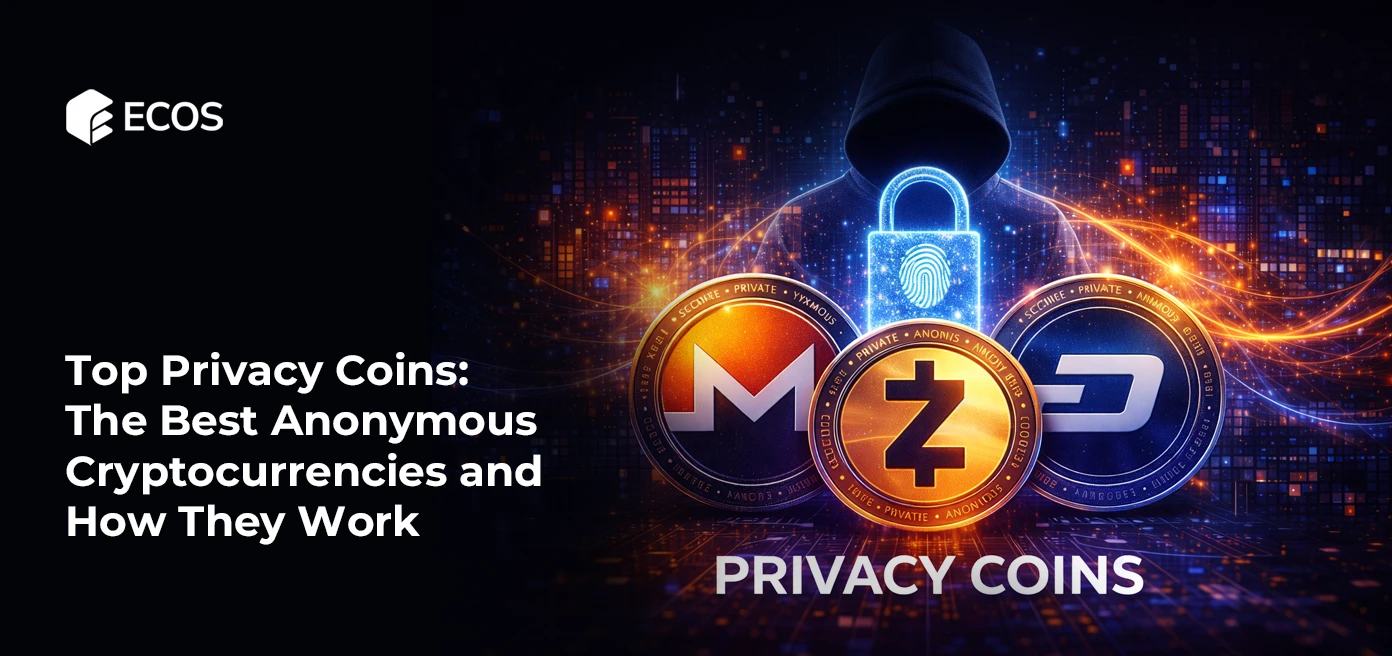
To me, Monero is the clear leader when we talk about the most anonymous cryptocurrency. Privacy here is “out of the box” for every single user. You do not have to mess with settings or toggle buttons—the protocol hides the sender, the amount, and the receiver by default.
A question that pops up a lot is: is monero traceable? In 2026, the answer is still no, as long as you follow basic digital hygiene. Even with all the effort from analytics firms and government bounties for cracking the code, Monero remains the toughest nut in the crypto world. It is a true untraceable cryptocurrency that does not compromise to please regulators.
Zcash (ZEC)
Zcash is the choice for those who value flexibility. Unlike Monero, it offers two types of addresses: transparent and shielded. This is handy if you need to send funds to an exchange through an open channel but want to keep your personal savings hidden.
I like the zk-SNARKs tech they use, but I always keep one thing in mind. Privacy in Zcash is optional. If you send money from a regular address to another regular one, no magic happens. This private coin requires the user to be mindful: if you want silence, you have to use shielded transactions.
Dash and other privacy-focused coins
Dash was one of the first to bring up confidentiality. Its PrivateSend feature works by mixing coins together. In 2026, Dash might not feel as bulletproof as it once did, but it is still popular because of its speed and low fees.
Besides the old guard, we see other top privacy coins emerging, like Iron Fish or protocols based on MimbleWimble. They are trying to find a balance between scalability and data protection. I am watching them with cautious interest—the tech looks promising, but it still needs time to prove its reliability in the real world.
Is monero traceable?
This is probably the most common question in the crypto world. The short answer is no, provided you use it correctly. People keep asking is monero traceable because even the US authorities offered a massive bounty to anyone who could crack its code a few years back. The fact that the money hasn’t been claimed yet speaks volumes. To me, this is the best proof that we are looking at a truly untraceable cryptocurrency.
Sure, blockchain analytics firms often claim they are making progress. But when you look closer, “tracing” usually refers to user mistakes rather than flaws in the code. For instance, if you move coins from an exchange where you showed your ID straight to your wallet, you have already linked your identity to that address. However, once those coins enter the Monero network, they blend in so well that their next move becomes invisible. In 2026, it remains the most anonymous cryptocurrency that actually delivers on its promises.
Why hacking attempts fail
The ring signature technology I mentioned earlier gets regular updates. Developers keep increasing the number of participants in each transaction to make analysis almost impossible. I see Monero as an endless game of hide-and-seek where the hider has an infinite supply of invisibility cloaks. Even with powerful supercomputers, the math behind the XMR blockchain stays too complex to break.
Most anonymous cryptocurrency: is any coin truly untraceable?
I get asked this a lot: can anything be 100% anonymous? Honestly, in tech, the word “absolute” is usually a trap. Any untraceable cryptocurrency is just the result of a non-stop race between developers and those trying to break the system. A coin might be invisible today, but a new data analysis algorithm could show up tomorrow.
Does that mean privacy is dead? Not at all. It just means the most anonymous cryptocurrency is the one that updates faster than the surveillance tools. Right now, Monero and Zcash’s shielded transactions are doing a better job than anything else out there. I see “untraceability” as a constant process rather than a final destination where you can just stop worrying. If you use the right tools and avoid basic mistakes—like sending funds directly from a KYC exchange—your financial life stays private.
Privacy coins vs Bitcoin and Ethereum
People often say Bitcoin is anonymous. I think that is one of the biggest myths in the crypto world. If Bitcoin is a transparent glass showcase, privacy coins are a sturdy safe in a locked room. In the Bitcoin and Ethereum networks, every transaction is recorded in a public ledger forever, and anyone with an internet connection can check your balance or see who you sent money to.
Why transparency can be a problem
Transparency sounds like a good thing until it involves your own wallet. On Ethereum, for example, if I find your address, I can see everything: your balances, your purchase history, and even which protocols you use. It is like putting your bank statement on a billboard in the middle of town. Privacy coins solve this quite simply: they take that data out of the public eye. I do not think this makes them “worse” than Ethereum; they are just built for a different purpose—protecting your personal space.
Regulation and legal risks of privacy coins
Let’s be real: regulators hate privacy coins. For most officials, any private coin is an automatic red flag for money laundering or something worse. In 2026, the pressure on these projects has only ramped up. We are seeing major exchanges drop top privacy coins from their platforms one by one just to stay on the good side of the law. This makes buying and selling these assets a real challenge.
This creates clear risks. If you keep all your savings in anonymous assets, you might find it hard to turn them back into cash through a traditional bank. Legally, owning these coins isn’t a crime in most places, but they make it as difficult as possible for the average user. I see it as a fight for control. Authorities find a transparent blockchain easy to deal with, but an encrypted one scares them because it is independent. Before investing, you should realize that this is not just about money—it is a political statement in favor of your own privacy.
Where to buy privacy coins
Buying a private coin has become much harder than it was a few years ago. Because of regulatory pressure, many big platforms are simply dropping anonymous assets to avoid trouble. If you are looking for where to buy monero, a quick trip to a popular centralized exchange might leave you empty-handed. I think this has created a sort of “filter”—now privacy tools are used by those willing to spend a bit more time learning the ropes.
There are three main ways to get an anonymous cryptocurrency in 2026. First, there are decentralized exchanges (DEXs), which have no central owner and won’t ask for your ID. The second option is P2P markets, where you buy coins directly from another person. This is my favorite method because it stays true to the idea of independent money. The third way is using specialized swap services, though you have to be very careful with their fees and reputation. The golden rule stays the same: once you buy your coins, move them to your own wallet immediately instead of leaving them with a middleman.
Use cases for anonymous cryptocurrencies
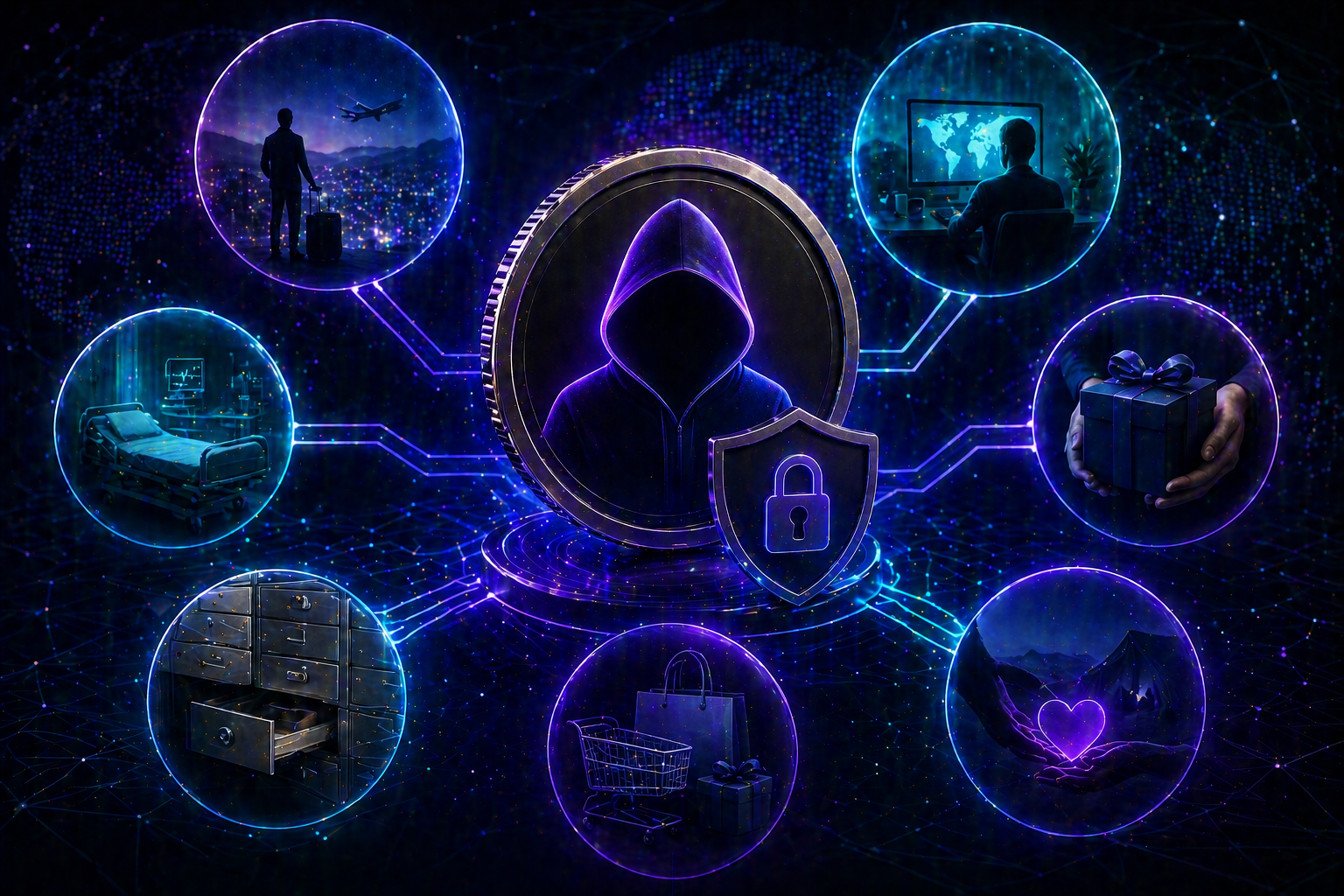
Why does a regular person even need an anonymous cryptocurrency in 2026? It often feels like these tools are only for people trying to break the law. I completely disagree with that. In reality, the reasons are much more practical. I see at least three scenarios where a lack of privacy feels uncomfortable.
First, think about your salary. Imagine buying a coffee, and the barista can immediately see your entire balance and income history on their screen. That is not just awkward; it is dangerous. Using a private coin fixes this issue. Your money stays your business, and no one gets to peek into your wallet without an invitation.
Second, think about business. If a company pays its suppliers through a transparent blockchain, competitors can easily track every deal and volume. That kills any competitive edge. Anonymous payments are a way to protect trade secrets. Finally, it is about basic safety. If the network shows you have a large amount in your wallet, you become a target for scammers. Using an untraceable cryptocurrency is a way to take that target off your back and just live your life.
Risks and downsides of using privacy coins
It wouldn’t be fair to only talk about the perks. Private money has its own share of problems, and some might catch you off guard. In 2026, the biggest headache is liquidity. Since authorities keep pushing trading platforms around, many top privacy coins are simply disappearing from major exchanges. This means when you want to sell your assets for cash, it will be harder than doing the same with Bitcoin.
Then there is the technical side of things. If you are used to slick banking apps, handling a private coin might feel like a chore. You have to stay on top of updates, set up your wallets correctly, and understand how different address types work. One tiny mistake and your transaction might lose its anonymity, or worse, your funds could get stuck.
Also, privacy isn’t free. Because of the heavy encryption math, transactions in these networks take up more space in the blockchain and can cost more in fees. I have seen Monero transfers take much longer than expected just because the network nodes needed extra time to verify all the proofs. That is the price you pay for silence and security.
The future of privacy in cryptocurrency
In 2026, we find ourselves at a strange crossroads. On one hand, encryption tech has become almost magical—allowing us to verify any deal without revealing anything personal. On the other hand, surveillance is so tight that any attempt to keep your spending private raises eyebrows among authorities. I don’t think privacy coins will vanish under this pressure. Instead, they will likely move into deeper, decentralized systems that are simply out of reach for officials.
Blockchain privacy is moving beyond just a line of code; it is becoming a personal choice for everyone. We either accept total transparency, where every move is watched by corporations and analysts, or we learn to use tools like Monero. I believe the demand for “quiet” money will only increase. In a world where algorithms track your every click, being able to handle your funds without witnesses is not just a whim—it is a real luxury.
Conclusion
Let’s be blunt: anonymous cryptocurrencies are not for the lazy. They take time to learn, caution when buying, and a clear grasp of the risks involved. But they are the only real way to make your finances truly private. If you decide to go with an untraceable cryptocurrency, remember: the tech gives you the shield, but how you hold it is entirely up to you.
Don’t wait for the “perfect moment” or the most secure coin of all time. It is enough to start with basic digital hygiene and pick projects that have proven their strength over the years, like Monero or Zcash. At the end of the day, your financial freedom is well worth the couple of evenings spent setting up the right wallet.
Published Articles
 Popular
Bitcoin Pizza Guy: The Story Behind the First Real Bitcoin Purchase
Introduction The history of Bitcoin is full of dramatic ups and downs,...
 Popular
The Meme Economy: How Internet Humor Shapes Culture, Markets, and Crypto
Introduction Ten years ago, the idea that a picture of a dog...
 Popular
What is the Omniverse? Exploring the Ultimate Multiversal Concept
Introduction Do you know what the omniverse is? Is this concept real?...
Bitcoin Taproot Explained: What the Upgrade Means for BTC
Introduction Unfortunately, the most popular cryptocurrency today – Bitcoin – was not...

Crypto On-Ramps and Off-Ramps Explained: How Fiat and Crypto Move In and Out
Entering the world of digital assets often feels like trying to cross...
Crypto Basics Explained: A Beginner’s Guide to Cryptocurrency and Trading
Introduction The world of finance is changing right before our eyes. Just...