
What is Fork Ethereum? Understanding Hard Forks and Their Impact on the Ethereum Network
Introduction
I’ve always found it fascinating how a decentralized network like Ethereum manages to change. Unlike a company where a CEO just signs an order, Ethereum relies on thousands of people agreeing on the same rules. But what happens when they don’t agree? That’s where the concept of an ethereum fork comes in.
I remember the tension during some of the bigger network updates. It’s never just a technical “patch.” It feels more like a constitutional crisis where the community has to decide which version of reality they want to follow. In this guide, I’ll break down what a fork ethereum actually is, why they happen, and why some of them ended up creating entirely new cryptocurrencies that we still trade today.
What Is a Fork in the Ethereum Network?
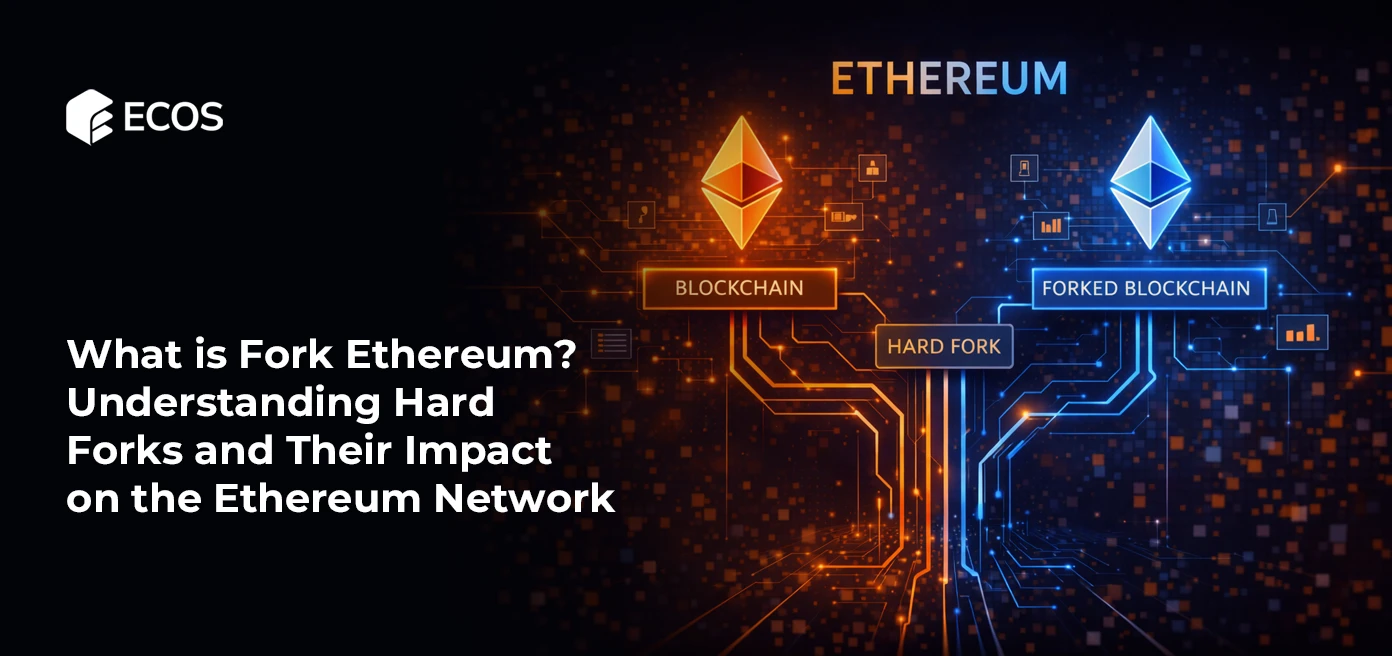
At its simplest, a fork is a change in the protocol of the blockchain. Think of it like a fork in the road. For a while, everyone is traveling on the same path, but then a decision point appears. Some people want to go left, others want to go right.
In the world of ethereum blockchain forks, this happens when the software that runs the network is updated. Because the system is decentralized, every single node (the computers running the software) needs to decide if they will accept the new rules. If most people agree, the network stays together. If they can’t reach a consensus, the path literal splits, and you end up with two separate blockchains.
Ethereum Hard Forks Explained
When we talk about big changes, we’re usually talking about an eth hard fork. This isn’t just a minor tweak; it’s a fundamental shift.

What Is a Hard Fork?
A hard fork is a permanent divergence from the previous version of the blockchain. The new rules are incompatible with the old ones. Think of it like a video game update where the new version is so different that you can’t play with people who haven’t updated their game.
In a hard fork ethereum scenario, nodes that run the old software are no longer recognized by the nodes running the new software. This is a high-stakes move. If part of the community refuses to upgrade, the chain splits forever. This is exactly how we got different versions of the network after people disagreed on how to handle technical or even moral issues within the code.
How Hard Forks Affect the Ethereum Network
I’ve noticed that people often focus only on the price of the coin during these events, but the impact goes much deeper. An ethereum hard fork changes the very rules of the game. It might change how fast transactions are processed or how much miners (or stakers) get paid.
For developers, it means they have to make sure their apps still work on the new version. For users, it can sometimes be confusing—suddenly you might find yourself holding two different types of tokens if a split occurs. It’s a moment of “clean up” for the network, but it also tests how strong the community’s trust really is.
Examples of Major Ethereum Hard Forks (e.g., DAO Fork, Constantinople)
When I look back at Ethereum’s timeline, a few updates feel like more than just code changes. They were moments of high stakes that tested the community’s nerves.
The DAO Fork of 2016 is probably the most famous. It wasn’t a scheduled upgrade; it was a rescue mission. A hacker found a loophole in a project called “The DAO” and started draining millions. It was a mess. Half the community argued that “code is law” and the theft should stand. The other half wanted to rewrite history to get the funds back. They chose to fork, and that’s why we have two different coins today—Ethereum and Ethereum Classic. It’s a perfect example of how a technical eth hard fork can become a philosophical battle.
Then there’s Constantinople, which rolled out in early 2019. This was part of a bigger plan to make Ethereum more efficient. It wasn’t about drama or hackers, but it was still a big deal. It lowered the costs for certain operations on the network and delayed the “difficulty bomb”—a piece of code designed to make mining harder as the network moves toward new rules. What I remember most is that it got delayed at the very last second because of a security flaw. It’s a good reminder that in any fork ethereum process, caution is usually better than speed.
Famous Ethereum Forks
When people talk about ethereum forks, they usually aren’t thinking about minor code updates. They’re thinking about the big split that created two different worlds.
Ethereum Classic (ETC) Fork
The etc fork is the ultimate example of what happens when a community’s soul splits in two. Back in 2016, there was no “Classic” or “Mainnet”—there was just Ethereum. But after the DAO hack, everything changed. I find it fascinating that the split wasn’t really about money; it was about a philosophy.
One group believed that the blockchain must be immutable—no matter what happens, you don’t erase history. They stayed on the original chain, which we now call Ethereum Classic. The other group, led by Vitalik Buterin, decided that protecting investors was more important than rigid rules. They moved to the new chain. It’s a strange feeling to think that the “original” Ethereum is actually the one that is now much smaller and less popular.
The Impact of the DAO Hack on Ethereum
I don’t think people realize how close this hack came to killing the project. Imagine 14% of all existing Ether suddenly sitting in one hacker’s wallet. It wasn’t just a theft; it was an existential crisis for the ethereum blockchain.
The eth hard fork that followed was a desperate attempt to undo the damage. It worked in terms of getting the money back, but it left a permanent scar. It proved that “decentralized” doesn’t always mean “beyond human control.” For a lot of purists, that realization was a hard pill to swallow. It changed how developers write smart contracts today—everyone is much more vigilant now, which is probably a good thing.
How Ethereum Classic and Ethereum Differ Today
Today, ETH and ETC are like two siblings who don’t talk to each other anymore. Ethereum (ETH) is the giant. It moved to Proof of Stake, it hosts almost all the big DeFi apps, and it’s constantly changing. It’s the “corporate” version that everyone uses.
Ethereum Classic (ETC), on the other hand, is the stubborn one. It still uses mining (Proof of Work) and refuses to change its core rules. If you’re looking for a hard fork ethereum story that shows the difference between pragmatism and idealism, this is it. One is a playground for innovation; the other is a museum of “how it used to be.”
What Happens During an Ethereum Hard Fork?
I’ve often wondered how a global network of thousands of computers actually switches to a new version without everything crashing. It’s messy, but there’s a logic to it.
Network Split and New Blockchain Creation
Think of a fork ethereum event as a software update that everyone has to agree on at the exact same second. If you don’t update your node, you’re essentially left behind in a ghost town. When the split happens, the blockchain literally copies itself. One path follows the new rules, while the old one keeps going with the old ones. If enough people stay on the old path, a new coin is born. This is how forked coins and network congestion (форкнутые монеты и перегрузка сети) become part of the conversation—suddenly, there’s twice as much data to track.
How Miners and Nodes React to Hard Forks
Nodes are the judges here. If a node operator doesn’t like the new rules of an eth fork, they simply don’t update. But for miners (or stakers), it’s a business decision. They follow the profit. I’ve seen miners jump ship the moment they realize one chain is going to be worth more than the other. It’s not about loyalty; it’s about paying the electricity bills. This migration can make the network temporarily unstable, which is why you often see exchanges pause deposits during a major update.
Consequences of Forks for Users and Developers
When an eth hard fork happens, it isn’t just a background update. It hits the people using the network right in the wallet.
For a regular user, a fork can feel like Christmas or a total mess. If the chain splits, you might wake up with “free” coins on the new network—forked coins are how many people got their start in different ecosystems. But it’s not all free money. There’s usually a lot of network congestion, and exchanges often stop you from moving your funds until they’re sure which side is winning. I’ve seen people panic because they couldn’t sell during a price drop just because an update was in progress. It’s a stressful time where “doing nothing” is usually the best strategy.
Developers have it even harder. If you’re running a dApp (decentralized app), a fork ethereum event means you have a choice to make. Does your code work on the new version? If the community splits, which chain do you stay on? It’s not just about fixing bugs; it’s a business bet. You have to hope you’re building on the version of Ethereum that people will actually use six months from now. It adds a layer of uncertainty that you just don’t find in traditional software development.
Forked Coins and Network Congestion
I’ve seen people get incredibly excited about “free money” whenever a split happens. When a fork ethereum event results in two chains, you technically own coins on both. It sounds like a win, but the reality is often messy.
These forked coins create a sudden rush. Everyone tries to move their new assets to exchanges at the same time to sell them before the price crashes. This leads to massive network congestion. I remember times when gas fees went through the roof, making the network almost unusable for hours. It’s a chaotic scramble that reminds us that decentralized systems still have very real physical limits. If you’re trying to send a normal transaction during a major eth hard fork, you might be waiting a long time or paying a fortune for the privilege.
Future Ethereum Forks
Ethereum isn’t a finished product. It’s more like a living organism that has to keep changing to survive. The roadmap is full of upcoming ethereum forks like “Pectra,” which aim to make the network even faster and safer.
I’m personally keeping an eye on how these updates will handle the growing demand for Layer 2 solutions. We aren’t just talking about fixing bugs anymore; we are talking about how Ethereum can support millions of users without breaking. Each future ethereum hard fork is a bet on the network’s longevity. Some people worry that too many changes will make the system too complex, and I think they have a point. But staying still is even riskier.
How Hard Forks Affect Ethereum’s Ecosystem
A major hard fork ethereum update sends ripples through everything—from the smallest NFT project to the biggest DeFi protocol.
It’s like a house renovation while you’re still living in it. Developers have to spend weeks auditing their code to make sure a new update doesn’t accidentally lock people out of their funds. I’ve noticed that the ecosystem has become much better at this over time. We’ve moved away from the “move fast and break things” era to a more mature approach. The ethereum blockchain forks of today are much more coordinated than the chaotic splits of the past, which gives institutional investors more confidence to step in.

Risks and Benefits of Ethereum Hard Forks
There’s no such thing as a free lunch in blockchain. Every eth fork is a trade-off.
The benefits are clear: we get better security, lower fees, and new features that were impossible a year ago. It’s how the network stays relevant. But the risks are real. A bug in a hard fork can lead to lost funds or a loss of trust that takes years to rebuild. There’s also the risk of community fragmentation—if people can’t agree, the network gets weaker. I believe the biggest risk isn’t technical; it’s social. As long as the community can talk through their differences, Ethereum stays strong.
Conclusion
So, what is fork ethereum? It’s more than just a technical term. It’s the way a leaderless network makes progress. Whether it’s a planned upgrade or a dramatic split like the one that created Ethereum Classic, forks are proof that the network is alive.
I don’t think we’ll ever see a “final” version of Ethereum. The world changes too fast for that. But by understanding how these ethereum hard forks work, you get a better sense of where the entire crypto world is headed. It’s a messy, complicated, and often stressful process, but it’s the only way to build something that actually lasts.
Published Articles
 Popular
Bitcoin Pizza Guy: The Story Behind the First Real Bitcoin Purchase
Introduction The history of Bitcoin is full of dramatic ups and downs,...
 Popular
The Meme Economy: How Internet Humor Shapes Culture, Markets, and Crypto
Introduction Ten years ago, the idea that a picture of a dog...
 Popular
What is the Omniverse? Exploring the Ultimate Multiversal Concept
Introduction Do you know what the omniverse is? Is this concept real?...
Bitcoin Taproot Explained: What the Upgrade Means for BTC
Introduction Unfortunately, the most popular cryptocurrency today – Bitcoin – was not...

Crypto On-Ramps and Off-Ramps Explained: How Fiat and Crypto Move In and Out
Entering the world of digital assets often feels like trying to cross...

Crypto Basics Explained: A Beginner’s Guide to Cryptocurrency and Trading
Introduction The world of finance is changing right before our eyes. Just...