
Altseason: What It Is and How to Make Money on Altcoin Growth
Introduction
Every bull market eventually produces a moment traders refer to simply as altseason. Bitcoin climbs, establishes its narrative, and then something shifts. Capital rotates. Projects that were mostly ignored begin printing double and triple-digit gains in days. New wallet holders flood in. Social feeds fill with screenshots of portfolios that have multiplied several times over in a matter of weeks.
Altseason is real, historically documented, and potentially very profitable. It is also brief, volatile, and regularly ends before most participants realize it has peaked. Understanding what triggers it, how to recognize it early, and — critically — how to avoid the mistakes that wipe out gains is what separates those who profit from those who exit with less than they started.
This guide covers what altseason means, the mechanics behind it, the signals that indicate one is underway, the types of projects that tend to lead each cycle, and the strategies experienced traders use to navigate the chaos.
What Is Altseason?
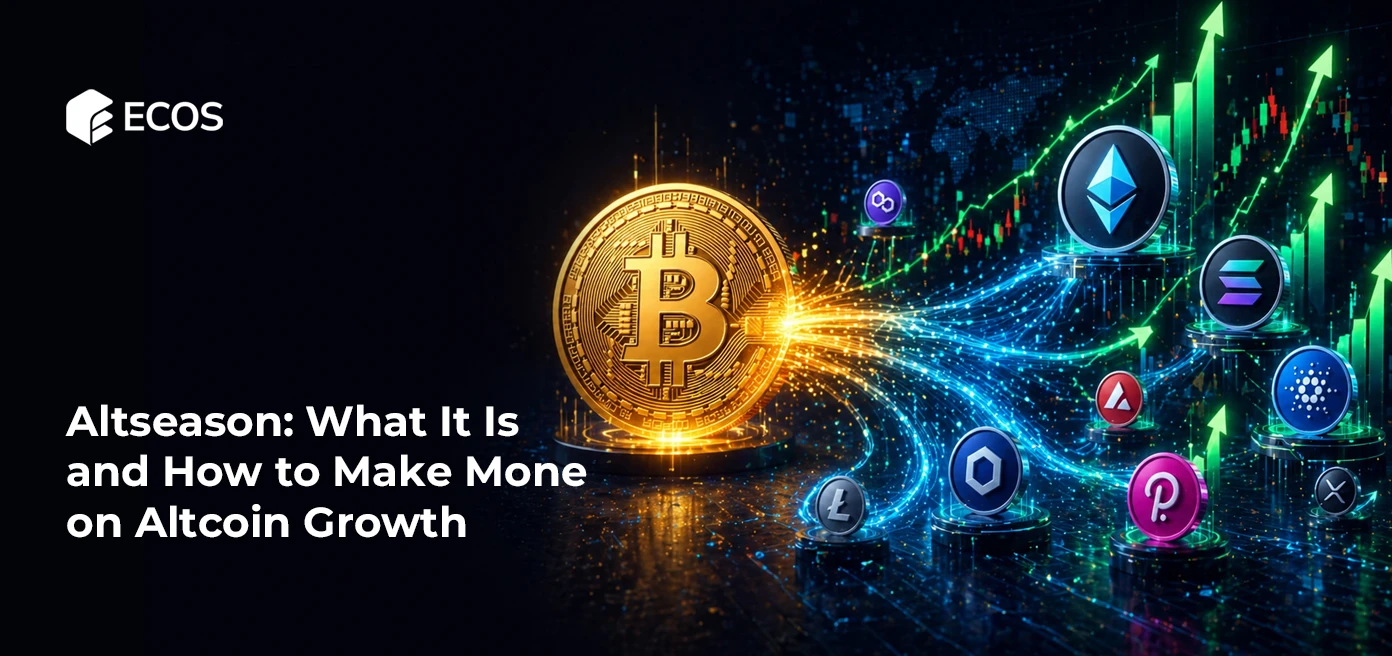
Altseason — also written as alt season — is a market phase in which altcoins, meaning any cryptocurrency other than Bitcoin, significantly outperform Bitcoin over a compressed time period. During this window, it is common to see major altcoins like Ethereum, Solana, or Avalanche gain 50–300% in a matter of weeks, while smaller-cap projects in trending sectors sometimes multiply by much larger factors.
The term comes from the observation that crypto markets tend to rotate. Bitcoin usually leads each new cycle by breaking to new highs. Once Bitcoin’s move begins to stabilize, liquidity and speculative interest shift into the broader market. Traders who have already made gains on Bitcoin look for higher-velocity opportunities. Newer market participants, drawn in by headlines about Bitcoin’s price, often arrive just in time to participate in the altcoin portion of the cycle.
What is alt season in technical terms? It is typically defined by the Bitcoin Dominance Index — a metric tracking Bitcoin’s share of total crypto market capitalization — falling meaningfully from elevated levels. When BTC dominance drops from, say, 58% toward 42%, that declining share represents capital flowing into other assets. The altcoin market cap collectively rises, and within that rise, individual projects can move violently depending on how much attention their specific sector attracts.
Not every altcoin participates equally. During altseason, market cap tiers tend to move in sequence: large-cap alts like ETH often move first, followed by mid-caps, and finally small-cap and micro-cap tokens in the highest-risk/highest-reward range. Projects with no fundamentals also rally during this period, which is part of what makes navigation challenging.
How Altcoin Season Starts
Altcoin season rarely starts from nothing. The typical sequence follows Bitcoin’s price action establishing a new range or breaking to fresh highs. Once Bitcoin’s volatility compresses — meaning it stops making dramatic new moves every day — traders become restless. Return potential on BTC from current prices looks limited compared to altcoins that haven’t moved yet.
Ethereum usually moves first. As the largest altcoin by market cap and the hub of DeFi and NFT activity, ETH tends to lead the rotation from Bitcoin. When Ethereum’s ratio against Bitcoin (ETH/BTC) begins rising after a prolonged period of underperformance, that is frequently the first clear signal that alt season is starting rather than merely speculated about.
Capital doesn’t arrive randomly. Institutional flows, retail FOMO, and on-chain activity all contribute. When stablecoin supply on DEXs increases, it signals dry powder sitting on the sidelines looking for deployment. When application layer activity on Ethereum, Solana, and other smart contract platforms picks up — measured by transaction counts, fee revenue, and daily active users — it suggests genuine demand rather than pure speculation.
Narrative catalysts accelerate the process. A major protocol upgrade, a new sector gaining traction (AI-integrated tokens, real-world assets, decentralized physical infrastructure networks), or a macro event reducing risk aversion can all compress the usual sequence and produce very sharp moves in a short time window.

Signs That Altseason Is Starting
Falling BTC Dominance
Bitcoin Dominance is the most widely watched altseason indicator. When BTC’s share of total market cap falls below 50% and continues declining, that is a structural shift — money is leaving Bitcoin positions (or at least new inflows are going elsewhere) and entering the broader market.
Historical altseasons have often coincided with Bitcoin Dominance falling below 45%. During the 2021 peak, dominance briefly reached levels below 40%. Tracking this metric daily on platforms like TradingView or CoinMarketCap gives traders a clear contextual backdrop before they commit capital to specific altcoins.
Be careful with this signal in isolation. Falling dominance doesn’t guarantee altcoin profits — it means money is moving out of BTC relatively, but if overall market cap is declining too, altcoins can still lose value in dollar terms even as they “outperform” Bitcoin percentage-wise.
Rising Altcoin Market Cap
Total altcoin market capitalization — often tracked via the TOTAL2 index on TradingView (which excludes Bitcoin from the total) — is a cleaner signal than Bitcoin Dominance alone. When TOTAL2 breaks previous resistance levels and begins making higher highs, altseason is typically in progress or accelerating.
Comparing TOTAL2 to its 200-day moving average provides another useful reference point. Sustained trading above that average, with expanding volume, suggests a trend rather than a temporary spike. Sharp moves upward followed by consolidation — rather than immediate reversal — indicate sustained buyer interest across the altcoin space.
Increased Trading Volume
Volume is the confirmation signal. Price moves without volume can reverse quickly. When altcoin trading volumes across major centralized and decentralized exchanges expand significantly — particularly in assets that were previously quiet — it shows genuine participation rather than thin-market manipulation.
DEX volume on Uniswap, Raydium, and other on-chain platforms is especially informative. A surge in DEX trading activity typically precedes or accompanies speculative altcoin moves, since retail traders often use decentralized platforms to access early-stage or newly listed tokens. Tracking weekly DEX volume relative to prior weeks gives a real-time sense of market momentum.
How to Identify the Next Altseason Tokens
Not all altcoins participate equally in altseason, and many lose significant value during the same period that headline projects are making new highs. Identifying which projects are likely to outperform requires looking beyond price action.
Strong Fundamentals
Projects with real products, growing user bases, and transparent development teams tend to attract sustained interest rather than just temporary speculative pumps. Metrics worth examining include daily active addresses, transaction volume, fee revenue (which reflects genuine usage), developer commit frequency on GitHub, and the presence of meaningful liquidity on multiple exchanges.
Token economics matter too. Projects with high inflation schedules — where a large percentage of supply is unlocked each month — face constant selling pressure from early investors and team members. Tokens with controlled emission schedules, buy-and-burn mechanisms, or meaningful lockup periods for team allocations are structurally more favorable for price appreciation.
Ecosystem Growth
The largest altcoin outperformers during each cycle tend to be at the center of an actively growing ecosystem. The 2021 cycle saw Solana and Avalanche surge as developers and users flocked to their ecosystems as alternatives to Ethereum. Layer-2 tokens on Ethereum (Arbitrum, Optimism, Polygon) gained traction in 2023 as adoption of rollup technology grew.
Watch for ecosystems where the number of deployed smart contracts, protocols, and active users is growing month-over-month even before price reflects it. Developer activity — new projects launching, existing projects updating — is a leading indicator of ecosystem health that tends to precede price appreciation by weeks or months.
Narrative Trends (AI, DeFi, Gaming)
Crypto markets are heavily narrative-driven. During any given altseason, certain sectors capture a disproportionate share of attention and capital. In 2021, it was DeFi and NFTs. More recently, AI-integrated blockchain projects, real-world asset tokenization, and decentralized physical infrastructure (DePIN) have commanded premiums.
Identifying which narratives are gaining traction early — before they appear in mainstream financial media — is one of the highest-value skills in altseason trading. Monitoring crypto Twitter, niche research newsletters, developer forums, and on-chain funding data for new projects gives earlier signals than waiting for the narrative to hit broader news coverage.
Gaming and metaverse tokens have had multiple cycles of hype and deflation. Each time, the projects with actual user retention and monetizable gameplay performed better on a relative basis than those running purely on speculative interest. The pattern repeats: narrative drives the initial move, fundamentals determine who survives.
Next Altseason Coins to Watch
Projecting specific token winners is inherently speculative, but certain categories consistently produce outperformers in each cycle. Rather than naming specific tokens — which change rapidly — the more durable insight is understanding which project types tend to lead.
Ethereum ecosystem tokens tend to move early in altseason. Projects building on Ethereum’s base layer — layer-2 networks, liquid staking derivatives, restaking protocols — benefited directly from Ethereum’s transition to proof-of-stake and the subsequent scaling roadmap. As Ethereum processes more transactions through rollups, the fee economics of L2 tokens become increasingly relevant.
Cross-chain infrastructure projects attract attention during periods when activity spreads across multiple blockchains. Bridge protocols, cross-chain messaging networks, and multi-chain wallet infrastructure all see volume increase when users and capital are moving between ecosystems rather than concentrating in one place.
Sector leaders in whichever narrative is dominant in a given cycle tend to outperform their peers significantly. The top DeFi protocols by TVL, the leading blockchain gaming platform by active players, or the most-used AI-integrated chain by developer adoption all attract a disproportionate share of speculative interest compared to projects in the same category with smaller footprints.
For next altseason coins specifically, watch projects with upcoming catalysts: major protocol upgrades, token generation events where locked supply begins unlocking favorably, exchange listings on tier-1 platforms, or institutional product launches (ETFs, structured products) linked to specific assets.
Strategies for Trading Altseason
Having a structure before altseason starts is far more useful than building one after it has already moved significantly. Most traders who underperform during altseason do so not because they lack knowledge of what to buy, but because they lack a framework for when to buy, how much to allocate, and — most critically — when to take profit.
- Rotate from BTC to ETH first — The ETH/BTC ratio is a real-time gauge of rotation. When it starts rising from depressed levels, that’s the first signal the broader rotation has started. Moving a portion of Bitcoin holdings into Ethereum early in the cycle captures the first leg while maintaining relative safety compared to smaller alts.
- Allocate by market cap tier — Larger-cap alts carry lower risk but also lower upside. Smaller caps can produce extreme returns but can also drop 90% just as quickly. A tiered approach — 50–60% in large-cap alts, 25–30% in mid-caps, 10–15% in small-caps — provides participation across the spectrum without overconcentrating in the highest-risk tier.
- Set price targets before entering — Identify the percentage gain at which you will take partial profits and set those targets explicitly before emotion enters the picture. Most experienced traders take a portion off the table at 2x, another portion at 5x, and let a small residual run with a trailing stop. This structure locks in gains while leaving exposure to continued upside.
- Manage position size relative to liquidity — Tokens with thin trading volume can produce stunning paper gains but be impossible to exit at anything near the displayed price. Position sizes in small-cap tokens should account for realistic exit liquidity, not just entry price.
- Track sector rotation within altseason — Capital doesn’t stay in one sector. DeFi may lead early, then gaming tokens take over, then infrastructure tokens. Watching where new inflows are going via on-chain data and social sentiment helps identify rotation before it fully prices in.
Altseason vs Bitcoin Season
Understanding the distinction between these two market phases prevents costly timing errors.
| Feature | Altseason | Bitcoin Season |
| BTC dominance | Falling (below 40–45%) | Rising (above 55–60%) |
| Market leadership | Altcoins outperform BTC | Bitcoin leads all gains |
| Retail participation | High — new entrants chasing gains | Lower — institutional focus |
| Risk level | Very high — many projects fail | Moderate — BTC is established |
| Typical duration | Weeks to a few months | Can last 6–12+ months |
| Profit potential | Extreme (10x–100x possible) | Significant (2x–5x common) |
Most cycles feature both phases in sequence. Bitcoin typically leads the macro bull market, establishing narrative credibility and attracting large institutional and retail inflows. Once Bitcoin’s price stabilizes — either at a new high or after a correction — altcoins begin their rotation. The key error many traders make is expecting altseason immediately after Bitcoin breaks out, rather than giving the Bitcoin phase time to complete.
Not every bull market produces a pronounced altseason. In cycles where Bitcoin dominance stays persistently high — often because institutional ETF flows concentrate capital in Bitcoin specifically — the rotation into altcoins may be muted or delayed compared to historical patterns. The 2024–2025 cycle demonstrated this dynamic, with Bitcoin ETF inflows keeping dominance elevated longer than many altcoin-focused traders expected.
Common Mistakes During Altseason
Chasing pumped tokens is the most common and most expensive error. When a token has already gained 300% in a week and social media is flooded with gain screenshots, the early move has already happened. Entering at that point means buying from those who entered earlier and are looking to exit.
Ignoring exit planning destroys gains that were legitimately made. Traders regularly see their portfolios peak at 10x, fail to take profit, and watch them fall back to 2x or even below cost as the phase ends. Altseason ends with similar speed to how it started, and the price action during the decline is often more violent than the rise.
Spreading capital too thin dilutes returns. Owning 30 different altcoin positions means that even if 5 produce extraordinary returns, the other 25 dragging will significantly reduce portfolio performance. Concentration in high-conviction positions with genuine research behind them tends to outperform scatter-shot allocation.
Using leverage during high volatility is a fast path to liquidation. Altseason produces rapid 20–30% corrections even during overall uptrends. Leveraged positions can be wiped out by normal volatility during this phase before the trend resumes.
Neglecting Bitcoin as a benchmark creates a dangerous blind spot. If a portfolio is up 40% in dollar terms but Bitcoin is up 80% in the same period, the altcoin allocation actually underperformed on a risk-adjusted basis. Always measure returns against Bitcoin’s performance, not just against dollar baselines.
How Long Does Altseason Last?
Historical altseasons have ranged from a few weeks to several months, with the most intense periods of outperformance typically compressed into a 4–12 week window. The 2017 altseason extended from roughly November through January 2018 — about two months of extraordinary gains followed by a sharp and sustained reversal. The 2021 cycle produced multiple shorter altcoin bursts in March-April and again in October-November, each lasting weeks rather than months.
Duration depends on the broader macro environment, Bitcoin’s own price action, and whether genuine product adoption is driving altcoin demand or whether it is purely speculative. Altseasons driven at least partly by fundamental adoption — users actually using DeFi, gaming, or infrastructure applications — tend to produce more sustained price action than those driven entirely by speculative momentum.
The safest assumption is that altseason is shorter than it feels while it’s happening. Profitable altcoin periods feel like they will last indefinitely when they are underway. Setting a calendar reminder to actively review positions and take profit after 8–12 weeks of strong performance is a useful forcing function against the psychological pull of letting winners run forever.
Risks of Investing in Altseason
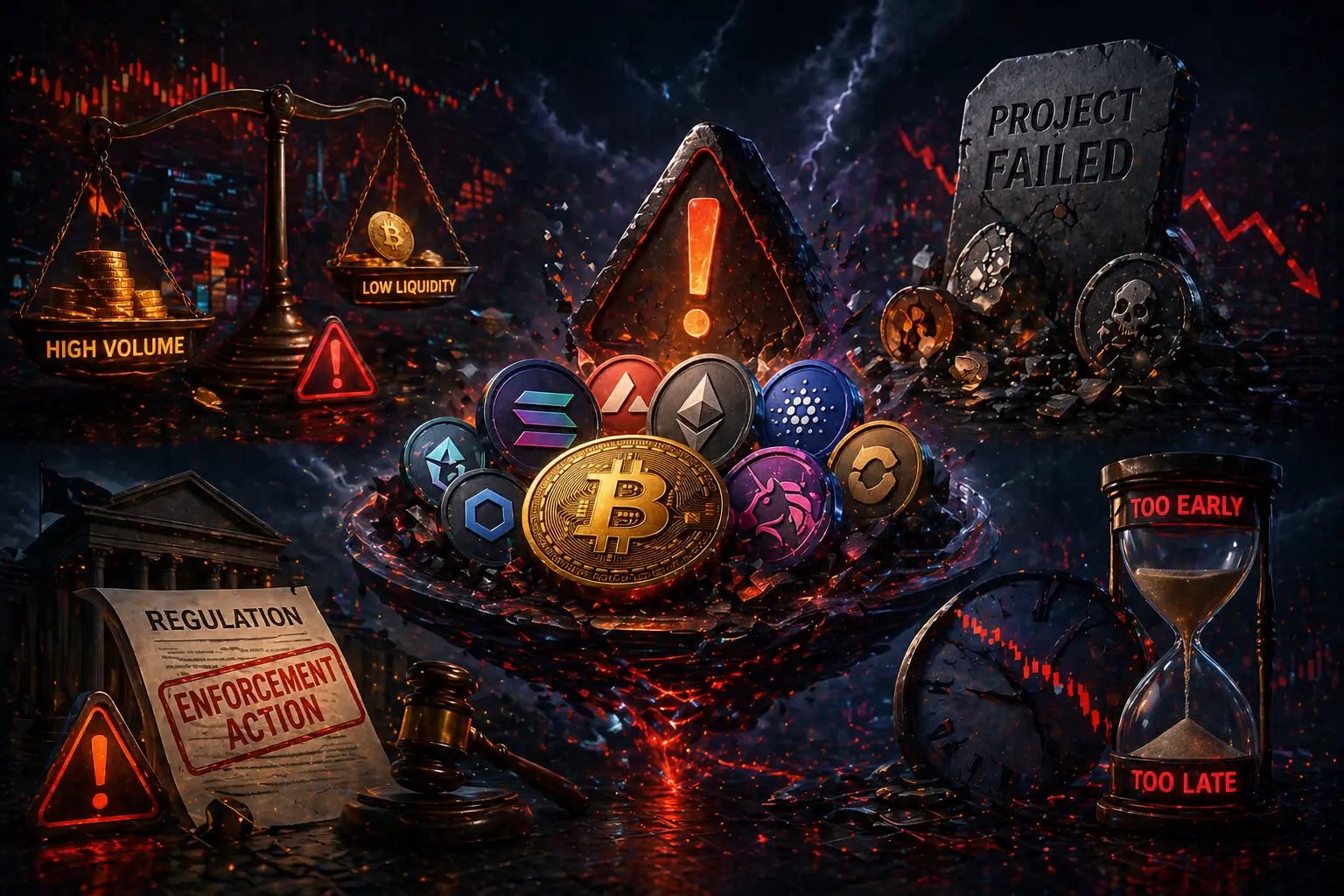
Liquidity risk is often underestimated. Many altcoins have millions of dollars in daily trading volume — which sounds significant until you realize that selling $100,000 worth of a token with $500,000 in daily volume will move the market against you substantially. Real exit liquidity for large positions is almost always lower than the quoted volume suggests.
Project failure is permanent. Unlike Bitcoin, which has demonstrated resilience across multiple crashes, altcoins can go to zero — literally. Teams abandon projects, exploits drain protocols of all funds, regulatory actions shut down operations, and market interest simply never returns. Diversification within the altcoin space helps, but it does not eliminate the possibility of individual position total loss.
Regulatory risk has become more consequential. Multiple jurisdictions have taken enforcement action against crypto projects for securities violations, unregistered exchanges, and market manipulation. A regulatory action against a specific project or exchange can produce instant 80–90% price drops with no warning.
Timing risk cuts both ways. Entering too early — before altseason has actually started — means holding through Bitcoin-denominated drawdowns while waiting for rotation. Entering too late means buying into a phase that is already near its end. Both errors are extremely common.
Key Takeaways
- Altseason is a defined market phase where altcoins collectively outperform Bitcoin, typically triggered by falling BTC dominance and capital rotation from Bitcoin into the broader market.
- The sequence matters — Ethereum usually moves before smaller altcoins, and within sectors, fundamentally stronger projects tend to lead. Watching ETH/BTC ratio is the most reliable early indicator.
- Narratives drive early moves — whichever sector — AI, DeFi, gaming, infrastructure — captures market attention first receives a disproportionate share of inflows. Identifying the dominant narrative early is more valuable than picking specific tokens.
- Exit planning is non-negotiable — the majority of unrealized gains from altseason are lost by traders who don’t have predefined profit-taking levels. Set targets before entering, not after the position is moving.
- Duration is always shorter than expected — historical altseasons last weeks to a few months. Treating each one as potentially the last before a major reversal creates healthier decision-making than assuming the rally is permanent.
- Risks are asymmetric — individual altcoins can produce extraordinary gains or go to zero. Position sizing, liquidity awareness, and diversification across tiers manage but do not eliminate this reality.
Expert Insight
According to Gemini’s Cryptopedia: “Altcoin seasons are periods during which altcoins outperform Bitcoin in terms of price appreciation. These phases are typically characterized by increased retail interest, rising trading volumes across the broader market, and a decline in Bitcoin’s share of total crypto market capitalization.”
That framing captures the fundamental mechanics accurately. What it understates is the psychological dimension: altseason produces conditions where rational risk assessment becomes extremely difficult. Returns that look extraordinary on paper create pressure to hold longer than planned. Social environments filled with gain announcements create pressure to chase. Building exit rules, position size limits, and sector rotation triggers before the phase starts — and committing to following them — is what determines whether a trader captures altseason’s opportunity or merely participates in its volatility.
Conclusion
Altseason represents one of the most concentrated wealth-generation opportunities in financial markets, and simultaneously one of the fastest ways to lose capital that was hard-earned during the preceding Bitcoin phase. The difference between those outcomes usually comes down to preparation.
Understanding what altseason is, why it occurs, which signals reliably precede it, and how to structure a portfolio to capture its gains without overstaying the welcome — that knowledge existed before the last cycle and will remain relevant through the next one. Markets change. Human behavior during periods of rapid price appreciation does not.
The traders who extract lasting value from altseason are typically not the ones who pick the most extreme winners. They are the ones who identified the phase early, sized positions appropriately, took profit systematically, and avoided the overconfidence that turns a successful trade into a cautionary tale.
FAQ
What is altseason?
Altseason is a market phase in which altcoins — all cryptocurrencies other than Bitcoin — significantly outperform Bitcoin over a compressed period. It typically occurs after Bitcoin has established a new price range, as capital rotates from Bitcoin into the broader market. The phase is characterized by falling Bitcoin Dominance, rising altcoin market capitalization, and surging trading volumes across multiple projects and sectors.
How do you know when altseason starts?
The most reliable indicators are: Bitcoin Dominance falling meaningfully from elevated levels (below 50% and continuing lower); the ETH/BTC ratio beginning to rise after a period of underperformance; total altcoin market cap (TOTAL2) breaking above key resistance levels; and expanding trading volume across decentralized exchanges. No single signal is definitive, but when multiple indicators align simultaneously, the probability of an active altseason is substantially higher.
What are the best next altseason tokens to watch?
Rather than specific tokens — which change with each cycle — the most durable approach is identifying the dominant narratives and ecosystem leaders early. Projects with genuine user adoption, controlled token emission schedules, active developer communities, and upcoming catalysts (upgrades, listings, institutional products) consistently outperform during altseason. Ethereum ecosystem tokens, cross-chain infrastructure, and sector leaders in whichever trend is capturing market attention tend to lead each cycle.
How long does altseason typically last?
Based on historical cycles, the most intense periods of altcoin outperformance last 4–12 weeks. Extended altseasons — like those seen in late 2017 and parts of 2021 — ran two to three months before reversing sharply. The phase almost always feels like it will continue when it ends, which is why pre-setting profit-taking targets at defined price levels matters more than trying to time the exact peak.
What is the difference between altseason and Bitcoin season?
Bitcoin season occurs when Bitcoin is the primary driver of market returns, with its price making significant moves while altcoins underperform or move sideways. BTC Dominance typically rises during Bitcoin season. Altseason follows, characterized by falling BTC Dominance as capital rotates into altcoins. Most bull market cycles include both phases in sequence, with Bitcoin leading and altcoins following. Understanding which phase is active prevents misallocating capital to altcoins during Bitcoin season or holding only Bitcoin during altseason.
Published Articles
Crypto On-Ramps and Off-Ramps Explained: How Fiat and Crypto Move In and Out
Entering the world of digital assets often feels like trying to cross...
 Popular
Bitcoin Pizza Guy: The Story Behind the First Real Bitcoin Purchase
Introduction The history of Bitcoin is full of dramatic ups and downs,...
Crypto Basics Explained: A Beginner’s Guide to Cryptocurrency and Trading
Introduction The world of finance is changing right before our eyes. Just...
 Popular
Uniswap Explained: What It Is, How It Works, and How to Use the UNI DEX
Introduction Decentralization and decentralized platforms that have emerged in recent years have...
 Popular
Bitcoin Lightning Network Explained: What It Is and How Bitcoin Lightning Works
Introduction In the world of cryptocurrency, transaction speed and costs have always...
How Bitcoin ATMs Work: A Complete Guide to Using Crypto ATMs
Introduction Millions of people around the world use cryptocurrencies today – at...