
Best Antminer Models

Introduction
For a tight equipment budget, an S19k Pro can be worth investigating where electricity is inexpensive and repair support is available. An air-cooled S21 XP deserves a closer look when energy efficiency matters and you already have suitable ventilation. At a site with three-phase power and a working liquid-cooling system, an S23 Hyd. belongs on the shortlist.
Those are starting points, not unconditional buying recommendations. A cheap machine can become expensive once its electricity bill arrives. An efficient hydro unit can require more infrastructure than the miner itself costs. The right purchase begins with a site and operating budget, followed by a quote for the exact hashrate version you intend to run.
Choosing the best Antminer also requires deciding what you are comparing. A replacement at an operating farm can reuse equipment that a first installation must buy. Keep those starting points separate when calculating the budget.
Which Antminer Is Best for Bitcoin Mining?
The best Antminer is the SHA-256 machine that fits your electrical capacity and cooling system while offering acceptable economics under realistic revenue assumptions. Antminer is Bitmain's hardware brand; not every product carrying that name mines Bitcoin. Check the algorithm before comparing hashrate numbers across listings.
There is no universal best Antminer for every tariff. A newer unit's lower joules per terahash can justify a higher purchase price, particularly over sustained operation. An older machine may remain useful when its acquisition cost is low enough. Finding the best Antminer therefore means comparing the installed cost and operating bill of a specific configuration, rather than choosing the largest number in an advertisement.
Antminer Comparison: Key Models at a Glance
The six reference configurations below separate air-cooled equipment from hydro units. Figures are nominal manufacturer specifications at the stated reference conditions, not guarantees for every room temperature or firmware setting. This is a shortlist across generations, not an exhaustive catalogue of every S23 derivative.
Supplier listings were checked on November 2, 2026. Prices are observations from named sellers, not endorsements or delivered-cost quotations. Where a batch price or condition could not be verified, it is marked unverified. A manufacturer's specification establishes a design; it does not prove that a seller's machine is new or available.
S23 Series
Bitmain Antminer S23 Hyd., 580 TH/s. Hydro-cooled; 5,510 W at the wall; 9.5 J/TH. The BITMAIN manual specifies three-phase 380–415 V AC. Price: no verified public quotation for this exact batch on the check date. Condition: unverified; request an explicit new or used designation. This configuration is relevant to an equipped hydro site. Do not substitute specifications from a differently named rack-format or XP version.
S21 Series
Bitmain Antminer S21 XP, 270 TH/s. Air-cooled; 3,645 W; 13.5 J/TH; single-phase 220–277 V AC. Altair Technology listed the 270T product from $3,649, described as brand new in box, on November 2, 2026. Confirm the selected delivery option and final invoice. Its efficiency is attractive when the extra capital can be supported by the site's projected operating savings.
Bitmain Antminer S21, 200 TH/s. Air-cooled; 3,500 W; 17.5 J/TH; single-phase 220–277 V AC. Price and offered condition: no verified quotation for an exact 200T batch on the check date. BITMAIN's specification provides the technical reference. It draws slightly less total power than the S21 XP above, while delivering less hashrate. Both power and output matter to an existing circuit.
Bitmain Antminer S21 XP Hyd., 473 TH/s. Hydro-cooled; 5,676 W at a 35°C inlet-water reference; 12 J/TH; three-phase 380–415 V AC. Price and batch condition: unverified on the check date. BITMAIN specifies liquid-flow and temperature requirements as well as electrical input. Do not treat this as an air-cooled S21 XP with a quieter enclosure; it requires a functioning liquid loop and heat rejection.
S19 Series
Bitmain Antminer S19 XP, 141 TH/s. Air-cooled; manufacturer reference 3,031.5 W at 25°C; 21.5 J/TH; 200–240 V AC, single phase. Altair listed the S19 XP family as new at $799 on November 2, 2026, but its page mixes hashrate and power entries. The exact 141T offer is unconfirmed. Obtain a matching nameplate and quotation before applying that price to this configuration.
Bitmain Antminer S19k Pro, 120 TH/s. Air-cooled; 2,760 W at 25°C; 23 J/TH; 200–240 V AC, single phase. Altair listed new 115–120 TH/s units at $599 on November 2, 2026. Confirm that the chosen option is 120T. A low initial price can suit a constrained budget, but it leaves less protection against rising electricity costs than the more efficient configurations above.
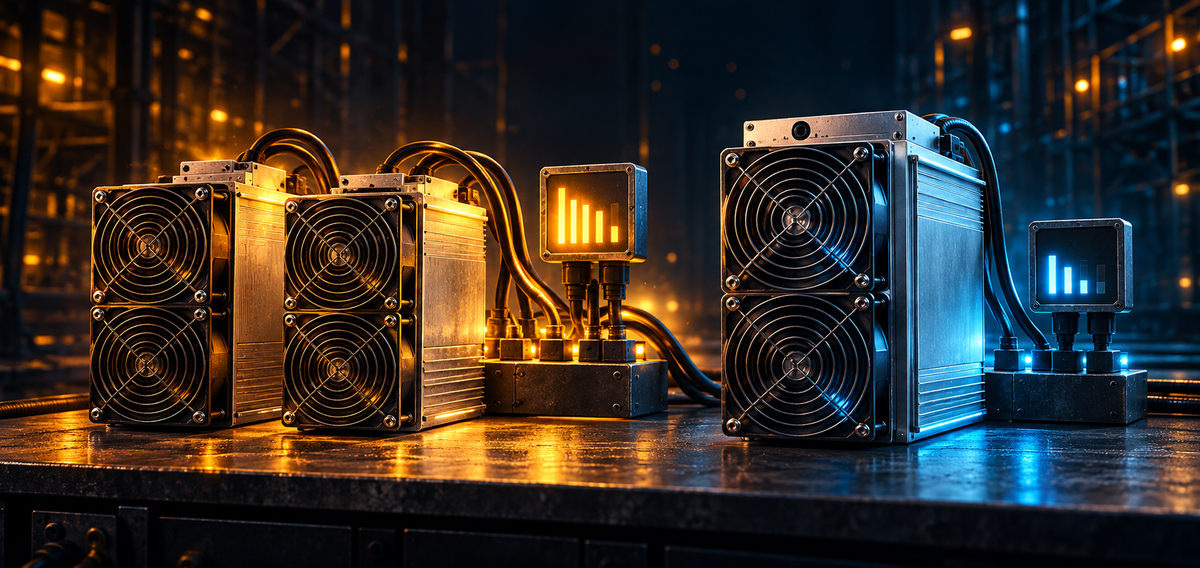
How to Choose the Best Bitmain Miner
Hashrate and Energy Efficiency
Hashrate measures how much hashing the machine performs each second. Efficiency in J/TH measures energy per unit of hashing; lower is better for electricity use at comparable operating conditions. Dividing wall power in watts by hashrate in TH/s gives J/TH. For the S21 XP, 3,645 divided by 270 equals 13.5.
Compare sustained pool-accepted performance after warm-up. A brief dashboard peak can conceal rejected shares, temperature throttling, or intermittent boards. When reviewing an Antminer comparison, make sure both machines use stock specifications or clearly identified tuning profiles. A lower-power firmware setting may reduce hashrate too, changing the number of machines needed to reach a target.
Purchase Price and Total Setup Cost
Build an installed-cost estimate before choosing a supplier. Include the miner, shipping, applicable duties, power distribution, ventilation or liquid cooling, and commissioning. Check whether the quoted PSU and required cables are included. Equipment advertised for a later shipment creates a different commitment from a unit ready for dispatch.
Used equipment needs a separate repair allowance and evidence of condition. A refurbishing claim should explain what was replaced and who stands behind the work. A seller's warranty may involve shipping a heavy machine abroad and waiting for repair. That delay belongs in the operating plan, even if parts are covered.
Price per terahash can help compare quotations once their scope matches. Divide the equipment price by its specified hashrate, then repeat using the installed cost. A low headline ratio can lose its appeal when freight, conversion work, or missing cooling components appear on separate invoices. Check those items before treating two offers as equivalent.
Electricity Rates and Operating Costs
Daily electricity consumption is wall power in kilowatts multiplied by running hours. An S21 drawing 3.5 kW continuously uses 84 kWh per day. At hypothetical energy rates of $0.06, $0.08, and $0.12 per kWh, the machine's daily electricity cost is $5.04, $6.72, and $10.08 respectively. These figures exclude facility overhead.
Use the rate you actually pay, including relevant delivery charges and taxes. Demand charges require separate treatment; multiplying the advertised energy rate by kWh will not capture them. External fans, pumps, and cooling equipment also consume electricity. Avoid adding those costs twice if a hosting tariff already includes them.
Cooling, Noise, and Power Requirements
An air-cooled miner moves a substantial volume of hot air. Plan an intake and exhaust path that prevents recirculation, and consider whether noise can be tolerated at the property. A voltage range on a specification sheet does not establish that an existing socket, cable, or breaker can support continuous operation.
Have a qualified electrician verify the complete supply arrangement and local requirements. Hydro equipment needs compatible power plus its specified coolant conditions. Ethernet access, remote monitoring, and a clear shutdown procedure also affect the practical workload. Do not buy first and assume the building can be adapted cheaply afterward.
Antminer S21 vs S19: What Is the Difference?
Generational labels hide several distinct products. The 200T S21 reference delivers 17.5 J/TH, compared with 23 J/TH for the 120T S19k Pro. The S19 XP sits between them at 21.5 J/TH. An antminer s21 vs s19 comparison should identify the suffix and hashrate version before drawing conclusions about the entire family.
For a concrete capacity comparison, two nominal 120T S19k Pro units provide 240 TH/s and draw 5,520 W. One 270T S21 XP provides more hashrate while drawing 3,645 W. The difference is 1,875 W, or 45 kWh over a full day. At an assumed $0.08 per kWh, that is $3.60 per day in machine electricity alone.
That saving does not calculate investment payback. The newer machine may cost substantially more, while the older pair might already be owned. Existing circuit limits and repair exposure can also change the decision. Compare the cost of keeping working equipment with the full cost of replacing it; a new purchase and an upgrade are different starting positions.
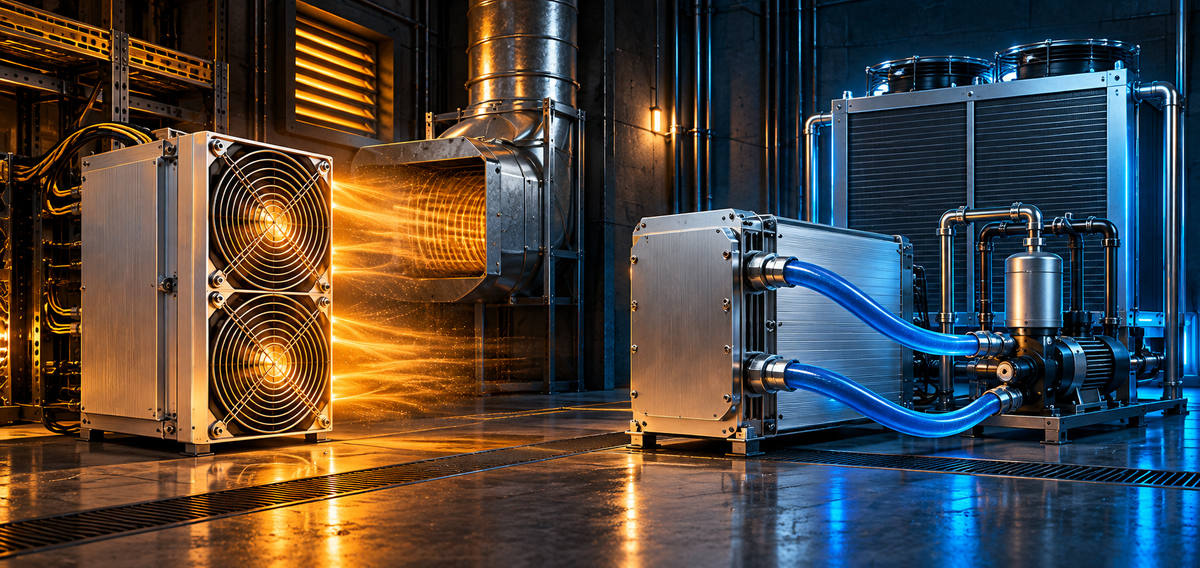
Air-Cooled vs Hydro-Cooled Antminers
Air cooling usually requires a simpler initial installation, provided the site can handle airflow and noise. Hydro designs move heat into a liquid circuit and depend on external equipment to reject it. Heat still leaves the facility somewhere. Lower noise at the machine does not make pumps or dry coolers silent.
The S23 Hyd. reference offers 9.5 J/TH, compared with 12 J/TH for the S21 XP Hyd. Those figures concern the miners. They do not include every watt used by the facility's liquid loop. Check flow, inlet temperature, water quality, pressure, and servicing requirements for the exact unit. Hydro cooling and immersion cooling are different arrangements; one should not be substituted for the other without an approved design.
How to Estimate Antminer Profitability
Start with estimated mining revenue and subtract pool fees, electricity, hosting charges, and expected operating expenses. Retain a separate allowance for downtime and repairs. Network difficulty, Bitcoin price, and transaction-fee revenue change; a calculator output represents its inputs at a moment in time. Today's positive result does not lock in tomorrow's margin.
For a transparent hypothetical example, assume gross hashprice of $50 per PH/s per day. A 200 TH/s S21 equals 0.2 PH/s, producing $10 in gross daily revenue at uninterrupted nominal output. After an assumed 2% pool fee, $9.80 remains. At $0.08 per kWh, subtract $6.72 for electricity: $3.08 remains before other expenses and hardware recovery.
At $0.12 per kWh, the same power bill becomes $10.08, leaving a $0.28 daily loss before overhead. The example changes only the tariff. The gross hashprice is an invented scenario input, not a current market quotation or expected payout. Rerun the calculation with lower revenue and more downtime before deciding what purchase price you can tolerate.
Use the ECOS ASIC mining calculator to organize the comparison, entering the exact hashrate version, wall power, electricity cost, and applicable fees. Check which costs the tool includes. Keep a copy of the assumptions and calculate a conservative case separately. Simple purchase-price payback is meaningful only while the assumed net operating cash flow stays positive.
What to Check Before Buying an Antminer
Ask for a recent operating test tied to the machine's serial number. It should show board status, temperatures, and stable performance, supported by pool records where available. Verify the PSU and firmware, and ask about prior repairs or liquid damage. A photograph of an unopened carton does not establish the condition of the unit inside.
- Match the full product name, hashrate version, and nameplate to the written quotation.
- Confirm new, used, or refurbished condition, dispatch date, and included equipment.
- Check voltage, phase, cooling specifications, and the site's approved installation capacity.
- Record delivery terms, warranty exclusions, return arrangements, and repair responsibility.
- Recalculate costs using your tariff and a less favorable mining-revenue scenario.
Confirm the seller's legal identity and payment instructions independently, especially if details change late in the transaction. For hosting, determine who owns and controls the machine, whether it can be removed, and what happens during curtailment. The best Antminer purchase can still become a poor operating arrangement if those terms are unclear.
Key Takeaways
- Compare exact configurations; S19, S21, and S23 are families rather than single specifications.
- Lower J/TH reduces electricity per unit of hashrate, not necessarily the full setup cost.
- Hydro machines need suitable liquid infrastructure and electrical supply.
- Match each price to its condition, hashrate option, and delivery terms.
- Test profitability under weaker revenue and your actual all-in power costs.
Expert Insight
Bitcoin.org's technical FAQ says that “miners must seek efficiency to cut their operating costs.” That observation explains why a low equipment price is an incomplete buying argument. The electricity requirement continues after the invoice is paid.
BITMAIN's specifications also distinguish typical ratings from actual performance. Use the manufacturer sheet to establish a reference, then verify the offered unit and site conditions. Neither a seller's daily-income estimate nor a nominal efficiency figure establishes your realized return.
Conclusion
Choose the best Antminer by matching a verified configuration to your site and tariff. Compare an efficient air-cooled unit against lower-cost alternatives, and consider hydro equipment where the necessary infrastructure exists. Proceed only with a clear installed price and an operating case that leaves room for adverse conditions.
FAQ
- Which Antminer is best for beginners?
Start with site compatibility and budget. An air-cooled unit avoids a liquid loop, but still needs suitable power, ventilation, and tolerable noise.
- Is an S21 always better than an S19?
No. Compare exact versions, acquisition cost, electricity, and whether the older unit is already owned. Better efficiency does not automatically justify replacement.
- Can a hydro Antminer run without external cooling?
No. It needs the specified liquid circuit and heat rejection, plus compatible electrical supply. Follow the requirements for the exact configuration.
- Are the listed prices guaranteed?
No. They are dated seller observations, with unresolved variants identified. Obtain a written quotation covering condition, shipping, taxes, and delivery.
- Does a profitability calculator predict my earnings?
No. It calculates from assumptions. Difficulty, price, fees, downtime, and actual costs can change the result and prevent hardware payback.
Published Articles
Bitcoin Mining: Calculate ASIC Electricity Consumption and Power Costs
Calculate Bitcoin mining electricity consumption in kWh, estimate ASIC power costs at German tariffs, and account for runtime, cooling and fixed charges.
Best ASIC Miners: Immediate Deployment Guide to the Most Profitable Mining Hardware
Compare the best ASIC miners from Bitmain, MicroBT, Canaan and Bitdeer. Check power, cooling, delivery and mining economics before buying.

What Is ASIC Mining? How ASIC Miners Work
Learn what is ASIC mining, how purpose-built miners process hashes, which coins they support, and what costs and risks affect an operation.

Crypto Mining Investment: How to Invest in Bitcoin Mining
Explore crypto mining investment models, operating costs, ROI calculations, company analysis, cloud contracts, and the risks investors should check.

Bitcoin Mining ROI: How to Calculate Profitability and Forecast
Introduction The Antminer S21 XP consumes 3.5 kW per hour and mines around 0.00014 BTC per day at current network difficulty. With electricity at $0.07 per kWh and Bitcoin at $100,000, that produces roughly $14 in rev...

How to Add Cloud Mining to a Crypto Portfolio
Learn how to add cloud mining to a crypto portfolio, choose a sensible allocation, track net returns, and control provider and liquidity risk.