
Best ASIC Miners: Immediate Deployment Guide to the Most Profitable Mining Hardware
Start With the Site You Can Actually Run
For an existing air-cooled facility, the Antminer S21 XP, Avalon A16XP and SEALMINER A3 Pro Air deserve comparison. They offer different combinations of purchase cost, output and electricity consumption. Actual availability may narrow that shortlist quickly.
A home installation calls for a different starting point. Canaan's Avalon Q has a much smaller electrical load than these industrial machines, although running it continuously still needs planning. Operators with an established liquid loop can consider hydro equipment. Building that infrastructure for a single purchase changes the budget substantially.
The best ASIC miners are the ones you can install, service and operate at an acceptable cost. Before paying a supplier, establish how much power the site can support and what each kilowatt-hour will actually cost. That gives the hardware specifications somewhere useful to land.
What Are Bitcoin ASIC Miners
A Bitcoin ASIC miner is a physical machine built around application-specific integrated circuits that repeatedly perform SHA-256 hashing. It connects to the network, usually through a mining pool, and submits work in exchange for a share of mining rewards under the pool's rules. Buying software alone does not supply that computing capacity.
Search results for the best crypto mining hardware often mix algorithms. Comparisons of the best ASIC miners should stay within the same algorithm. A powerful Scrypt or EtHash machine cannot mine Bitcoin merely because its listing shows a large hashrate. Even among Bitcoin devices, the best ASIC miners for an established farm may be unsuitable for a rented home. Cooling, electrical supply and access to repairs affect what can sensibly be purchased.
Hashrate measures work per second. Joules per terahash, written J/TH, measures energy used for that work; a lower figure means better machine efficiency under comparable conditions. Total watts matter separately because the building must handle the entire load.
Seven ASIC Configurations to Compare
The following manufacturer specifications and listing observations were checked on November 3, 2026. Ratings are nominal and subject to the manufacturer's tolerances. Prices are in USD before additional costs unless stated otherwise. A public listing provides a starting point for a quotation; obtain confirmation of the exact batch, condition and dispatch date.
Bitmain Antminer S21 XP 270T
The S21 XP reference delivers 270 TH/s at 3,645 W, or 13.5 J/TH, with air cooling and single-phase 220–277 V AC input. BITMAIN's indexed shop listing showed $4,590 and SPOT shipping within seven working days after full payment. Confirm those terms directly before ordering.
This is an option for a facility that already handles industrial airflow and noise. Its power demand is substantial even though efficiency is good. Existing electrical capacity may accommodate one machine but leave no room for another. Compare the installed cost with Canaan and Bitdeer quotations, including any changes to power distribution.
Canaan Avalon A16XP 300T
Canaan specifies 300 TH/s, 3,850 W at the wall and approximately 12.8 J/TH for this air-cooled configuration. Its launch information gives a 220–277 V AC input range. The official shop displayed $4,800, with a shipping label of “From 2026Q2.” That historical label does not establish a current dispatch commitment; stock depends on the selected location and batch.
The A16XP offers more nominal output than the S21 XP above, while drawing more total power. It belongs in a modern air-cooled farm comparison. Ask the supplier which service center will handle a failed board and how long replacement parts normally take to arrive.
Bitdeer SEALMINER A3 Pro Air 290T
Bitdeer's product page specifies 290 TH/s, 3,625 W and 12.5 J/TH with air cooling. On the check date, the page said “Stay tuned” rather than providing an orderable price and firm delivery window. Treat price and dispatch as unconfirmed.
Its nominal efficiency makes it a useful alternative when comparing the best bitcoin mining hardware for an existing air-cooled site. Availability may decide the purchase before a small efficiency difference does. Obtain the official batch specification showing voltage, phase and maximum current; the readable product listing does not establish those installation details. Do not assume an Antminer power arrangement transfers unchanged.
MicroBT WhatsMiner M60S 186T
MicroBT's M60-series manual defines the 186 TH/s reference at 3,441 W and 18.5 J/TH at 25°C. This air-cooled machine uses 220–240 V AC. The family contains other hashrate versions, so a quotation for “M60S” alone is incomplete. A current price and dispatch date for this exact configuration were not confirmed.
This older-generation option is worth considering when acquisition cost is sufficiently low and electricity is inexpensive. It provides less hashrate per watt than the newer air-cooled references here. For used equipment, the savings need to survive a realistic repair allowance. Ask for a sustained operating test tied to the offered serial number.
Bitmain Antminer S23 Hyd 580T
The 580 TH/s hydro-cooled reference uses 5,510 W at approximately 9.5 J/TH and requires three-phase 380–415 V AC. BITMAIN's indexed listing showed a $17,400 base price, a conditional after-coupon price of $14,790, and a sold-out shipping status. A displayed discount is not evidence of available stock.
This configuration suits a prepared liquid-cooled facility. Pumps, coolant controls and external heat rejection add installation and operating costs that the miner's efficiency figure excludes. It is a poor candidate for a rushed conversion of an ordinary room. Confirm the exact variant; similarly named rack-format machines can have very different requirements.
Bitdeer SEALMINER A3 Pro Hydro 660T
Bitdeer lists this hydro-cooled SHA-256 configuration at 660 TH/s, 8,250 W and 12.5 J/TH. Its shop showed a $9,900 base price, a conditional $9,478 coupon price and shipment within seven business days after full payment. Freight, duties and taxes are additional. Reconfirm eligibility and the batch before paying.
The electrical load alone rules out treating it as a small home appliance. Request the manufacturer's exact voltage, phase and coolant requirements with the quotation; verify them against the site's supply and liquid loop. Its higher output can be useful where infrastructure already exists, but each hour of downtime also removes more hashing capacity.
Canaan Avalon Q 90T
Canaan's home-oriented Avalon Q is rated at up to 90 TH/s, 1,674 W and 18.6 J/TH, with air cooling and a stated 110–240 V AC input range. The official shop displayed $1,888 and selectable shipping locations. A firm dispatch date for a chosen destination was not confirmed.
Its smaller load and residential design make it more practical for home use than the industrial machines above. That does not establish profitability at a household tariff. Ask how voltage and operating mode affect output, and have the intended circuit checked for continuous use. Heat and noise still need somewhere to go.
How to Compare Manufacturers Without Buying on Reputation
Local repair access can change a shortlist of the best ASIC miners. Ask which boards, fans and power supplies a technician actually keeps available for the exact device. A broad promise to service a brand may exclude the configuration being sold.
For a small first installation, a working machine nearby can be easier to assess than a cheaper shipment from abroad. Larger operators may have spare capacity and replacement units that make longer repair times manageable. Put those differences into the downtime allowance instead of declaring one manufacturer universally more reliable.
Home Mining and Industrial Installation Need Different Budgets
At its stated maximum draw, an Avalon Q consumes about 40.18 kWh over a full day. The S21 XP uses 87.48 kWh. That difference matters to both the electricity bill and the amount of heat released inside a building. A basement that feels cool during inspection can warm quickly under continuous operation.
Have a qualified electrician verify the circuit, protective devices, wiring and intended continuous load. An input-voltage range does not establish that any socket supplying that voltage is suitable. Avoid relying on an adapter to resolve a mismatch.
Air-cooled equipment needs a clear intake and exhaust route. Recirculating hot exhaust can raise inlet temperature and reduce performance. For liquid systems, establish who monitors coolant condition and responds to leaks or pump failure. External cooling equipment can also create noise; moving heat into water does not make the whole installation silent.
Hosting changes who performs this work. Obtain written terms for machine ownership, withdrawal, repair charges and curtailment. Check whether the advertised tariff covers cooling and other facility costs. Otherwise, the apparent comparison with running equipment yourself may leave out a separate monthly invoice.
Estimate profitability before choosing the best ASIC miners
Use a dated hashprice assumption to compare machines on equal terms. Hashprice expresses gross mining revenue per unit of hashrate per day. It incorporates changing network and market conditions, so it should not be treated as a fixed lifetime yield.
For an illustrative calculation prepared on November 3, 2026, assume gross hashprice of $50 per PH/s per day, 100% uptime, a 2% pool fee and electricity at $0.08/kWh. This is an invented scenario, not a current revenue quotation. Apply the same inputs to every device.
At 270 TH/s, the S21 XP represents 0.270 PH/s and generates $13.50 gross daily revenue under that assumption. After the pool fee, $13.23 remains. Its 87.48 kWh of daily electricity costs about $7.00, leaving approximately $6.23 before hosting overhead, repairs, taxes and recovery of the purchase cost.
The A16XP produces $15.00 gross at 300 TH/s. After the same pool fee and $7.39 electricity bill, the remainder is about $7.31. Those figures describe operating cash flow before the excluded expenses. They do not show a realized investment return.
Now raise only the tariff to $0.16/kWh. Electricity for the S21 XP costs almost $14.00 per day, exceeding the $13.23 remaining after the pool fee. The result is an operating loss before other expenses. There is no positive payback period under those unchanged assumptions.
A calculator can organize these inputs, including the ECOS ASIC mining calculator. Check its treatment of pool fees and hosting costs before relying on the result. Rerun the case with lower revenue and downtime, and retain the assumptions alongside the equipment quotation. Simple payback divides installed cost by positive net operating cash flow; it becomes misleading when that cash flow changes materially.
Check the Offer Before Sending Payment
Price per terahash helps only after the offers cover equivalent items. Include freight, applicable import costs and any missing power equipment. For a hydro installation, add the external cooling system and commissioning. Keep a separate cash reserve for faults after delivery.
An unopened box proves little about the condition of a machine. Request evidence connecting its serial number to a recent test, including board status, temperatures and pool-accepted output. A used unit's low purchase price may reflect worn fans or an intermittent board. Ask what a refurbishing claim actually covers.
Before buying one of the best ASIC miners, resolve these points:
- Match the full product name, hashrate version and electrical specification to the supplied unit.
- Confirm whether the machine is new, used or refurbished, and identify included components.
- Obtain the dispatch commitment, delivery terms and responsibility for customs clearance.
- Read warranty exclusions and establish who pays repair freight.
- Verify the seller's identity and payment details through an independent channel.
Cross-border warranty service can leave a machine idle while it travels to a repair center. Account for that interruption. For hosted hardware, also establish whether you can retrieve the unit and whether removal involves a fee. A good equipment price cannot compensate for an operating arrangement you cannot exit.
Commission the Machine Before Expanding
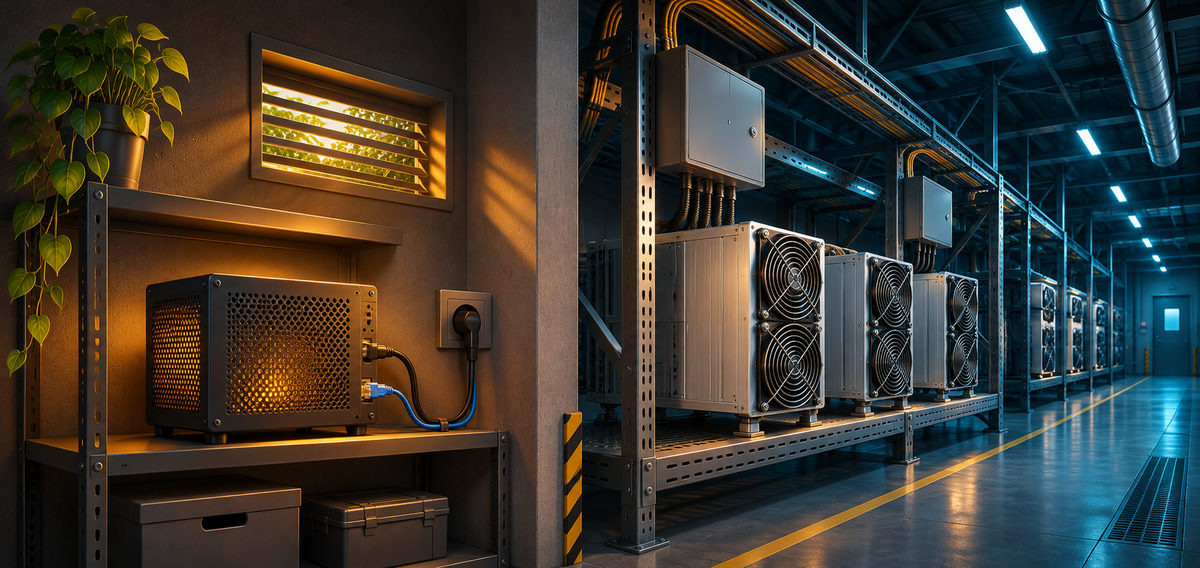
After delivery, inspect the equipment against the order and arrange installation to the manufacturer's instructions. Connect it to the intended network, change default access credentials and enter the pool configuration. Keep administration access restricted.
Observe performance after the machine reaches normal operating temperature. Compare accepted pool work and measured power with the expected range, allowing for the pool's averaging period. A brief peak on a local dashboard does not establish sustained output. Record a baseline that can later reveal changes after cleaning or repair.
Software supports this process through firmware, pool connectivity and monitoring. Check exact hardware compatibility before installing a different firmware version, including any development fee and warranty implications. Start with a stable configuration; several simultaneous changes make a performance problem harder to trace.
Expert Perspective on Operating Costs
Gemini's explanation of Bitcoin mining observes that “there is a real cost associated with creating bitcoin.” Electricity continues to be consumed after the hardware invoice has been paid. That recurring expense explains why an apparently attractive equipment deal needs a separate operating calculation.
A machine awaiting a replacement board earns nothing during that interruption. Include the likely repair turnaround in the budget, especially when there is no spare unit available. An affordable part can still lead to an expensive shutdown.
Conclusion
Choose among the best ASIC miners by narrowing the options to equipment your site can support, then compare installed cost and conservative operating cash flow. Confirm the offered batch and dispatch terms. Begin with capacity you can monitor and service before committing to a larger deployment.
FAQ
- Which is the best ASIC miner for Bitcoin at home?
Start with electrical capacity, tariff and repair access. A home-oriented Avalon Q has a smaller load; industrial equipment needs an appropriate installation.
- Which Bitcoin miner should I buy in 2026?
There is no universal winner. Compare exact configurations from several manufacturers using the same revenue assumptions and your actual operating costs.
- Can an industrial ASIC use a normal home outlet?
Do not assume it can. A qualified electrician should verify voltage, wiring, protection and continuous-load capacity for the specified machine.
- Are the quoted prices and delivery times guaranteed?
No. They are dated listing observations. Obtain written confirmation of the exact configuration, condition, total delivered cost and dispatch commitment.
- How long does an ASIC take to pay for itself?
It depends on installed cost and future operating cash flow. A loss-making scenario has no positive payback period under unchanged assumptions.
Published Articles
Bitcoin Mining: Calculate ASIC Electricity Consumption and Power Costs
Calculate Bitcoin mining electricity consumption in kWh, estimate ASIC power costs at German tariffs, and account for runtime, cooling and fixed charges.
Best Antminer Models
Compare Bitmain models by hashrate, efficiency, price and cooling. Find the best Antminer for your electricity costs, with S21 vs S19 examples.
What Is ASIC Mining? How ASIC Miners Work
Learn what is ASIC mining, how purpose-built miners process hashes, which coins they support, and what costs and risks affect an operation.

Crypto Mining Investment: How to Invest in Bitcoin Mining
Explore crypto mining investment models, operating costs, ROI calculations, company analysis, cloud contracts, and the risks investors should check.
Bitcoin Mining ROI: How to Calculate Profitability and Forecast
Introduction The Antminer S21 XP consumes 3.5 kW per hour and mines around 0.00014 BTC per day at current network difficulty. With electricity at $0.07 per kWh and Bitcoin at $100,000, that produces roughly $14 in rev...
How to Add Cloud Mining to a Crypto Portfolio
Learn how to add cloud mining to a crypto portfolio, choose a sensible allocation, track net returns, and control provider and liquidity risk.