
Best Crypto Contract Trading Platform: Top Platforms for Futures and Derivatives Trading
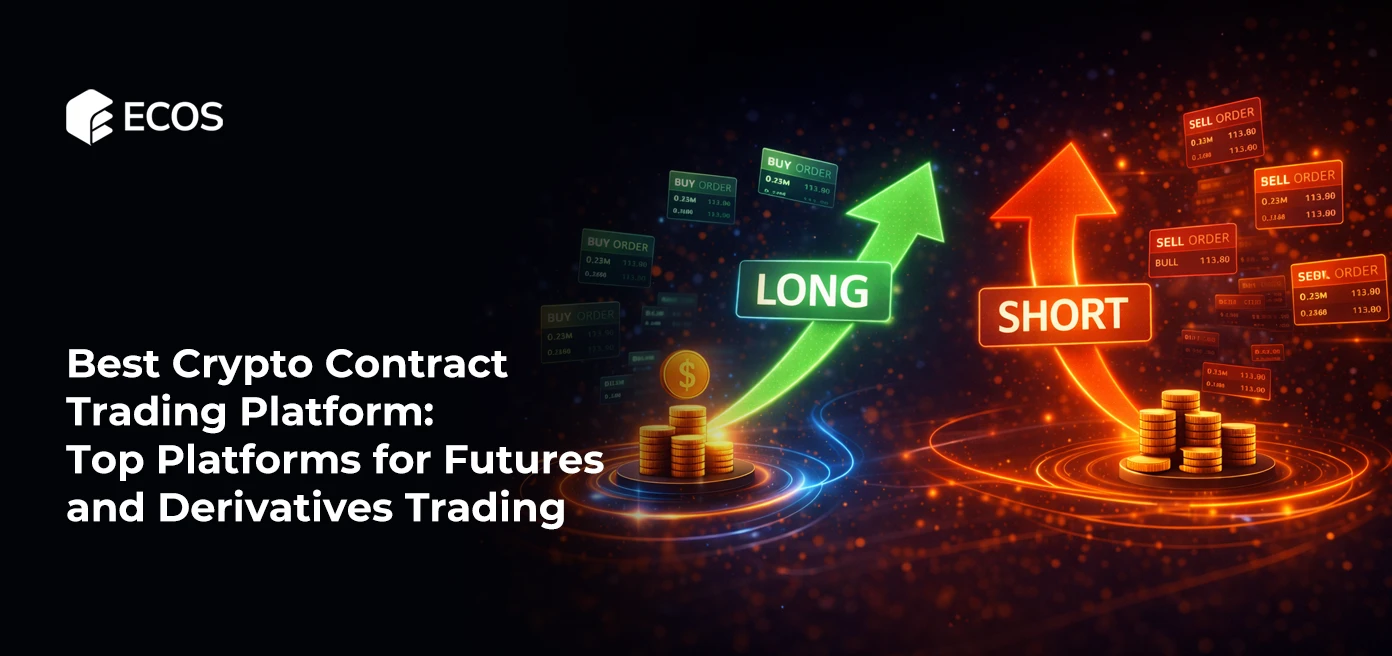
Contract trading has become the dominant activity in crypto markets by volume. Binance alone recorded over $1 trillion in futures trading volume in January 2026. CME Group’s crypto insights report tracked open interest across major platforms reaching record levels — demand for leveraged products isn’t leveling off. Behind those numbers are traders who chose their platform carefully, because the choice matters more in derivatives than almost anywhere else in crypto.
This guide covers how contract trading works, what separates the leading platforms, and what to look for before committing capital to any of them.
What Is Contract Trading in Crypto?
Contract trading means taking a position on where a crypto asset’s price will go — without buying the underlying asset. The position is backed by a margin deposit, profits and losses settle in cash or stablecoins, and the trader never touches actual Bitcoin or Ethereum.
Leverage is what makes this attractive. With $1,000 and 10x leverage, a trader controls a $10,000 position — a 5% favorable move returns $500 on that $1,000 stake. The same math runs in reverse on losing trades, which is why liquidation mechanics matter as much as entry timing.
Short positions are the other major draw. During the 2022 crypto bear market, traders who understood contract mechanics could profit while spot holders absorbed losses. Miners and large BTC holders use the same mechanism differently: shorting futures against existing holdings creates a hedge that limits downside without forcing a sale.
Types of Crypto Contracts
Futures Contracts
Buying a BTC futures contract expiring in March means agreeing to a price today that settles on that date — regardless of where spot trades when the date arrives. Most crypto futures settle in cash rather than delivering actual Bitcoin: at expiration, the difference between the contract price and spot price gets paid out and the position closes.
Futures don’t track spot exactly — they trade at a premium or discount depending on market sentiment. Elevated demand for long exposure pushes futures above spot (contango); during bearish periods they can fall below it (backwardation). The gap between spot and futures price, called the basis, functions as a sentiment indicator and occasionally as a trade in itself.
Perpetual Contracts
Perpetual contracts account for the vast majority of crypto derivatives volume — they have no expiration date, so positions stay open as long as margin requirements are met. That single structural difference from standard futures explains their dominance: traders don’t need to roll positions at expiration.
Keeping a perpetual contract priced close to spot requires a mechanism. Every eight hours on most platforms, the side trading at a premium pays the other side a small fee — longs pay shorts when the perpetual trades above spot, shorts pay longs when it trades below. This funding rate is real money changing hands, not an accounting abstraction, and it accumulates into a meaningful cost for positions held over days or weeks during trending markets.
Options Contracts
An options contract gives the buyer the right — not the obligation — to transact at a specified price before a specified date. Buying a call option is a bet the price rises above the strike; buying a put is a bet it falls below. Either way, the buyer’s maximum loss is capped at the premium paid regardless of how far the market moves against the position.
Options are more complex than futures but offer defined risk on the long side. A trader who buys a BTC call option can only lose the premium paid, regardless of how far Bitcoin falls. This makes options useful for expressing directional views with bounded downside, or for constructing hedges with more precision than simple short positions allow.
How Crypto Contract Trading Works
Opening a contract position requires depositing margin — collateral that covers potential losses. Two margin types exist across platforms: cross margin pools your entire account balance as collateral for all positions, allowing one position’s profits to buffer another’s losses; isolated margin allocates a specific amount to each trade, capping the loss on any single position at whatever was isolated.
After funding, a trader selects contract type, direction (long or short), leverage level, and order type. Market orders fill immediately at current price; limit orders sit in the order book until the specified price is reached; stop orders trigger automatically when price hits a threshold. More advanced platforms offer conditional orders, trailing stops, and bracket orders that set take-profit and stop-loss simultaneously.
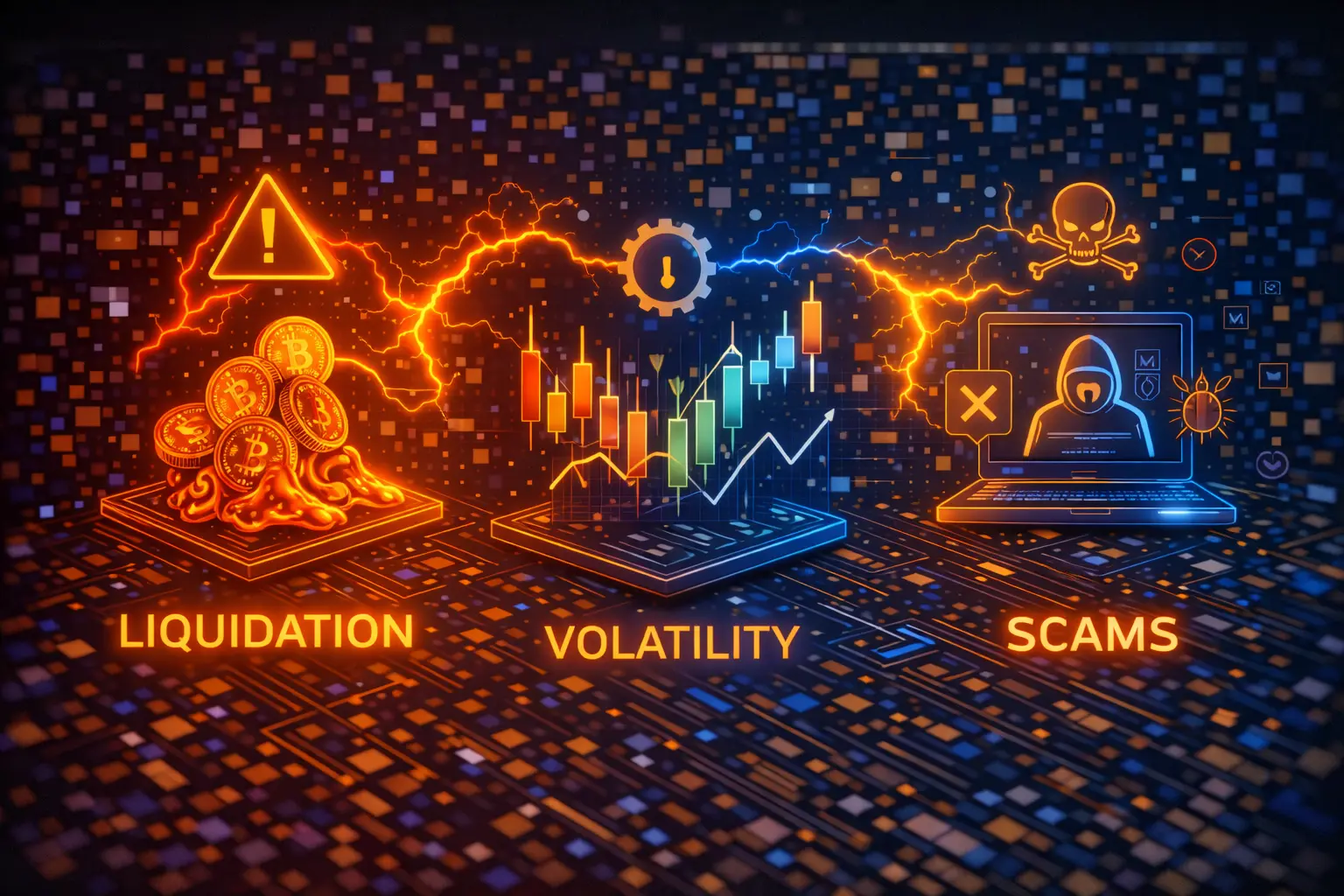
Liquidation is the primary risk. When a position moves against the trader and margin drops below the maintenance threshold, the exchange force-closes the position to prevent the account from going negative. At 100x leverage, a 1% adverse price move triggers liquidation. Most platforms show the liquidation price in the trading interface; serious traders monitor it constantly.
Funding rates on perpetuals represent an ongoing cost that accumulates over time. A trader holding a leveraged long during a period when funding runs at 0.1% every eight hours pays 0.3% per day — over 100% annualized. Positions held for days or weeks during elevated funding periods face meaningful drag even if price moves favorably.
Best Crypto Contract Trading Platforms in 2026
Centralized Exchanges With Futures
Binance Futures leads the market with hundreds of billions in daily volume across 340 pairs. It supports USDT and COIN-margined contracts with up to 125x leverage. Fees start at 0.02% maker and 0.05% taker. Using BNB provides a 10% discount on these costs. However, the platform remains unavailable to US residents.
Bybit launched in 2018 with a specific focus on derivatives. It offers over 300 pairs and leverage up to 100x. Many traders prefer its clean interface over Binance for futures work. Maker fees match the industry standard at 0.02%. The platform is restricted in the US, UK, and China.
OKX holds about 21% of the global derivatives market share. Its unified account system pools margin across spot, futures, and options. This allows positions in one market to offset requirements in another. Active traders benefit from seven order types and 300 pairs. A narrower US version became available in early 2026.
Deribit dominates the institutional space for crypto options. It processes the vast majority of BTC and ETH options trades globally. The platform provides granular expiry selection and a full options chain. Professional traders use its portfolio margin for both options and futures.
Kraken Pro prioritizes regulatory credibility over a wide breadth of pairs. Its futures offering is narrower than its larger competitors. However, Kraken has maintained a clean record since its launch in 2011. This makes it a reliable primary option for US-based traders.
Decentralized Perpetual Platforms
dYdX runs on its own application-specific blockchain and settles perpetual contract positions on-chain — up to 20x leverage on major pairs, without requiring users to deposit funds with a centralized custodian. Among decentralized perpetual platforms, it has the deepest liquidity and the most mature infrastructure for traders running systematic strategies.
GMX uses a different architecture than most DEX perp platforms: trades execute against a multi-asset liquidity pool, and the pool’s LPs effectively take the other side of every position. The tradeoff is zero price impact on smaller trades — useful for entries in less liquid markets — with all activity fully verifiable on-chain on Arbitrum or Avalanche.
Aevo combines options and perpetuals on a custom L2 chain built on the Optimism stack. Off-chain order matching with on-chain settlement gives it speed close to a CEX while preserving self-custody. The unified margin system across options and perps is relatively rare in DeFi and attracts traders who run complex multi-leg strategies.
Fee Comparison and Liquidity
| Platform | Maker Fee | Taker Fee | Max Leverage | Notable |
| Binance | 0.02% | 0.05% | 125x | Largest volume, BNB discount |
| Bybit | 0.02% | 0.055% | 100x | 70M+ users, derivatives-focused |
| OKX | 0.02% | 0.05% | 100x | Unified account, US now available |
| Deribit | 0.03% | 0.03% | 10x | Options liquidity benchmark |
| Kraken | 0.02% | 0.05% | 50x | US-available, strong compliance |
| dYdX | 0% | 0.05% | 20x | Self-custody, on-chain settlement |
Fees alone don’t determine trading cost. Funding rates on perpetuals can dwarf maker/taker fees for positions held more than a few hours. Slippage on less-liquid altcoin pairs can exceed stated fees by multiples. For active traders, the real cost comparison requires looking at all three.
Key Features of a Good Crypto Contract Trading Platform
Liquidity and order book depth determine how cleanly positions execute. Deep books mean large orders fill near the quoted price; thin books produce slippage that eats into returns. Binance, OKX, and Bybit have the deepest perpetual markets for major pairs. For altcoins, depth varies significantly even across these platforms — checking before executing a large position is worth the time.
Margin and risk management tools separate platforms that serve serious traders from those that don’t. Cross/isolated margin options, automatic stop-loss triggers, liquidation price displays, and insurance funds (which cover the gap when a liquidated account goes below zero) are baseline requirements. Platforms without clear insurance fund disclosures leave traders exposed to socialized losses.
Leverage range and contract selection matter based on strategy. Most platforms max out at 100–125x for BTC and ETH perpetuals, with lower caps for altcoins. Traders who use moderate leverage rarely need the top end, but contract variety — inverse vs. linear, quarterly vs. perpetual, cross-margined options — affects which strategies are executable.
Regulatory status and geographic availability constrain choices for many traders. Binance and Bybit are unavailable in the US. Kraken and Coinbase Derivatives are US-accessible but more limited in products. International traders generally have broader access, though specific countries face their own restrictions on individual platforms.
Interface and API quality matter more in derivatives than in spot trading. Poor latency or buggy order entry during volatile markets can be genuinely costly. API performance matters for any trader running automated strategies — look for platforms with documented API specs, stable uptime records, and active developer communities.

Fees in Contract Trading
Every crypto contract trading platform charges at minimum two types of fees: maker fees (for orders that add liquidity to the order book) and taker fees (for orders that remove liquidity by executing immediately). Most major platforms sit in the 0.02–0.05% range for standard accounts, with maker fees at the lower end.
Beyond the headline rates, several fee dynamics compound over time. Funding rates on perpetual contracts transfer between longs and shorts every eight hours. During bull markets, longs routinely pay 0.01–0.05% per period — which adds up to 0.03–0.15% daily on an open position. Extended periods of elevated funding during trending markets make long perpetuals expensive to hold even when price direction is correct.
Most platforms offer tiered fee structures where high-volume traders and holders of native exchange tokens (BNB, OKB, MX, BGB) receive discounts. Reaching the first VIP tier typically requires $1–5 million in 30-day volume on major exchanges. For retail traders, the more accessible discount is usually the native token fee payment option — Binance’s BNB discount, for example, is 10% on all trades.
Liquidation fees apply when a position is force-closed. These vary by platform but typically range from 0.5–1% of the position value, making them significant on leveraged positions. A $10,000 position liquidated with a 1% fee costs $100 in addition to whatever losses the position itself generated.
Withdrawal fees, cross-margin interest rates for margin borrowing, and spread costs on illiquid pairs round out the full cost picture. The platforms with the lowest stated maker/taker fees don’t always produce the lowest total trading cost once all of these factors are included.
Risks of Crypto Contract Trading
Liquidation risk is the most immediate danger. Leverage amplifies losses exactly as it amplifies gains, and at high multiples, a relatively small price move eliminates the entire margin deposit. A position at 50x leverage liquidates with a 2% adverse move from the entry price. Many traders who understand this intellectually underestimate it emotionally during live trading.
Funding rate exposure catches perpetual contract holders who don’t account for it. Holding a long position in a trending bull market when funding runs at 0.05% every eight hours costs 0.15% per day — roughly 55% annualized. Correct price direction and poor timing on funding exposure can produce a losing trade.
Counterparty and platform risk differs significantly between CEXs and DEXs. On centralized platforms, users depend on the exchange to hold funds safely, execute orders accurately, and remain solvent. Bybit suffered the largest single security breach in crypto history in early 2025. FTX’s 2022 collapse demonstrated that even high-volume exchanges can fail catastrophically. Decentralized platforms eliminate the custodial risk but introduce smart contract risk — code bugs or exploits can drain liquidity pools regardless of platform intent.
Volatility and cascading liquidations interact dangerously during sharp market moves. When many leveraged positions liquidate simultaneously, forced selling intensifies price movement, triggering further liquidations. This feedback loop produces the rapid, multi-percent drawdowns that crypto markets are known for, and it hits leveraged positions far harder than spot holders.
Regulatory risk affects platform availability unpredictably. Multiple major exchanges have abruptly restricted access for users in specific countries with little notice, leaving traders unable to access or close positions during critical periods. Trading on platforms with unclear regulatory standing adds an operational risk layer on top of the usual market risk.
Conclusion
Binance, Bybit, and OKX dominate centralized contract trading due to deep liquidity, broad asset selection, and competitive fees. Deribit remains the leader for options. For those seeking on-chain settlement without custodians, dYdX and GMX are the most proven decentralized alternatives. Choosing a platform requires matching its specific strengths to your trading style—compliance-focused exchanges differ significantly from derivatives-heavy platforms with deep altcoin books. Leverage makes contract trading attractive but unforgiving; understanding liquidation mechanics and funding costs is essential to avoid being used by the tool.
More Questions
It involves derivative agreements tied to an asset’s price without owning the asset itself. Traders use leverage to go long or short, profiting from price movements. Main instruments include futures, perpetuals, and options.
Binance leads in volume and liquidity. Bybit is preferred for derivatives-focused interfaces, while OKX is competitive on fees. Deribit is the standard for options. Your choice depends on location, leverage needs, and preferred settlement type.
Futures have fixed expiration dates and close at settlement. Perpetual contracts have no expiration, using a funding rate mechanism to keep the price close to the spot market. Perpetuals are more popular because they don’t require rolling positions.
Leverage lets you control larger positions with smaller margin. At 10x, $1,000 controls $10,000. Profits and losses apply to the full position size, meaning higher leverage leads to faster liquidation during adverse price moves.
Standard maker/taker fees range from 0.02–0.05%. Perpetual traders also pay or receive funding rates every eight hours. Liquidation fees (0.5–1%) apply during forced closures.
Binance and Bybit restrict US users. OKX launched US services in April 2025. Regulated options include Kraken Pro, Coinbase Derivatives, or CME-listed futures via traditional brokerages.
It is a periodic payment between longs and shorts to align the perpetual price with the spot price. When demand is high, one side pays the other. These rates reset typically every eight hours.
Published Articles

Crypto On-Ramps and Off-Ramps Explained: How Fiat and Crypto Move In and Out
Entering the world of digital assets often feels like trying to cross...
 Popular
Bitcoin Pizza Guy: The Story Behind the First Real Bitcoin Purchase
Introduction The history of Bitcoin is full of dramatic ups and downs,...

Crypto Basics Explained: A Beginner’s Guide to Cryptocurrency and Trading
Introduction The world of finance is changing right before our eyes. Just...
 Popular
Uniswap Explained: What It Is, How It Works, and How to Use the UNI DEX
Introduction Decentralization and decentralized platforms that have emerged in recent years have...
 Popular
Bitcoin Lightning Network Explained: What It Is and How Bitcoin Lightning Works
Introduction In the world of cryptocurrency, transaction speed and costs have always...

How Bitcoin ATMs Work: A Complete Guide to Using Crypto ATMs
Introduction Millions of people around the world use cryptocurrencies today – at...