
Best Crypto Debit and Credit Cards in 2026
Introduction to Crypto Cards
If you followed the news back in 2022 and 2023, you probably remember the collapse of big names like FTX and BlockFi. It felt like the party was over for crypto-linked plastic, and many projects simply vanished. But standing here in 2026, I see a completely different scene. The market has matured, and finding the best crypto rewards credit card isn’t just a niche hobby anymore. It’s a practical way to make your digital assets work for you at the grocery store or a gas station.
How Crypto Cards Work
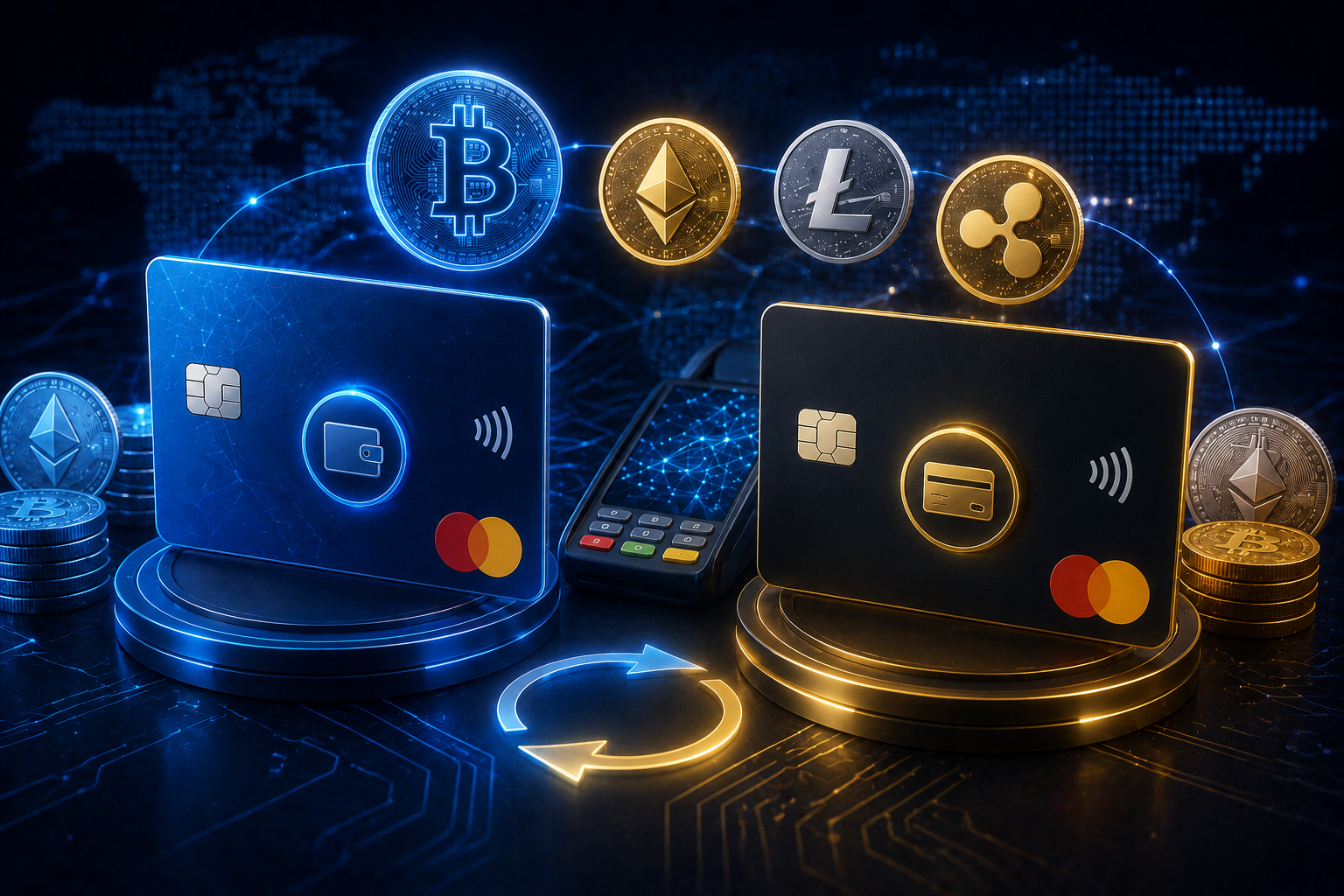
At their core, these cards act as a bridge. They link your digital wallet directly to the payment terminal at a shop. When you buy a coffee, the card provider automatically converts just enough of your Bitcoin or stablecoins into local currency to cover the bill. The merchant receives regular fiat money, and you don’t have to manually sell your assets on an exchange first. It’s fast, and for most users, it feels exactly like using a traditional bank card.
Benefits of Crypto Cards
The biggest draw for me has always been the rewards. Why settle for airline miles that expire when you can get a best crypto debit card that pays you back in Bitcoin or Ethereum? Many cards now offer up to 3% or 4% cashback on daily spending. Beyond the money, there’s the sheer convenience. You get instant access to your funds globally without waiting days for bank transfers to clear.
Debit vs. Credit Crypto Cards
Choosing between debit and credit is where things get interesting. A crypto debit card uses the balance you already have in your account. It’s straightforward but requires you to keep funds on the platform. Crypto credit cards, like the one from Gemini, offer a credit line and reward you for spending. Then there are “hybrid” options like the Nexo Card, which lets you borrow against your coins so you don’t have to sell them and trigger a tax event.
Why Crypto Cards Are Popular
People like flexibility, and these cards provide it. With Visa and Mastercard backing most of these projects, you can use your crypto at millions of locations worldwide. It makes the “magic internet money” feel real. Whether you’re trying to hedge against inflation or just want to earn some extra Satoshis on your morning commute, these cards have become a standard tool in the modern financial kit.
What Are Crypto Debit and Credit Cards?
I often get asked if these are just regular bank cards with a Bitcoin logo slapped on them. In a way, yes—but the engine under the hood is completely different. These cards act as a real-time translator between your digital wallet and the merchant’s bank account. They allow you to use digital assets for everyday purchases without the headache of moving funds to a centralized exchange and waiting days for a bank transfer to clear. It’s essentially a bridge that makes “magic internet money” usable at any corner store.
Crypto Debit Cards
A crypto debit card is tied directly to the balance you already have in your account. If you have 500 USDC sitting in your Coinbase or Nexo wallet, that is exactly what you have available to spend. When you buy something, the provider sells your crypto on the spot and pays the merchant in fiat. It’s a great way to manage a budget because you can’t spend more than you actually own, and it avoids the debt traps associated with traditional credit.
Crypto Credit Cards
Credit cards in the crypto world work a bit differently. Instead of pulling from your existing balance, the issuer gives you a line of credit to spend. You pay the bill later, just like a standard Visa or Mastercard. The Gemini Credit Card is a prime example of this model. What makes them “crypto” is the reward system—instead of earning points for a toaster or airline miles you’ll never use, you get Bitcoin or Ethereum back on every purchase. Some, like ether.fi, even let you use your staked assets as collateral for this credit line.
Supported Payment Networks
Don’t expect these cards to run on some obscure, experimental blockchain network at the point of sale. To ensure they actually work everywhere, almost all providers partner with Visa or Mastercard. This is why you can use a crypto card at millions of locations globally, from a high-end hotel in Paris to a small cafe in Yerevan. These legacy networks handle the actual transaction processing, while the crypto platform manages the conversion and settlement in the background.
Benefits of Using Crypto Cards
I’ve spent enough time testing different fintech tools to realize that crypto cards aren’t just about showing off a cool metal card at a bar. They actually solve a real problem: liquidity. Before these cards became common, your Bitcoin was basically stuck in a digital vault unless you wanted to deal with the multi-day headache of exchange withdrawals. Now, the benefits go far beyond just “access.” It’s about making your money work harder while you’re just living your life.
Cashback Rewards
The most obvious win here is the rewards system. Traditional bank points are often confusing and lose value over time, but earning Bitcoin or Ethereum back on your groceries feels different. Some cards, like Gemini, offer up to 4% back on gas or EV charging. Others, like the Coinbase One Card, can go up to 4% depending on your balance. There is always a chance the crypto you earn could increase in value over time, which is something a 1% cash-back check from a legacy bank will never do.
Convenience
Convenience is where these cards really shine for me. In the past, if I wanted to use my crypto for a flight, I had to sell it, wait for the transaction to clear, and then move it to my bank. It was a mess. With a modern crypto card, you just swipe. The app handles the backend logic, so you don’t have to be a technical genius to pay for dinner with your digital assets. It integrates directly into your daily financial routine.
Instant Conversion
One thing that still feels like magic is the instant conversion. When you tap your card at a terminal, the provider sells exactly enough of your crypto to cover the cost in real-time. The merchant gets their local currency (like USD or EUR), and you walk away with your coffee. You don’t have to worry about manually checking exchange rates or pre-selling your coins every morning. It’s all handled in the background during the few seconds it takes to process the payment.
Global Acceptance
Since most of these cards are issued on the Visa or Mastercard networks, they work almost everywhere. I’ve used them for international travel without any issues. Whether you are at a high-end hotel or a local shop in a different country, if they take plastic, they likely take your crypto card. It makes crossing borders much easier because you are carrying a global asset that converts to any local currency on the fly.
Security
Security is a big concern, but these cards are usually safer than keeping your money in a random exchange wallet. Most providers offer standard features like two-factor authentication (2FA), chip-and-pin technology, and the ability to instantly freeze your card from an app if you lose it. Some cards also include fraud monitoring and 3D Secure for online shopping. It gives me peace of mind knowing that my digital assets have the same (or better) protections as my traditional bank account.
Key Features to Look For
Picking the right card is honestly a bit of a balancing act. You might see a flashy 8% cashback offer, but I’ve learned that the “fine print” is where the real story lives. First, look at the fee structure. Some cards boast no annual fees, like Gemini, while others, like Coinbase One, require a monthly subscription that can eat into your earnings if you don’t spend enough. Also, watch out for foreign exchange (FX) fees—if you travel, a 1% or 2% markup can quickly negate any rewards you’ve earned.
Rewards are the biggest draw, but they aren’t always straightforward. I always check if there’s a cap on how much you can earn. For instance, the Coinbase One Card caps its highest 4% rate at $10,000 in monthly purchases before dropping it down to 2%. You should also see which coins are supported. If you only care about Bitcoin, a search for best bitcoin debit cards will show you specialized options, but if you want variety, the best crypto rewards credit card for you might be one like Gemini, which supports over 50 different assets.
Don’t overlook the technical side: security and usability. Every reputable card in 2026 requires a KYC (Know Your Customer) process, so be ready to share some ID documents. A solid mobile app is non-negotiable for me—you need to be able to freeze your card instantly if it goes missing or track your spending in real-time. Finally, consider the “custody” aspect. Are you okay with the exchange holding your keys, or do you prefer a non-custodial option like Cypher or ether.fi where you stay in control?
Top Crypto Debit Cards in 2026
The market for debit cards has moved far beyond the “one-size-fits-all” approach we saw a few years ago. I’ve noticed that in 2026, the best crypto debit card for you depends entirely on whether you value absolute privacy, high interest rates, or just a simple way to spend your stablecoins without thinking about it. These cards allow you to use your existing balance at millions of merchants through the Visa and Mastercard networks.
Coinbase Visa® Prepaid Debit Card
For those who want a “set it and forget it” solution, the Coinbase Card remains a solid choice. It doesn’t charge annual or monthly fees, which is a big plus in my book. The rewards are uncapped and come from a rotating list of cryptocurrencies—you might earn Bitcoin one month and another token the next. The only real downside is that it’s still not available in Hawaii, and you have less control over the exact reward percentages compared to credit options.
Nexo Card (Debit Mode)
The Nexo Card is the Swiss Army knife of this list. What I find impressive is its “Dual-Mode” functionality, letting you switch to a debit mode that earns you up to 14% compound interest on your balance. It’s essentially a high-yield savings account that you can spend from instantly. There are no monthly or inactivity fees, but keep in mind that to get the highest rates, you need to hold a certain amount of NEXO tokens in your portfolio.
Non-Custodial Options: MetaMask and Cypher
If you aren’t a fan of keeping your money on an exchange, 2026 has brought some serious non-custodial contenders. The MetaMask Card lets you spend directly from your wallet via the Linea network, keeping you in control of your keys until the transaction happens. Similarly, Cypher supports over 1,000 tokens across 15 different blockchains. These cards are perfect for those who live entirely on-chain but still need to pay for a real-world dinner.
High-Reward Challengers: Bitget and KAST
For the “yield farmers” of the physical world, Bitget and KAST offer some of the highest rewards I’ve seen. Bitget provides a 0-fee allowance that covers many conversion costs, while KAST offers up to 4% rewards on its free tier and a staggering 8% for its premium users. The catch with KAST is the high annual fee for premium tiers, so you really need to be a heavy spender to make the math work.

Top Crypto Credit Cards in 2026
If you prefer keeping your capital invested while spending the bank’s money, the credit card market has finally recovered from the 2022 “crypto winter” that took down projects like BlockFi. Today, these cards are much more stable and integrated with traditional banking. I’ve found that the best crypto rewards credit card options now offer a mix of high-percentage cashback and traditional perks like travel insurance, making them competitive even with mainstream rewards cards.
Gemini Credit Card®
The Gemini Credit Card remains one of my top recommendations for sheer simplicity. It’s a $0 annual fee card that works like a standard Mastercard, but the rewards are anything but standard. You get 4% back on gas and EV charging (up to $300/month), 3% on dining, and 2% on groceries. The best part? The rewards are deposited into your account almost instantly in any of the 50+ supported cryptocurrencies.
Coinbase One Card
The Coinbase One Card is a heavy hitter for those who already have a significant portfolio on the platform. It’s a credit card issued by First Electronic Bank that rewards you based on how much you hold. If you have over $200,000 in assets, you can earn 4% back in Bitcoin on your first $10,000 of monthly spending. While it requires a paid Coinbase One membership, the added AMEX benefits and travel insurance make it a strong contender for high-net-worth users.
Venmo Credit Card
I like the Venmo Credit Card for its “set it and forget it” flexibility. It automatically gives you 3% cashback on your highest spending category and 2% on the second highest. Through the “Cash Back to Crypto” feature, you can choose to have these rewards automatically buy Bitcoin or Ethereum every month. There’s no annual fee, and the conversion spread is clearly disclosed, making it a very transparent way to stack sats.
ether.fi Cash
For the DeFi enthusiasts, ether.fi Cash is the card to watch. It’s a non-custodial credit card that lets you borrow against your staked assets and spend that value in the real world. Currently, they offer a flat 3% cashback across all purchase levels. It’s a brilliant way to maintain your long-term crypto positions while still using their value to pay for your daily life without triggering a sale.
How to Choose the Best Crypto Card for Your Needs
The truth is, the “perfect” card doesn’t exist. What works for a high-net-worth trader won’t work for someone just looking to spend their monthly staking rewards on coffee. I always tell people to start by looking at their monthly bank statement. If you spend most of your money at restaurants, a card with dining perks is a no-brainer. But if you’re a “road warrior,” something like the Gemini card with its 4% back on gas might be the best crypto rewards credit card for your specific lifestyle.
Then there’s the question of fees. I’m personally a fan of cards with no annual fees, like the standard Coinbase or Venmo options. However, if you’re planning to move a lot of volume, paying for a premium tier like Coinbase One or KAST’s X Card might actually save you money in the long run through higher cashback rates and lower conversion spreads. Just do the math before you commit; don’t let a “metal card” ego trip cost you hundreds of dollars in unnecessary fees.
You also need to decide how much control you want over your money. Most of the popular cards are “custodial,” meaning the exchange holds your funds. It’s convenient, but you have to trust them. If “not your keys, not your coins” is your mantra, look at the best bitcoin debit cards in the non-custodial space, like MetaMask or Cypher. These allow you to keep your assets in your own wallet until the very second you tap that payment terminal.
Finally, check the “hidden” technicalities. Is the card available where you live? For example, Nexo is great for Europeans but hasn’t always been available for US residents. Does the app let you freeze the card instantly? Is the KYC process a nightmare or a 5-minute task? These little details might seem small when you’re looking at a 4% cashback headline, but they are exactly what determines whether you’ll actually use the card or just leave it at the bottom of your drawer.
Conclusion
Looking back at where we were a few years ago, the progress in the crypto card space is actually pretty wild. We went from experimental products that barely worked to a market where the best crypto debit card or best crypto rewards credit card can legitimately compete with what’s in your traditional wallet. Whether you want to stack sats with the Gemini card or keep full control with MetaMask, the choice finally belongs to the user, not just the bank. It’s clear that these tools have moved from being a curiosity for “techies” to a practical reality for millions.
If there’s one thing I want you to take away, it’s that these cards are tools, not get-rich-quick schemes. The market is still volatile, and a 4% reward doesn’t mean much if the underlying asset drops significantly the next day. But for those of us who believe digital assets are here to stay, these cards are the easiest way to bridge the gap between “internet money” and a daily cup of coffee. Just pick the one that fits your spending habits, watch the fees, and remember that even in 2026, doing your own research remains the most valuable asset you have.
Published Articles

Crypto On-Ramps and Off-Ramps Explained: How Fiat and Crypto Move In and Out
Entering the world of digital assets often feels like trying to cross...
 Popular
Bitcoin Pizza Guy: The Story Behind the First Real Bitcoin Purchase
Introduction The history of Bitcoin is full of dramatic ups and downs,...

Crypto Basics Explained: A Beginner’s Guide to Cryptocurrency and Trading
Introduction The world of finance is changing right before our eyes. Just...
 Popular
Uniswap Explained: What It Is, How It Works, and How to Use the UNI DEX
Introduction Decentralization and decentralized platforms that have emerged in recent years have...
 Popular
Bitcoin Lightning Network Explained: What It Is and How Bitcoin Lightning Works
Introduction In the world of cryptocurrency, transaction speed and costs have always...
How Bitcoin ATMs Work: A Complete Guide to Using Crypto ATMs
Introduction Millions of people around the world use cryptocurrencies today – at...