
Bitcoin Mining Scams: How to Spot Fake Cloud Mining Sites and Avoid Crypto
Introduction
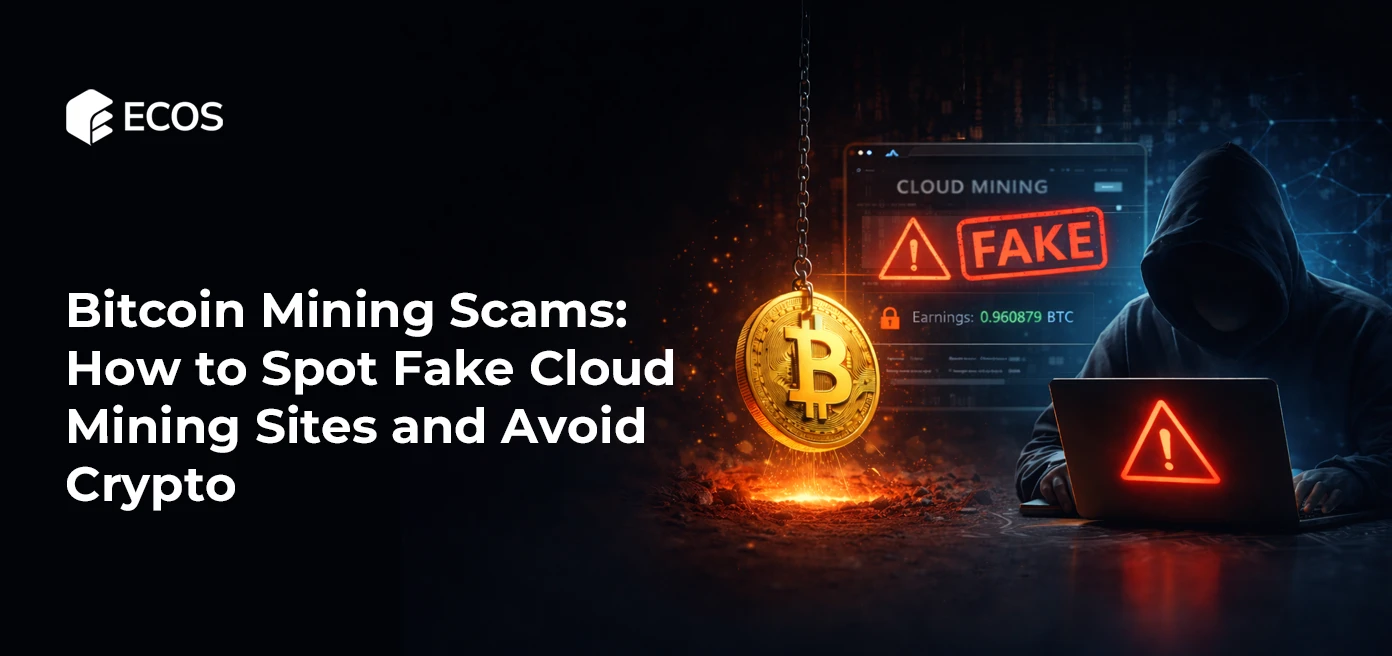
The growing popularity of cryptocurrencies has opened up new opportunities, but it has also led to significant risks, including the rise of Bitcoin mining scams. Any popular asset inevitably attracts scammers, and Bitcoin today is not only the most well-known cryptocurrency, but also one of the most expensive and potentially profitable, making it a prime target for fraudsters.
There are different ways to obtain Bitcoin: you can buy it on an exchange or a P2P platform, or you can mine it on your own farm or using third-party services. And it is precisely Bitcoin mining that attracts many enthusiasts and scammers… This is why Bitcoin mining scams and cloud mining scams, targeting inexperienced investors who want to earn from Bitcoin without fully understanding the mining process, have become so prevalent.
Many ask: “is Bitcoin mining a scam?” and while Bitcoin mining itself is legitimate, there are active fraudulent schemes in this space.
Scammers create fake Bitcoin mining sites and launch crypto cloud company scams, luring users with promises of high profits and easy earnings. These schemes are becoming increasingly sophisticated, so it is crucial to be able to distinguish real opportunities from fraudulent traps. Understanding the mechanisms of such schemes, recognizing warning signs, and verifying services is the first step toward protecting your funds and avoiding financial losses.
In this guide, we will explain what Bitcoin mining is, why scams arise, what types of fraud you might encounter, and practical strategies to avoid crypto mining scams. By the end, you will confidently navigate the world of Bitcoin mining.
What Is Bitcoin Mining and Why Scams Exist
Bitcoin mining is the process of validating transactions on the Bitcoin network and creating new coins. It requires computational power, provided by specialized equipment such as ASIC miners, and complex mathematical algorithms. For this work, miners are rewarded with newly minted Bitcoin. Long ago, it was even possible to mine BTC on regular computers, but today specialized equipment is required.
Bitcoin mining is a complex and costly process. For beginners, the prospect of quick profits seems attractive, and this is where scammers come into play. Bitcoin mining scams emerge precisely because of investors’ inexperience and their desire to earn without effort.
The main reasons for the emergence of fraudulent schemes are:
- Complexity of the mining process: Most people simply don’t understand how the network works and easily trust promises of high and fast returns.
- Popularity of cryptocurrencies: The greater the interest in Bitcoin, the more fraudulent offers appear on the market.
- Lack of regulation: Many cloud services are not monitored by government authorities, which makes it easier to create fake Bitcoin mining sites.
Scammers use attractive advertising materials, show fake income screenshots, and create the appearance of real activity. Sometimes they pretend to be well-known crypto cloud companies.
It is important to understand that the mining technology itself is legal and generates income for those who invest real resources and work with trusted platforms. However, due to its high popularity and the complexity of the process, cloud mining scams and other schemes appear on the market, misleading investors.

Is Bitcoin Mining a Scam?
If you are asking is Bitcoin mining a scam, rest assured that it is incorrect to call the entire process of Bitcoin mining fraudulent. It is completely legal, and many private miners and large companies have turned BTC mining into a full-fledged business.
If you also plan to develop in this field, it is important to distinguish legitimate mining from fraudulent schemes. Real mining requires investments in equipment and electricity. Genuine mining pools and services operate transparently and show actual network performance results. If you are offered to “buy an ASIC” cheaply or sign a contract with a mining company promising guaranteed and extremely high returns, you may be dealing with scammers!
The Difference Between Real and Fake Mining
It is fairly easy to distinguish real mining from fraudulent schemes:
- Real mining: The equipment physically exists, transactions are verified on the blockchain, and income depends on computational power and market conditions.
- Fake mining: Income is promised without transparent operations, often using fake Bitcoin mining sites and fake reports.
Signs of a Fraudulent Bitcoin Mining Scheme
In Bitcoin mining, as in any other field, there are so-called red flags that can help you distinguish fraudulent offers from legitimate ones:
- Unrealistic profit promises: Remember, a 10–20% monthly return without costs is impossible.
- Lack of transparency: Information about the location of the equipment or the team is hidden.
- Aggressive marketing: Constant emails, offers to invest immediately, etc., are also suspicious signals.
- Use of referral programs and “invite-a-friend” schemes: These are often signs of Ponzi schemes.
Bitcoin Mining Real or Fake — How to Check
You can protect yourself and your funds from scammers by following simple rules:
- Always verify the company’s information and check the location of its physical equipment and data centers.
- Look at user reviews on independent resources.
- Check the company’s registration and the presence of licenses.
- Compare the promised returns with the actual profitability of Bitcoin mining.
- Monitor how the company behaves on social media and what it offers.
- ALWAYS check the website address where you conduct transactions – scam sites often disguise themselves as legitimate companies using similar usernames and domain names.
Common Types of Bitcoin Mining Scams
The world of Bitcoin mining attracts both legitimate investors and scammers. Bitcoin mining scams can take various forms – from fake Bitcoin mining sites to cloud schemes and fictitious partnerships. Understanding the types of fraud that exist will help you recognize danger in time and avoid losing your funds.
Fake Bitcoin Mining Sites
Fake Bitcoin mining sites are one of the most common types of scams. These sites not only look professional, but they often copy resources from well-known companies, display income screenshots, and publish “customer reviews.” Their main goal is to mislead people and convince them that they are about to work with a large, reputable company. In reality, if you invest money on such a site, you will not get it back.
Scammers often promise high and stable returns without explaining how Bitcoin mining actually works. Beginners who are not familiar with the technical aspects of the process are easily tricked by these schemes.
Cloud Mining Scams and Ponzi Models
Cloud mining scams and Ponzi-style schemes are another popular way to deceive users who want to engage in Bitcoin mining. Users are offered to “rent” mining power through an online platform, promising high returns. In reality, no equipment usually exists, and payouts to early investors are made using funds from new contributors.
Typical signs of such schemes include:
- Promises of returns that exceed market rates.
- Strong pressure to “invest now.”
- Use of affiliate programs and referral bonuses.
Mining Pool Scams and Fake Partnerships
Mining pool scams and fictitious partnerships are a less obvious but dangerous form of fraud. Scammers create the appearance of participation in large pools or partnership projects to gain the trust of potential clients. In reality, there is no involvement in real pools, and investors’ earnings are not real – they are simply “fabricated” on the website.
If you want to invest in a mining pool or connect your equipment to a pool, it is important to check the pool’s history, the availability of transparent reports, and verification of network activity. Genuine mining pools publish data on hashrate, blocks, and rewards, which allows you to confirm their legitimacy.
Cloud Mining Scams Explained
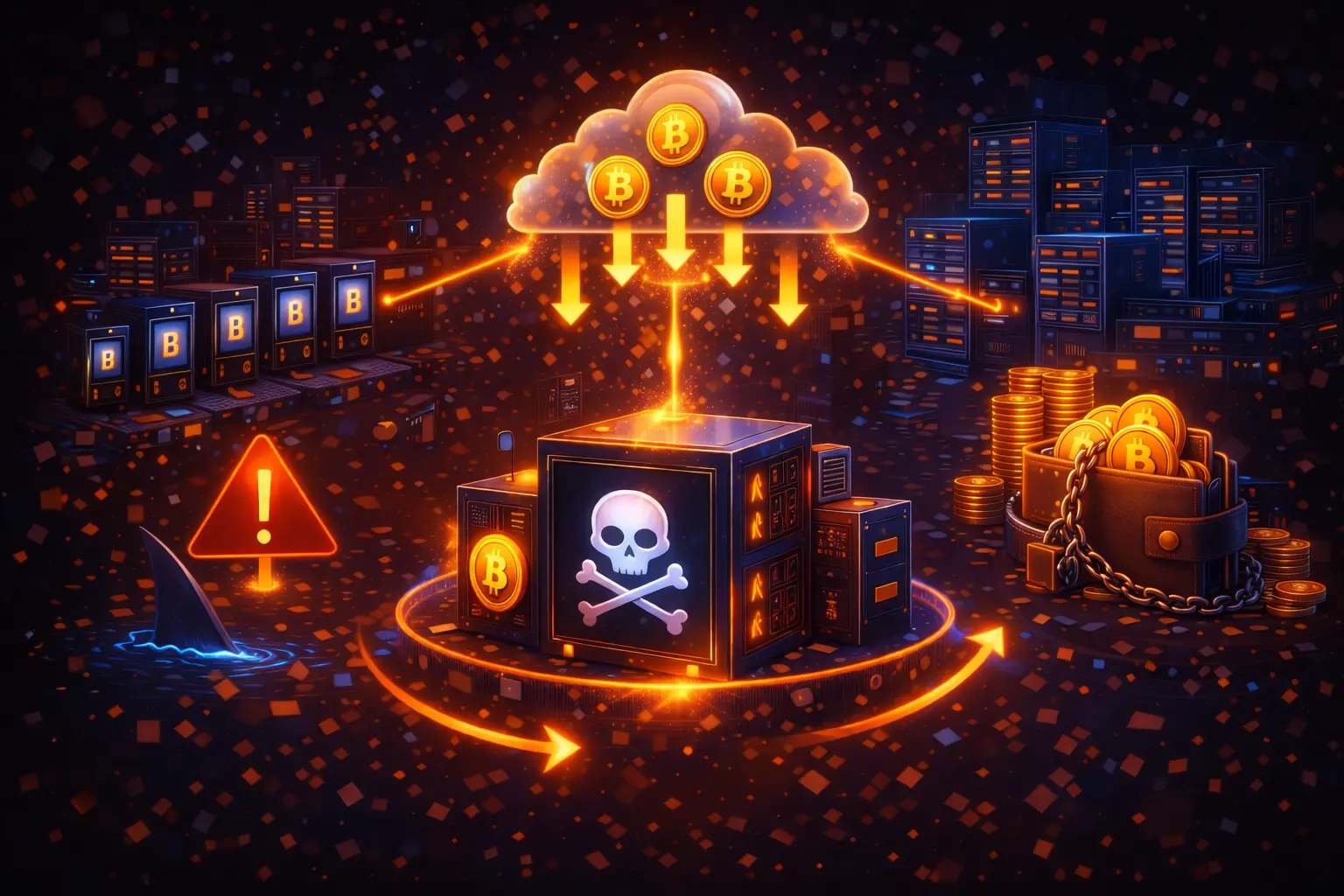
Cloud mining scams are one of the most common types of fraud. You are offered remote rental of mining power without the need to purchase and set up equipment (by the way, this is how real cloud mining works — you pay for a contract, and the company mines Bitcoin for you).
In reality, however, you may encounter scammers who stop payments and disappear with clients’ funds. If the company does not provide transparent information about the location and quantity of equipment, this should raise a red flag! Also, information online indicating that users cannot withdraw funds without additional conditions is another warning sign.
Even legitimate cloud mining services require careful verification. Investors should analyze the company, check licenses, look for reviews on independent platforms, and avoid falling for aggressive marketing campaigns.
The next section will cover Red Flags to Watch Out For, where we will discuss specific signals indicating fraudulent schemes.
Red Flags to Watch Out For
The ability to recognize fraudulent schemes is a key skill for any crypto market user, as even experienced investors and holders can sometimes fall into traps if they ignore obvious signals. The main red flags are:
- Unrealistic returns: Promises of stable income above market levels almost always indicate fraud.
- Lack of transparency: If a company does not disclose information about its team, the location of its equipment, or its technologies, this is a warning sign.
- Aggressive marketing: Constant emails, calls to invest “right now,” and time-limited offers are typical signs of scams.
- “Invite-a-friend” schemes: Referral programs can be part of a Ponzi model, where payouts depend entirely on new contributors.
- Fake reviews and awards: Scam sites often publish “customer” reviews and images of awards to create an illusion of legitimacy.
If you notice these signs in a company, be cautious! Avoid potentially dangerous services, as there are many reliable and verified platforms on the market.
How to Verify Legitimate Mining Services
To avoid Bitcoin mining scams and cloud mining scams, it is important to be able to verify the legitimacy of services. How can this be done? Let’s break it down!
Start with the basics: find out where the company is registered, whether it has official licenses, and its legal address. Legitimate services usually provide registration and contact information. Additionally, pay attention to reviews and feedback from clients: look for reviews on independent forums and resources, not just on the company’s own website.
Remember that real companies showcase their data centers, publish hashrate statistics and rewards. If this information is missing, it should raise a red flag. Furthermore, legitimate services clearly describe contract terms, including fees, profitability, and the ability to withdraw funds. Services may provide links to external platforms where the performance of the equipment, blocks, and confirmed transactions are visible.
These are the basic steps that will help minimize the risk of falling for fake Bitcoin mining sites and allow you to protect your funds.
Real-Life Bitcoin Mining Scam Cases
Analyzing real cases helps to understand how Bitcoin mining scams and cloud mining scams operate.
Major Cloud Mining Scams Exposed
There have already been high-profile cases of fraud related to cloud mining scams:
- Kodak KashMiner — pseudo-mining from the Kodak brand. In 2018, the company Spotlite USA introduced a device under the Kodak brand, promising passive income from mining BTC through renting a “KashMiner.” The product was created without Kodak’s official approval, had no real mining equipment, and the promised payouts were economically impossible due to the constantly increasing network difficulty. Ultimately, the SEC conducted an investigation and exposed the founders of the scam.
- GainBitcoin/GB Miners — a large Ponzi scheme in India. A group led by Amit Bhardwaj created a cloud mining network and the GB Miners pool, which were presented as profitable crypto investments. The Maharashtra state police arrested the organizers, and the project was recognized as a pyramid scheme: payouts were made using funds from new investors.
- VBit Technologies Corp — SEC charges (USA, 2025). At the end of 2025, the U.S. The Securities and Exchange Commission accused the company and its CEO of fraud related to cloud mining: “mining contracts” were sold to users with promises of passive income, but most of the claimed mining capacity did not exist, and the collected funds were spent on personal expenses.
- HashFlare — FBI investigation (2025). The cloud mining platform HashFlare attracted U.S. law enforcement attention after reports of investors’ funds disappearing. The investigation highlighted mass user complaints and significant losses estimated in the hundreds of millions of dollars, drawing the attention of the FBI.
In addition to these well-known examples, there are dozens of smaller fraudulent cloud platforms and apps that promise mining income without real equipment and then disappear or stop paying out funds.
How Investors Lost Funds
Investors lost funds in Bitcoin mining scams in various ways:
- Inability to withdraw funds — platforms blocked accounts or imposed “technical” restrictions, preventing money from being withdrawn.
- Purchase of fake contracts — investors bought contracts promising mining income, but no equipment or capacity actually existed.
- Fake partnerships and mining pools — users believed they were participating in large pools or partnership programs, but in reality, the funds simply disappeared.
- Manipulation of rates or reports — scammers falsified mining statistics and balances, creating the illusion of profitability.
- Aggressive marketing and investor pressure — forcing people to invest “now or miss out” often led to decisions without proper verification.
Lessons Learned from Past Cases
The cases mentioned above provide a valuable learning experience for investors, allowing them to learn from others’ mistakes rather than their own. Here are the key lessons to take away:
- Always verify information: Never trust promises of high returns without confirming licenses, physical equipment, and transparent reporting.
- Set realistic expectations: Any excess profit without risk is almost certainly a scam. Compare promises with actual market performance.
- Use independent sources: Reviews on forums, media investigations, and official registries help distinguish legitimate services from fakes.
- Don’t give in to pressure: Aggressive marketing campaigns and “limited-time” offers are a clear sign of a scam project.
- Education and caution: The better you understand the mining process and the principles of crypto networks, the harder it is for scammers to deceive you.
How to Protect Yourself from Mining Scams
Protecting yourself from scams requires attention and a few practical steps:
- Verify the company — check licenses, legal address, registration, and contacts. Legitimate services are open to verification.
- Use independent reviews — look for opinions on forums and resources not affiliated with the platform.
Check equipment and statistics — real services show actual hashrate, blocks, and payouts. - Don’t trust “too good to be true” promises — unrealistically stable and extremely high rewards should raise a red flag.
- Protect your data — use strong passwords, two-factor authentication, and never share your keys with others.
- Start with small amounts — test the service with minimal investments before committing larger sums.
By following these rules, you can significantly reduce the risk of losses and safely work with verified platforms.
Conclusion
The world of Bitcoin mining offers real earning opportunities, but it also carries risks. The main takeaway is this: mining itself is legitimate, but scammers create fake websites, cloud services, and fraudulent contracts to take investors’ funds.
To work safely with cryptocurrency, it is important to:
- Distinguish between real mining and fake schemes.
- Verify the legitimacy of services and the transparency of their operations.
- Be attentive to signs of fraud, such as unrealistic returns, aggressive marketing, and lack of transparent information.
- Learn from past cases to avoid repeating other investors’ mistakes.
By following these recommendations, you can navigate the world of Bitcoin mining with confidence, avoid financial losses, and make informed investment decisions.
Published Articles

Crypto On-Ramps and Off-Ramps Explained: How Fiat and Crypto Move In and Out
Entering the world of digital assets often feels like trying to cross...
 Popular
Bitcoin Pizza Guy: The Story Behind the First Real Bitcoin Purchase
Introduction The history of Bitcoin is full of dramatic ups and downs,...

Crypto Basics Explained: A Beginner’s Guide to Cryptocurrency and Trading
Introduction The world of finance is changing right before our eyes. Just...
 Popular
Uniswap Explained: What It Is, How It Works, and How to Use the UNI DEX
Introduction Decentralization and decentralized platforms that have emerged in recent years have...
 Popular
Bitcoin Lightning Network Explained: What It Is and How Bitcoin Lightning Works
Introduction In the world of cryptocurrency, transaction speed and costs have always...
How Bitcoin ATMs Work: A Complete Guide to Using Crypto ATMs
Introduction Millions of people around the world use cryptocurrencies today – at...