
Blockchain Oracles: How They Work, Their Importance, and Use Cases
What is a Blockchain Oracle?
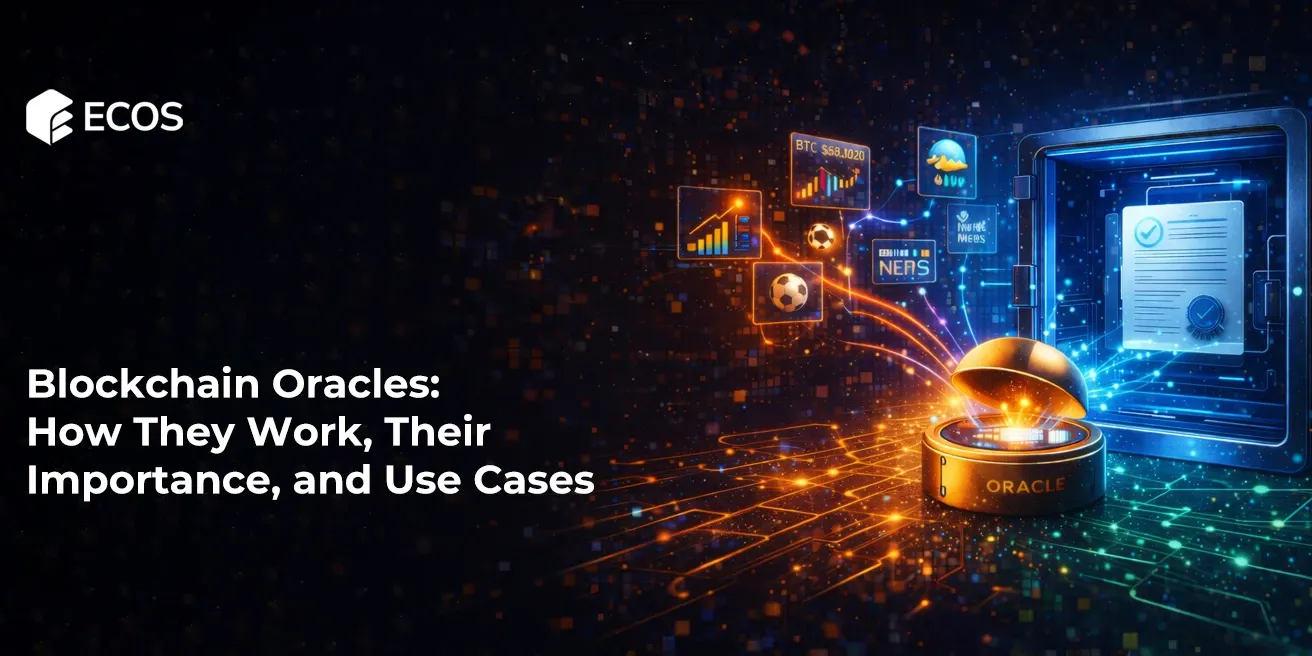
A blockchain is basically a high-security vault that has no windows. It excels at keeping records safe and immutable, but it stays completely blind to what is happening in the outside world. This isolation is intentional because it keeps the network secure and deterministic, yet it makes the technology somewhat limited for most daily tasks. If a contract needs to know the current price of Bitcoin or who won a specific football match, it cannot simply browse the web to find out. This is where an oracle comes in to fill the gap. An oracle is a service that finds external data and brings it onto the blockchain so the code can execute its functions.
The Role of Oracles in Blockchain Networks
I see an oracle as a digital courier or a piece of middleware. It is not the actual source of the information, but rather the bridge that carries data from an API or a physical sensor to the smart contract. Without these bridges, decentralized finance (DeFi) would just be a closed loop with no connection to real market prices or actual events. Oracles provide the essential connectivity that allows blockchains to handle insurance claims, supply chain tracking, and complex financial trades that depend on moving targets in the real world. They effectively function like the internet for computers, turning isolated ledgers into a global network of useful applications.
Oracles and Smart Contracts: How They Interact
Smart contracts run on simple “if-then” logic. For example, a contract might state that if a flight is delayed by two hours, then it must pay the traveler a specific amount of money. The contract is ready to pay, but it has no way to check the flight status on its own. The oracle monitors the flight data from an airline database and sends a verified report directly to the contract on-chain. Once that piece of data hits the blockchain, the contract triggers the payment automatically. This interaction is the foundation of automation in Web3, allowing code to react to the unpredictable reality of our daily lives.
How Do Blockchain Oracles Work?
Think of the interaction as a conversation where the smart contract asks a question and the oracle goes out to find the answer. Since a blockchain cannot “look” at an external website, it relies on a specific piece of code—the oracle contract—to act as its communication terminal. When a contract needs data, it broadcasts a request that an off-chain node picks up. This node is the workhorse that actually talks to the internet, gets the facts, and brings them back home to the ledger.
The workflow usually follows a strict sequence to ensure nothing gets lost in translation. First, the smart contract sends a data request specifying exactly what it needs. It might ask for a specific stock price or a weather report. This request triggers a log event on the blockchain. Off-chain nodes are constantly watching for these specific signals.
Once a node “hears” this signal, it initiates an off-chain task. It then makes an HTTP GET request to a specific API or database. After fetching the data, the node translates it into a format the blockchain understands. It then processes and signs a transaction to send it back. Finally, the oracle contract verifies this information and passes it to the user contract. At this point, the user contract completes its intended task.
Types of Blockchain Oracles
Categories of Blockchain Oracles
I have found that not all oracles look or act the same way because they solve vastly different problems. It is easiest to group them based on where they get their information and how they move it. Some stay purely in the digital realm, while others interact with the physical world through sensors or cameras.
Summary of Oracle Types
The oracle landscape is divided into three main categories: source, direction, and trust. You have software and hardware versions that find the data. Then you have inbound and outbound versions that decide where that data flows. Finally, there is the choice between centralized and decentralized management.
Software Oracles
These are the most common tools you will encounter in Web3. They pull data from websites, public APIs, or server databases in real time. If a lending platform needs the price of gold, a software oracle fetches that from a financial feed and drops it into the contract.
Hardware Oracles
Hardware oracles deal with tangible objects. They use IoT sensors to track wind speed for hurricane insurance or RFID tags to see if a shipping container reached its destination. This is essentially about turning physical events into digital records.
Centralized vs. Decentralized Oracles
A centralized oracle is managed by one single company. This setup is fast and cheap, but if that company gets hacked or its server goes offline, your entire contract breaks. Decentralized networks like Chainlink use many independent nodes to reach a consensus. I think of this as a jury system where many people must agree on the truth before it is accepted.
Inbound and Outbound Oracles
Inbound oracles bring info to the blockchain, like weather reports or sports scores. Outbound oracles let the blockchain talk back to the world. For instance, a smart contract can use an outbound oracle to tell a bank to send a wire transfer or tell an IoT lock to open a car door.
Use Cases for Blockchain Oracles
Industries Utilizing Oracles
I often think of oracles as the oxygen for decentralized applications. Without them, most of the cool things we hear about in Web3 would be impossible to build. They are the “missing link” that takes a smart contract from a simple digital locker to a powerful tool capable of changing how global trade or finance works. Today, we see these tools being used in everything from banking to tracking shipping containers across the ocean.
DeFi Applications
Decentralized finance (DeFi) is where oracles really show their muscles. If you want to take out a loan on a platform like Aave, the system needs to know exactly how much your collateral is worth in real-time to make sure the loan is safe. Oracles provide these price feeds constantly. They also help synthetic asset platforms keep their tokens pegged to the value of real-world assets like gold or stocks. In my view, the entire DeFi market would simply freeze up if these data streams stopped flowing for even a few minutes.
NFTs and Gaming
In the world of NFTs and gaming, oracles do more than just fetch prices; they provide fairness. Many games use oracles to generate “verifiable randomness” for things like loot boxes or determining which player gets a rare item. This proves to the players that the game isn’t rigged. We also see “dynamic NFTs” that change their appearance based on real-world events, like a digital sports card that updates its stats every time a player scores a goal in real life.
Supply Chain and Logistics
I find the use of oracles in supply chains particularly grounding because it connects code to physical boxes. Companies use hardware oracles with RFID tags and sensors to track where a product is and even what condition it is in. For instance, a sensor can record the temperature of a food shipment and send that data to a blockchain. If the container gets too warm, the smart contract can automatically flag the shipment as spoiled or even trigger a refund.
Insurance and Prediction Markets
Insurance is perhaps the most obvious “if-then” use case. Imagine a flight delay policy: if the flight is more than two hours late, you get paid. Oracles monitor the flight status from airline databases and, if the delay happens, they trigger the payout immediately without you having to file a single piece of paper. In prediction markets, oracles act as the final judge, bringing in the results of elections or sports matches so that the winners can collect their earnings.
Blockchain Oracle Providers
The market for these services is not as fragmented as you might think. Most projects choose one of a few established names because trust is everything here. If the data is wrong, the money is gone, so reputation acts as the primary currency for these providers. I believe that in a space where “code is law,” the entity providing the facts to that code holds an incredible amount of power.
Chainlink: Leading Oracle Network
Chainlink is basically the 800-pound gorilla in the room. It secures more than 70% of the entire DeFi world, which is a massive amount of responsibility. I find their multi-layered approach to security fascinating because they decentralize everything: the data source, the node operator, and the network itself. They aren’t just about prices anymore; they handle complex cross-chain messaging with their CCIP protocol and provide verifiable randomness for gaming. It has become the industry standard simply because it has survived the most stress tests.
Band Protocol
Band Protocol is the go-to alternative, especially if you aren’t working on Ethereum. While Chainlink grew up with Ethereum, Band was built from the ground up to be blockchain-agnostic. They use a decentralized network of validators to aggregate data, and they are often seen as a more scalable or cost-effective option for certain applications that need to move data across different chains quickly. It is a strong contender that focuses heavily on being fast and easy to integrate for developers outside the main EVM ecosystems.
Other Popular Oracle Solutions
Then there are the specialists. Pyth Network is a powerhouse for high-frequency financial data, often used for professional-grade trading apps where every millisecond counts. API3 takes a different route by letting data providers run their own nodes directly, which I think is a smart way to cut out the middleman. We also have Tellor, which uses a unique miner-based system to ensure data integrity, and Witnet, which focuses on helping contracts respond to specific real-world events. Each of these fills a specific niche that the bigger players might overlook.
Security and Risks of Blockchain Oracles
I often tell people that oracles are the “soft underbelly” of decentralized finance. If a hacker cannot find a bug in the smart contract’s code, they will simply try to lie to it by feeding it fake information. Because the blockchain is immutable, it cannot “un-see” a lie once it is accepted as truth. This makes the security of the data feed just as important as the security of the code itself.
Data Manipulation
The most common way to break an oracle is to mess with the data at its source. Market manipulation tactics like wash trading or spoofing can create a fake price on a small exchange. If an oracle picks up that “distorted” price and brings it on-chain, it can trigger massive liquidations or allow someone to borrow money they don’t actually have. It is the classic “garbage in, garbage out” problem.
Single Points of Failure
Centralized oracles are a massive red flag for me. If a single company controls the data, that company becomes a target for hackers or government censorship. If their server goes offline or their API breaks, the smart contracts relying on them simply stop working. I’ve seen too many projects fail because they trusted a single, vulnerable data stream instead of a decentralized network.
Oracle Attacks
Attackers have become incredibly creative with flash loans. They can borrow millions of dollars, dump an asset to crash its price on a specific exchange, and then let the oracle report that low price to a lending platform. We saw this with Inverse Finance, where a manipulator used low liquidity on SushiSwap to trick the oracle and “borrow” millions that were never repaid. It is a high-speed game of cat and mouse where the stakes are worth tens of millions.
Smart Contract Vulnerabilities
Sometimes the oracle is working perfectly, but the smart contract is not programmed to handle bad data. I recall a close call with AaveV3 where a specific function lacked access control, potentially letting anyone set an asset’s price manually. Developers often forget to build “circuit breakers” that would stop the contract if the oracle suddenly reports a price that seems impossible. Without these safeguards, even a small oracle error can lead to a total loss of funds.
The Future of Blockchain Oracles
I honestly believe we’ve only seen a fraction of what oracles will eventually handle. They are evolving from basic price checkers into the essential backbone of the global onchain economy. As trillions of dollars in assets shift to blockchain formats, these bridges will need to become faster and more invisible. In my view, the next few years will be about making these connections so seamless that users won’t even realize an oracle is working in the background.
Advancements in Decentralization
The next phase is all about making these networks more resilient and diverse. I expect to see new consensus mechanisms that spread control among an even wider group of node operators. This isn’t just about adding more nodes; it’s about creating a system where data manipulation becomes practically impossible. By decentralizing the validation process even further, we can provide a much tougher layer of security for the next generation of decentralized apps.
Scalability Improvements
Scalability has been a massive headache for everyone in crypto, and oracles are no exception. To keep up with the demand for real-time data, we are seeing a move toward layer-2 solutions and off-chain data processing. These innovations allow oracles to crunch huge amounts of information without clogging up the main network or driving up gas fees. This is going to be a game-changer for high-frequency trading and complex supply chains that need updates every few seconds.
Integration with Other Blockchain Projects
In the emerging Web 3.0 world, oracles will act as the “glue” between completely different blockchain networks. They will enable cross-chain applications where a contract on one network can react to events on another without any friction. I’m also particularly excited about the intersection of oracles and AI. We are already seeing oracles being used to aggregate responses from AI models to prevent “hallucinations” and provide verified data for smart contracts.
Published Articles
 New
NewWhat is Render Crypto? Understanding the Future of Decentralized Rendering
What is Render Crypto? Three-dimensional rendering has a compute problem. A single…
 New
NewBitcoin Dominance Explained: What the BTC Market Share Tells Traders
Introduction One number sits at the top of every serious crypto trader’s…
 New
NewNFTs: The Ultimate Guide to Non-Fungible Tokens, How They Work
NFTs: A Simple Guide Something strange happened in March 2021. A digital…
 New
NewTokenized Stocks Explained: How Blockchain Is Transforming Equity Trading
Introduction Equity markets run on infrastructure built in the 1960s. Settlement takes…
 New
NewWeb3 Domains: The Future of Decentralized Internet Addressing
Introduction Every website address you type into a browser runs through the…
 New
NewCustodial and Non-Custodial Wallets Explained
Introduction You don’t actually store cryptocurrency. That trips people up when they…