
FDV in Crypto Explained: What Fully Diluted Valuation Means and Why It Matters
Introduction
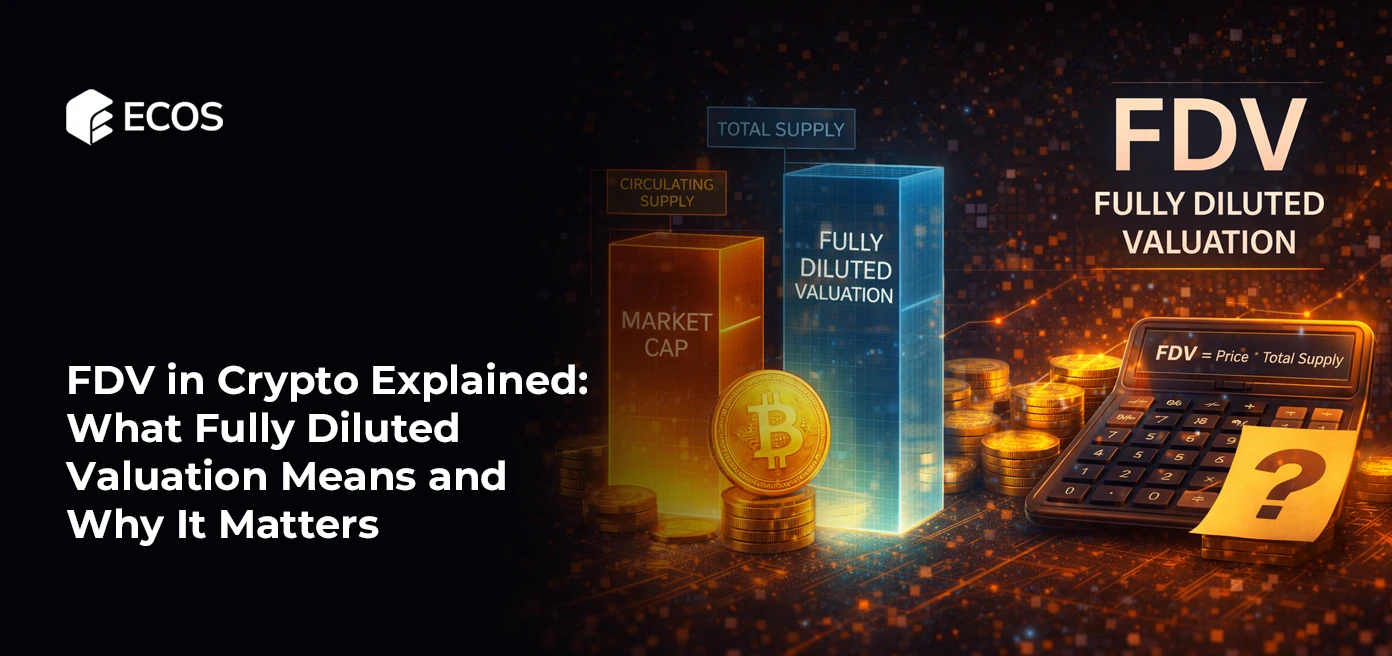
When selecting projects for investment, traders most often focus on metrics such as market capitalization. But recently, another metric has been mentioned more and more often – Fully Diluted Valuation (FDV). Not everyone knows what is FDV and why it can differ significantly from familiar metrics.
At first glance, FDV meaning crypto seems straightforward: it is a metric that estimates a crypto project’s potential market capitalization if all tokens were unlocked and in circulation. In practice, however, FDV is far more nuanced, touching on token economics, inflation, team incentives, and an asset’s real long-term value. It is common to see cases where a project looks “cheap” by market cap, while its Fully Diluted Valuation is measured in billions of dollars. Without understanding FDV meaning, these discrepancies can be misleading and lead to poor investment decisions.
In this article, we will break down what is FDV in crypto, how it is calculated, how it differs from market cap, why this metric is especially important for assessing risk, and how to use FDV crypto in practice rather than treating it as just another number on data aggregators.
What Is FDV in Crypto?
What is FDV? As noted above, it is a metric that reflects a crypto project’s potential valuation under the assumption that all existing tokens have already been issued and are in circulation. The full name of the metric is Fully Diluted Valuation, and it shows the project’s “maximum” size at the current token price.
Put simply, FDV meaning crypto answers the question: what would the project be worth if the entire token supply became liquid at today’s market price? This is the key difference from market capitalization, which accounts only for the circulating supply.
When investors ask what does FDV mean in crypto, it is important to understand the context. FDV is not a forecast of future price and does not guarantee the market will ever value the project at that level. It is more of a reference point that helps assess the potential scale of future dilution in a token’s value.
The metric FDV crypto meaning is especially relevant for:
- new projects with a small circulating supply;
- tokens with long vesting schedules;
- ecosystems where a large share of tokens is reserved for the team, investors, or incentives.
On data aggregators, it is common to see situations where FDV is 5–20 times higher than the current market cap. This is not necessarily bad, but without understanding the tokenomics, such a gap can be a serious risk signal.
In other words, what is FDV in crypto is not just an extra figure on CoinMarketCap or CoinGecko, but a tool for assessing long-term downward pressure on token price and the realism of a project’s current valuation.
How Fully Diluted Valuation Is Calculated
To correctly interpret Fully Diluted Valuation, it’s important to understand what components make up this metric. Despite its apparent simplicity, FDV often causes confusion, especially among beginners. Let’s break the process down step by step, starting with the key distinction between different types of token supply.
Circulating Supply vs Total Supply
The main reason FDV meaning in crypto differs from market capitalization is the difference between circulating supply and total supply. Circulating supply is the number of tokens already freely available on the market: they can be traded, transferred, and used within the ecosystem. This is the figure used to calculate market cap.
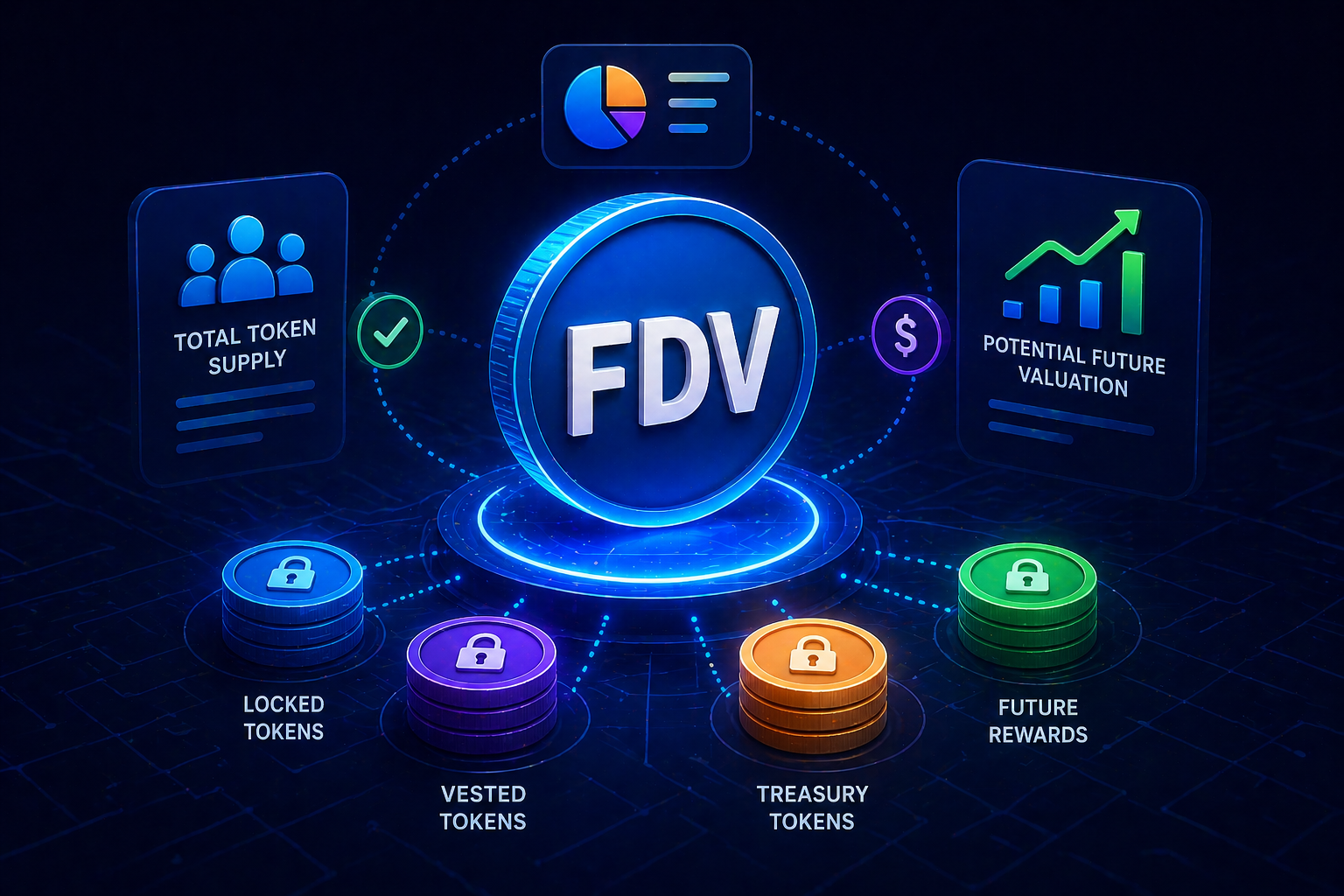
Total supply reflects the total number of issued tokens, including:
- locked team tokens;
- venture investor allocations under vesting;
- foundation or DAO reserves;
- tokens reserved for future incentives and rewards.
When investors try to understand what is fully diluted market cap, they are effectively looking at a project’s valuation including the entire potential supply, even if most of it will not become available for years.
FDV Formula Step by Step
From a technical standpoint, what is FDV is calculated very simply. The formula is:
Fully Diluted Valuation = current token price × total token supply
That is why FDV crypto can change sharply when price fluctuates, even if the amount of tokens in circulation stays the same.
It’s important to understand that FDV assumes the token price remains at its current level after the full unlock. In reality, this is rarely the case. For this reason, FDV meaning should be treated as a theoretical reference point, not a guaranteed future valuation.
Fully Diluted Market Cap vs Market Cap
Many investors confuse fully diluted market cap with standard market capitalization. The difference is fundamental. Market cap is calculated as:
token price × circulating supply
Whereas what is fully diluted market cap accounts for:
token price × total supply
Because of this, FDV in crypto is almost always higher than market cap, especially for early-stage projects. The smaller the share of tokens already in circulation, the larger the gap between these metrics and the greater the potential future pressure on price.
FDV vs Market Capitalization
Comparing Fully Diluted Valuation and market capitalization is one of the most important steps when analyzing any crypto project. Both metrics describe an asset’s value, but they do so from different time horizons. Understanding these differences helps avoid common mistakes when evaluating FDV crypto and a project’s true scale.
Key Differences Between FDV and Market Cap
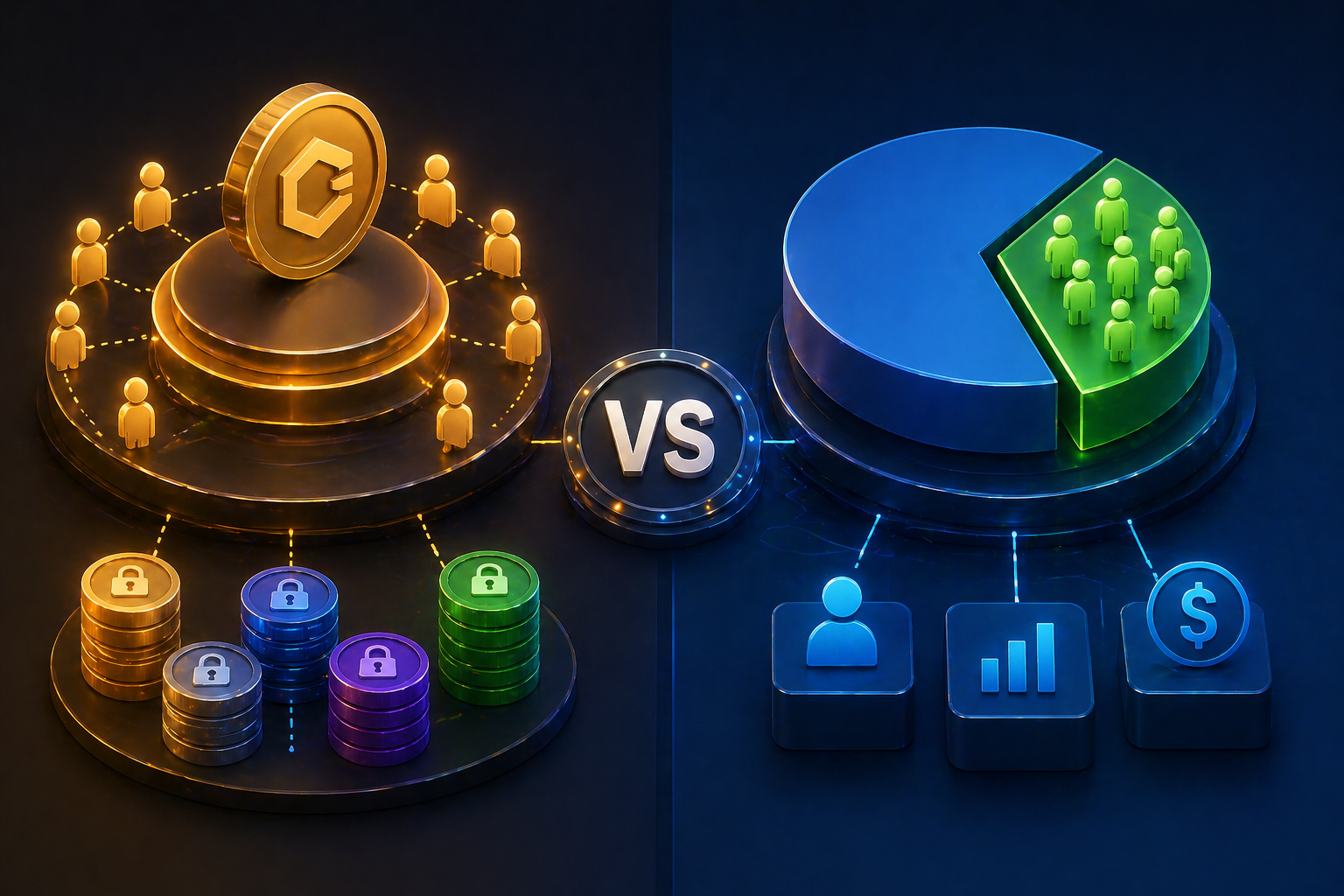
The main difference lies in how each metric treats token supply: market cap reflects the current market state, while FDV meaning crypto shows the potential valuation under full issuance.
The core differences are:
- market cap considers only circulating supply → Fully Diluted Valuation considers total supply;
- market cap better reflects short-term market conditions → FDV meaning in crypto is more useful for long-term analysis.
As a result, a project with a relatively small market cap can still have a very high FDV meaning, indicating a large volume of tokens that have not yet entered the market.
Why FDV Can Be Much Higher Than Market Cap
When investors see FDV far exceed market cap, it is often because the initial token release was limited. High FDV crypto meaning is most common in projects where:
- a large portion of tokens is locked in early stages;
- there are long vesting schedules for the team and investors;
- significant token allocations are reserved for future incentives.
In such cases, the current price is formed under restricted supply, but as tokens unlock, the market faces additional selling pressure. That is why FDV in crypto is often used to assess potential inflation.
Common Investor Misunderstandings
One of the most frequent mistakes is treating FDV as an objective or fair valuation of a project. In reality, it is neither a forecast nor a “target market cap.” A high FDV is not always a negative signal – it must be evaluated against unlock schedules and tokenomics; and when comparing FDV across different projects, it is essential to account for their development stage.
In practice, FDV meaning crypto is only meaningful when combined with analysis of the product, token demand, and issuance pace. Without that, the metric loses much of its analytical value.
Why FDV Matters in Crypto Investing
Understanding Fully Diluted Valuation helps investors evaluate a project not only through the lens of today’s price, but also through its long-term potential and risks. This is an important element of fundamental analysis, especially in the volatile digital asset market.
Evaluating Long-Term Token Value
A key question for any investor is whether a project can sustain token value as supply grows. In this context, FDV meaning crypto helps assess how realistic the current valuation is given future issuance.
If FDV crypto is already comparable to the capitalization of large, established projects, it may indicate the market has priced in overly optimistic expectations. For price to grow meaningfully in the future, the project would need either a major increase in demand or a significant expansion in real token utility.
In this sense, what does FDV mean in crypto is a way to ask the right question: does the project still have room to grow after full token unlocks?
Token Unlocks and Inflation Risk
One of the main reasons FDV in crypto matters is future token unlocks. Each new release increases supply and can put downward pressure on price.
Projects with high Fully Diluted Valuation often have:
- aggressive vesting schedules;
- large allocations for the team and early investors;
- significant token reserves for future incentives.
If token demand does not grow in step with supply, inflationary pressure becomes inevitable. That is why FDV meaning in crypto should be evaluated alongside an unlock calendar, not in isolation.
FDV in Different Crypto Sectors
FDV meaning crypto varies significantly depending on a project’s sector. Comparing FDV crypto without considering the business model and the token’s role is a common mistake that distorts the picture.
In infrastructure blockchains (Layer 1 and Layer 2), high Fully Diluted Valuation is often explained by long-term ecosystem development strategies. A large share of tokens is reserved for validators, developer grants, and network incentives. In such projects, FDV in crypto can be high without necessarily implying overvaluation, provided the network shows sustained growth in activity.
In DeFi, the situation is different – here FDV is closely tied to revenue models and token utility. If the token is used for governance, staking, or fee distribution, a high FDV requires validation through real cash flows. Without that, FDV meaning becomes more of a speculative number.
GameFi and NFT projects often show one of the widest gaps between market cap and Fully Diluted Valuation. This is driven by aggressive token emissions for rewards and in-game economies. What does FDV mean in crypto in this case? It signals a risk of rapid value dilution if the user base does not grow.
High FDV vs Low FDV Projects
A high or low FDV is not inherently good or bad. Everything depends on context and a project’s stage. High-FDV projects are often early-stage: their current price is formed on limited supply, while the bulk of tokens remains locked. Such projects can be highly volatile, especially around major unlock events.
Projects with lower FDV in crypto have typically already issued most of their tokens, have more mature tokenomics, and face a lower risk of sudden supply expansion.
However, low FDV does not guarantee price appreciation. It simply reduces uncertainty tied to future issuance. That is why FDV should be analyzed together with the product, usage metrics, and token demand.
Limitations and Criticism of FDV
Despite its growing popularity, FDV has several limitations that make it a frequent target of criticism among analysts and experienced investors. Understanding these nuances helps interpret FDV meaning crypto more realistically and avoid overestimating its importance.
The main issue is that FDV often assumes an unrealistic scenario: all tokens are in circulation and valued at the current price. In reality, as tokens unlock, the price almost always changes – sometimes dramatically. As a result, FDV crypto does not reflect actual future market conditions, but rather a hypothetical maximum valuation.
Another limitation is that FDV ignores demand. FDV meaning accounts only for token supply and says nothing about whether the market will be willing to absorb additional issuance. A project can have a high FDV while lacking sustainable demand or a working business model.
FDV in crypto is also criticized for not accounting for unlock pace, for ignoring token burns and deflationary mechanisms, and for having limited usefulness for short-term trading.
For these reasons, what does FDV mean in crypto is not a universal indicator. Its value becomes clear only when combined with tokenomics, vesting schedules, and a project’s fundamental metrics.
How to Use FDV in Your Investment Strategy
For FDV meaning crypto to be practically useful, it should be used as part of a comprehensive analysis, not as a standalone decision criterion. First, this metric helps compare projects at a similar development stage – contrasting the FDV of young projects with the market caps of mature protocols can reveal whether current market expectations are justified.
FDV crypto meaning is also useful for:
- assessing future inflationary pressure;
- analyzing risks tied to token unlocks;
- identifying projects with potentially overvalued token economics.
A practical approach is to evaluate this metric alongside the vesting calendar, token demand dynamics, and real product usage both now and over time. Used this way, FDV in crypto becomes a risk-management tool rather than an abstract number on a data aggregator.
Conclusion
Fully Diluted Valuation is a metric that helps look beyond current market capitalization and assess a project’s potential scale and risks. Understanding FDV meaning crypto is especially important in an industry where a significant share of tokens often remains locked for years.
It is important to remember that FDV is not a forecast and not a guarantee of future valuation. It is an analytical tool that only becomes meaningful in the context of tokenomics, demand, and a project’s development strategy. By using FDV crypto thoughtfully and alongside other metrics, investors gain a fuller picture and reduce the risk of making decisions based solely on surface-level indicators.
Published Articles

Crypto On-Ramps and Off-Ramps Explained: How Fiat and Crypto Move In and Out
Entering the world of digital assets often feels like trying to cross...
 Popular
Bitcoin Pizza Guy: The Story Behind the First Real Bitcoin Purchase
Introduction The history of Bitcoin is full of dramatic ups and downs,...

Crypto Basics Explained: A Beginner’s Guide to Cryptocurrency and Trading
Introduction The world of finance is changing right before our eyes. Just...
 Popular
Uniswap Explained: What It Is, How It Works, and How to Use the UNI DEX
Introduction Decentralization and decentralized platforms that have emerged in recent years have...
 Popular
Bitcoin Lightning Network Explained: What It Is and How Bitcoin Lightning Works
Introduction In the world of cryptocurrency, transaction speed and costs have always...

How Bitcoin ATMs Work: A Complete Guide to Using Crypto ATMs
Introduction Millions of people around the world use cryptocurrencies today – at...