
What Is Bitcoin and How Does It Work in Simple Terms
Introduction
Bitcoin is digital money. You can send it to another person through a network of computers, and the payment becomes part of a public record known as the blockchain. BTC is the abbreviation shown beside the amount in your wallet. Behind that simple balance screen, independent computers check that you are allowed to spend the coins. Bitcoin has no central bank issuing its currency or company maintaining the sole official record.
Open a wallet and you will see a balance and a send button. Following what happens after you press that button is a useful way to understand how Bitcoin works.
Bitcoin in Simple Terms
Bitcoin is a decentralized digital currency: its network runs on computers operated by independent participants. A payment can travel between users without a central operator approving it. Those computers use shared rules to decide which transactions to accept and how many new coins a block may create. The network started in 2009, after Satoshi Nakamoto published its design in 2008. That name is a pseudonym; the creator's identity remains unknown.
To understand how Bitcoin works, consider what someone needs to make a payment. Knowing another person's balance will not let you spend it. Spending usually requires a digital signature created with the relevant private key, secret data held by the owner or their custodian. Other computers check the signature mathematically. They can establish that the payment was authorized without seeing the key used to sign it.
You do not need to buy a whole coin. Bitcoin's base blockchain records amounts in satoshis, with 100 million of these small units making up one BTC. A balance of 0.001 BTC is therefore 100,000 satoshis. Change the wallet's display setting and the number looks different, though your holdings have not changed. Knowing how Bitcoin works at this smaller scale helps put a whole-coin price into perspective.
What Bitcoin Looks Like
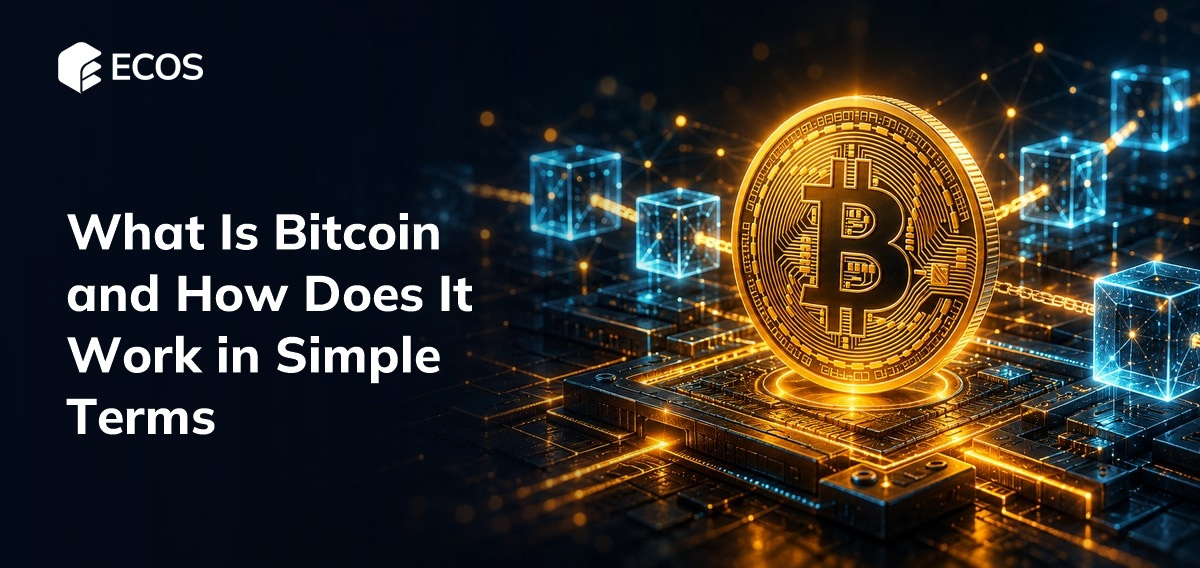
A gold coin with a Bitcoin emblem makes an easy illustration for a news story. There is no official physical coin behind the picture. In a wallet, Bitcoin appears as a balance you can spend. To receive more, you give the sender an address, a string of characters directing the payment to the right destination. Scanning its QR code saves you from typing the address by hand.
You can also look up a payment on a block explorer, a website displaying public blockchain records. It shows the transaction identifier, amounts and confirmations. No wallet password is required to view those details. A metal souvenir cannot establish that you own any BTC.
How Bitcoin Is Organized
Sending a payment and adding it to the public record involve different pieces of software. Your wallet prepares the spending instruction. Full nodes check it against Bitcoin's rules, and miners try to include it in a new block. A wallet's send button hides most of this work, which is why the roles can seem blurred when you first encounter Bitcoin.
The Blockchain as a Shared Transaction History
Payments are recorded in batches called blocks. Each new block contains a reference to the previous one: a hash, or digital fingerprint calculated from data. Alter the earlier data and its fingerprint changes, breaking that reference. Following the links takes you back through the transaction history. The accepted chain also carries the accumulated computational work required to produce its blocks.
A wallet might show one balance even though the money arrived in several payments. Behind the display, Bitcoin keeps track of the amounts still available from earlier transactions, known as unspent transaction outputs. Each output has conditions for spending it. A new payment uses existing outputs and creates replacement ones for the recipient and any change. Once an output has been spent in the accepted history, a second attempt to use it fails the checks.
Network Nodes and Rule Checking
A full node runs software that checks transactions and blocks for itself. Before accepting a payment, it verifies the signature and checks whether the referenced coins are available to spend. A block faces additional checks, including the amount of new bitcoin it claims. Invalid data is rejected under the node's rules. Approval by other operators cannot substitute for passing those checks.
A miner puts together a candidate block and searches for proof of work, computational evidence that the block meets Bitcoin's difficulty requirement. Full nodes then check both that evidence and the block's contents. Even a miner with powerful equipment would have an excessive reward rejected. This is an important part of how Bitcoin works: proposing a block does not give its creator permission to change the rules enforced by other participants.
Wallets Addresses and Private Keys
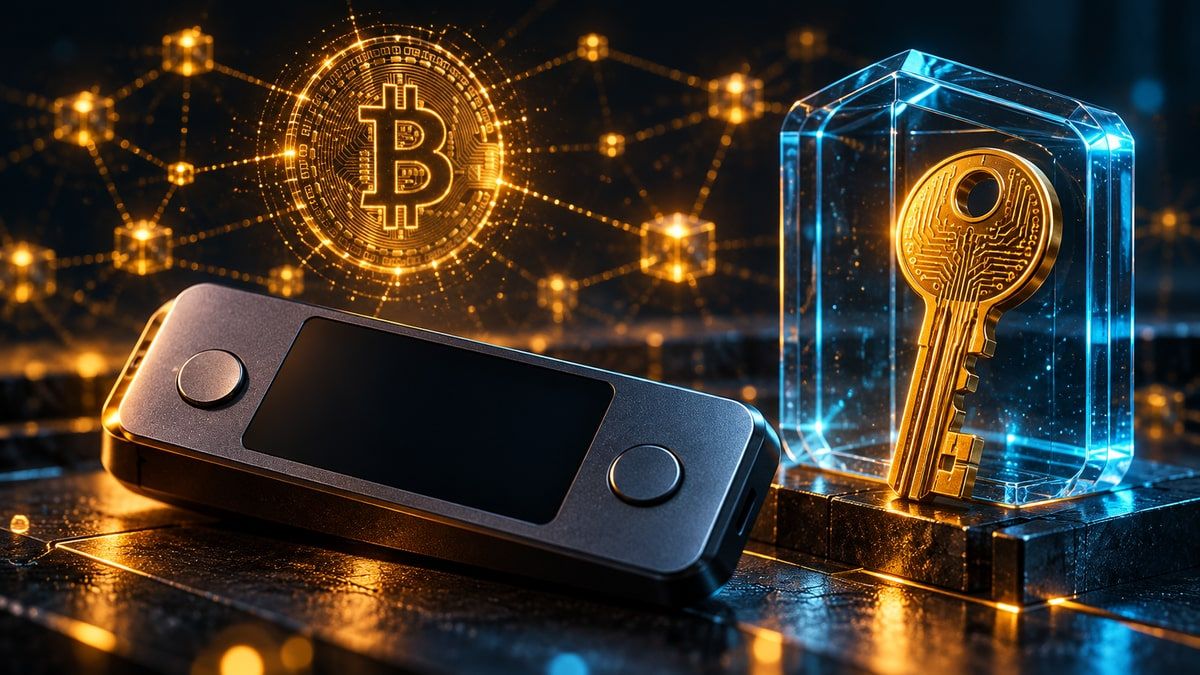
Your wallet provides the tools for receiving and spending BTC. With self-custody, you hold the private keys yourself; the software uses this secret data when signing a payment. Share a receiving address with someone who wants to pay you. Keep the private key to yourself. Closing the app leaves the coins recorded on the blockchain, so your phone does not have to stay online to keep them.
Many wallets create a recovery phrase, a sequence of words from which their keys can be restored. Anyone who obtains that phrase may be able to take the funds. A custodial service handles the keys on a customer's behalf, so access also depends on that service's systems and withdrawal policies. An account password and a wallet recovery phrase serve different purposes.
How a Bitcoin Transfer Works Step by Step
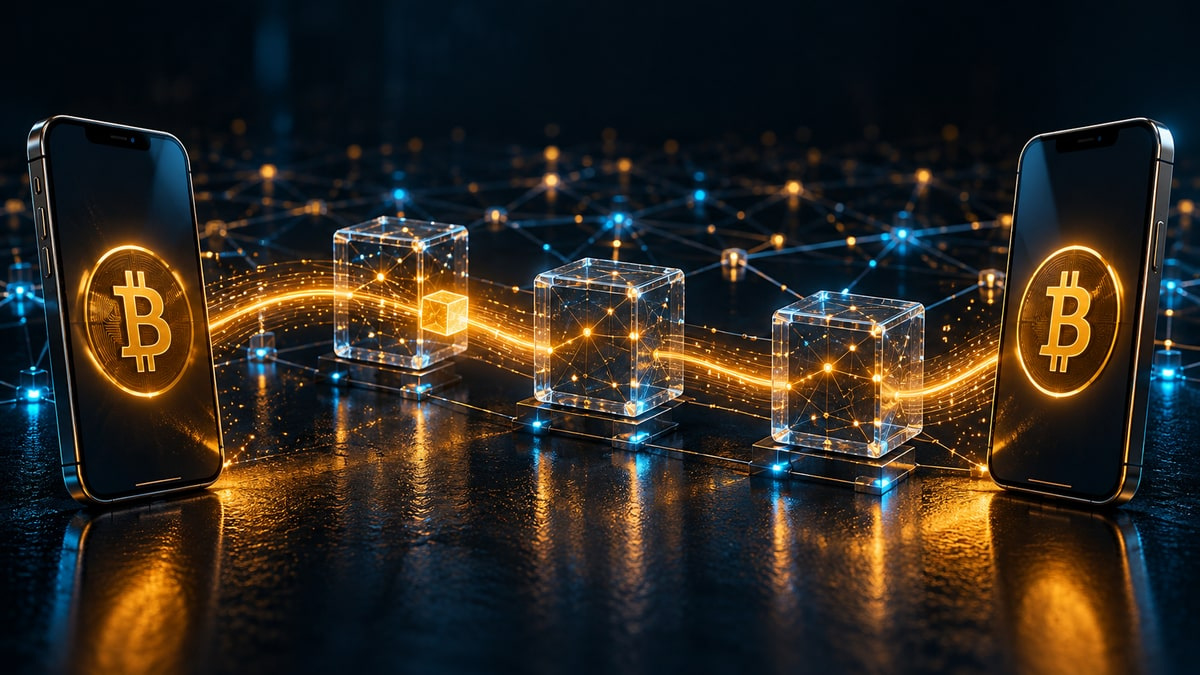
Suppose Alice wants to send Bob 0.001 BTC, or 100,000 satoshis, using Bitcoin's base blockchain. Bob gives her an address generated by his wallet. Alice checks the address and network, enters the amount, and reviews the fee. Both should agree whether Bob needs to receive the full amount and how the wallet handles the additional transaction cost.
Creating and Signing the Transaction
Assume Alice has one spendable output worth 150,000 satoshis. Her wallet could use it to create an output of 100,000 satoshis for Bob and another of 49,000 satoshis returning to Alice. The remaining 1,000 satoshis would be the fee. These are illustrative figures; an actual wallet chooses outputs and estimates a fee from current conditions.
The wallet then signs the spending instruction with Alice's key. Other participants can verify the signature without learning the secret. The return output is called change, much like the amount returned after paying with a larger banknote. It usually goes to a new address belonging to Alice's wallet. No physical object moves between the two people.
Broadcasting the Transaction and Including It in a Block
Alice's wallet broadcasts the signed transaction to connected peers, other computers on the network. Nodes check it and may relay it onward. Valid unconfirmed transactions wait in local pools called mempools. There is no single universal waiting room: different nodes can hold different sets of pending transactions according to their policies and what they have received.
A miner can select Alice's transaction for a candidate block, generally considering the fee relative to the space it occupies. If that miner finds acceptable proof of work and the network accepts the valid block into the active chain, Bob's payment gains its first confirmation. Until inclusion, a wallet showing a pending transfer should not be mistaken for completed settlement.
Confirmations Waiting Time and Fees
Once the payment's block is accepted, another block built on top gives it a second confirmation. Further blocks add more. The average interval is about ten minutes, with substantial variation between individual blocks. A low-fee transaction may wait through several blocks before being included at all. When the recipient is an exchange, its required confirmation count and processing time also affect when the deposit becomes available.
A small payment can carry a surprisingly large fee during a busy period. The amount sent tells you little about the space the transaction occupies or the competition for that space. Wallets express a fee rate in satoshis per virtual byte, a unit measuring transaction size with Bitcoin's data structure taken into account. For example, a 140-virtual-byte transaction at 10 satoshis per virtual byte costs 1,400 satoshis. These are illustrative figures, not a suggested rate for today's payment.
As more blocks accumulate, reversing a payment through a competing chain becomes harder. Some risk remains. This example follows an on-chain transfer, recorded directly in Bitcoin's base blockchain. Lightning payments use an additional layer built on Bitcoin and have their own operating requirements.
Where Bitcoins Come From and How Mining Works
A block can create a permitted quantity of new BTC for its miner. This newly issued amount is the block subsidy. The miner may also collect fees from the transactions included in that block; those fees use coins already in existence. Both amounts are claimed through a special first transaction called the coinbase transaction. Despite the name, it has no connection to the exchange company.
Mining equipment calculates hashes again and again, changing the data in a candidate block header until a result meets the difficulty requirement. The header is the compact description of the block being proposed. Every 2,016 blocks, difficulty adjusts to keep the average interval near ten minutes over time. Modern miners use ASICs, machines designed specifically for this calculation. A wallet application does none of that work, and simply holding BTC does not mine additional coins.
The subsidy is cut in half every 210,000 blocks, roughly every four years. Under Bitcoin's current rules, total issuance approaches a limit of 21 million BTC. Full nodes enforce the permitted amounts. The schedule reduces new supply over time; it does not determine the price people will pay for the coins already circulating.
Miners incur electricity, equipment and operating costs, with variable earnings. A cloud mining contract provides access to mining capacity or its proceeds through a provider, adding provider and contract risks. Buying a contract is a separate decision from buying BTC.
Why Bitcoin Has a Price
Bitcoin's price emerges from trades between buyers and sellers. People may demand it for transfers, self-custody, speculation or a long-term holding. Available supply and willingness to sell matter too. A limited issuance schedule can influence demand, but scarcity alone does not make an asset valuable. Buyers must still be willing and able to pay.
There is no fixed conversion rate to dollars or another national currency. Quotes can differ across venues because trading conditions and available liquidity differ. Liquidity describes how readily an asset can be traded without moving its price substantially. A rising price says little about whether the next purchase will gain value. Bitcoin generates no automatic interest merely by sitting in a wallet.
How Bitcoin Differs From Ordinary Money
National currencies, often called fiat currencies, operate within a state's monetary and legal system. Central banks manage the monetary base, while commercial bank lending also affects the wider money supply. Bitcoin's issuance follows its software rules. Understanding how Bitcoin works requires separating that issuance mechanism from the market value of each unit.
Cash can be held physically. A bank balance is a claim on the bank, managed through its accounts and payment systems. Self-custodied Bitcoin is controlled through spending keys. An exchange account introduces an intermediary again, with access dependent on the operator. Calling all digital balances the same kind of money obscures who can authorize or restrict a withdrawal.
Bank transfers follow the relevant payment network's procedures, sometimes including compliance checks or business-hour limits. Bitcoin's network operates continuously, although fees and confirmation times fluctuate. A bank or card provider may offer a dispute or recall process for some payments. Bitcoin has no central chargeback desk; a confirmed mistaken payment generally requires the recipient's cooperation to recover.
Purchasing power also behaves differently. National currencies can lose value through inflation or exchange-rate changes. BTC can undergo abrupt market swings against those currencies, affecting the cost of everyday purchases. Monetary supply limits do not remove that volatility. Payment acceptance, taxes and legal protections depend on the jurisdiction and service involved, rather than one rule applying everywhere.
How People Obtain and Store Bitcoin
People obtain BTC through purchases, payments for goods or services where permitted, or mining proceeds. Exchanges may require identity checks and impose deposit or withdrawal conditions. Buying a product whose price tracks Bitcoin can give financial exposure without giving you coins you can send to your own address. Check what the purchase actually provides.
For self-custody, software wallets are convenient for smaller everyday balances. A hardware wallet is a dedicated device that keeps signing keys separate from the general-purpose computer or phone used to prepare a payment. It still requires a reliable backup and careful checking of payment details. Losing the device can be recoverable if the correct backup survives; losing all access to the keys may be permanent.
Before transferring a meaningful amount, verify the complete receiving address on a trusted screen and confirm the intended network. A small test payment can reveal a setup mistake, though it carries its own fee. Keep recovery information offline and protected from theft or damage. Support staff should never need your recovery phrase to investigate a transaction.
The Main Risks of Bitcoin
Price risk is the most visible. A person who needs a fixed amount of local currency next month may find that the same BTC buys much less when the bill arrives. Borrowing to buy it adds repayment obligations regardless of the market outcome. Knowing the mechanics does not make that financial exposure predictable.
Security failures often occur outside the blockchain itself. Fake wallet downloads, stolen recovery phrases and malware that replaces a copied address can divert funds. Custodial services can suffer outages, theft or insolvency, delaying or preventing withdrawals. Hardware devices cannot compensate for a recovery phrase handed to a scammer.
Privacy deserves attention as well. Bitcoin addresses do not automatically display people's names, but transactions are public. Repeated address use and records held by services can connect payments to an identity. Bitcoin is not inherently anonymous. Finally, software and network risks remain: competing valid chains can reorganize recent history, and temporary disruption can affect payment availability.
Key Takeaways
BTC is digital value recorded through a public network, divisible into 100 million satoshis per bitcoin.
Wallets manage spending access; full nodes independently check the rules and miners propose blocks with proof of work.
On-chain fees reflect transaction size and block-space demand. Confirmation timing varies.
New issuance follows a declining subsidy schedule, with a limit approaching 21 million BTC under current rules.
Secure keys, reliable backups and the custody arrangement deserve attention before a large transfer.
Expert Insight
Gemini's Cryptopedia describes Bitcoin as a "decentralized digital currency" in its guide How Does Bitcoin Work, updated February 2, 2026. The phrase helps frame the central idea, but decentralization needs to be understood at the level of the network. A person holding BTC on an exchange still depends on that particular custodian to process a withdrawal.
Who controls the keys? What happens if the service stops responding? A balance screen does not answer either question. Establish the custody arrangement before depositing funds.
Conclusion
Learning how Bitcoin works makes a wallet balance easier to interpret. A payment uses spending keys, passes through independent rule checks and gains confirmations when miners add valid blocks. New issuance follows a defined schedule. For everyday use, check the custody arrangement, protect recovery information and allow for fees and waiting time. Bitcoin's market price remains a separate source of risk, however well you understand the system.
FAQ
- Do I have to buy one whole bitcoin?
No. One BTC contains 100 million satoshis. You can buy a fraction, subject to a service's minimum order and fees.
- Does Bitcoin exist as a physical coin?
No. Metal Bitcoin tokens are illustrations or collectibles. Actual BTC ownership depends on blockchain records and the conditions for spending coins.
- Can miners create unlimited bitcoins?
Full nodes reject blocks that exceed the permitted subsidy. Bitcoin's current issuance rules limit the total to approximately 21 million BTC.
- How long does a Bitcoin transfer take?
Timing depends on block discovery, the fee and congestion. A receiving service may require several confirmations before crediting the payment.
- Can a mistaken Bitcoin payment be reversed?
There is no central chargeback service. Recovering a confirmed payment generally requires the recipient's cooperation. Check the address before sending.
Published Articles
Best Crypto Wallets: Security, Features, and Expert Recommendations
Compare the most secure crypto wallets for mobile and hardware use. Review key protection, recovery, security audits, and risks before choosing a wallet.
Bitcoin vs XRP Explained: Technology, Speed, and Investment Comparison
Compare XRP vs Bitcoin by technology, transaction speed, fees, supply, decentralization, and investment risks. Understand how Ripple differs from XRP.
Hardware Wallet Explained: How Cold Storage Protects Cryptocurrency
Learn how a hardware crypto wallet protects private keys, how to set one up, and what to check when backing it up, signing transactions, or recovering access.
What Is Quant (QNT)? The Cryptocurrency Explained
Discover how Overledger works, what the QNT token is used for, and what to check when following its price, buying in Germany, or choosing a wallet.
MetaMask Wallet Explained: How to Set Up and Use It Safely
Learn how to use MetaMask on desktop and mobile, set up and fund your wallet, send crypto, connect to dApps, and protect your wallet access.

What Is Render Crypto? A Guide to RNDR/RENDER
What Render crypto is, how its GPU network works, how RNDR differs from RENDER, and what to know about token utility, wallets, migration, and risks.