
Is ASIC Mining Profitable in 2026? Factors, Tips, and Future Trends
Introduction
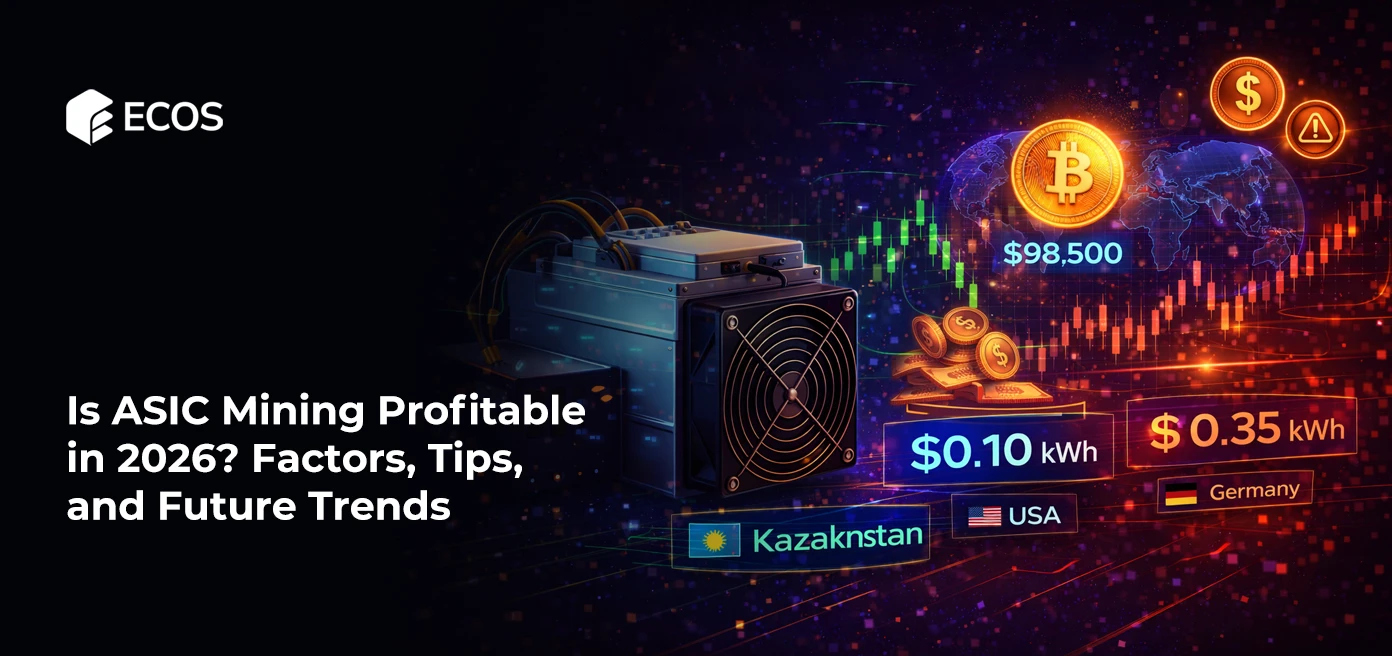
I have been watching the mining market long enough to know that the question “is it still worth it?” never really goes away. People were asking this back in 2013, and they are asking it now as we head into 2026. The truth is, the answer changes every time Bitcoin’s price moves or a new machine hits the shelves. Right now, with Bitcoin hovering around 98,500 USD, the stakes feel higher than ever.
Some people think mining is just printing money from thin air. In reality, it is more like running a high-tech factory where the cost of “raw materials”—which is your electricity—can easily sink your business. If you are paying 0.10 USD per kWh in the US, an Antminer S21 Pro might make you about 11 USD a day. But if you find a spot in Kazakhstan with 0.04 USD rates, that same machine becomes a gold mine. I want to look at what actually makes sense for a miner today, without the hype or the usual corporate talk.
What Is ASIC Mining?
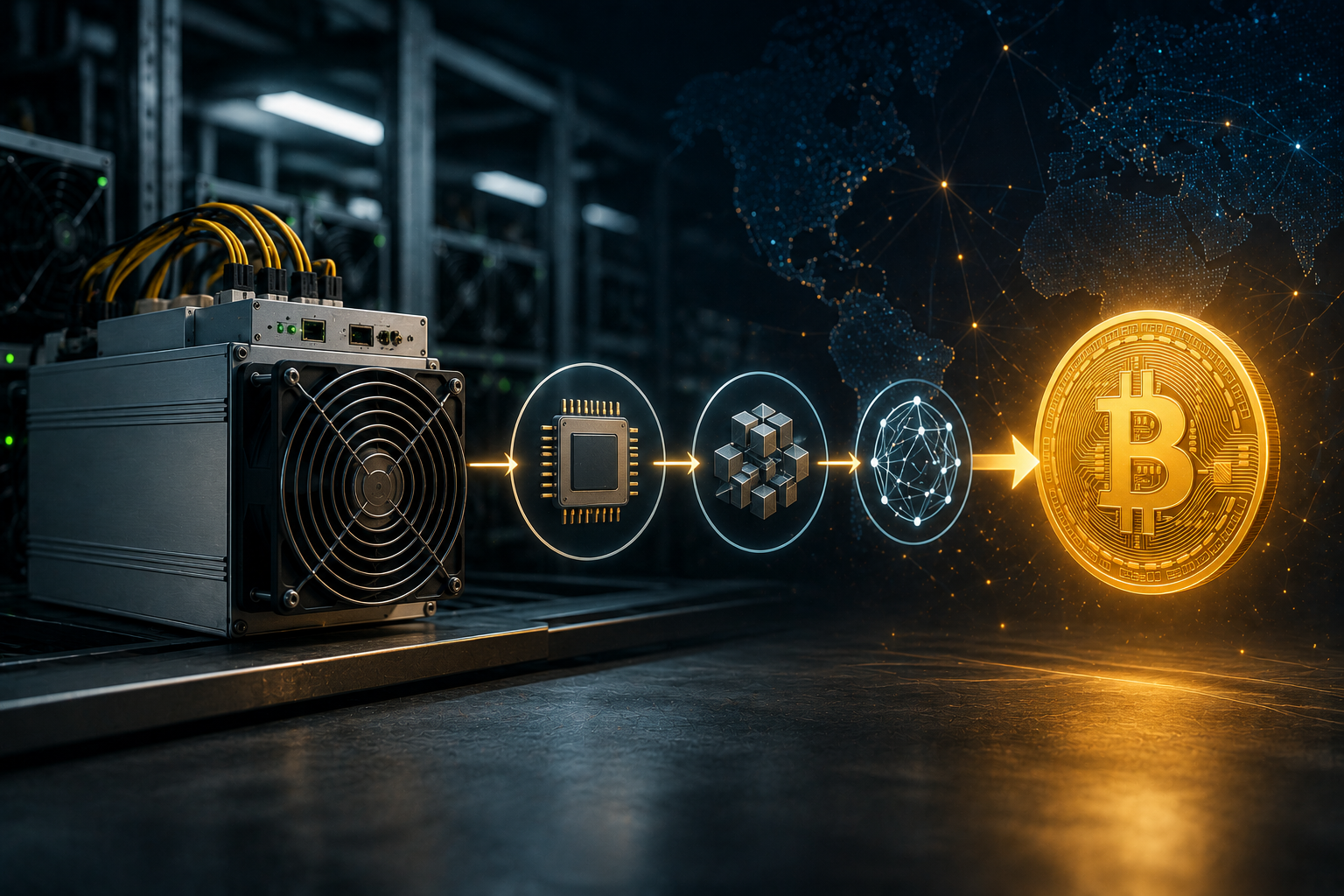
ASIC stands for Application-Specific Integrated Circuit. That sounds like a mouthful, but it basically means a machine designed for exactly one task. While your laptop is a jack-of-all-trades that can edit photos or send emails, an ASIC is a specialist. It’s built to do nothing but mine cryptocurrency, and it does that better than anything else I’ve seen.
The process is pretty straightforward. The machine connects to the network and starts solving complex math problems to validate transactions on the blockchain. Once a block is solved, you earn rewards in cryptocurrency. Because these units are optimized for just this one job, they are incredibly fast. They don’t waste energy on background apps or fancy graphics, which is why they dominate the market today.
How asic mining profitability is calculated
Calculating profit isn’t exactly rocket science, but I see many beginners forget the most obvious things. You take what the machine makes and subtract what you pay for power. That sounds simple, right? But the numbers move every day, and a setup that makes money on Monday might be borderline by Friday.
Hashrate and block rewards
Your hashrate is your power. Think of the Antminer S21 Pro — it pumps out 234 TH/s. In 2024 and 2025, with Bitcoin staying around 98,500 USD, that hashrate translates to about 11 or 12 dollars a day. You get these rewards for every block your machine helps solve. If you have more “thash,” you get a bigger slice of the pie.
Electricity costs
This is where most dreams die. Electricity is your biggest bill. I find it fascinating how much location matters. In the US, you might pay 0.10 USD per kWh. At that rate, you keep some profit. But if you live in Germany where it’s 0.35 USD, you are basically paying to mine. Miners in Kazakhstan have it easy with 0.04 USD rates, which changes the whole math.
Mining difficulty and network hashrate
The network has a mind of its own. When more people start mining, the network makes the “puzzles” harder. This is mining difficulty. If everyone buys a new S21 Pro tomorrow, your 234 TH/s won’t be as effective as it is today. I’ve noticed that difficulty usually goes up when prices are high, which can eat into your margins just when things look good.

ASIC miner profit: revenue vs expenses
I like to think of an ASIC miner as a hungry beast. It eats electricity and spits out Bitcoin. To see if you are actually making money, you have to look at the gap between what you earn and what you burn. In late 2024 and early 2025, a top-tier machine like the Antminer S21 Pro can bring in about 11.75 USD every day. That is your revenue. But don’t start spending it yet.
Your biggest enemy is the power bill. If you are running that same S21 Pro, it draws about 3,510 watts. At 0.10 USD per kWh, you are paying around 8.40 USD a day just to keep the lights on. That leaves you with a few dollars of actual profit. I’ve seen people forget about pool fees too—places like F2Pool or NiceHash take a small cut, usually around 1% to 2%. Then there is maintenance. If you don’t clean the dust out, your fans work harder, your chips get hotter, and your efficiency can drop by up to 20%. It is a game of margins, and those margins can be thin.
Most profitable asic miners in 2026
Choosing a miner in 2026 feels like a high-stakes gamble if you don’t know the specs. I’ve spent years looking at these machines, and the one thing I’ve learned is that raw power isn’t everything. You want a unit that is fast but won’t bankrupt you when the monthly power bill arrives.
Top high-hashrate models
If you want pure speed, the MicroBT WhatsMiner M63S+ is hard to ignore. It hits a massive 412 TH/s. That is a lot of power for a single unit, but you have to remember that such high-performance machines produce an enormous amount of heat, sometimes around 3,000 watts. You’ll need a serious cooling setup to keep it from melting down.
Best efficiency (j/th) models
Power is great, but efficiency is what keeps you in business when the market dips. I always look at the joules per terahash. The Antminer S21 Pro operates at 15 W/TH, which is excellent for staying profitable even if difficulty rises. I also keep an eye on the S21 XP, which sits at around 19 J/TH. These numbers matter because they tell you exactly how much Bitcoin you get for every dollar spent on electricity.
Budget vs industrial asic options
Not everyone has a massive budget to start. Pre-made models like the Antminer S21 Pro or WhatsMiner M63S+ usually start around 3,000 USD. If you are looking for something that holds its value, the Antminer S19 XP is a solid choice. Even after years of use, it can still fetch 70% to 80% of its original price on the secondary market.
Best asic chips for bitcoin mining
The chip is the heart of the machine. I have often thought that if you have the best chips, you have the best chance of survival in this market. Right now, companies like Bitmain and MicroBT rule this space. They don’t just sell their latest tech to anyone; they keep the best designs for their own miners. This makes it really hard for anyone trying to build their own setup from scratch.
Back in late 2024, these advanced chips were selling for anywhere between 300 and 500 USD each. But here is the catch: you usually have to buy them in huge batches of a thousand or more. For a regular person, that is just not realistic. These chips are built using very small nanometer processes, which makes them incredibly fast at solving the SHA-256 algorithm used for Bitcoin. It is a game where the smaller and faster the chip, the more money you keep at the end of the month.
Real asic mining profitability scenarios
I have seen many people get excited about the potential of mining, but the reality depends heavily on where you plug in your machine. It isn’t just a guess; the numbers tell a very specific story based on your local power rates and the market price of Bitcoin.
Here are a few real-world scenarios I have calculated for the Antminer S21 Pro, assuming Bitcoin stays around 98,500 USD:
- The budget miner (Kazakhstan): With electricity at 0.04 USD per kWh, you could walk away with over 15 USD in profit every day.
- The average setup (USA): If you pay around 0.10 USD per kWh, your daily take-home is closer to 11.75 USD after power costs.
- The high-cost zone (Germany): At 0.35 USD per kWh, you aren’t making money. In fact, you are likely losing a few dollars every day.
- The market dip: If Bitcoin drops to 80,000 USD, I expect earnings to crash by 30% or more, even if your power costs stay the same.
Break-even and roi analysis
I think everyone starts mining with a calculator in one hand and a dream in the other. ROI, or Return on Investment, is that long-awaited moment when your machine finally pays for itself. It is the point where you stop being in the red and start actually stacking profit in your wallet. In the current market, I have seen these timelines shift quite a bit. If you are running an Antminer S21 Pro and have access to electricity at about 0.07 USD per kWh, you are likely looking at a break-even point in roughly 12 to 18 months.
But I have to be honest—this isn’t a fixed schedule. If the network difficulty spikes because thousands of people just plugged in their new gear, or if Bitcoin price takes a sudden dive, that 12-month window can easily stretch to two years. I always tell people to plan for the worst-case scenario. It is much better to be surprised by an early profit than to be stuck paying off hardware that isn’t pulling its weight. Factory-made machines are usually your best bet for a predictable ROI because they are optimized for efficiency right out of the box, unlike risky DIY projects.
Cloud mining and hosted asic solutions
I talk to plenty of people who love the idea of Bitcoin but hate the thought of a noisy, hot machine screaming in their basement. If you live in a small apartment or in a place where electricity costs a fortune, traditional home mining is basically impossible. This is where cloud mining and hosting come in. I see them as a way to bridge the gap between wanting to mine and actually having the space or cheap power to do it.
Cloud mining is the simplest version. You aren’t buying a physical machine. Instead, you pay for a specific amount of hash power from a provider like ECOS. They handle the maintenance, the cooling, and the power bills. You just collect the rewards. It is a good way to test the waters without spending 3,000 USD on an Antminer S21 Pro right away.
Then there is the hosted model, which I find more interesting for long-term players. You actually buy the ASIC, but instead of shipping it to your house, it goes to a professional data center. These centers are often built in places with very low power rates, like Kazakhstan. You own the hardware, but you don’t have to worry about a fan failing or your home circuit breaker tripping. It is a professional setup for people who want the benefits of ownership without the daily headache of hardware management.
Conclusion
I get asked all the time if mining is still a good idea. Looking at the numbers for 2026, I think the answer is yes, but only if you have a clear plan. You can’t just plug a machine into a random outlet and expect to get rich anymore. The days of easy money are long gone, but for those who find cheap power and use efficient gear like the S21 Pro, the rewards are still real.
I personally feel that the shift toward hosted solutions and green energy is the right path forward. It takes the technical burden off your shoulders and puts your hardware in a place where it can actually perform. Mining has moved from being a basement hobby to a serious business. If you are ready to treat it that way, 2026 looks like a year of steady growth for disciplined miners.
More Questions
Yes, it is, provided your power cost is low. In places like Kazakhstan, you can make over 15 USD a day with the latest models, while high-cost areas like Germany will likely see losses. I’ve seen many people fail because they didn’t check their local utility rates before buying expensive gear.
I usually suggest the Antminer S21 Pro because it is efficient and comes ready to use right out of the box. It is a solid choice for someone who wants to start mining without needing a degree in electrical engineering or complex programming skills.
I wouldn’t recommend it for most people. Sourcing chips is very hard because companies like Bitmain usually require huge orders of 1,000 units or more. It is almost always cheaper and much more reliable to buy a pre-made machine from a trusted manufacturer.
With decent electricity rates around 0.07 USD per kWh, you are looking at about 12 to 18 months to see a return on your investment. This timeframe can change if the price of Bitcoin moves or if the network difficulty goes up.
Published Articles
Crypto On-Ramps and Off-Ramps Explained: How Fiat and Crypto Move In and Out
Entering the world of digital assets often feels like trying to cross...
 Popular
Bitcoin Pizza Guy: The Story Behind the First Real Bitcoin Purchase
Introduction The history of Bitcoin is full of dramatic ups and downs,...
Crypto Basics Explained: A Beginner’s Guide to Cryptocurrency and Trading
Introduction The world of finance is changing right before our eyes. Just...
 Popular
Uniswap Explained: What It Is, How It Works, and How to Use the UNI DEX
Introduction Decentralization and decentralized platforms that have emerged in recent years have...
 Popular
Bitcoin Lightning Network Explained: What It Is and How Bitcoin Lightning Works
Introduction In the world of cryptocurrency, transaction speed and costs have always...
How Bitcoin ATMs Work: A Complete Guide to Using Crypto ATMs
Introduction Millions of people around the world use cryptocurrencies today – at...