
Is Bitcoin a Good Investment For Beginners?
Introduction
In December 2024, Bitcoin crossed $100,000 for the first time in history. A few days later it pulled back to $90,000. This is not an exception to the rules — it is the rules. Bitcoin moves sharply, unpredictably, and often against any forecast. That is precisely why the question of whether investing in Bitcoin is a good idea has no single correct answer.
The good news: it has an honest one. Bitcoin investment can be a reasonable decision — with the right understanding of what you are actually buying, over what time horizon, and what risk you are prepared to accept. This article covers all of that sequentially: from core arguments for and against, to concrete strategies and common beginner mistakes.
Is Investing in Bitcoin a Good Idea?
Direct answer: for many beginning investors — yes, provided the approach is sensible. Is it good to invest in bitcoin? It is if you understand the nature of the asset, are prepared for volatility, and see it as part of a diversified portfolio rather than an all-or-nothing bet.
Bitcoin has existed since 2009. In that time it has survived multiple cycles of more than 80% decline — and each time recovered to new all-time highs. That is a unique track record for any asset over 15 years. No stock, no commodity market has shown anything comparable in magnitude of growth.
On the other hand, putting money into Bitcoin means accepting real risk. The asset generates no cash flow, pays no dividends, and has no intrinsic value in the traditional financial sense. Its value is determined by demand and belief in its utility as a store of value. This makes it simultaneously powerful and vulnerable.
Bitcoin as an Investment: Key Pros and Cons
Scarcity and Long-Term Demand
The fundamental argument for bitcoins as an investment is simple: supply is capped at 21 million coins and cannot be changed. Every four years, the halving occurs — miner rewards are cut in half, slowing the arrival of new coins to the market. The fourth halving happened in April 2024.
With growing institutional demand — ETFs, corporate treasuries, sovereign funds — and shrinking supply, the arithmetic looks favorable for price appreciation. This is not a guarantee, but it is logic that has historically worked.
Volatility and Market Risk
The flip side of that same logic is extreme volatility. Bitcoin has lost 50%, 70%, 80% of its value within a single bear cycle. In 2022 it fell from $69,000 to $16,000. Whoever entered at the 2021 peak and could not hold through the drawdown locked in a massive loss.
For beginners, this is the primary trap: buying on emotion during rallies and selling in panic during declines. Bitcoin’s volatility is a feature, not a bug. But it needs to be navigated consciously.
Liquidity and Global Access
Among Bitcoin’s practical advantages is its highest liquidity among all crypto assets. Bitcoin can be bought and sold at any time of day, in any country, with minimal spread. The entry threshold is literally a few dollars — most exchanges allow buying fractional coins.
This makes Bitcoin accessible to people without access to traditional financial markets — one of the most significant properties for long-term user base growth.
Safest Way to Invest in Bitcoin
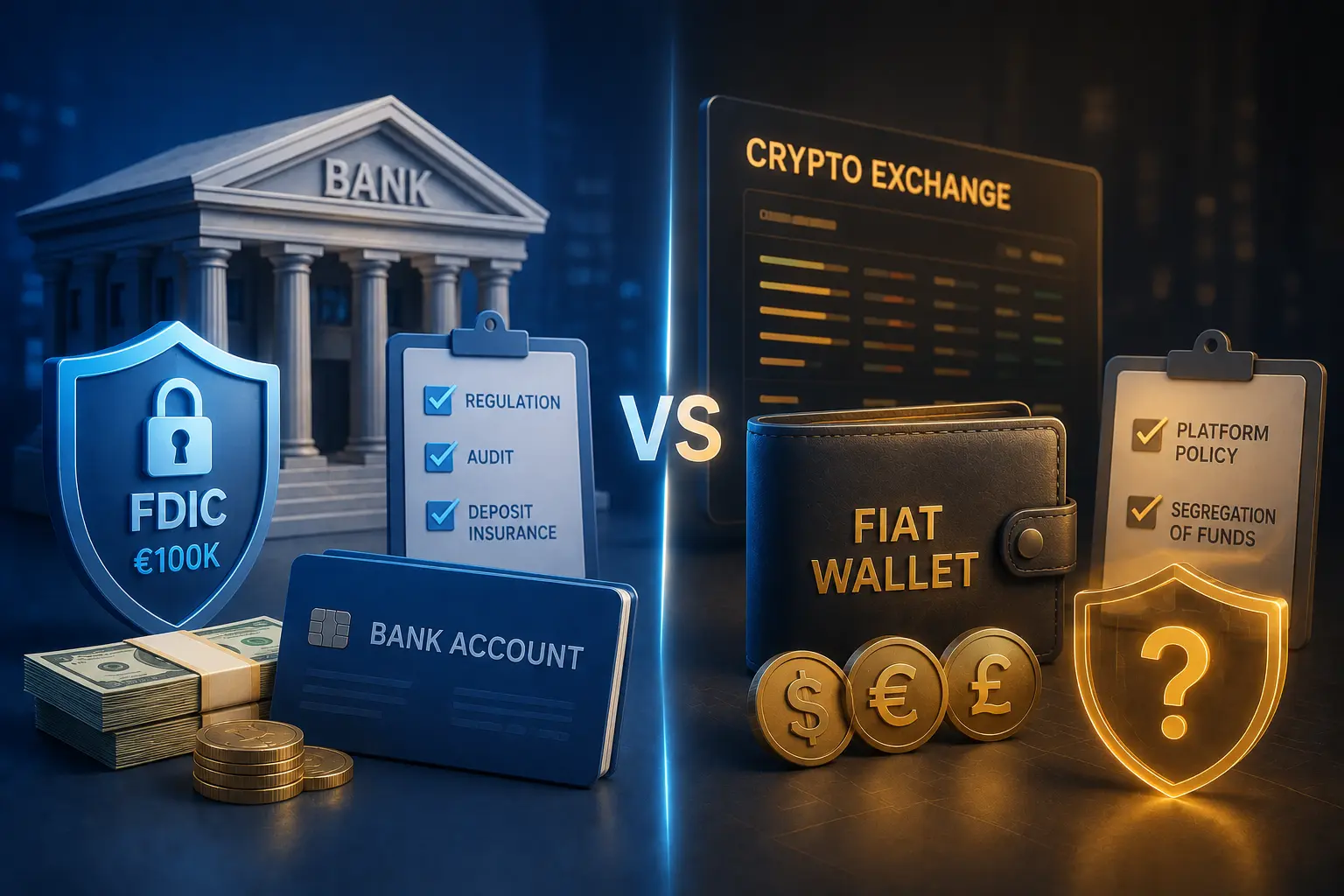
There is no “safe” way to invest in Bitcoin in the sense of eliminating market risk — the price will still move. But there is safe operational practice that protects against losing funds for non-market reasons: hacks, fraud, mistakes.
Use only regulated exchanges. Coinbase, Kraken, Gemini in the US; Binance, OKX in other regions. Avoid anonymous platforms without clear regulatory status.
Never store large amounts on an exchange. An exchange is for trading, not storage. FTX, Celsius, BlockFi — these names are reminders of what happens when people keep funds on platforms that later go bankrupt.
Use a hardware wallet for long-term storage. Ledger, Trezor — devices that store private keys offline. Even if your computer is compromised, the keys remain safe. They cost $50–200 and protect positions worth thousands.
Enable two-factor authentication everywhere. Use an authenticator app, not SMS. Never share your seed phrase with anyone, under any circumstances.
How to Buy Bitcoin Safely
Buying Bitcoin as a beginner is a relatively straightforward process if you follow a few rules.
Choose an exchange. Coinbase or Kraken work well for beginners: clear interface, solid regulatory reputation, English support. Complete KYC verification: upload a document, confirm your address — this is a mandatory step on any legitimate platform. Fund your account: bank transfer is cheaper than card. Buy Bitcoin: start with a small amount — $100–500 — to understand how the process works. Transfer to a wallet: for significant amounts, send to a hardware wallet immediately.
One important point on timing: do not try to “catch the bottom.” Even professional traders consistently fail at identifying the perfect entry moment. DCA works better for most beginning investors.
How to Store Bitcoin Securely
Storage is an underrated part of Bitcoin investment. Many beginners lose funds not because of price declines but because of improper storage.
Hot wallet (online). Apps like MetaMask or Trust Wallet are convenient for small amounts and active use. They are internet-connected — meaning vulnerable to hacks. Not the best choice for long-term storage of significant positions.
Cold wallet (offline). Hardware devices like Ledger Nano X or Trezor Model T store private keys isolated from the network. Even if your computer is compromised, the keys are safe. Cost $50–200, protect positions worth thousands.
Seed phrase. When setting up any wallet, you receive 12 or 24 words — your master backup key. Write it on paper, store physically in a safe place. Never photograph or store in the cloud.
Bitcoin Investment Strategies for Beginners
Long-Term Holding
“Buy and hold” — or hodl in crypto slang — is historically the most effective strategy for Bitcoin. Analysis shows: anyone who held Bitcoin for more than four years from any purchase point ended up in profit. The key condition: not selling in panic during bear phases.
Psychologically this is harder than it sounds. When Bitcoin drops 40% in a month, “just hold” requires real discipline. It helps to have a pre-written decision: “I sell only in this case” — and unwavering adherence to it.
DCA Strategy
Dollar-Cost Averaging — buying a fixed dollar amount of Bitcoin at regular intervals: every week, every month. Regardless of price.
This eliminates the need to guess entry timing. At low prices you automatically buy more coins for the same amount. At high prices — fewer. Average purchase cost levels out over time. DCA is the simplest way to reduce volatility’s impact on long-term results.
Portfolio Diversification
Bitcoin is a high-risk instrument. Most financial advisors recommend allocating no more than 5–10% of an investment portfolio to it. Not because Bitcoin is a bad asset — but because high concentration in a single highly volatile instrument creates unacceptable loss risk.
A diversified portfolio can include Bitcoin, other liquid assets, stocks, bonds, and cash. In such a portfolio, Bitcoin serves as “asymmetric growth”: if the bull scenario plays out, it disproportionately boosts total returns; if the bear scenario does, it does not destroy the entire portfolio.
Main Risks of Investing in Bitcoin
Price risk. Bitcoin can lose 70–80% of value in a bear cycle and remain at low levels for years. This is not theory — it is documented history.
Regulatory risk. Governments continue to develop approaches to crypto regulation. Strict restrictions in major jurisdictions can pressure the price.
Technology risk. Although Bitcoin’s base protocol has operated since 2009 without serious hacks, the ecosystem around it — exchanges, wallets, DeFi protocols — is vulnerable. User errors in storage also lead to fund loss.
Psychological risk. Fear of missing out (FOMO) pushes people to buy at peaks. Panic on declines forces selling at a loss. This is the most common way to lose money even on a long-term appreciating asset.
Bitcoin vs Other Investment Options
Bitcoin vs Stocks
Stocks are the traditional capital growth instrument. They have intrinsic value (earnings, assets, dividends), are regulated, and historically grow with the economy long-term. Bitcoin lacks these attributes but has shown significantly higher returns over the past 10 years — at the cost of far greater volatility.
Correlation between Bitcoin and stocks has strengthened in recent years: in stress periods they often fall together. As a defensive asset, Bitcoin performs worse than theory suggested.
Bitcoin vs Gold
Gold is a millennia-tested inflation hedge. It is physically scarce, globally recognized, and has industrial applications. Bitcoin is often called “digital gold” — and by some metrics the comparison holds: limited supply, censorship resistance, global liquidity.
But Bitcoin is significantly more volatile. As a short-term store of value, it is inferior to gold. As a long-term growth instrument — potentially superior, if the “digital gold” thesis plays out.
Bitcoin vs Crypto ETFs
Spot Bitcoin ETFs (BlackRock IBIT, Fidelity FBTC, and others) have been available in the US since January 2024. They enable Bitcoin investment through familiar brokerage accounts without self-custody of keys. Advantages: simplicity, tax clarity, regulatory protection. Disadvantages: small management fee (0.2–0.5% annually), no ability to withdraw actual coins.
For a beginning investor who does not want to deal with wallets and exchanges, a Bitcoin ETF is a good entry point.
The Psychology of Bitcoin Investing
One of the least discussed but most important aspects of Bitcoin investment is psychological readiness for what happens after buying.
Most beginners enter during a growth period. The first weeks or months go well: Bitcoin rises, the portfolio is green, everything seems obvious. Then the first serious correction arrives. Minus 30% in a week. Media headlines proclaim “Bitcoin is dead.” Social media floods with pessimism.
It is precisely at this moment that decisions are made that determine the final result. An investor who panics and sells locks in a loss and often misses the recovery. An investor who follows a pre-made plan rides through the correction and captures appreciation in the next cycle.
Tools that help navigate psychological traps: a pre-written investment thesis (“I hold Bitcoin because…” with specific exit conditions); automated DCA purchases eliminating the need for decisions each time; limiting portfolio check frequency — daily monitoring of a volatile asset is psychologically destructive.
Tax Considerations for Bitcoin Investors
Cryptocurrency taxation varies by jurisdiction, but the general principle is similar in most countries: selling Bitcoin is a taxable event.
In the US, Bitcoin sales are subject to capital gains tax. Holding more than a year gets favorable rates (0–20% depending on income). Holding less than a year — ordinary income rates apply. Converting Bitcoin to another cryptocurrency also counts as a taxable event.
In Germany, Bitcoin held for more than a year is tax-exempt. One of the most attractive tax regimes for long-term investors in Europe.
Practical takeaway: document every transaction from day one. Use tools like CoinTracker or Koinly for automatic tracking. Consult a tax specialist for significant positions — rules change, and errors cost.
What Is Happening With Bitcoin in 2025
Early 2025 saw several important developments. Bitcoin ETFs in the US attracted over $50 billion in assets in their first year — a record for any new exchange-traded fund category. Several corporations followed MicroStrategy’s lead by adding Bitcoin to corporate reserves. A number of governments announced creating strategic Bitcoin reserves.
The fourth halving in April 2024 reduced the daily issuance of new Bitcoin from ~900 to ~450 coins. Historically, within 12–18 months of a halving, Bitcoin has established new price highs.
This is not a forecast — it is context. The market can always move differently. But the structural factors of 2024–2025 have created conditions where the Bitcoin investment thesis looks more justified than ever from an institutional support standpoint.
Common Mistakes New Bitcoin Investors Make
Investing under FOMO. Buying Bitcoin after a period of rapid growth — when it is on everyone’s lips — is historically one of the worst entry moments. The best time to buy is usually when almost no one talks about it.
Keeping funds on exchanges. “Not your keys, not your coins” — a rule that costs dearly to those who ignore it.
Investing money you cannot afford to lose. Bitcoin is a risky asset. Putting in funds that might be needed in the next 1–2 years is inadvisable. The rule “only invest what you can afford to lose entirely” applies literally here.
Trading instead of investing. Most people trying to actively trade Bitcoin underperform passive holding. Fees, taxes, emotional decisions — all erode returns.
Ignoring taxes. In most jurisdictions, Bitcoin sales are subject to capital gains tax. Buys, sells, and conversions need to be documented from day one.
Is Bitcoin Still Worth Investing In?
Short answer: it is still worth considering as part of a portfolio — but with a clear-eyed understanding of what kind of asset Bitcoin is.
By 2025, Bitcoin is a mature market with institutional players, ETFs, regulatory frameworks, and market capitalization comparable to the world’s largest companies. The “thousandfold growth” potential of 2013 is in the past. But potential for doubling or tripling under positive scenarios is realistic.
Bitcoin as an investment today is a bet on three theses: global scarcity continues to value the asset, institutional adoption continues to expand the holder base, and digital sovereignty remains relevant in a world where trust in traditional institutions is uneven. If you share these theses — Bitcoin remains a justified part of a diversified portfolio.
Key Takeaways
- Investing in Bitcoin is a good idea for beginners under one condition: you understand the asset’s nature and are prepared for volatility that has historically reached -80% from peak.
- The safest way to invest in Bitcoin is to use regulated exchanges, store significant positions in a hardware wallet, and apply DCA strategy to reduce volatility’s impact.
- Bitcoin as an investment has a unique “scarcity + liquidity” combination: a capped supply of 21 million coins with global accessibility and high liquidity.
- Main risks are price risk (high volatility), regulatory risk, and psychological risk (FOMO and panic).
- Optimal Bitcoin allocation for a beginner is 5–10% of investment capital; long-term holding and DCA strategy produce better results than active trading.
- Spot Bitcoin ETFs (BlackRock IBIT, Fidelity FBTC) are a good alternative to direct purchase for those not ready to manage wallets independently.
Expert Insight
Fidelity Investments, in its analytical material on cryptocurrency investment, notes that Bitcoin has fundamentally different characteristics from other crypto assets: it is decentralized, controlled by no single organization, and demonstrates the longest uninterrupted operating history among all blockchain systems. The company treats Bitcoin as a separate asset class, distinct from the broader cryptocurrency market.
This distinction matters for any beginning investor: when people say “crypto is risky,” they often mean the entire market — thousands of tokens with varying degrees of reliability. Bitcoin occupies a special position: largest capitalization, highest hashrate, most developed infrastructure, and clearest regulatory status among all crypto assets.
Conclusion
Bitcoin is not a simple asset. It requires understanding, patience, and discipline. But for an investor willing to learn and committed to a reasonable approach — a small Bitcoin position remains a justified part of a modern portfolio.
More Questions
Yes, if you accept volatility risk, invest only what you can afford to lose, and view Bitcoin as a long-term position rather than quick profit.
Buy through a regulated exchange, store on a hardware wallet, use DCA strategy for regular purchases.
Most advisors recommend 5–10% of investment portfolio. Start with an amount whose loss would not critically affect your financial life.
ETFs are simpler from a storage and tax reporting standpoint. Direct purchase gives full control over coins. For beginners — ETF is more convenient.
Technically yes: if you buy at the peak and sell at the bottom, the loss can be very large. Historically, those who held Bitcoin for more than 4 years always came out ahead — but past results do not guarantee future ones.
Published Articles

Crypto On-Ramps and Off-Ramps Explained: How Fiat and Crypto Move In and Out
Entering the world of digital assets often feels like trying to cross...
 Popular
Bitcoin Pizza Guy: The Story Behind the First Real Bitcoin Purchase
Introduction The history of Bitcoin is full of dramatic ups and downs,...

Crypto Basics Explained: A Beginner’s Guide to Cryptocurrency and Trading
Introduction The world of finance is changing right before our eyes. Just...
 Popular
Uniswap Explained: What It Is, How It Works, and How to Use the UNI DEX
Introduction Decentralization and decentralized platforms that have emerged in recent years have...
 Popular
Bitcoin Lightning Network Explained: What It Is and How Bitcoin Lightning Works
Introduction In the world of cryptocurrency, transaction speed and costs have always...
How Bitcoin ATMs Work: A Complete Guide to Using Crypto ATMs
Introduction Millions of people around the world use cryptocurrencies today – at...