
Is Crypto Dead? Understanding the State of the Crypto Market Today

Why People Say “Crypto Is Dead”
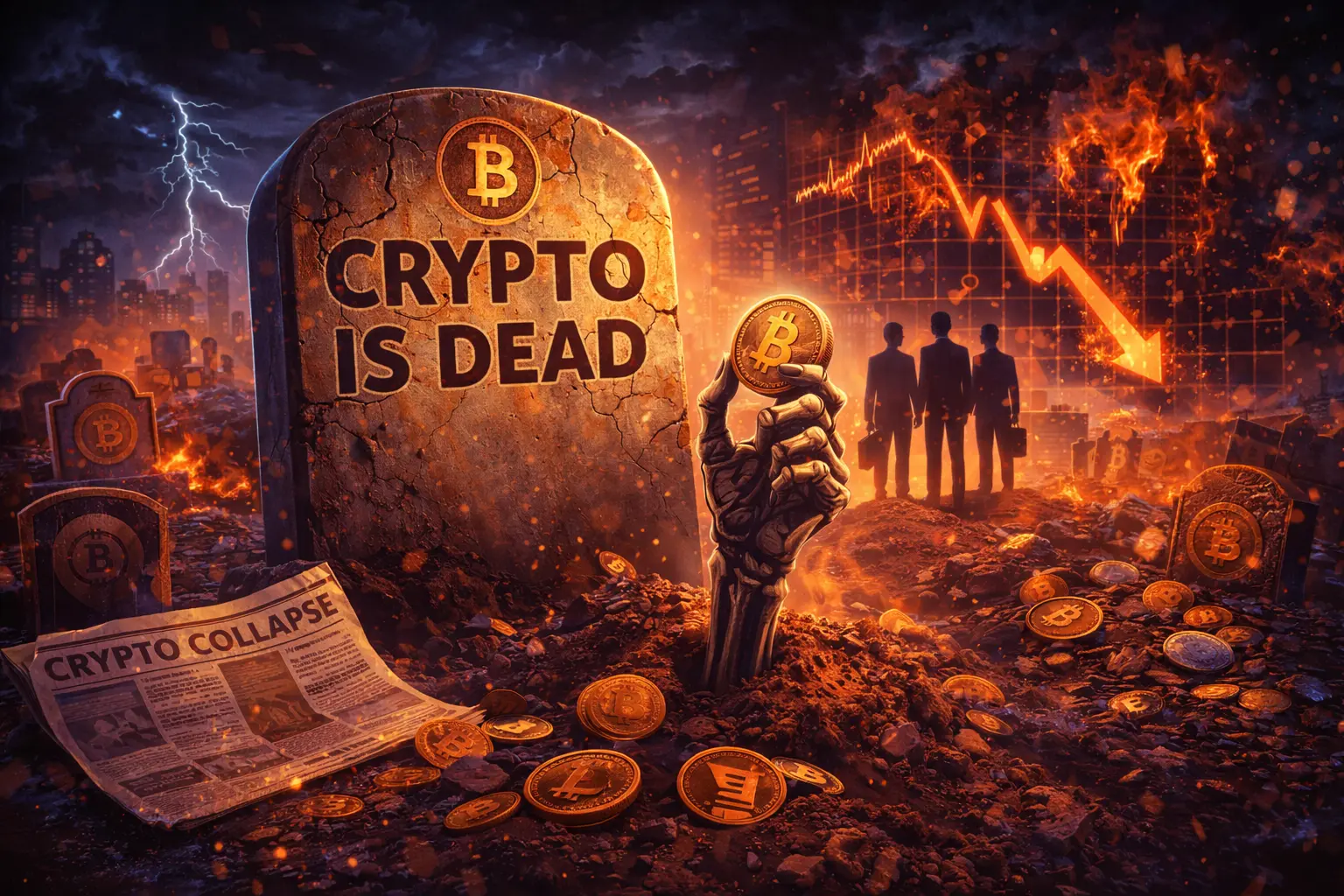
“Is crypto dead?” is a question that comes to mind for many people whenever the market experiences a sharp drop or a wave of negative news. For the general public, the crypto market is still primarily associated with wild price swings rather than technology or infrastructure. Therefore, when prices fall, the phrase crypto is dead quickly appears in public discourse, even though fundamental processes continue.
Of course, such statements do not take into account the long-term nature of the cryptocurrency market. Instead, people focus on short-term fluctuations, scandals, and sensational headlines. As a result, the market often appears to be “dying.”
Market Crashes and Price Volatility
High volatility is one of the main reasons people ask is Bitcoin dead or is crypto dying. Sharp price drops often look like a sign of the end, especially to less experienced investors.
However, history shows that such crashes have occurred many times before. Each cycle brought claims that Bitcoin is dead. After a short period, the market stabilized and entered a new stage of development. Volatility is not an anomaly. It is a structural feature of an emerging market.
High-Profile Scandals and Failures
High-profile exchange bankruptcies, project collapses, and large-scale failures reinforce the narrative that crypto dead. To outside observers, such events may seem like proof that the industry is doomed. However, investors must distinguish individual company failures from the overall state of the market. Scandals damage trust in the short term, but they often lead to stronger regulation and greater transparency.
Media Narratives and Public Perception
The media play a key role in shaping public opinion about cryptocurrencies. When journalists claim that crypto is dead, many people accept this view. Extreme headlines attract attention and strongly influence perception. For this reason, every market downturn triggers articles asking are cryptocurrencies dead or is Bitcoin dying, even when objective reasons are missing.
Over time, this rhetoric repeats itself. The market evolves, but the narrative stays the same. Each crisis is presented as final.
Is Crypto Really Dead or Just in a Cycle?
When answering the question is crypto really dead, it is important to consider market cycles. The cryptocurrency industry develops in waves. Periods of rapid growth are followed by correction phases. Historically, downturns push out short-term investors. At the same time, these periods allow new technologies, business models, and infrastructure to emerge. Instead of “death,” the market enters a phase of cleansing and renewal.
Historical Bitcoin “Deaths”
During its existence, Bitcoin has been declared “dead” dozens of times. Media headlines regularly announced that Bitcoin is dead. Despite this, Bitcoin continues to develop. The network attracts new participants, gains recognition in several countries, and remains a topic of interest for banks and politicians. This behavior does not resemble the end of an asset.
Market Cycles and Investor Psychology
People often claim that crypto is dying out of fear. This fear intensifies during price drops. During growth phases, euphoria dominates instead. Understanding investor psychology shows that such fluctuations are normal. Market cycles build long-term resilience. They eliminate weak projects and strengthen viable solutions.
Is Bitcoin Dead? A Closer Look at BTC
The status of Bitcoin as the first and most resilient digital asset requires analysis, not emotional conclusions. Claims about the death of digital gold remain premature and overly sensational.
Is Bitcoin Dying or Maturing?
Despite claims that Bitcoin is dead, the BTC network continues to operate steadily. The hashrate remains high, which reflects miner confidence. The number of holders keeps growing as well. Strong security, decentralization, and predictable monetary policy make Bitcoin difficult to compare with short-term speculative projects.
Bitcoin Beyond Price
Questions like is BTC dead? conflict with growing institutional interest. Companies use Bitcoin as a reserve asset, a hedging tool, and infrastructure for financial products. Even during downturns, many firms continue to increase their holdings. This behavior reflects long-term strategy, not a temporary trend.
Is Bitcoin Cash Dead?
It is important to separate Bitcoin from projects that face real extinction risks. When people say crypto dead, they often refer to altcoins without sustainable models or real use cases. Bitcoin does not rely on marketing promises or centralized control. Its value comes from limited supply, network effects, and trust built over many years.
Are Cryptocurrencies Dead Beyond Bitcoin?
Beyond Bitcoin, the market remains diverse and dynamic. New projects enter the ecosystem regularly. Many of them still have a real chance to find sustainable use cases.
Ethereum and the Evolution of Use Cases
Claims that Bitcoin and Ethereum are dead usually come from uninformed observers or investors driven by FOMO. These statements ignore fundamental changes in blockchain technology. Ethereum has evolved into infrastructure for decentralized applications, stablecoins, and tokenized assets.
The transition to Proof-of-Stake, the rise of layer-two solutions, and active developer work show that the ecosystem continues to adapt to real demand, even when speculation fades.
Altcoins, Failures, and Survivors
Those who ask is cryptocurrency dead? often focus on failed projects. However, the collapse of some altcoins is a natural stage of development. Weak models disappear. Projects with real utility, active teams, and sustainable economies survive. This process resembles natural selection and gradually forms a more mature market.

What Is Actually Changing in the Crypto Market Today
The cryptocurrency market remains young. Early cycles relied heavily on hype and speculation. Today, the focus shifts toward infrastructure:
– blockchain supports payments and cross-border transfers
– tokenization of real assets moves beyond experiments
– institutions focus on custody, compliance, and regulation
Lower volatility may look like stagnation. In reality, it signals maturation. The idea is Bitcoin dead weakens as governments and institutions increasingly treat crypto as a legitimate asset class. Clearer rules reduce the risk of sudden bans and support long-term growth.
In the past, many participants chased quick profits. Today, long-term holders dominate. Users analyze risks more carefully. This shift reflects filtering, not abandonment.
Why Crypto Is Not Dying
The claim “Bitcoin is dead” has circulated since 2011. After every major crash, commentators predicted the end of crypto. Each time, the market recovered. Declines removed weak projects but never destroyed the underlying networks.
Many investors still judge Bitcoin only by price. This mindset leads to the question is BTC dead?. Fundamental indicators tell a different story. The network processes millions of transactions. Miners invest in infrastructure. Security continues to improve.
Cryptocurrencies are evolving. They are moving from experimental assets to elements of the global financial system. This transformation often looks like decline, but it is not.
Conclusion
The question “is crypto dead” appears regularly during market corrections, price drops, and major bankruptcies. A deeper analysis shows a different picture. The industry is not dying. It is developing through natural cycles.
Bitcoin remains the foundation of the market. Its network operates reliably. Hashrate grows. Institutions continue to integrate and use it. Altcoins have undergone natural selection, resulting in a stronger ecosystem.
The crypto market continues to evolve, learn, and mature. It remains an important part of global finance and technological progress.
Published Articles

Crypto On-Ramps and Off-Ramps Explained: How Fiat and Crypto Move In and Out
Entering the world of digital assets often feels like trying to cross...
 Popular
Bitcoin Pizza Guy: The Story Behind the First Real Bitcoin Purchase
Introduction The history of Bitcoin is full of dramatic ups and downs,...

Crypto Basics Explained: A Beginner’s Guide to Cryptocurrency and Trading
Introduction The world of finance is changing right before our eyes. Just...
 Popular
Uniswap Explained: What It Is, How It Works, and How to Use the UNI DEX
Introduction Decentralization and decentralized platforms that have emerged in recent years have...
 Popular
Bitcoin Lightning Network Explained: What It Is and How Bitcoin Lightning Works
Introduction In the world of cryptocurrency, transaction speed and costs have always...

How Bitcoin ATMs Work: A Complete Guide to Using Crypto ATMs
Introduction Millions of people around the world use cryptocurrencies today – at...