
Polymarket Explained: How the Crypto Prediction Market Platform Works

Introduction
I’ve been watching the rise of prediction markets for a while, but nothing quite compares to the scale Polymarket reached during the last election cycle. People used to rely on pundits or polls, which are often wrong. Now, they look at where the actual money is going. If you’re asking yourself “what is polymarket” or “is polymarket legit,” you aren’t alone. It’s a platform that lets you bet on real-world outcomes using crypto, and it has changed how we track news.
The platform doesn’t just host political bets. You can find markets on everything from pop culture events to Federal Reserve interest rate hikes. Critics often wonder “how does polymarket work” without a central bookmaker. The answer lies in its decentralized nature, which removes the middleman but adds layers of technical complexity that new users need to understand before diving in. It isn’t just another gambling site; it’s a data tool driven by financial incentives.
What Is Polymarket?
I like to think of Polymarket as a massive, global prediction machine. In technical terms, it is a decentralized information markets platform where you use polymarket crypto assets to trade on the outcome of future events. You aren’t betting against a shady bookie in a back alley; you are trading against other people who have different opinions than you. If you are right, your shares go to $1. If you are wrong, they go to zero.
So, what is polymarket exactly in the eyes of a trader? It is a place where prices reflect the collective wisdom of thousands of participants. Unlike traditional betting sites that might limit winners or change odds based on their own risk, this platform relies on transparent code and smart contracts. I have noticed that the platform gained traction because it provides a clear, real-time percentage of how likely an event is to happen. It turns vague “maybe” statements into hard numbers backed by money.
How does polymarket work?
People often ask me how does polymarket work without a central authority setting the odds. It is actually simpler than it looks. Instead of a sportsbook or a bookie deciding the price, the market itself does the heavy lifting. If more people buy “Yes” shares for a specific event, the price of “Yes” goes up. This creates a real-time probability. If a “Yes” share costs 60 cents, it means the collective market thinks there is a 60% chance of that thing happening.
Market creation and event questions
New markets usually start with a clear, binary question. It has to be something that can be proven with a “Yes” or “No” answer by a specific date. I have seen questions ranging from who will win a major movie award to whether a certain crypto project will launch its mainnet on time. The platform curators ensure the wording is tight so there isn’t any room for weird interpretations or disputes once the clock runs out.
Buying shares in outcomes
When you decide to trade, you are buying shares in a specific result. Each share is worth between $0.01 and $1.00. If you think an event will happen, you buy “Yes” shares. Если you are skeptical, you go with “No.” I find it helpful to think of these as small contracts. You can sell your shares at any time before the event ends if the price moves in your favor. You don’t have to wait for the final result to take a profit or cut a loss.
Settlement and payout process
Once an event is over, the system needs to know who won. A decentralized oracle verifies the result. If the “Yes” outcome happened, every “Yes” share becomes worth exactly $1.00, and “No” shares become worthless. The money is paid out automatically through smart contracts. I appreciate this because it removes the risk of a human administrator refusing to pay out a winning bet or making a mistake.

Polymarket crypto infrastructure
I’ve seen plenty of projects fail because they chose the wrong chain. Polymarket didn’t make that mistake. They built on Polygon, which is a sidechain of Ethereum. It is fast, and the fees are basically pennies. This matters because if you want to place a $5 bet on a movie outcome, you can’t pay $20 in gas fees. It just wouldn’t make sense for anyone involved.
Blockchain network used
The choice of Polygon is the reason this thing scaled so well. Transactions are nearly instant. I remember trying to trade on older prediction markets where you’d wait ten minutes for a confirmation. Here, it feels like using a regular app. You get the security of Ethereum but without the soul-crushing costs. It is a practical trade-off that has kept the platform alive while others faded away.
Stablecoin usage (e.g., USDC)
You won’t find a “Polymarket coin” here. Instead, everything is priced in USDC, which is a stablecoin pegged to the US Dollar. I think this is a smart move. It means your winnings don’t evaporate if the crypto market crashes overnight. You bet a dollar, you win a dollar. It keeps the focus on the prediction rather than the volatility of the currency itself.
To get started with polymarket crypto transactions, you usually need a few specific things:
- A crypto wallet like MetaMask or a simple Google account login.
- A balance of USDC on the Polygon network to place your trades.
- A tiny bit of POL (the native token of Polygon) to pay for transaction fees.
- An internet connection that isn’t blocked by regional restrictions.
Wallet connection and transactions
Connecting is surprisingly easy. You can use traditional wallets, but Polymarket also uses Magic, which lets you create a wallet just by using your email or Google account. It feels less like “web3” and more like a normal website. When you make a trade, a smart contract holds the funds in escrow. No one can touch that money until the oracle settles the event, which is how they keep things fair.
Is polymarket legit?
When I first saw people betting millions on election results, my first thought was: is polymarket legit or just another crypto fever dream? It is a fair question to ask in an industry full of scams. The platform has been around since 2020 and has handled billions in volume. It isn’t some fly-by-night operation that appeared yesterday. They use the Polygon blockchain, which means every trade and every payout is recorded where anyone can see it. You don’t have to take their word for it; you can check the ledger yourself.
Trust in crypto often comes down to who is behind the curtain. Polymarket has backing from big names like General Catalyst and even Vitalik Buterin, the creator of Ethereum. I think it is also important to look at how they handle disputes. They use UMA’s optimistic oracle, a system where real people vote on the outcome if there is a disagreement. It isn’t a perfect system, but it adds a layer of transparency that you just don’t get with traditional offshore betting sites.
Here are a few things that help prove the platform is real:
- Billions of dollars in documented trading volume since its launch.
- Public smart contracts on the Polygon network that anyone can audit.
- A decentralized resolution process using UMA to settle markets.
- Financial support from reputable venture capital firms.
Is polymarket legal?
Legal questions are usually the first thing people bring up when they talk about prediction markets. When you ask is polymarket legal, the answer depends entirely on your coordinates on the map. It is a complicated situation because the platform exists at the intersection of decentralized finance and gambling laws, two areas where regulators are currently very aggressive. For a long time, it felt like a gray area, but that changed when the authorities finally started paying attention to the volume the site was pulling in.
I think the biggest mistake people make is assuming that because a site is “decentralized,” it is automatically beyond the reach of the law. Polymarket has had to make massive changes to its business model just to stay online. It isn’t a lawless frontier anymore; it is a platform that has been forced to play by some very specific rules to avoid being shut down by major financial watchdogs.
US regulatory status
If you are trying to trade from the United States, the reality is pretty simple: you aren’t supposed to. In early 2022, the Commodity Futures Trading Commission (CFTC) reached a settlement with Polymarket. The agency argued that the platform was operating an unregistered facility for trading “event contracts.” As part of the deal, Polymarket paid a $1.4 million fine and agreed to wind down its services for US residents. Today, if you visit the site from a US IP address, you can see the data, but the “buy” and “sell” buttons won’t work for you.
Restrictions by country
The US isn’t the only place with strict rules. Many countries have laws that classify binary options or prediction markets as forms of gambling that require local licenses. Polymarket manages this by using geoblocking technology to restrict access in certain regions. I know many traders try to use VPNs to bypass these blocks, but the platform has stepped up its detection methods. Using a VPN to trade on the platform is risky; if you get caught, you could find your access permanently cut off, which is a headache nobody wants when they have money on the line.
Compliance and enforcement actions
To keep regulators at bay, the platform has shifted toward a more corporate structure regarding compliance. They hired experts to oversee their market listings and ensure they don’t cross any major legal lines. This move toward “playing nice” with regulators has frustrated some crypto purists who want total decentralization. However, I believe this was a survival move. Without that 2022 settlement and the subsequent move to block US users, the platform probably wouldn’t have survived long enough to become the massive info-hub it is today.
How to use polymarket step by step
I remember the first time I tried to use a decentralized app; it was a nightmare of seed phrases and gas errors. Polymarket is different. They have smoothed out the edges enough that it feels like a normal fintech app, but there are still a few crypto-specific hurdles you need to clear. If you want to start trading on polymarket crypto events, you need to follow a specific order so you don’t lose your funds in the void of the blockchain.
Connecting a wallet
The first thing you see when you land on the site is the “Connect Wallet” button. You have two main paths here. If you are already a crypto native, you can use MetaMask or Phantom. But for most people, I recommend the email login. It uses a service called Magic that creates a non-custodial wallet for you behind the scenes. You don’t have to write down 12 words immediately, which makes the entry point much less intimidating for a beginner.
Depositing funds
Once your wallet is linked, you need some “fuel” for your trades. Polymarket runs on USDC, but it has to be the version of USDC that lives on the Polygon network. This is where people often get stuck. I’ve seen many users try to send USDC directly from an exchange like Coinbase without checking the network, which can result in lost tokens.
The most common ways to get funds in are:
- Buying USDC directly on the platform using a credit card or Apple Pay via MoonPay.
- Transferring USDC from an exchange, making sure you select the “Polygon” or “MATIC” network for the withdrawal.
- Bridging assets from Ethereum to Polygon if you already have a balance in another wallet.
Trading and withdrawing
Trading is straightforward. You pick a market, choose “Yes” or “No,” and enter the amount of shares you want. I like that the interface shows you exactly what your potential payout is before you click confirm. When you are ready to leave, you can sell your shares back for USDC. Withdrawing is just the reverse of depositing. You send your USDC back to an exchange or your personal wallet. I suggest keeping a tiny bit of POL (formerly MATIC) in your wallet if you use MetaMask, as you’ll need it to pay for the “gas” to move your money.
Risks of using polymarket
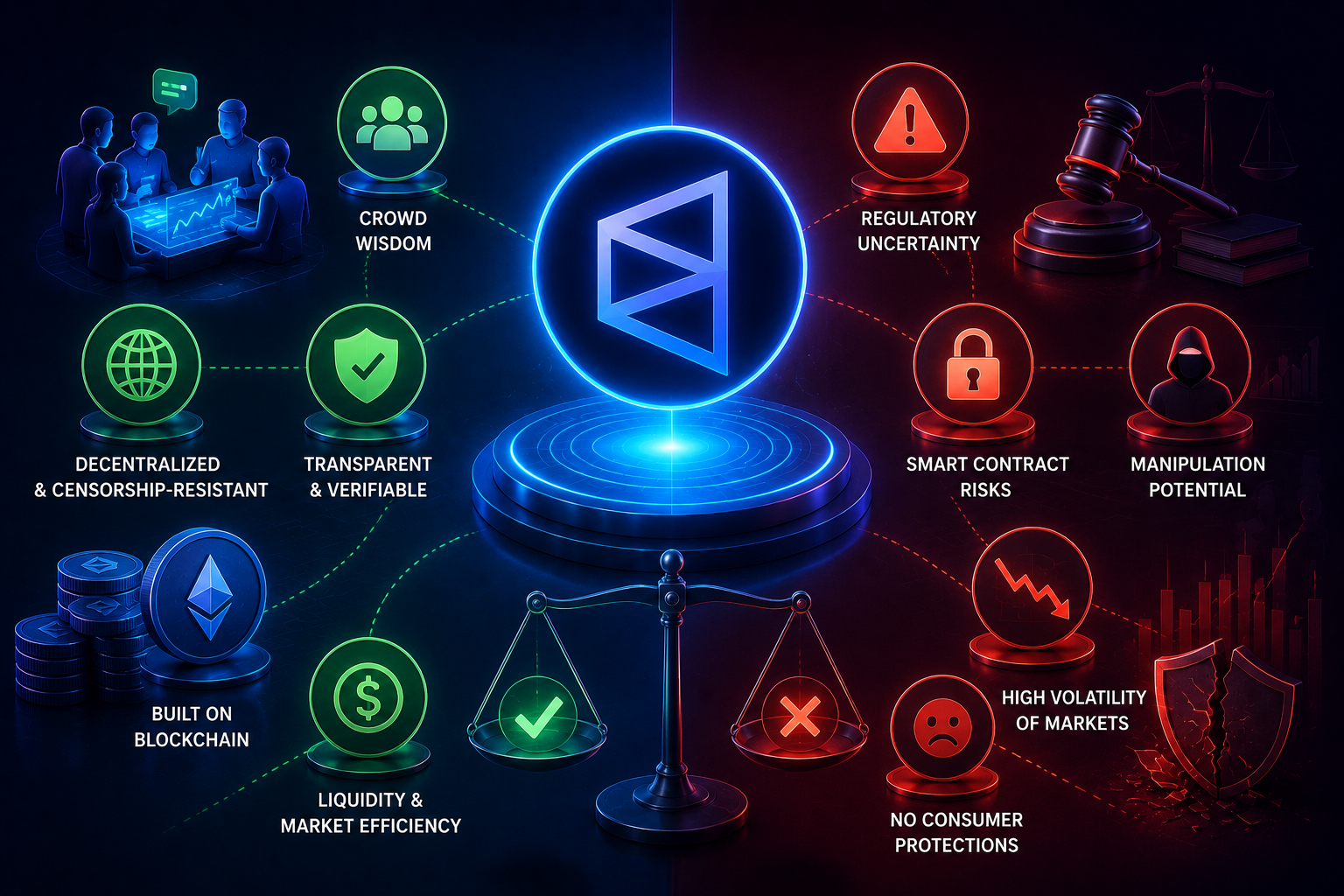
I think it is easy to get swept up in the excitement of a high-stakes trade, but you have to look at the downsides. The most obvious risk is simply being wrong. Prediction markets are zero-sum games; for every winner, there is someone who lost everything they put in. Unlike a stock that might just drop 10%, a “No” share in a market that settles “Yes” goes straight to zero. There is no middle ground or partial recovery once the oracle speaks.
Then you have the technical side of things. Since everything is built on the Polygon network, you are relying on the security of smart contracts. I have seen enough “secure” protocols get exploited to know that nothing is 100% safe. If the code has a bug or if the oracle system makes a controversial decision, your funds could be stuck or lost. It is a reality of the polymarket crypto experience that you have to accept before you deposit a single dollar.
Market liquidity is another thing I keep an eye on. If you are betting on a very niche event, there might not be enough people trading to let you exit your position early. You might buy shares for 50 cents and see the odds move in your favor, but if there are no buyers, you are stuck until the end. It is also worth noting that big players can sometimes manipulate the price to make a market look more certain than it really is, which can mislead smaller traders.
Polymarket vs traditional betting platforms
When you use a site like DraftKings or a local bookie, you are playing a game designed by the house. They set the lines, they take a cut (often called the “vig”), and if you win too much, they might just ban your account. I’ve seen this happen to professional bettors more times than I can count. Polymarket is a different beast because it isn’t a bookmaker. It is a peer-to-peer exchange. You are trading with other people, and the platform doesn’t care if you win or lose because it doesn’t take the other side of your bet.
This shift changes the incentives. On traditional platforms, the house has a financial interest in you losing. On Polymarket, the platform’s only job is to provide a place for people to agree on a price. I find that this often leads to more accurate odds. Because there is no middleman trying to pad their pockets with high margins, the prices move based purely on information. If you’ve ever wondered “is polymarket legit” compared to a casino, the answer is in the transparency. In Vegas, the math is hidden. On a blockchain, every single order is there for you to inspect.
Another big difference is the limits. Traditional apps will often cap how much you can bet on a specific event to protect themselves from heavy losses. Polymarket doesn’t really have a “limit” in the same way. As long as there is someone willing to take the other side of your trade, you can put down as much as you want. It creates a much more liquid and honest environment for anyone who feels they have a real information edge.
Pros and cons of polymarket
I’ve spent enough time on the platform to see that it isn’t perfect, but it offers something you can’t find anywhere else. The most obvious benefit is the transparency. Since every trade is on-chain, you know exactly what the volume is. There are no hidden fees or “house edge” baked into the numbers. It is just you and the market. I think this level of honesty is refreshing in an industry that usually hides the math from the user.
However, the downsides are real. The barrier to entry is still high for people who don’t know how to handle a crypto wallet. Dealing with networks like Polygon and stablecoins like USDC can be a headache if you just want to make a quick trade. Also, the legal situation is a constant shadow hanging over the project. One regulatory shift could change everything, and that is a risk every user has to weigh for themselves.
Here is a quick look at the trade-offs:
- Better odds because there is no middleman or bookmaker margin.
- Total transparency where every trade is visible on the blockchain.
- Access to unique markets that traditional sites won’t touch.
- Technical complexity that can lead to lost funds if you make a mistake.
- Geographical restrictions that block users in major regions like the US.
Conclusion
I’m not sure if prediction markets like Polymarket will replace polling, but they’ve changed how I consume news. Seeing real money on the line makes predictions feel more honest than pundit opinions. This fast-moving experiment forces us to put a price on our beliefs.
The platform has flaws, including technical barriers and regulatory pressure. Many lose money by ignoring risks or misunderstanding the Polygon network. Jump in to test your knowledge, not for easy wins. Polymarket is a data tool, only as good as its user.
More Questions
Yes, it is a functional platform built on the Polygon blockchain. It uses smart contracts to handle funds and a decentralized oracle system (UMA) to resolve disputes. While is polymarket legit is a common question for newcomers, the transparency of the blockchain allows anyone to audit the transactions.
The platform allows users to buy and sell shares in the outcome of future events. Prices are determined by market demand, where a share price of $0.60 represents a 60% probability of an event happening. If your prediction is correct, each share settles at $1.00. This is the core of how does polymarket work in a peer-to-peer environment.
The legality depends on your location. In the US, Polymarket is restricted and does not allow residents to trade due to a 2022 settlement with the CFTC. Many other countries have their own regulations regarding event contracts.
Most people use it to hedge against real-world risks or to get a clearer picture of event probabilities than what news outlets provide. When asking what is polymarket, think of it as a search engine for truth powered by financial incentives. It covers everything from elections and economic data to pop culture.
Published Articles
Crypto On-Ramps and Off-Ramps Explained: How Fiat and Crypto Move In and Out
Entering the world of digital assets often feels like trying to cross...
 Popular
Bitcoin Pizza Guy: The Story Behind the First Real Bitcoin Purchase
Introduction The history of Bitcoin is full of dramatic ups and downs,...
Crypto Basics Explained: A Beginner’s Guide to Cryptocurrency and Trading
Introduction The world of finance is changing right before our eyes. Just...
 Popular
Uniswap Explained: What It Is, How It Works, and How to Use the UNI DEX
Introduction Decentralization and decentralized platforms that have emerged in recent years have...
 Popular
Bitcoin Lightning Network Explained: What It Is and How Bitcoin Lightning Works
Introduction In the world of cryptocurrency, transaction speed and costs have always...
How Bitcoin ATMs Work: A Complete Guide to Using Crypto ATMs
Introduction Millions of people around the world use cryptocurrencies today – at...