
Solana vs Ethereum Explained: Which Blockchain Is Better?
Two Independent Networks
Solana is an independent Layer 1 blockchain. It is not built on Ethereum. Each network has its own validators, transaction history, and native asset: SOL for Solana and ETH for Ethereum. A bridge between them moves value or messages under additional rules; it does not turn Solana into part of Ethereum.
For someone making a transfer, the useful question is whether the recipient supports the network and asset being sent. For a developer, execution rules matter. Buying either token raises a different question again. A fast blockchain can still have a volatile token, and a convenient payment route does not automatically make its native asset a suitable investment.
What the Solana vs Ethereum Comparison Covers
A Solana vs Ethereum comparison examines two independently secured networks that run applications and record changes to digital assets. Ethereum L1 means Ethereum's base chain. An Ethereum Layer 2 is a separate execution network designed to scale Ethereum while deriving security from it. Solana belongs on the independent-L1 side of that distinction.
Keep two comparisons in view. One concerns the base networks themselves. The other concerns what a person actually uses, which may be Solana versus a particular Ethereum L2. Treating every L2 as if it had Ethereum mainnet's fees would distort a Solana vs Ethereum comparison before the first transaction is sent.
The Main Differences at a Glance
- Architecture: Ethereum L1 executes EVM contracts; Solana runs programs through its own runtime. Ethereum L2s execute separately and connect their settlement process to Ethereum.
- Costs: Ethereum L1 charges gas in ETH; Solana charges transaction fees in SOL. L2 fee components and gas arrangements depend on the specific network.
- Timing: inclusion, application confirmation, and protocol finality measure different events. An L2's quick initial response is not automatically final settlement on Ethereum.
- Scaling: Solana expands base-layer execution capacity. Ethereum also scales through rollups, which introduce their own operational assumptions and routes between networks.
- Applications: check the exact deployment and asset market. An application available on several chains can have different liquidity and features on each.
- Staking: ETH and SOL support their respective validator systems. Solo operation, delegation, and liquid staking expose users to different obligations and risks.
- Risk: examine consensus, application code, bridges, and custody separately. No single speed measurement establishes the safety of the whole transaction route.
How Their Architectures Differ
Ethereum applications use the Ethereum Virtual Machine, or EVM. Developers can reuse established contract interfaces and much of their tooling across compatible networks. Compatibility still needs testing: a deployment on another chain can have different administrators, dependencies, or upgrade settings even when the contract language looks familiar.
Solana programs use a different execution environment. Mutable data is held in accounts supplied to instructions, separate from executable program code. Transactions that do not contend for the same writable accounts can benefit from parallel execution. Shared demand for the same accounts can still create a bottleneck. A network-wide capacity figure says little about the experience inside one busy market.
Solana Consensus Changed in October 2026
Older explainers describe Solana through Proof of History and TowerBFT. Proof of History provided a cryptographic timing mechanism; it was never an independent replacement for stake-based consensus. That historical description now needs a date.
According to the Solana Foundation's updated upgrade page, Alpenglow's Votor phase activated on mainnet on October 21, 2026. Validators exchange votes directly and assemble certificates, replacing the previous voting layer. Proof of History no longer paces block production. Rotor, a separate change to block propagation, remains a later phase. These changes should not be described as one fully completed package.
Ethereum uses proof of stake, with validators proposing and attesting to blocks. Its base-layer consensus and its rollup ecosystem have distinct jobs. A change to an L2's sequencer does not, by itself, change how Ethereum validators agree on the base chain.
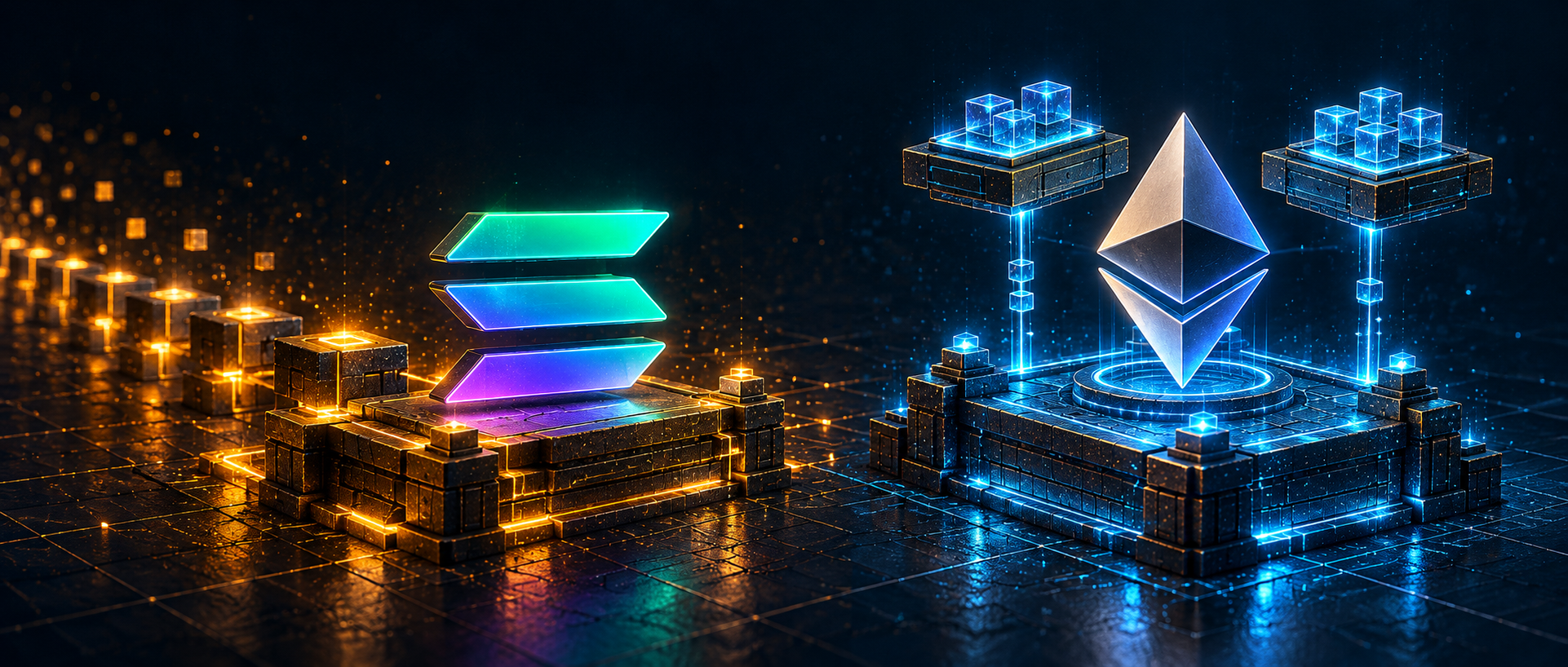
Speed Requires More Than One Stopwatch
Block time measures the interval between blocks; slot time describes scheduled opportunities to produce them. Confirmation is a product or protocol status, while finality concerns when the network treats a recorded result as irreversible under its consensus assumptions. A wallet animation may report success before every stage relevant to the recipient has finished.
Ethereum's proof-of-stake schedule uses 12-second slots. Inclusion in a block can happen well before checkpoint finality, which normally takes minutes. Solana's Alpenglow documentation describes a target of roughly 150 milliseconds for finality. That is a protocol target, not a promise that every submitted payment reaches an application in that time. Submission delays and processing inside services still count.
Status labels also need context. After Alpenglow, Solana's documentation says confirmed and finalized describe the same state. Applying an old explanation of those labels to the updated network would be misleading. An exchange can nevertheless impose its own deposit-crediting policy after the blockchain has accepted a transaction.
Why Headline TPS Numbers Mislead
An honest throughput comparison uses the same observation period and explains what is counted. Successful user transactions, failed attempts, and validator votes are different categories. Older Solana totals could include vote transactions; Votor moves voting out of blocks. A change in that accounting can affect a chart without representing an equivalent change in user activity.
Do not compare a laboratory maximum for one chain with ordinary observed traffic on another. For Ethereum, state whether the figure covers L1 alone or includes selected L2s. The latter measures a broader ecosystem with multiple execution environments. It is useful information, provided the scope is visible.
Fees Depend on the Operation
In Solana vs Ethereum discussions, a dollar fee often outlives the conditions that produced it. The transaction type matters first. Sending a native coin, swapping tokens, and interacting with a lending contract can consume very different resources. Network demand and the price of the fee token then change the dollar result.
On Ethereum L1, gas used is multiplied by the effective gas price. As a hypothetical calculation, a standard 21,000-gas ETH transfer at 15 gwei costs 0.000315 ETH. That is not a quote for a token swap, and it does not establish a permanent dollar charge. The base-fee component is burned; the priority component compensates the validator.
Solana's documented base fee is 5,000 lamports per signature, equivalent to 0.000005 SOL. Optional priority fees and the transaction's requested compute budget can change the amount paid. The base figure alone does not describe every busy-market transaction or the full cost of using an application.
For a practical comparison, obtain live quotes for the same intended action. Include application charges and swap price impact, where relevant. If one route requires bridging or an exchange withdrawal, include that step too. A cheaper network fee can be outweighed by the cost of reaching the correct network in the first place.
Ethereum L2 Changes the User Experience
Rollups process transactions outside Ethereum L1 and use Ethereum for parts of their security and settlement process. This can reduce the cost of everyday activity considerably relative to executing everything on mainnet. It also means that the user's transaction passes through more than one system.
A fast sequencer response is an early assurance from the L2 operator. Posting data, submitting proofs or claims, and reaching the relevant settlement stage are separate events. Optimistic systems can impose a challenge period on the canonical withdrawal route. Third-party liquidity can offer another exit, with different costs and risks. Check the actual route rather than assuming every withdrawal has the same wait.
Read the chosen L2's current rules for upgrades and emergency control. Determine what happens if the sequencer stops, how users can exit, and where transaction data remains available. An EVM-compatible network is not necessarily an Ethereum rollup. Compatibility describes execution behavior, not the source of its security guarantees.
Security and Decentralization Need Separate Checks
Consensus security concerns the network's ability to agree on valid history. An application can fail while that agreement works correctly. A vulnerable contract, compromised administrator, or manipulated price input can cause losses without compromising either blockchain's consensus. The asset can also be lost through a stolen wallet key.
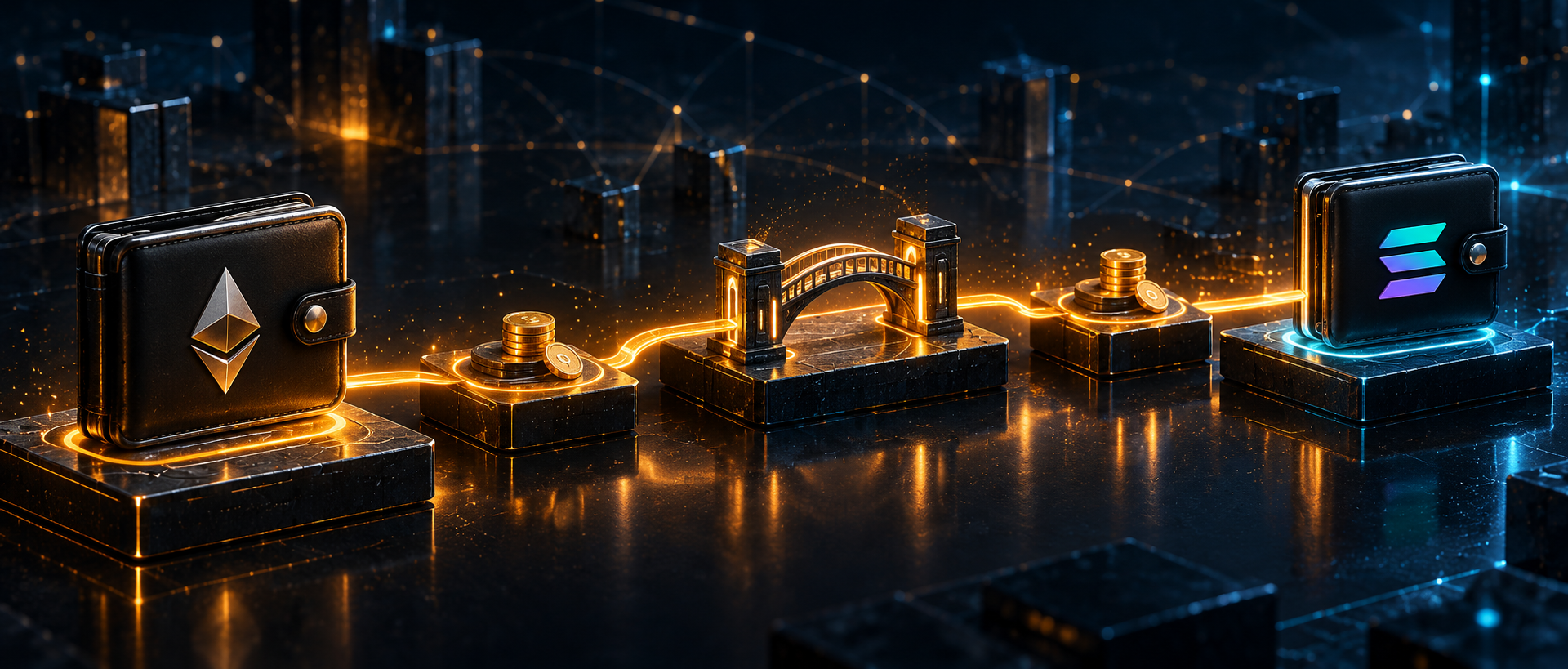
Moving between networks adds another boundary. A bridge may rely on contracts, signers, proofs, or combinations of these. Wrapped tokens can introduce claims on assets held elsewhere. An apparently familiar ticker does not establish that the token has the same issuer, redemption rights, or bridge exposure as a version on another chain.
Validator count is one decentralization measure, but stake concentration and shared control matter as well. Several validator identities can belong to one operator. On Ethereum, many validators can run under the same service or use the same client software. On Solana, equipment costs and operating requirements affect who can participate competitively. Counting identities alone misses those relationships.
Look at independent client implementations and the stake actually running them. Software sharing much of the same code may share the same defect. Solana's Alpenglow migration also had specific client compatibility requirements, so a general statement that a client exists is insufficient evidence of current diversity. Use the stake distribution and software versions for the period being assessed.
Reliability Means Identifying What Stopped
Solana's official report records an approximately five-hour incident on February 6, 2024, involving a software bug and a coordinated restart. It is a dated example of a network-level disruption, not a description of every subsequent period. The report identifies the cause and recovery process, which are more informative than an undated outage count.
Ethereum also experienced finality delays on May 11 and 12, 2023. The client developers' report describes resource exhaustion and missing blocks, with some clients continuing to propose and attest. Finality recovered without a coordinated network restart. Classifying both episodes simply as downtime would hide a meaningful operational difference.
A stalled wallet or unavailable RPC endpoint is a different event. RPC services relay requests and return blockchain data; one can fail while validators continue processing transactions. Likewise, delayed finality and halted block production should not be treated as interchangeable. Record which component failed and whether users could obtain another route to the network.
For routine use, review the base network's incident record together with the application and infrastructure providers you depend on. An L2 requires its own sequencer and settlement checks. A short incident-free window does not establish a permanent reliability advantage, and an old failure does not explain current operating conditions by itself.
Compare Ecosystem Activity on the Same Basis
Both networks support token transfers, decentralized trading, and applications using smart contracts or programs. The relevant ecosystem is the one containing your intended assets and counterparties. A large overall market does not guarantee a good quote for your particular token pair or transaction size.
For a Solana vs Ethereum activity comparison, match the measurement window and network scope. Total value locked measures capital reported in protocols; it is not a transaction count. Dollar TVL can rise because deposited assets appreciate. DEX volume measures trading, while stablecoin supply measures an outstanding stock of assets. None of these figures substitutes for the others.
Use the same data provider and methodology where possible. Separate Ethereum L1 from an explicitly defined set of L2s. Check whether staking assets, borrowed funds, or bridged representations are included, and whether aggregation double-counts the same economic value. A seven-day trading-volume comparison and a point-in-time supply snapshot should carry their own timestamps.
Staking and Token Supply
ETH and SOL pay network fees and support their respective staking systems. Ethereum solo staking requires at least 32 ETH and a working validator setup. Pooling or other services allow different participation arrangements, with additional dependencies. Slashing and inactivity rules, provider fees, and exit procedures all affect the outcome.
Solana holders can delegate SOL through stake accounts to validators. Operator performance and commission influence rewards, and activation or deactivation follows network rules. Liquid staking introduces a separate token and may add contract, liquidity, and pricing risks. A token that can be sold immediately is not a guarantee that the underlying stake can be redeemed immediately at the expected value.
Reward rates fluctuate. Compare the amount earned after fees with the risks and restrictions of the chosen method. Keep token issuance separate from fee burning: Ethereum's net ETH supply depends on both, while SOL rewards and applicable fee-burning rules have their own mechanics. A positive token reward does not establish a positive return in dollars.
The investment version of Ethereum vs Solana requires more than a technology ranking. Price per coin depends partly on supply, so a lower unit price does not mean a cheaper project valuation. Network usage and the way value reaches token holders need separate analysis. Higher throughput alone cannot tell you where either token's price goes next.
Choose a Network for the Job
The Solana vs Ethereum decision becomes more concrete once you specify the complete task. Write down where the funds start, which application or person must receive them, and how you intend to exit. Then compare routes that can actually complete that job.
Frequent Small Transfers
Compare Solana with the specific Ethereum L2 accepted by the recipient. Get a quote for the asset you will actually send, including withdrawal costs if funds start on an exchange. Leave enough native gas for later transactions unless the wallet explicitly handles it. For repeated payments, setup costs can be spread across several transfers; for a single payment, they can dominate the bill.
Using a Particular DeFi Application
Start with the application's supported deployments and contract addresses. Check liquidity at your intended size, borrowing terms if relevant, and who can upgrade the deployment. A different network may have the same brand but a smaller market. Trying a small transaction can reveal the workflow, although it cannot establish that a contract is secure or that a larger trade will receive the same execution.
Holding or Sending Stablecoins
Verify the issuer and exact token identifier on the destination network. Distinguish issuer-native tokens from bridged representations. Confirm that the recipient or exchange accepts that version before transferring. Stablecoin issuer restrictions and custody risks remain relevant even if the network fee is tiny. A successful blockchain transfer does not force a service to credit an unsupported deposit.
Building an Application
For an EVM-oriented team, Ethereum and compatible L2s can reduce the work of adapting existing tools. Solana requires attention to its account structure and execution environment. Test realistic workloads, including competition for shared state. Also test wallet integration, indexing, and RPC behavior during interruptions. A benchmark for isolated transfers does not establish how a production application performs under concurrent demand.
Choosing a Staking Route
Compare the actual staking arrangements available to you, rather than choosing by headline yield. Determine who controls withdrawal access and how the operator earns its fee. Examine the exit process and any intermediary token you receive. Your ability to keep a validator running, or your willingness to depend on a service, can matter more than a small difference in the displayed reward rate.
Expert Insight
Chainlink's explanation of Layer 2 states that a qualifying system “inherits the security of the blockchain it is built on top of.” That definition helps explain why a bridge connection does not make Solana an Ethereum L2.
It also gives a useful question to ask about any scaling network: which guarantees come from Ethereum, and which depend on the implementation? The answer requires checking the deployed system. A broad ecosystem label cannot settle it.
Key Takeaways
- Solana is a separate Layer 1; SOL and ETH are different native assets.
- Compare Solana with Ethereum L1 and with a named L2 separately.
- Finality, inclusion time, and service crediting describe different stages.
- Calculate the complete transaction route, including any bridge or withdrawal.
- Check application risks and staking terms independently of network performance.
Conclusion
Use Solana vs Ethereum as a practical comparison. Choose a supported route for a transfer, the right market for a DeFi trade, and an execution environment your team can maintain. Assess buying ETH or SOL separately. A network can suit the task without its token suiting your investment plan.
FAQ
- Is Solana built on Ethereum?
No. Solana is an independent Layer 1 with its own validators and native SOL asset. Bridges do not change that relationship.
- Which network has lower fees?
Compare live quotes for the same operation. Ethereum L1, a specific L2, and Solana have different costs, which change with demand and token prices.
- Is Solana faster than Ethereum?
Specify the metric. Block intervals, protocol finality, wallet responses, and deposit crediting are different measurements. Ethereum L2s also have their own settlement stages.
- Does an Ethereum L2 work exactly like mainnet?
No. It has separate execution and operational rules. Check its sequencer, settlement process, upgrade controls, and available withdrawal routes.
- Is staking a guaranteed source of income?
No. Rewards vary, token prices move, and risks depend on the validator, service, or liquid-staking arrangement. Check fees and exit conditions.
- Can I use the same assets on both networks?
Some assets have versions on both. Verify token identity and recipient support; moving between networks can introduce bridge, issuer, or custody risks.
Published Articles
What Is Crypto Staking? A Complete Guide to Staking and Liquid Staking
Learn what is staking crypto, how validators earn rewards, how delegation works, and what liquid staking adds in flexibility, costs, and risk.
Smart Contracts: How Blockchain Automates Digital Agreements
Introduction In 1994, Nick Szabo — a legal scholar and cryptographer — described a concept he called a "smart contracts." He imagined a digital agreement that could enforce its own terms automatically, without needing...
Ethereum vs Ethereum Classic: A Comprehensive Comparison
What Distinguishes Ethereum from Ethereum Classic? Two blockchains share the same technical DNA, the same founding team, and the same launch date. Yet they represent fundamentally different ideas about what a blockcha...
Tokenized Stocks Explained: How Blockchain Is Transforming Equity Trading
Introduction Equity markets run on infrastructure built in the 1960s. Settlement takes two business days. Trading stops at 4 PM New York time. Fractional shares exist at some brokers but not others. Investors outside...
Web3 Domains: The Future of Decentralized Internet Addressing
Introduction Every website address you type into a browser runs through the same infrastructure: DNS, the Domain Name System. A global network of servers managed by ICANN and a handful of registrars translates human-r...
EVM Explained: What the Ethereum Virtual Machine Is and Why It Matters in Crypto
Key Takeaways Introduction What Is the Ethereum Virtual Machine (EVM)? How the EVM Works EVM and Ethereum What is an EVM-compatible blockchain? Why EVM matters in crypto and Web3 EVM vs Non-EVM Blockchains Future of t...