
Utility Tokens Explained: Examples, Use Cases, and How They Work in Crypto
Introduction
When Binance launched BNB in 2017, it was worth less than a dollar and served a simple purpose: reducing trading fees for exchange users. Today BNB sits in the top-5 cryptocurrencies by market capitalization — not because it represents a stake in a company, but because it is needed to operate within the ecosystem.
This is the essence of a utility token: not a security, not a currency in the traditional sense, but a digital instrument with a specific function. Utility tokens crypto is one of the most common types of digital assets, but their logic often goes misunderstood. What exactly makes a token “utility”? How does it differ from other types? And which examples show how this instrument works in practice?
What Is a Utility Token?
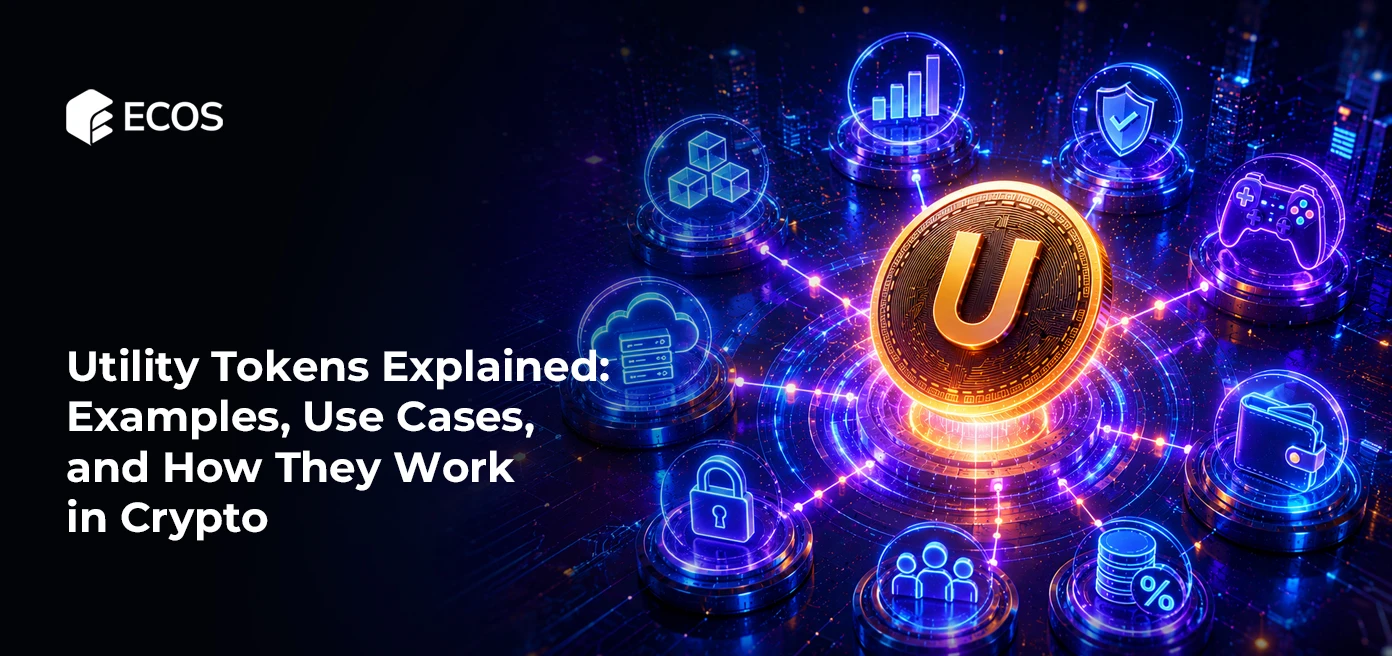
A utility token is a cryptocurrency token that grants the holder access to a product, service, or feature within a specific blockchain ecosystem. What is a utility token in plain terms: it is a digital “pass” that enables you to do something inside a platform — pay, vote, receive discounts, or use services.
Unlike securities, utility token crypto does not represent ownership or promise profit from others’ efforts. The value of a utility token is determined by demand for the platform itself: if the service is in demand, the token is needed; if the platform loses users, token demand falls with it.
What are utility tokens in the broader sense? They are an asset class that emerged with the ICO boom of 2017–2018, when projects began issuing tokens to finance development while tying them to functions of a future product. Many of those tokens disappeared, but the model survived and evolved: today utility tokens crypto are represented across all major market segments — exchanges, DeFi, gaming, infrastructure.
How Utility Tokens Work
The mechanics of a utility token are defined by its specific function in the ecosystem. There is no single standard — there is a set of common patterns.
Service payment. The most basic case: the platform requires the token to process transactions or functions. Users need ETH for gas in Ethereum, FIL for file storage in Filecoin, and LINK for oracle requests in Chainlink to perform specific actions in the network.
Discounts and privileges. BNB reduces trading fees on Binance. Holders of certain tokens gain access to exclusive features, higher limits, or priority support. Privileges stimulate token demand beyond direct functional necessity.
Staking and access. Some protocols require “staking” (locking) tokens to gain access to services or to participate as a service provider. In Chainlink, node operators must stake LINK to participate in the oracle network — creating a reputation collateral mechanism.
Rewards and incentives. Users receive utility tokens as rewards for useful actions in the protocol: providing liquidity, storing data, performing computations. This is the foundation of the tokenomics of many DeFi protocols.
A utility token cryptocurrency in different implementations can combine several functions at once. BNB is simultaneously a discount token, gas for BNB Chain, and a means of participating in Launchpad projects.
Utility Token Crypto vs Other Token Types
Utility Tokens vs Security Tokens
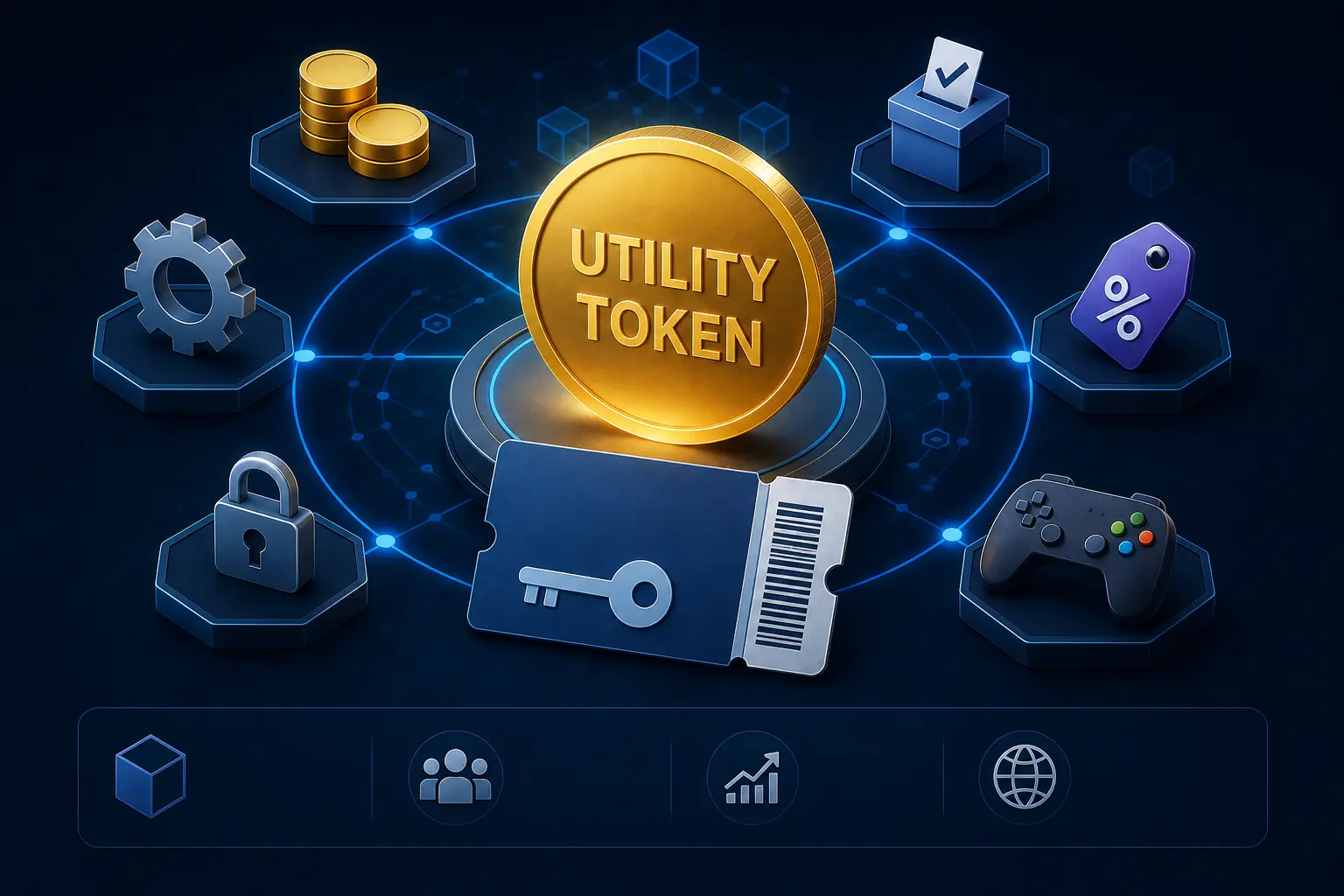
The main distinction in regulatory and investment terms is between utility and security tokens. A security token represents a right to a share in an asset or company and is regulated accordingly. A utility token does not grant that right.
In practice, the line is blurry. The SEC in the US applies the Howey Test to determine whether a token is a security: if a buyer invests money in a common enterprise expecting profit from the efforts of others — it is a security. Many ICO tokens positioned as utility tokens met this test — which led to numerous enforcement actions.
Utility Tokens vs Governance Tokens
Governance tokens give holders the right to vote on protocol parameters: rates, upgrades, treasury allocations. UNI (Uniswap), COMP (Compound), AAVE — these are examples of governance tokens.
The difference is fundamental: a utility token opens access to a service, a governance token gives the right to influence protocol management. Many tokens combine both functions — for example, MKR in MakerDAO simultaneously provides voting rights and is used to pay penalties during position liquidations.
Utility Tokens vs Stablecoins
A stablecoin is a token with a price peg to a stable asset, primarily the US dollar. Its purpose is stability, not functionality within a specific ecosystem. USDT and USDC serve as settlement and storage instruments, but do not grant platform privileges or access in the way utility tokens do.
Utility Token Examples
Exchange Utility Tokens
BNB (Binance Coin) is the benchmark example of an exchange utility token. Originally launched on Ethereum as an ERC-20 token, later migrated to Binance’s own blockchain. Functions: reduced trading fees on Binance, gas for BNB Chain, participation in Launchpad lotteries, staking, and payment for goods and services with partners. The quarterly token burn mechanism reduces supply, adding deflationary pressure on price.
OKB is OKX’s utility token, operating on a similar model: fee discounts, access to Jumpstart (Binance Launchpad equivalent), and participation in OKX ecosystem products.
FTT was FTX exchange’s utility token — the story of its collapse in 2022 illustrated the primary risk of exchange utility tokens: if the issuing platform fails, the token goes to zero regardless of its mechanics.
DeFi Utility Tokens
LINK (Chainlink) is the token for the decentralized oracle network. Smart contracts requiring external data (asset prices, weather, event results) pay for oracle requests in LINK. Node operators stake LINK as a guarantee of honesty. This is a pure utility token: it is needed for infrastructure to function, not for speculation.
FIL (Filecoin) is the token for the decentralized file storage system. Users pay FIL to storage providers; providers stake FIL to participate in the network. Token demand is directly tied to storage utilization.
UNI (Uniswap) — although UNI is positioned primarily as a governance token, it is also a utility token of the Uniswap ecosystem: holders can vote to activate the fee switch, which would redistribute a portion of protocol fees.
Gaming and Metaverse Utility Tokens
AXS (Axie Infinity) is the utility and governance token of the Axie ecosystem. Used for breeding (creating new Axies), governance participation, and earning rewards. At its 2021 peak, AXS became one of the most prominent examples of a gaming utility token.
MANA (Decentraland) is the metaverse token of Decentraland. Used to purchase land parcels (LAND), virtual goods, and pay for services inside the platform. MANA’s price is sensitive to broader sentiment around the metaverse concept.
APE (ApeCoin) is the token of the Bored Ape Yacht Club ecosystem, used in the Otherside game and for ApeCoin DAO governance.
Common Use Cases for Utility Tokens
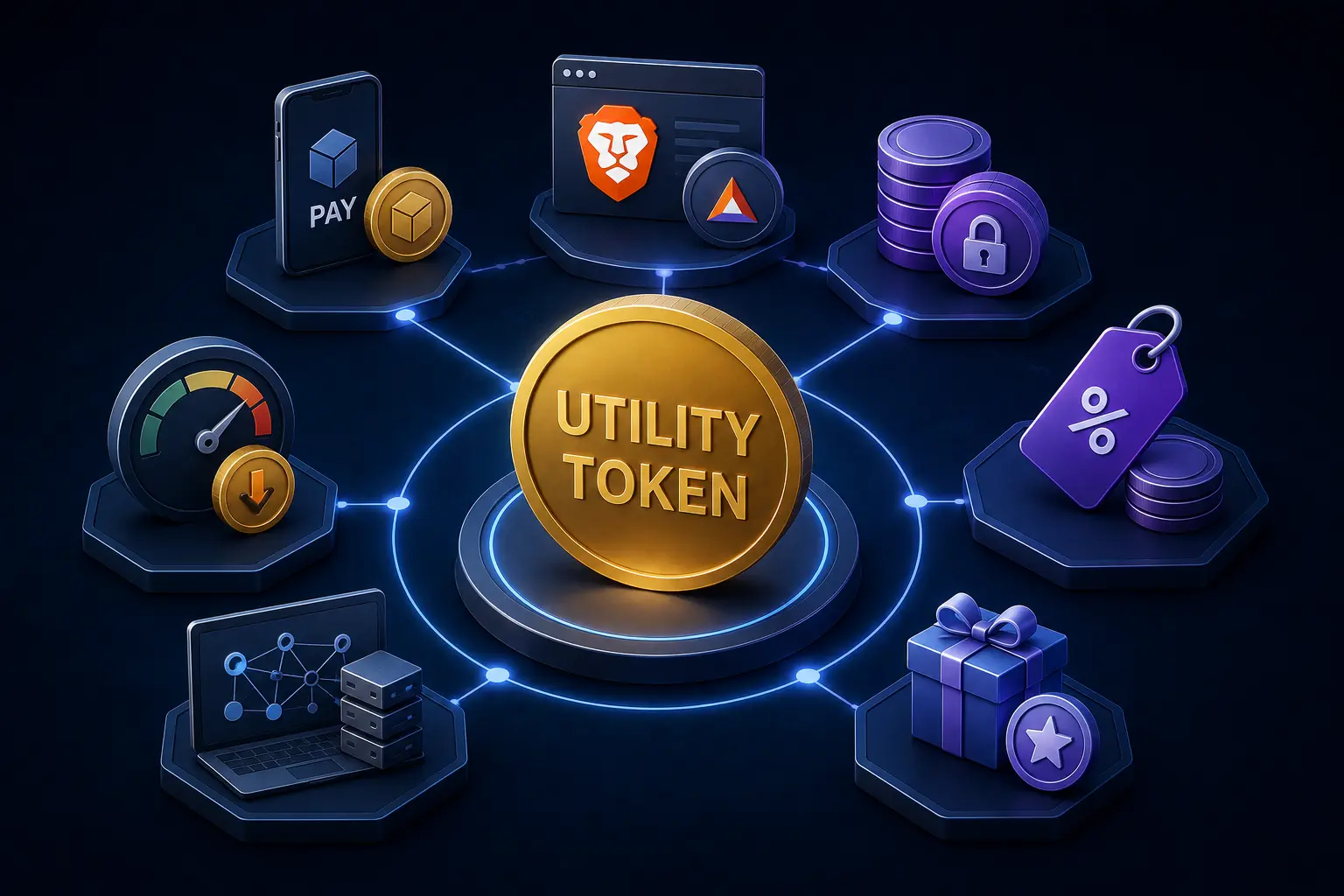
Crypto utility tokens span a broad range of applications. Payment instruments within ecosystems: BNB for gas in BNB Chain, ETH for gas in Ethereum. Access to services: BAT (Basic Attention Token) rewards users of the Brave browser who agree to view ads. Staking as a participation requirement: Proof of Stake networks and many DeFi protocols require staking for validators or liquidity providers. Discount mechanisms: reduced fees when using a platform’s native token. Participation rewards: tokens as incentives for users to perform useful actions — provide liquidity, store data, perform computations.
Utility Token Development
Creating a utility token is technically accessible to any developer with basic knowledge of Solidity or another smart contract language. Most utility tokens are issued under the ERC-20 standard on Ethereum or equivalent standards on other blockchains (BEP-20 on BNB Chain, SPL on Solana).
The technical process includes: defining tokenomics (total supply, distribution, emission and burn mechanisms), writing the smart contract, auditing the code, and deploying to mainnet. But the technical part is the smallest challenge. The real difficulty in utility token development is building an ecosystem where the token is organically in demand.
A token without a real function or without sufficient user base loses value quickly. This is exactly why most utility tokens from the 2017 ICO wave went to zero: the token existed, the product did not.
History and Evolution of Utility Tokens
The utility token concept emerged with the first wave of ICOs in 2016–2018. Ethereum made it easy to create tokens on top of the blockchain, and developers began issuing them to finance projects — promising future holders access to platforms not yet built.
At the peak of the ICO boom in 2017–2018, billions of dollars were raised. Most tokens had no working product and disappeared. This triggered strict regulatory responses and a rethinking of the model itself.
The second phase — the DeFi boom of 2020–2021 — brought a new generation of utility tokens alongside genuinely working protocols: Uniswap launched UNI for governance, Chainlink developed LINK as an infrastructure token, gaming blockchain projects built tokens for in-game economies. Now the token followed the product, rather than preceding it.
The third phase — institutionalization and regulatory adaptation — began around 2022 and continues. Projects began paying more attention to the legal status of tokens, conducting audits, and disclosing tokenomics information. MiCA in the EU created the first systematic regulatory regime distinguishing between token types.
This evolution shows: the utility token model works when a real ecosystem backs the token. Failures are almost always stories of a token without a product, not of a broken concept.
How to Evaluate a Utility Token
When choosing between utility tokens, asking several specific questions helps.
Is there real demand for the platform? Active user count, transaction volume, TVL growth dynamics — these are more reliable indicators than token price. A growing platform creates organic demand; a stagnant one does not.
Is the token technically necessary? If the platform would work equally well without the token, its value is speculative in nature. If the token is embedded in the mechanics — paying gas, staking to participate, mandatory burn per transaction — demand is more organic.
What are the tokenomics? Fixed or inflationary supply? What percentage is held by the team and investors? Are there burn mechanisms? Poorly designed tokenomics creates constant sell pressure even in a growing ecosystem.
Who is behind the project? A team with a track record, transparent documentation, smart contract audits, active developer community — all reduce risk. Anonymous teams without audits are red flags.
Risks and Limitations of Utility Tokens
Regulatory uncertainty. The boundary between utility token and security token is subjective and jurisdiction-dependent. A token launched as a utility token can be reclassified by a regulator — with significant consequences for issuers and holders.
Platform dependence. A utility token is valuable exactly as much as the platform it was created for is in demand. Competition, technical issues, user exodus, or project shutdown can zero out a token’s value regardless of its mechanics.
Tokenomic risks. Supply inflation, incorrect distribution mechanics, excessive issuance for teams or venture investors — all can create sell pressure even in a growing ecosystem.
Manipulation risk. Low-liquidity utility tokens are vulnerable to pump-and-dump schemes. Token concentration among a few large holders can lead to sharp price movements unrelated to actual usage.
Technical vulnerability. Smart contracts underlying utility tokens can contain bugs. A hack or exploit puts all tokens in the ecosystem at risk.
Future of Utility Tokens
The utility token market continues developing in several directions.
Tokenization of real-world assets. Utility tokens are increasingly used to manage access to real assets and services: tokens for access to AI compute, physical infrastructure, legal or financial services. This expands the model’s application beyond natively crypto ecosystems.
Regulatory clarity. MiCA’s adoption in the EU and ongoing legislative work in the US are gradually establishing clear criteria for token classification. This reduces legal uncertainty for issuers and investors.
Convergence of token types. Modern tokens increasingly resist single-category classification. Most successful projects issue tokens combining utility, governance, and sometimes value functions — increasing their value proposition for holders.
Key Takeaways
- A utility token is a digital asset granting access to a specific function or service in a blockchain ecosystem — not ownership in a company.
- The value of utility token crypto directly depends on platform demand: more users and activity means higher organic demand for the token.
- The key difference from security tokens: no promise of profit from others’ efforts; from governance tokens: focus on service access rather than voting rights.
- Utility token examples span exchanges (BNB, OKB), DeFi infrastructure (LINK, FIL), gaming and metaverse (AXS, MANA) — each with unique tokenomics for a specific use case.
- Main risks: platform dependence, regulatory reclassification, tokenomic inflation, and smart contract technical vulnerabilities.
- Utility token development is technically straightforward, but a sustainable model requires real platform demand — most failures stem from the absence of product value.
Expert Insight
Chainlink’s documentation describes LINK as a utility token performing two key functions in the ecosystem: paying for oracle services that deliver external data to smart contracts, and staking as an economic security mechanism that ensures node operator honesty.
This example is instructive precisely because it demonstrates a mature utility model: real infrastructure usage creates token demand, not speculative interest. When the system requires a token to function — rather than the token simply existing as an “ecosystem currency” on paper — it distinguishes sustainable utility tokenomics from most ICO projects of the past.
Conclusion
Utility tokens are diverse, ranging from exchange discounts to infrastructure tools like oracles. Their value stems from usage and demand rather than dividend expectations. For users, distinguishing between tokens with real utility and those without clear functions is essential for assessing practical risk and platform viability.
More Questions
A token granting access to specific services or products within a blockchain ecosystem. It represents a functional right, not company ownership. Examples: BNB (discounts), LINK (oracles), FIL (storage).
Security tokens represent asset ownership and fall under securities law. Utility tokens provide platform access. However, regulators often apply tests (like the Howey Test) to determine if a utility token should be reclassified as a security.
BNB: Binance ecosystem.
LINK: Chainlink oracles.
FIL: Filecoin storage.
MANA: Decentraland metaverse.
They carry risks like platform failure, regulatory shifts, and high volatility. Investing is essentially a bet on the underlying product’s success and user adoption.
Technically, via smart contracts (e.g., ERC-20). The real challenge is tokenomics: ensuring organic demand. Most failures result from a lack of product-market fit rather than technical flaws.
Cryptocurrencies (BTC, ETH) are native blockchain assets acting as money or stores of value. Utility tokens are built on top of blockchains for specific ecosystems. These roles often overlap as ecosystems evolve.
Published Articles
Crypto On-Ramps and Off-Ramps Explained: How Fiat and Crypto Move In and Out
Entering the world of digital assets often feels like trying to cross...
 Popular
Bitcoin Pizza Guy: The Story Behind the First Real Bitcoin Purchase
Introduction The history of Bitcoin is full of dramatic ups and downs,...
Crypto Basics Explained: A Beginner’s Guide to Cryptocurrency and Trading
Introduction The world of finance is changing right before our eyes. Just...
 Popular
Uniswap Explained: What It Is, How It Works, and How to Use the UNI DEX
Introduction Decentralization and decentralized platforms that have emerged in recent years have...
 Popular
Bitcoin Lightning Network Explained: What It Is and How Bitcoin Lightning Works
Introduction In the world of cryptocurrency, transaction speed and costs have always...
How Bitcoin ATMs Work: A Complete Guide to Using Crypto ATMs
Introduction Millions of people around the world use cryptocurrencies today – at...