
What is copium? Meaning, origin, and use in crypto
Introduction
I remember the first time I saw that meme of Pepe the Frog wearing an oxygen mask labeled “Copium.” It popped up right after a particularly brutal Bitcoin crash. At first, I figured it was just another weird internet joke, but I soon realized it captured a very specific state of mind. It is that desperate need to believe everything is fine when your portfolio is clearly screaming the opposite.
We see this term everywhere now—from deep Reddit threads to snarky comments on X. Copium is no longer just a funny bit of internet slang; it has turned into a psychological shield people use to hide from the harsh reality of the crypto market. I have found myself leaning on it too, trying to justify why a token I bought is definitely going “to the moon” despite being down 90% with no signs of recovery.
I think understanding this term helps us get a better handle on our own investor psychology. We often look for comfort in illusions rather than admitting we made a mistake. In this article, I want to break down where this word came from, how it took over the crypto community, and why a hit of copium can sometimes be genuinely dangerous for your capital.
Copium meaning and definition
Define copium in simple terms
To put it simply, copium is a fictional drug used to handle a painful reality. The word is a blend of “cope” and “opium.” I find it quite ironic: instead of admitting defeat or a mistake, a person chooses a sweet illusion. It is a psychological defense mechanism where the facts say “everything is going south,” but that inner voice whispers “this is just a temporary dip, things will turn around soon.”
What does copium mean online
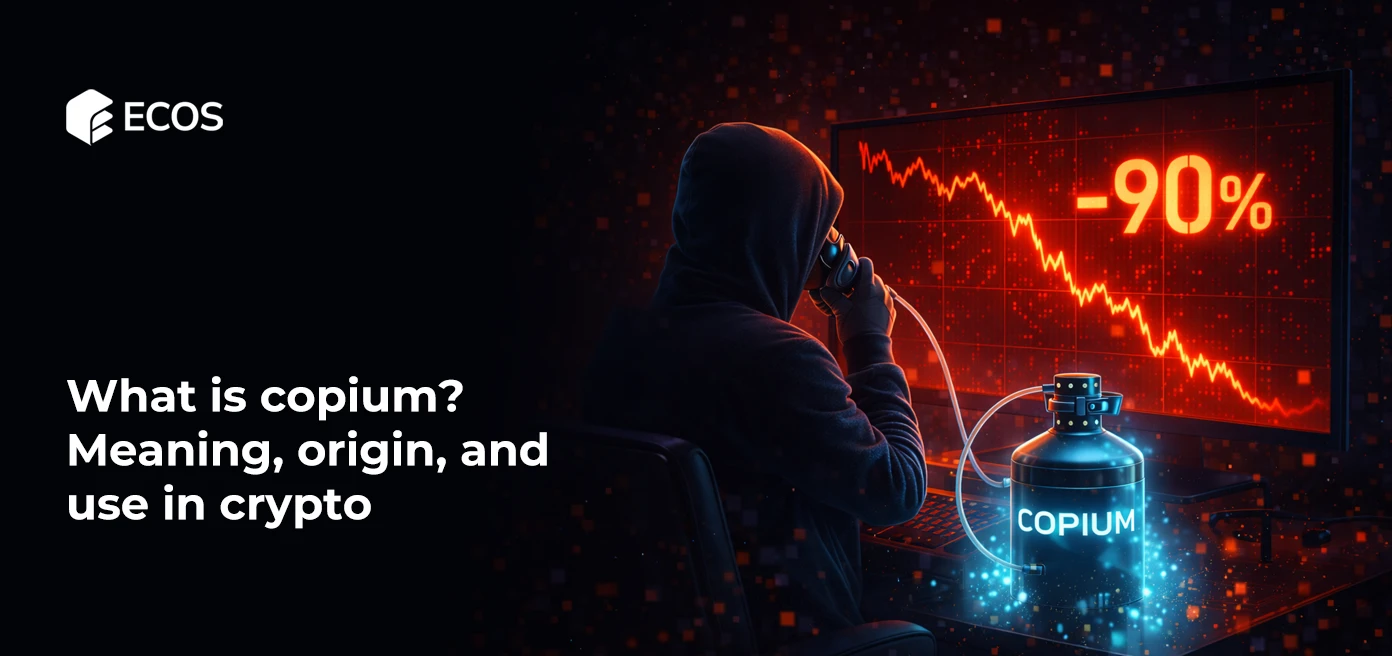
Online, this word has turned into a universal tool for trolling. You have probably seen the image of a sad Pepe the Frog inhaling gas from a tank labeled “Copium.” People usually post this meme in response to anyone trying to justify an obvious failure—be it a sports team losing, a political defeat, or what is more relevant to us, a token price crashing to zero. To me, seeing “copium” in a comment section is a sign that the debate has hit a wall, and one side simply refuses to accept the truth.
Why it became popular
I think the secret to this term’s popularity lies in its honesty. We have all been in a situation where reality hit us hard, yet we pretended it was all part of some master plan. Copium quickly spread beyond imageboards like 4chan and took over Reddit and X. It is short, punchy, and perfectly describes today’s culture of denial. In a world where everyone wants to look like a winner, calling someone out for “inhaling copium” has become a much-needed reality check.
Origin of the word copium
I spent quite a while thinking that “copium” was a fresh invention by Reddit users, but the reality turned out to be much more interesting. In fact, the roots of this word go back to the early 2000s. It first made a loud appearance in 2003 when Oakland rapper Keak da Sneak released an album titled “Copium.” In his context, it was a play on words related to how people in his neighborhood tried to deal with the harsh realities of street life. It was a surprise to me that meme slang originally had such a grounded, hip-hop origin.
The real explosion in popularity happened much later, around 2016, and in a completely different environment. The word migrated to imageboards like 4chan. There, it started appearing in political discussions to mock opponents who refused to accept their candidates’ election losses. That is when the image of Pepe the Frog with a gas tank became attached to the word. I think this visualization is what made the term immortal—the image of a character literally “breathing in comfort” was just too accurate to ignore.
By 2020, copium had fully transformed into a universal label for anyone living in a world of illusions. From political threads, it smoothly flowed into gaming communities and then into the world of finance. I remember how often I started seeing it in the comments under posts about falling tech stocks. The word perfectly filled a niche: we needed a short term to describe collective self-deception, and copium fit the bill better than anything else.

What is copium in crypto?
The crypto market is probably the best place for copium to thrive. Volatility here is so high that you can lose half your money overnight, and your brain starts scrambling for a way to stay sane. I have seen serious people turn into fanatics when their favorite project starts sinking. Copium in crypto is not just a meme; it is a survival tool for those who went “all in” at the wrong time.
Copium after market crashes
When a sudden crash hits, Telegram chats fill up with specific messages instantly. It is denial in its purest form. People start looking for various justifications to explain why this is a ‘healthy correction’ or a natural part of market cycles. I have been there too, frantically refreshing charts, hoping to find a single green pixel to back up my hopes. In those moments, copium works like a painkiller: it does not fix your empty wallet, but it numbs the pain for a while.
Holding through bear markets
A bear market is like a marathon of inhaling copium. During these times, faith becomes more important than numbers. Investors start digging through project roadmaps that have not been updated in months, convincing themselves that the devs are just “building in silence.” I think this is where copium gets dangerous. It is one thing to wait out a temporary dip, but it is another thing to hold a useless token for years, waiting for a miracle that will never happen.
Here are a few typical phrases that give away a copium user in a crypto chat:
- “Whales are just manipulating the price to buy in cheaper.”
- “The project fundamentals have not changed; the price is just noise.”
- “It is not a loss until I sell.”
- “The developers are releasing a major update soon, we just need to wait.”
Copium vs hopium
These two terms often get mixed up, but I see a clear line between them. Hopium is the fuel for growth, when you believe in success based on actual potential. It is about hope for the future. Copium, on the other hand, shows up when hope is already dead, but you refuse to admit it. If hopium makes you buy, then copium keeps you from selling and cutting your losses before they become fatal for your portfolio.
Examples of copium in crypto communities
I have seen plenty of examples where entire communities fell into a deep “copium-induced” sleep. The most striking recent case was the collapse of the Terra (LUNA) ecosystem. When the UST stablecoin lost its peg to the dollar, the chats turned into something resembling a cult. People were seriously discussing how Do Kwon was just playing chess with market makers and was about to press a button to bring the price back to $1. I read posts from people putting their last bits of cash into the “falling knife,” truly believing it was the chance of a lifetime, even though the project was basically dead.
Another classic case is the FTX exchange story. Even when it became clear that the hole in the balance sheet was massive and Sam Bankman-Fried was just spending other people’s money, many users kept hoping for a miracle. They believed in mysterious “white knights” or government bailouts. It was pure copium in action. I think this happened because admitting the truth meant admitting the loss of all their savings. The brain simply blocks that kind of info, replacing it with comforting fantasies.
In the world of meme coins, copium is pretty much the default state. Just hop into any chat for a token that has dropped 99%. You will always find a group of people convincing each other that the “fever will break soon” and they just need to be patient. They celebrate every tiny 5% pump after a 90% dump, calling it the start of a journey to the moon. I often look at this with a bit of sadness, because behind every one of those memes, there are real human dramas and lost money.
Copium vs hopium: what’s the difference?
I often notice people in crypto chats using these two words as synonyms, but I see a massive gap between them. Hopium is all about expecting success. It is that nice feeling you get when you buy a coin and imagine picking out a new car a year from now. There is an element of believing in the best that keeps the market moving forward, even if that belief sometimes feels naive.
Copium is a different story; it is about denying a failure that has already happened. While hopium makes us dream, copium makes us lie to ourselves when the chart is cratering. I think hopium is an entry strategy, but copium is the inability to exit a trade. It is like the difference between looking forward to a party and trying to pretend the party is still going when the guests have left and the lights are off.
In my view, hopium can be useful because it provides the motivation to research new projects. However, copium is almost always harmful because it blinds the investor. When you replace cold logic with a hit of copium, you stop managing your risks. I have been through this myself and know how hard it is to close a position at a loss when your inner voice, fueled by copium, promises an imminent trend reversal.

Why copium is popular in crypto markets
I have often wondered why the word copium found such a permanent home in the crypto space. In my experience, it is because the crypto market is essentially a casino that never sleeps. The emotional pressure here is much higher than in traditional finance. When you see your portfolio shrinking, you need something to hold onto to keep from spiraling. Copium provides that imaginary support, letting you believe that everything will turn around tomorrow, even when the charts say otherwise.
There is also a huge community factor. When you see thousands of people on X or Telegram inhaling the same “gas,” it makes the situation feel less lonely. It turns a personal financial disaster into a shared joke. I have noticed that using copium memes helps take the edge off. If we can laugh at our losses, it means we are still in the game. It is a strange, slightly masochistic form of optimism that fits the spirit of digital assets perfectly.
I think the popularity of the word is also down to how fast everything moves. In a world where you can get rich or lose it all in an hour, people need a simple label for their feelings. Copium is the perfect answer to “how are you feeling right now?”. Instead of long talks about market cycles or fundamentals, we just post a meme. It is more honest and, funnily enough, helps keep a bit of sanity in this wild space.
Psychological side of copium
I often think that copium is more than just an internet joke; it is a real defense mechanism for our minds. We are naturally wired to hate admitting mistakes, especially when those mistakes cost us money. When the chart goes down, a conflict arises between reality and our expectations. Psychologists call this cognitive dissonance. To numb this inner pain, we start looking for excuses, and copium becomes the painkiller that temporarily glues our broken hopes back together.
I believe loss aversion plays a huge role here as well. Studies show that the pain of losing something is twice as powerful as the joy of gaining the same amount. That is why admitting your favorite token has lost its value feels like a physical injury. I have noticed how easily the brain replaces hard facts with pleasant stories just to avoid facing the truth. It is a psychological trap: we cling to bad assets simply because we have already invested time and faith in them.
Ultimately, copium helps us protect our self-esteem. Nobody wants to feel like a fool who got scammed or simply guessed the market direction wrong. It is much more comfortable to believe in conspiracy theories or temporary setbacks than to accept that we made a mistake. I think that until we learn to spot these mental traps, we are destined to keep returning to that “gas tank” every time the market gets rough.
Should investors avoid “copium thinking”?
I often get asked if it is possible to invest without leaning on copium. My answer is straightforward—if you want to keep your money over the long term, you need to ditch that “copium mindset” as fast as you can. I have learned the hard way that this is the most expensive habit a trader can have. The issue is that when you start making excuses for a failing asset instead of admitting you were wrong, you lose control. You are no longer managing your portfolio; your unfulfilled dreams are.
I remember a time when I held tokens for a project that was slowly dying. The developers went silent, and the price dropped every single day. Yet, I kept reading chats filled with people in the same boat, convincing myself these were “just temporary setbacks.” I ended up losing almost everything I put into that trade. If I had just turned off my emotions and looked at the facts back then, I would have walked away much sooner and saved what was left. It was a harsh lesson that taught me one thing: the market does not care about your feelings or how “good” you think a project is.
To stay out of this trap, I suggest always having a clear exit plan before you even hit the “buy” button. I use stop-losses and try to avoid community chats when the market moves against me. It is way too easy to catch someone else’s optimism there, which is usually just collective self-deception. I think it is much better to accept a loss once and keep your capital for the next trade than to spend years “inhaling copium” while staring at an empty wallet.
Conclusion
I have concluded that copium is more than a meme; it is a mirror for every crypto investor. This word hides both the irony of seeking easy money and the painful difficulty of admitting mistakes. While we shouldn’t ditch optimism, we must draw a line between believing in a project and blindly denying facts.
The main lesson is discipline. The market plays on emotions, offering false hopes. A “tank” of this imaginary gas provides only temporary relief and obstructs sound decision-making. Be honest, watch the charts instead of comforting chats, and you won’t need to seek refuge in illusions.
More Questions
No, it is not a pharmaceutical product. It is a fictional internet term describing a state where someone seeks comfort in false hopes. You won’t find it at a drug store.
Definitely. It appears in gaming, sports, and politics—anywhere a losing side refuses to admit defeat. The crypto community simply embraced it because the market provides endless reasons for self-deception.
No. To me, hopium is optimism before a trade or belief in future growth. Copium kicks in after things go wrong. If you hope for a pump, that’s hopium. If you are making excuses for a 90% drop, that is pure copium.
Ask yourself: “If I saw this chart for the first time today, would I buy this asset?” If the honest answer is “no,” you are likely just handling the pain of a loss. Another sign is ignoring data to spend hours in chats where users only comfort one another.
Published Articles

Crypto On-Ramps and Off-Ramps Explained: How Fiat and Crypto Move In and Out
Entering the world of digital assets often feels like trying to cross...
 Popular
Bitcoin Pizza Guy: The Story Behind the First Real Bitcoin Purchase
Introduction The history of Bitcoin is full of dramatic ups and downs,...

Crypto Basics Explained: A Beginner’s Guide to Cryptocurrency and Trading
Introduction The world of finance is changing right before our eyes. Just...
 Popular
Uniswap Explained: What It Is, How It Works, and How to Use the UNI DEX
Introduction Decentralization and decentralized platforms that have emerged in recent years have...
 Popular
Bitcoin Lightning Network Explained: What It Is and How Bitcoin Lightning Works
Introduction In the world of cryptocurrency, transaction speed and costs have always...

How Bitcoin ATMs Work: A Complete Guide to Using Crypto ATMs
Introduction Millions of people around the world use cryptocurrencies today – at...